@aarondfrancis Sounds like the db focused route is the way to go. There's likely to be a lot of interest in context management and dbs in months to come. There are systems like GraphRAG and Google Memory Bank coming out, and there will be lots of value in teaching on the underlying concepts.
@heyrobinai Curious why you didn’t include Claude Code in your testing? I also would have included Cursor over windsurf. Augment code is another to look at. Anyway, appreciate the perspective on Warp. I’ve loved it as a terminal, but haven’t tried it as an agentic coding tool yet.
@MariyaHari81424@connect_js Thank you for the kind words @MariyaHari81424 🙏. And thank you for bringing engagement to the talk! It’s hard to read the room sometimes with the tech crowd, and it was nice to get some smiles and nods coming from your table 🙂
@levelsio@DanielLockyer I don’t think I’ve heard of anyone using Opcache quite like this before. Typically, if data fetching from an RDMS is your bottleneck you’d reach for a fast in-memory search layer. I use Meilisearch often and really like it.
@aarondfrancis Love this! Personally I’ve been really loving Herd lately for most of my local needs, but I can think of some really cool process groups I could use this pattern for to supplement what I’m doing with Herd. Particularly around managing a supervisor locally
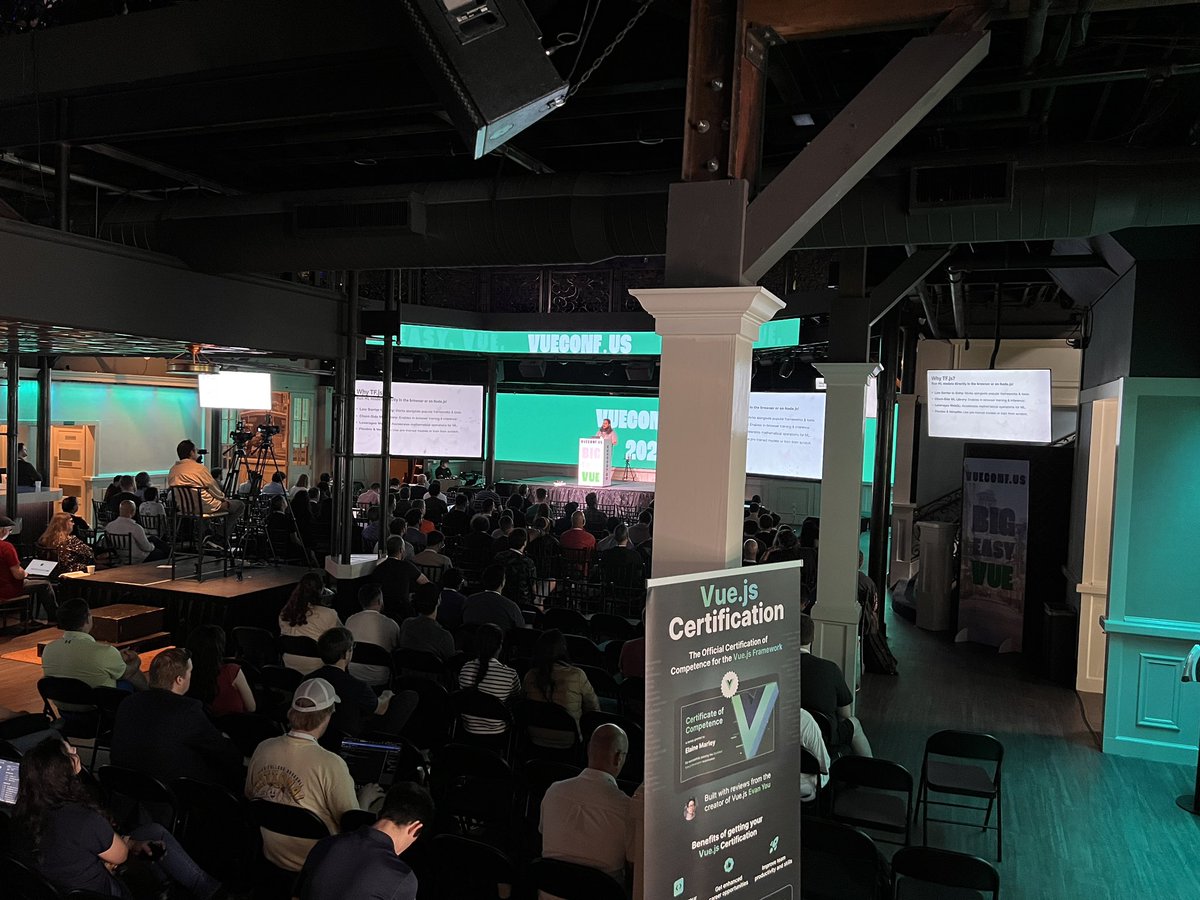
I had such an awesome time speaking @vueconfus! It was an honor to be speaking among so many people in the tech community that I admire 🫶💚, not to mention getting to learn from so many great speakers.
@t3dotgg I feel that as they’ve grown and added more products, the quality of the documentation and consistency throughout the ecosystem has been a challenge. However, as a dev that implements it regularly, I vastly prefer it over the alternatives I’m aware of.
@ianlandsman Dude I grew up on the space coast. My dad worked on the crews that put the payload in the shuttle. I’ve seen every kind of cool shuttle/rocket launch there was in the 90’s. I’m not here to argue your opinion but subjectively, self landing rockets are cool as $h!t.
@MelkeyDev Always diagnose with all non-critical peripherals disconnected. Re-seat the memory and then run diagnostics there. There’s a lot that can fail in a puter, but that’s where I’d start
@MelkeyDev Then, also use the same tools drive to run hardware diagnostics on the machine. Start with the hard drive(s). If there’s a failure there you need to see if it’s logical corruption or physical failure.