New footage has emerged in the killing of seven-month-old Palestinian Sam Abu Haikal in the occupied West Bank.
The video appears to show the family's car slowing to a stop before an Israeli soldier opens fire.
Sky's @AdamParsons reports ⬇️
Latest: https://t.co/cjyZPzIyeA
One way of measuring UK productivity shows a remarkable upturn since Labour came to office....
... so is the UK witnessing a productivity revival?
https://t.co/cc78csZFrj
🚨 NEW: Volodymyr Zelenskyy says the decision of some Reform UK councils to take down the Ukrainian flag is the kind of "small mistake that can break a big friendship"
"I hope they will put it back"
Swap the phones for newspapers and this is a subway photo from 1920.
A sociologist named Erving Goffman described exactly this in 1963. He called it civil inattention: the learned habit of acknowledging that a stranger exists, then pulling your attention back so you don't intrude on them. A quick glance, then you look away. In a space packed with people you will never see again, looking away is the courtesy.
It's the quiet contract that lets a few hundred strangers share a tight platform without friction. You signal "I see you, you're no threat, I won't bother you." Phones slotted neatly into that ritual. They are the most convincing prop anyone has ever had for performing it.
The newspaper did the same job for a century. Subway photos from the 1920s through the 1970s show entire rows of riders vanished behind broadsheets, every face covered, nobody speaking. Radio got blamed for ending conversation. So did the Walkman. So did the cheap paperback before either of them. Each new object inherited the same eulogy: this is the thing that finally isolated us.
Connection on a subway platform was always rare. Strangers waiting for a train kept to themselves long before anyone had a screen to disappear into. The phone's real footprint is at the dinner table and in the living room, the places where idle attention used to have nowhere to go and now always does.
The behavior in this photo is a hundred years old. The object in everyone's hands is the only part that keeps getting replaced.
Silicon Valley companies have 'embraced MAGA politics due to self-interest', according to Nick Clegg, Meta's former head of Global Affairs and current Global Lead in stating the bloody obvious
It's not just the exploitation of a tragedy.
JD Vance's picture of Britain - where migrants have led to a crime surge - is the opposite of the truth.
https://t.co/y5El5FUj7v
The commemoration of the bravery, tragedy and importance of D-Day is not ever the place to try and score cheap political points. What an ignorant and disrespectful dumbass.
Former MI6 chief Sir Alex Younger on Brexit: “Putin would have been absolutely delighted by our decision.”
“So would Xi. France has effectively eclipsed us. Brexit has marginalised us.” Most striking of all: “Just nobody mentions the UK.”
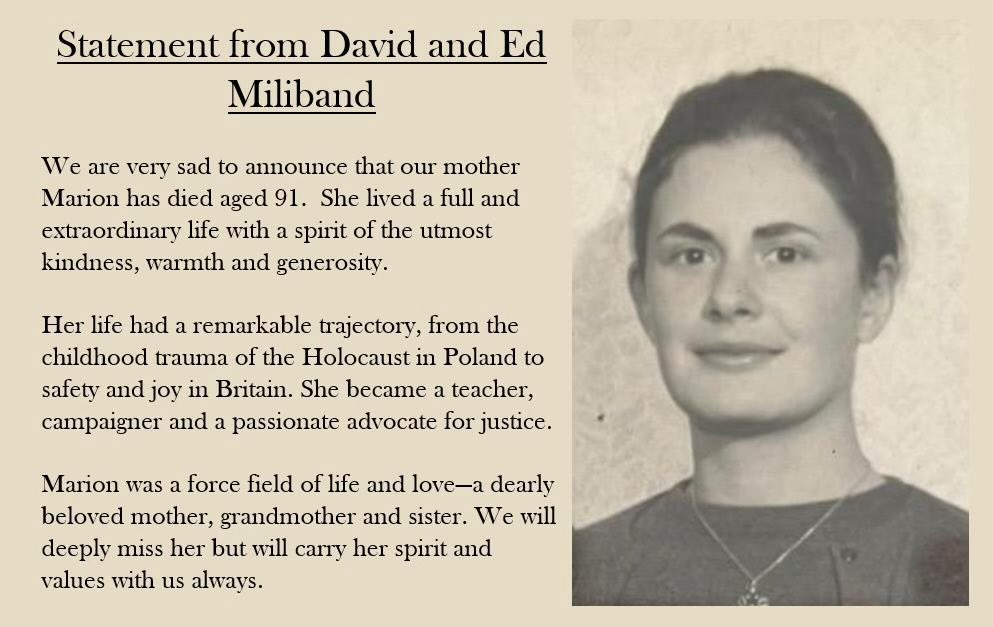
Very sad that Sir Alex Younger, chief of the Secret Intelligence Service, born on July 4, 1963, died of pancreatic cancer on June 2, 2026, aged 62
I was born and raised here. Countless brave Sikh soldiers died for Britain, proudly wearing their turban and kirpan.
Thankfully, Rupert and Restore don't get to decide what is British.
Beware … today they’re coming for me, but tomorrow it could be you!
I didn’t vote for either of the winners of the last two General Elections but “traitors” for whom a “reckoning is coming”? Really? This very excitable, angry & hyperbolic man should be nowhere near a position of responsibility in a political party that aspires to power.
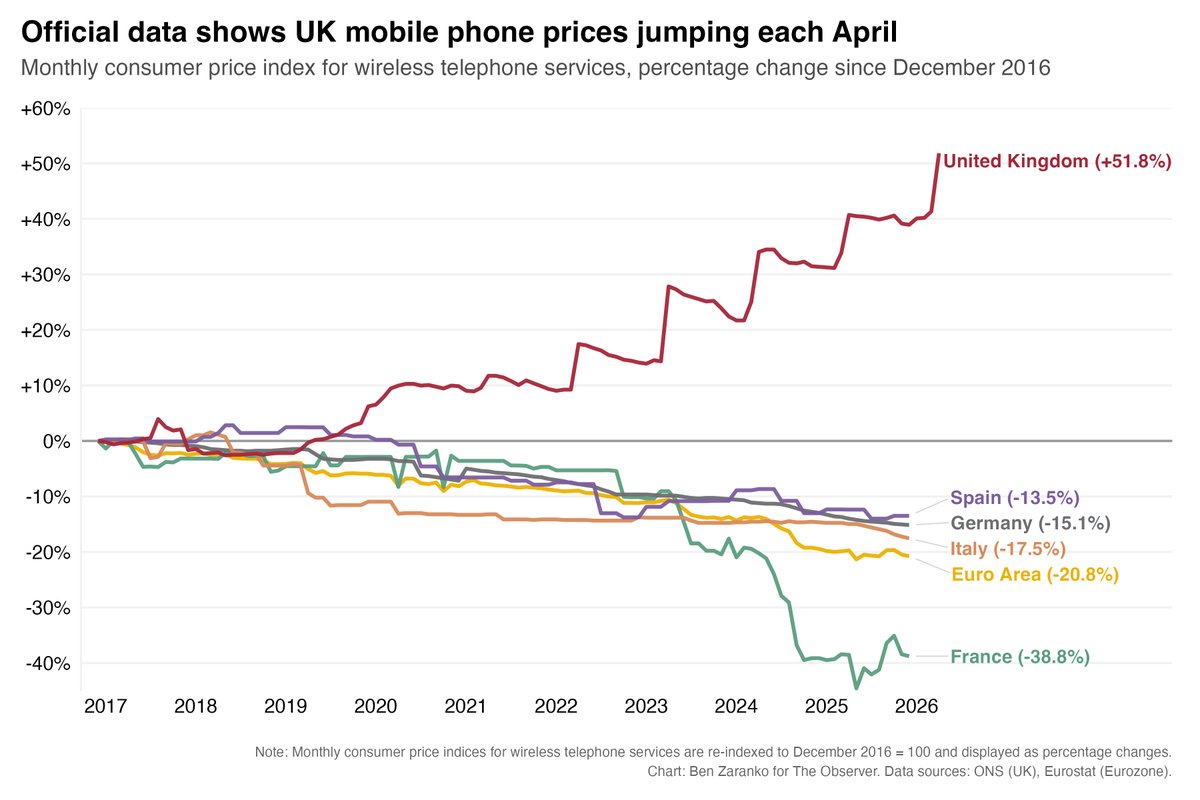
This chart is bonkers.
I think there's two possible explanations for why the UK runs so far ahead of other European countries – neither of them good. And the annual April jump speaks to a wider issue. For more detail, see my column in this weekend's Observer (link below).
Some people are determined to misunderstand. Here is a graph of mean daily maximum temperature in May for the UK, not including 2026, showing a clear rising trend since about 1980:
I never stop being amazed by them. Launching their “Birdhouse” — a strategic-class missile worth around $100 million, capable of carrying a nuclear warhead — at a garage complex in the Kyiv region.
Let’s calculate how much this night cost them.
One “Oreshnik” — roughly $100 million. Around ninety cruise and ballistic missiles: Kh-101s, Kalibrs, Iskander-Ks — at an average price of about $8 million each — that’s another roughly $720 million. Six hundred Shahed drones at $50,000 each — another $30 million. Plus fuel, launch platforms, maintenance, reconnaissance.
Total: around $850 million for a single night. Nearly a billion dollars.
And what did they get for that billion?
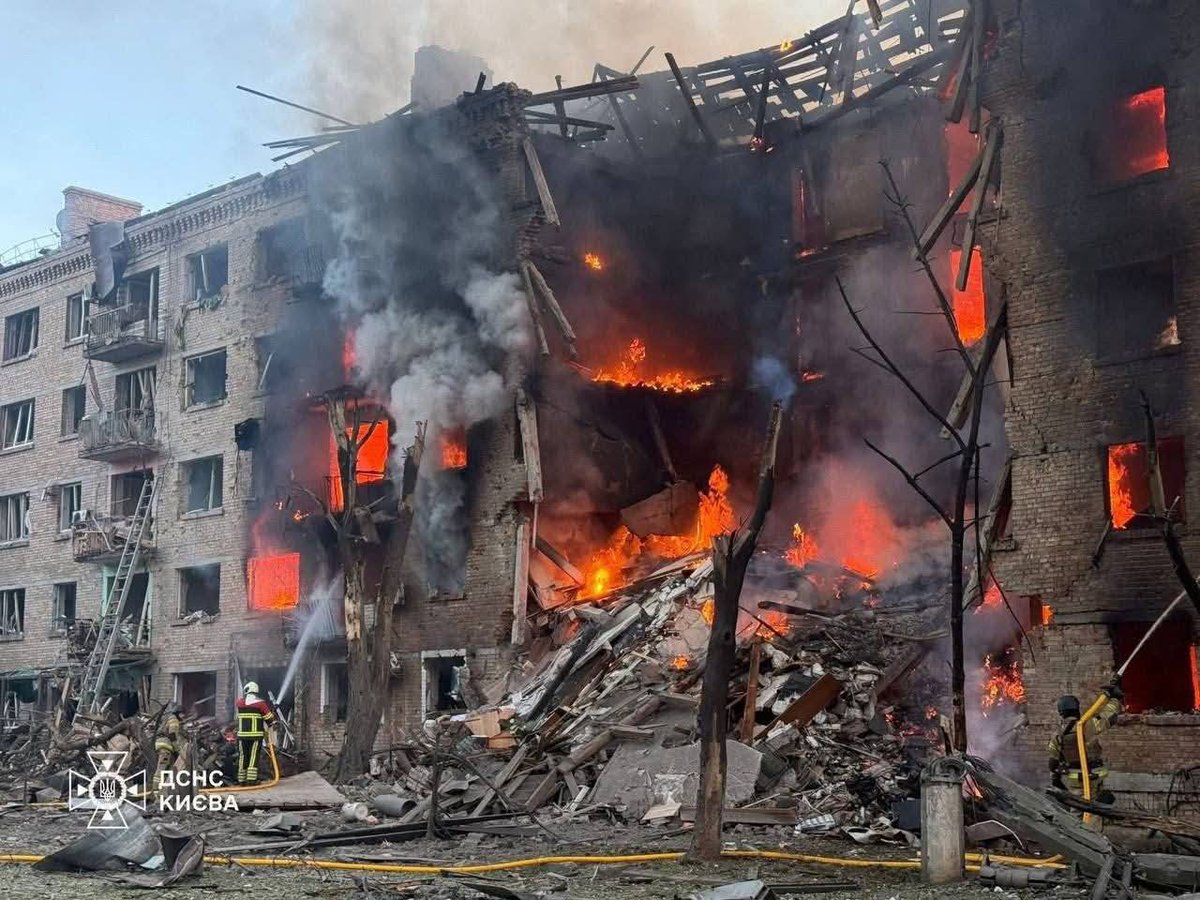
They hit garages in Bila Tserkva. Destroyed the “Kvadrat” shopping mall. Set the roof of a dormitory on fire in Darnytskyi district. Blew apart an entrance section of a five-story apartment building in Shevchenkivskyi district. Hit a market. A supermarket. A construction hypermarket in Obolon. Dropped debris onto the Valeriy Lobanovskyi Dynamo Stadium.
Two sleeping civilians killed. Fifty-six wounded, including children. Is this their strategic result for a billion dollars? This is their “special operation.” This is their “greatness.”
They cannot move forward on the battlefield. Cannot seize a single truly significant settlement. Cannot defeat the army of a country they promised to capture in three days four years ago. And in convulsions, in agony, in powerless rage, they strike residential neighborhoods at night — museums, markets, shops, garages.
Impotent on the battlefield, compensating for their failure with the number of munitions fired at sleeping civilians.
Blind evil and helplessness at the same time.
Monsters. Simply monsters. Rabid, paranoid lunatics with a nuclear button.
I have no other words left for them.