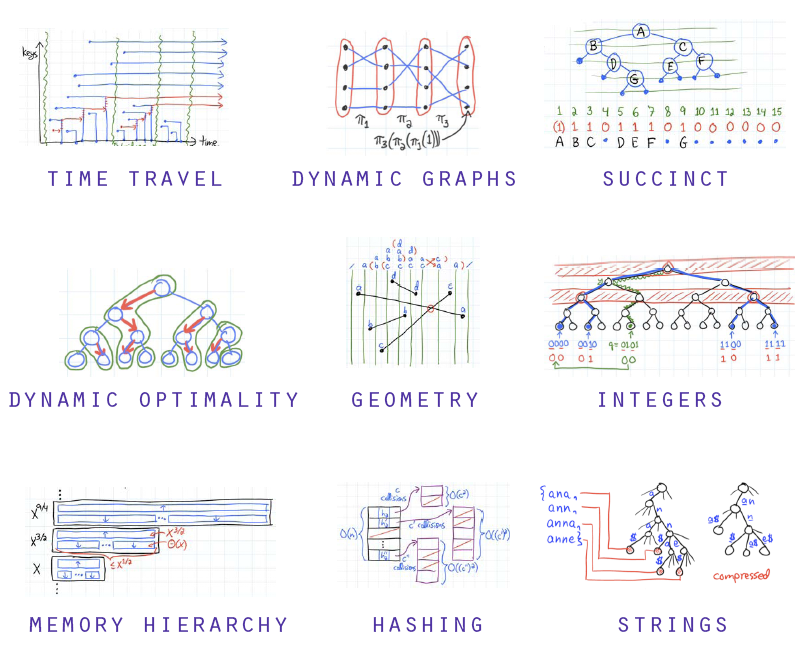
Here's the Link to The Interactive Handbook on Data Structures and Algorithms, by Elias Yilma.
The book is a self-contained Unity app that you can run from an executable, and it's available for Mac, Windows, and Linux.
Currently, there's a discount leaving it at USD 35. It includes a Python mini IDE and interpreter for exercises, and you can download the Chapter 6 (Strings) as a free sample.
https://t.co/pNEuTf7edb
INSTEAD OF WATCHING AN HOUR OF NETFLIX TONIGHT.
This 60-minute Cambridge lecture by Demis Hassabis will teach you more about the future of AI than most people will learn in the next 5 years.
Bookmark it and give it an hour, no matter what.
WATCH THIS 1-HOUR MIT LECTURE ON “STOCHASTIC DIFFERENTIAL EQUATIONS.”
The math behind how quants model markets, risk & uncertainty.
The same skills top firms pay $62K/month for.
Bookmark this & give it 1 hour today.
Holy shit… someone just made machine learning click.
Not static diagrams.
Not math-heavy PDFs.
Not black-box training.
Real algorithms — training step-by-step — visually.
It’s called Machine Learning Visualized
and it lets you watch models learn in real time.
Here’s why this is different:
Instead of dumping theory first,
it shows optimization happening live:
• gradients moving
• weights updating
• decision boundaries shifting
• loss decreasing
• models converging
You literally see learning happen.
Everything is built from first principles:
• Gradient Descent
• Logistic Regression
• Perceptron
• PCA
• K-Means
• Neural Networks
• Backpropagation
No magic. Just math → code → visualization.
Each chapter is a Jupyter notebook
that derives the math
then implements it
then animates training.
So you can watch:
• neural nets shape decision surfaces
• PCA rotate feature space
• K-means clusters form live
• gradient descent find minima
• sigmoid reshape boundaries
• backprop update weights step-by-step
This solves a huge problem:
Most ML resources teach: math → code → ??? → trained model
This shows: math → code → learning process → result
Which means you finally understand:
• why gradients matter
• how weights evolve
• what loss landscapes look like
• how convergence actually happens
• why deep nets learn non-linear functions
Even better:
You can open any notebook
modify parameters
and watch behavior change instantly.
Learning ML becomes interactive.
Not passive.
Not abstract.
Not confusing.
Just… visible.
Perfect for:
• beginners learning ML
• devs moving into AI
• interview prep
• teaching concepts
• understanding backprop
• visual learners
• building intuition
This is the kind of resource
that makes neural networks finally “click”.
Link: https://t.co/i0k7LzGbJt
We’re moving from:
reading about ML
→ watching ML learn
That’s a big shift.
Because once you can see training,
you stop memorizing… and start understanding.
AI education just got visual.
i'm running a live claude cowork workshop for non-technical people on april 22
by the end of the 2 hours, you'll have a fully set up marketing system on your computer that:
> produces a full week of content in one sitting, dialed into your voice so it sounds like you on your sharpest day
> turns any marketing framework or post into a repeatable skill that claude runs on command for you
> builds sales pages in minutes so you stop paying designers and copywriters thousands
> schedules tasks to run while you sleep so you wake up to finished drafts, fresh ideas, and updated reports every morning
> writes launch emails, newsletters, and sequences using the same frameworks behind my 6-figure product launches
all click by click, on your machine, while i do it on mine
here's everything that you get:
• the full 2-hour live workshop where you build everything in real time
• 16 personal skills that i built over 100s of hours for my own business
• the complete recording so you can rewatch anytime
• a self-paced course version of all the material
• access to Claude Marketing OS telegram group
this system runs 90% of the marketing behind my 7-figure brand doing 15M+ impressions/month
and it's all yours come april 22nd
comment "Cowork" and i'll DM you the link
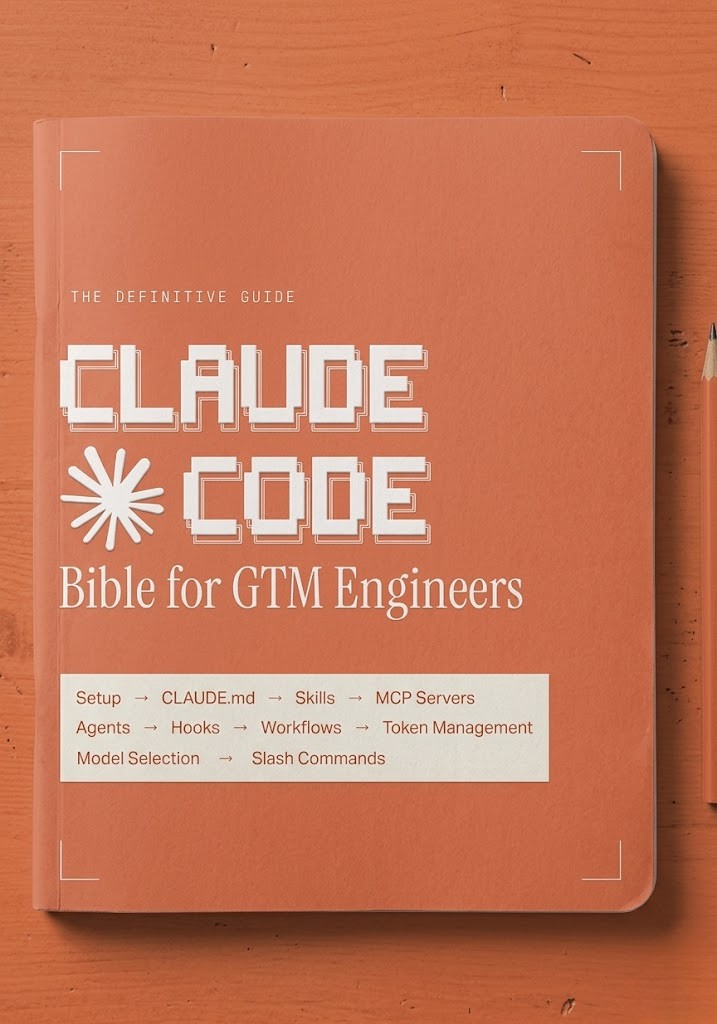
I put my entire Claude Code setup for GTM engineering into ONE Notion doc
10 modules. No fluff.
- How to install Claude Code and run your first GTM session in under 10 minutes
- How to build a CLAUDE. md that acts as your project brain and never loses context
- How to install GTM skills that chain together and run autonomously
- How to connect your full stack via MCP servers without writing custom wrappers
- How to run parallel agents and subagents across GTM workflows simultaneously
- How to manage context and token usage across long research sessions
- How to choose between Sonnet, Opus, and Haiku based on the task
- How to hook Claude Code into external triggers so workflows run without you
- The exact GTM workflows to build first: signal detection, lead scoring, outreach sequencing
- Full slash command reference for every repeatable GTM task
This is the setup I would have KILLED for before spending months piecing it together from documentation, YouTube tutorials, and scattered GitHub threads.
Like + comment "BIBLE" and I'll send it over
(must be connected for priority access)
🚨 Breaking: The guy who created Claude Code @bcherny — just revealed how his team actually builds software with AI.
And it’s not prompting.
It’s a 5-layer operating system for AI-driven development.
Most developers only use: • one Claude session
• long prompts
• manual reviews
• sequential work
Boris’s team does the opposite.
They run Claude like a parallel engineering org.
Here’s what he shared:
1. Parallel sessions (not one AI)
They run 5–10 Claude instances at once.
Each handles a different task.
One writes code
One reviews
One tests
One refactors
Everything happens in parallel.
2. Persistent memory via CLAUDE.md
They keep a shared CLAUDE.md in the repo.
It stores: • past mistakes
• architecture rules
• coding conventions
• verification steps
Claude reads it every session.
So the AI improves over time.
3. Custom AI subagents
Instead of one Claude, they define roles:
• backend-reviewer
• migration-guard
• code-simplifier
• verify-app
Each agent has a specific job.
Like a real team.
4. Worktree isolation (true parallelism)
Each agent gets: • its own git worktree
• its own task
• its own tests
• its own PR
No context collisions.
No waiting.
Just parallel execution.
5. Orchestration commands
They use compound commands:
/simplify
→ runs multiple reviewers in parallel
/batch
→ launches dozens of agents
→ each opens a PR
This enables: • large migrations
• repo-wide refactors
• automated reviews
• parallel implementation
The insight:
This isn’t one AI assistant.
It’s an AI engineering system.
Parallelism
Memory
Custom roles
Isolation
Orchestration
Stack them together and Claude stops behaving like a chatbot —
and starts behaving like a team of engineers.
This is what most people missed.
They copied prompts.
Boris built infrastructure.
Bookmark this. This changes how you use Claude Code.
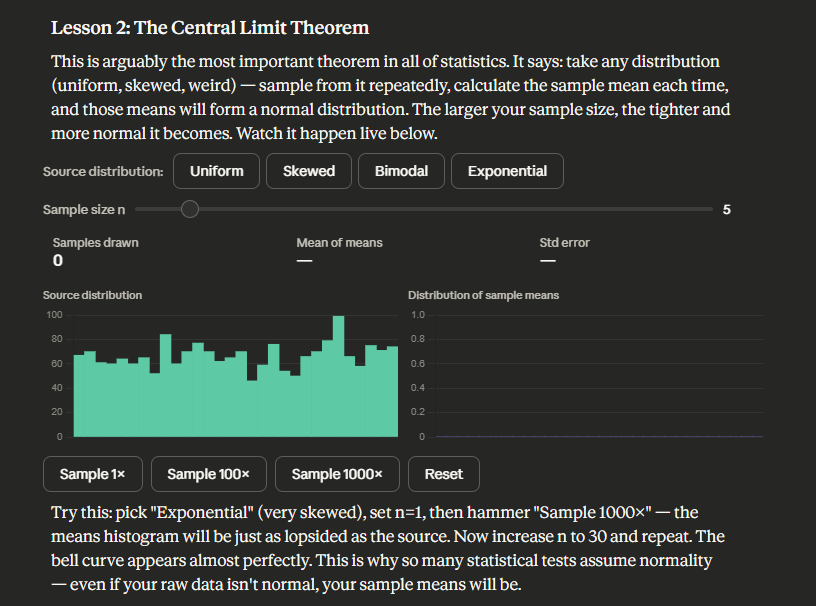
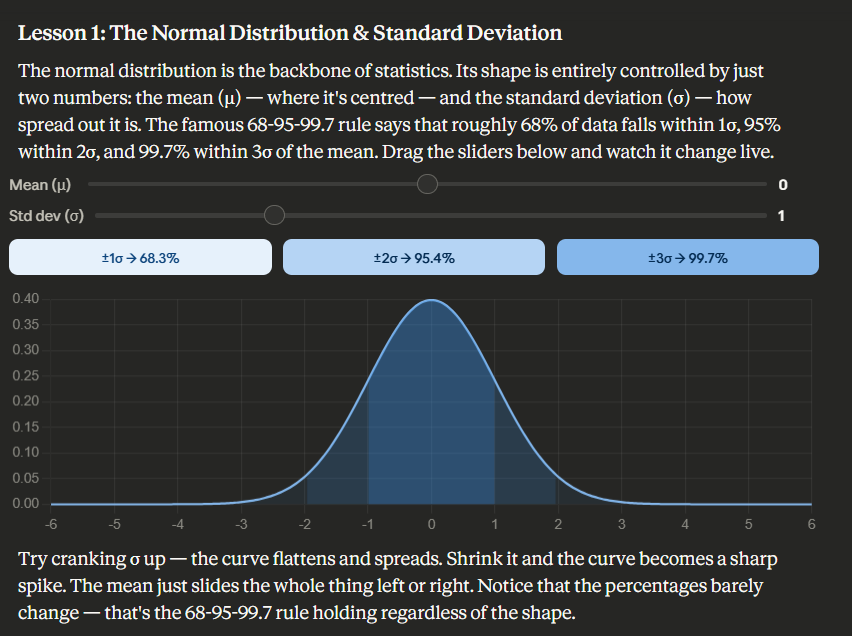
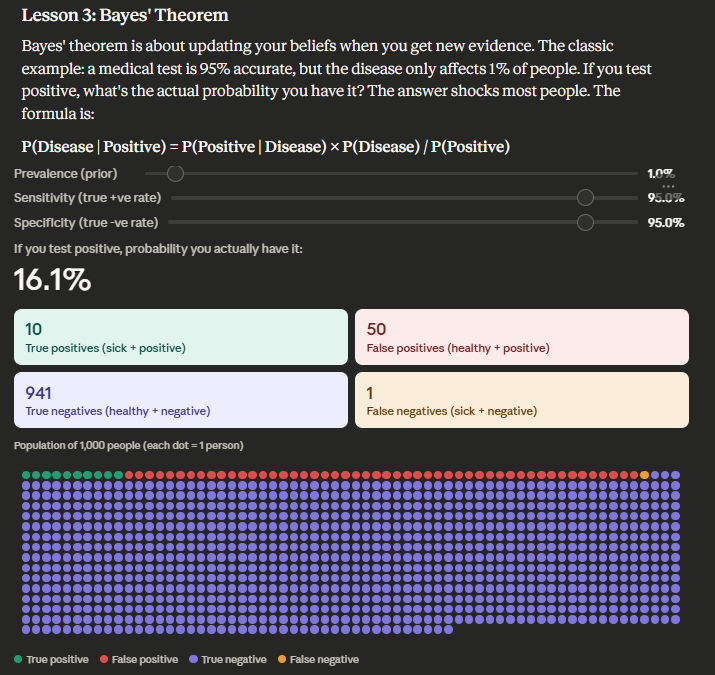
Claude is literally teaching me maths right now and i actually understand it??
like it just showed me WHY a positive medical test doesn't mean you're sick (Bayes theorem) with a live interactive dot grid and i could drag sliders to see it change in real time
normal distribution, central limit theorem, full interactive bell curves all in one chat
this is how school should have worked
After 3 years of using Claude, I can say it’s the technology that has revolutionized my life.
Here are 10 prompts I use daily that have transformed my day-to-day life and could do the same for you:
(save this)
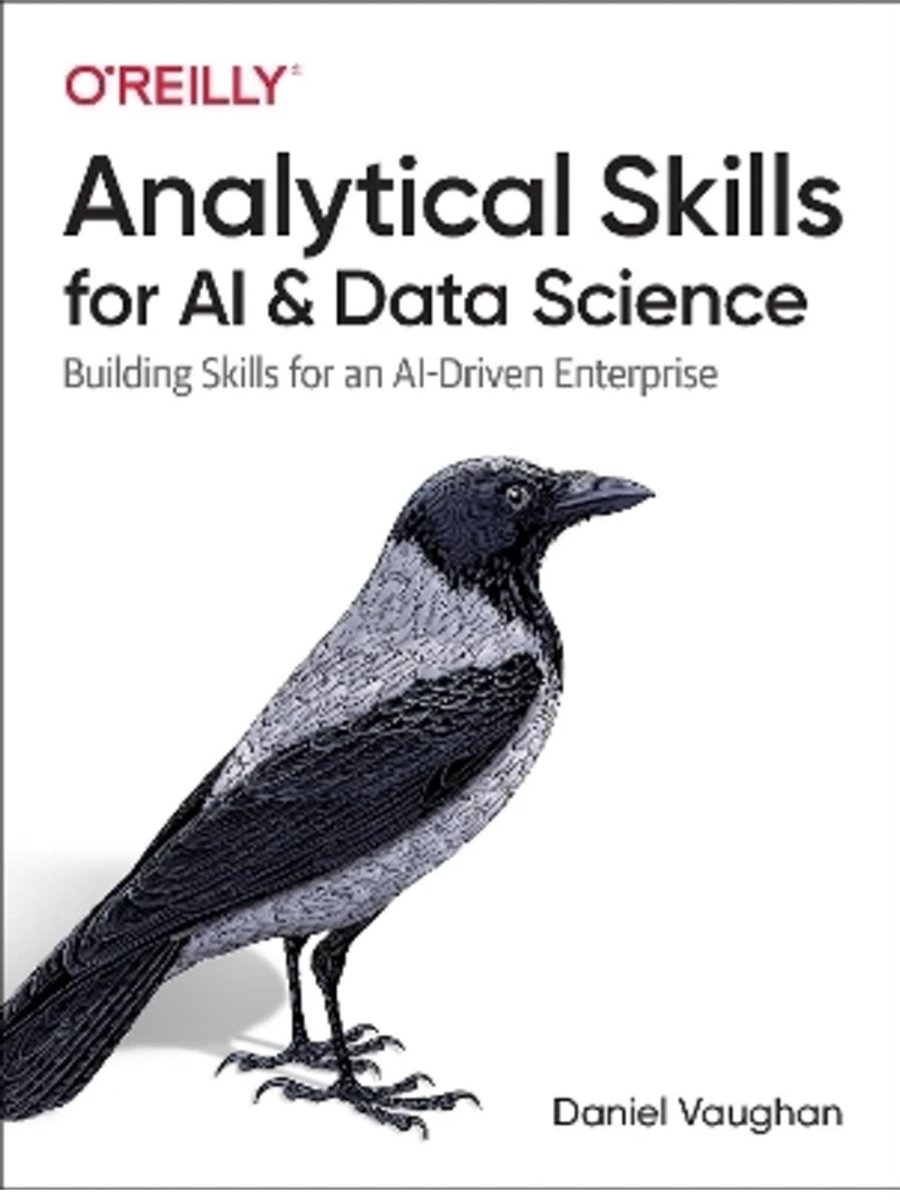
If you want to work in AI or Data Science, read this.
O’Reilly published a 533-page book teaching the real analytical skills behind AI.
Topics inside:
• statistical learning
• regression models
• clustering
• Monte Carlo methods
• data visualization
Basically the foundation of modern AI systems.
I’m giving it away FREE.
To get it:
1. Follow me
2. Like + RT
3. Comment AI
I’ll DM the book
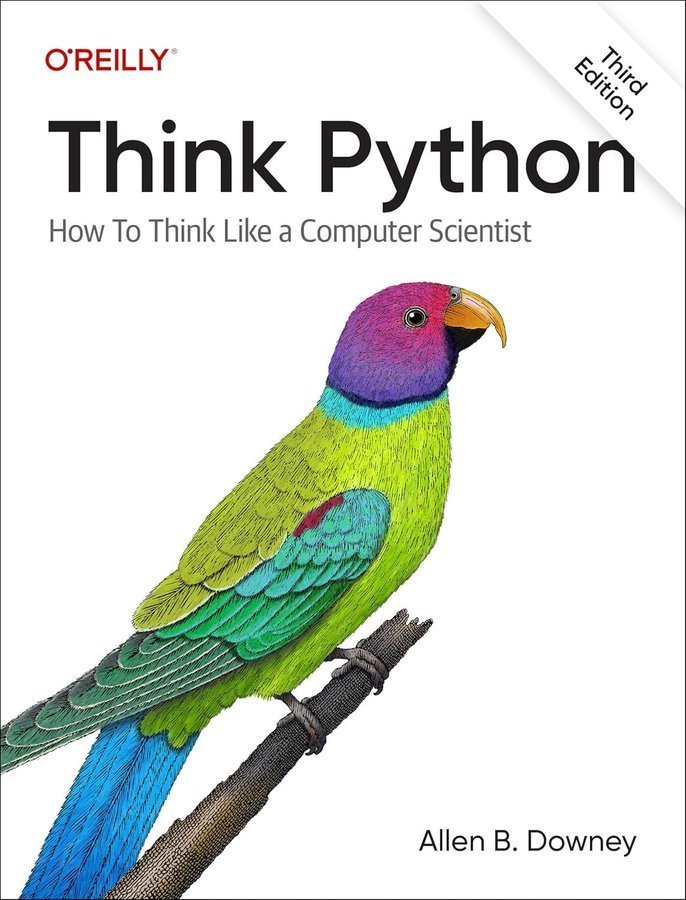
Stop learning Python like a tutorial addict.
Start thinking like a Computer Scientist. 🧠🐍
I’m giving away Think Python (3rd Edition) – Allen B. Downey
The book that builds real fundamentals, not copy-paste skills.
If you’re serious about mastering Python the right way, this is for you.
To get:
1️⃣ Follow MUST so I can dm
2️⃣ Like + RT
3️⃣ Comment “THINK”
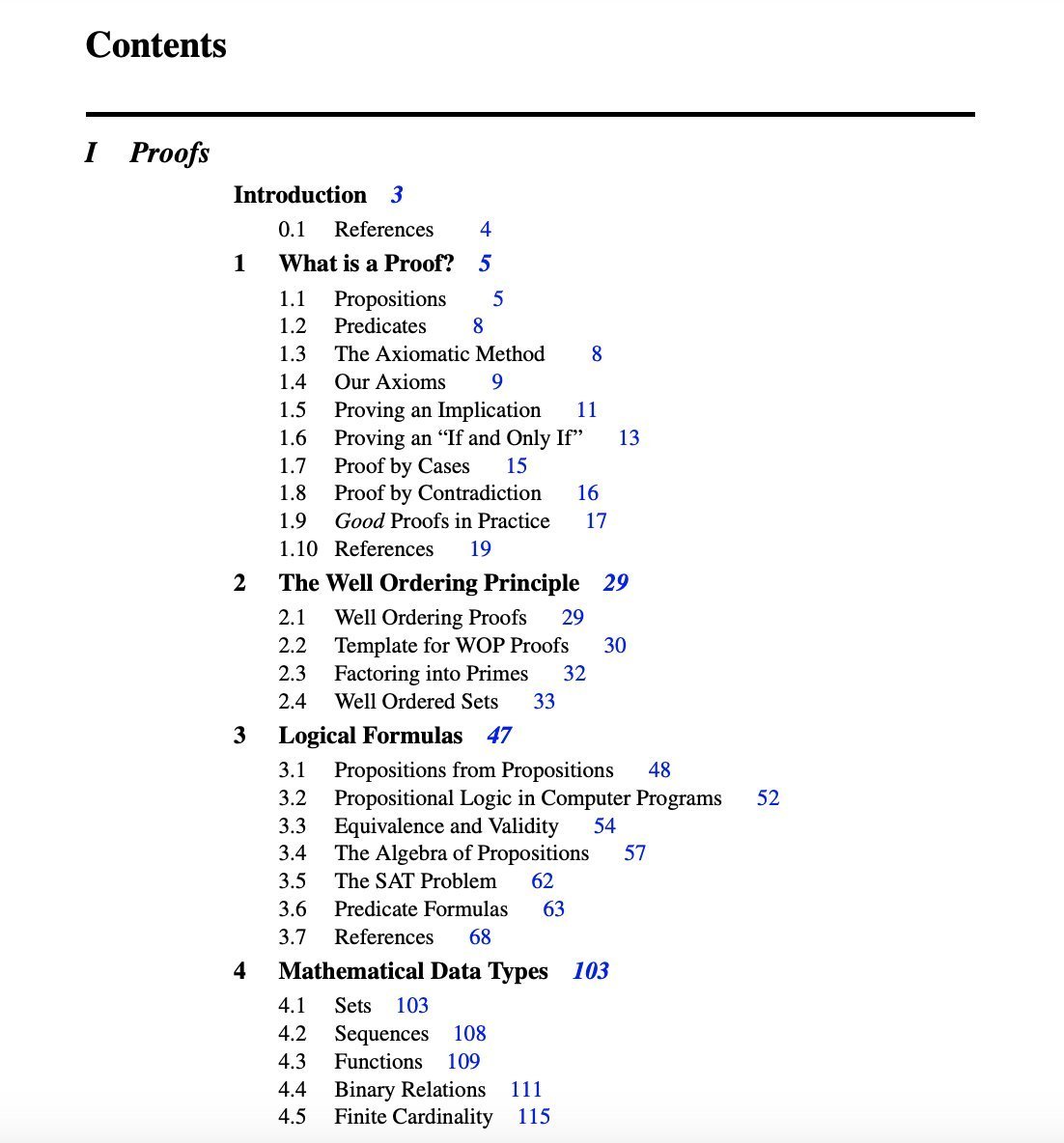
"Mathematics for Computer Science"
MIT is offering this 1048-pages book for FREE.
If you are planning for Comp Sc, the first thing you should learn is Mathematics. And this is the BEST one.
Download your copy → https://t.co/r3BtLY4wB1
Link to the textbook I wrote to support what was, during its operation from 2020-23, the most advanced high school math/CS sequence in the USA:
PDF: https://t.co/Wv8c7trnmj
HTML: https://t.co/1FeISaqu4Y
@LNER I am travelling on lner with an advanced ticket tomorrow with a reservation from Edinburgh to Peterborough tomorrow. I have been assigned a table seat and I would much rather a normal seat. Is there a way to change this seat reservation? I didn’t book my ticket with lner
Our new Linear Algebra for Machine Learning path just dropped.
This is not meant to be easy.
It’s built to make sure you truly understand/learn the linear algebra you actually need for machine learning.
You’ll learn the fundamentals, how things really work under the hood, and then finish with practical problems that force you to apply what you learned.
If you’re looking for something to make you feel smart this is not for you.
This is for people who actually want to learn.