How do the cells of one organism thrive in, on or near those of another? Investigating the biology of the rice blast fungus Magnaporthe oryzae to find answers.
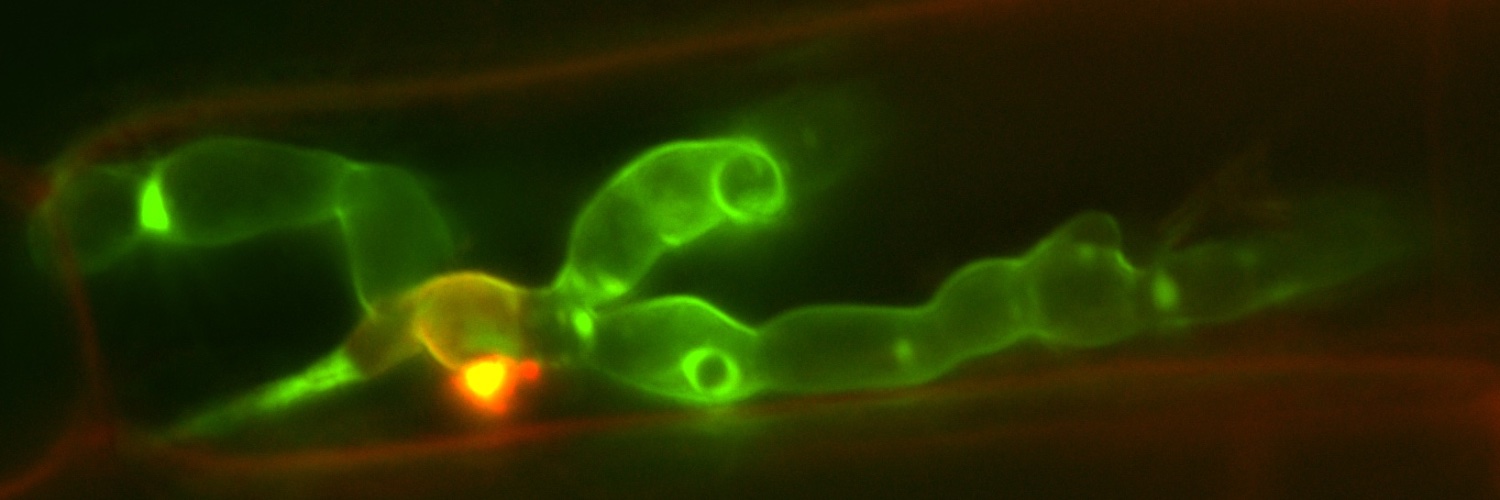
Our new preprint shows that MoGrh1 helps the rice blast fungus bypass the Golgi to secrete immune-suppressing effectors during infection. This links unconventional protein secretion to the ER–Golgi intermediate compartment, autophagy, and plant disease. @UNL_IANR@UNLincoln
Happy to share our new preprint investigating unconventional secretion in #Magnaporthe oryzae #riceblast during #biotrophy that found a pre-Golgi intermediate compartment protein required for #effector sorting.
https://t.co/C9Bi6pnaQS
Our results indicate that cytoplasmic effector secretion via the unconventional secretion pathway is constitutive and not a response to cellular stress but it is supported by autophagy under the nutrient-restrictive conditions of biotrophy.
✨ BIG NEWS ✨
Edgar Cahoon, director of the University of Nebraska–Lincoln’s Center for Plant Science Innovation, has been elected to the National Academy of Sciences, one of the nation’s highest honors for scientists and engineers. https://t.co/NO3LB2kSRo
📢 The next @MPMIjournal Focus Issue is now open for submissions: "Plant Immune Receptors in the Spotlight" 🌱🔬
Edited by @sardineboy_DING@ClemMarchal@MariSchuster@WilsonLab and yours truly!
Deadline: Oct 31, 2026 Submit your best work! 👇 https://t.co/As0i2pbyWS
The rhizosphere is a dynamic environment for microbial activity where plants engage in a wide array of interactions with surrounding microorganisms. These interactions can be mutually beneficial, as in the case of symbiotic partnerships that enhance nutrient acquisition and stress resilience, or detrimental, involving pathogens that compromise plant health and productivity.
The latest MPMI focus issue, "Symbiotic and Pathogenic Interactions in the Rhizosphere," highlights cutting-edge advances in our understanding of the dynamic relationships between plants and microbes within the rhizosphere, encompassing both beneficial symbioses and pathogenic interactions.
Focus Issue Guest Editors: Tarek Hewezi, Hari Krishnan, Kevin Garcia, and Mina Ohtsu
Explore the issue now: https://t.co/VQL8zPdx6y
#rhizosphere #MPMI
Delighted to have provided some input on this sirtuin-related work that uncovered a broad-spectrum anti fungal compound targeting mitophagy
https://t.co/9AwYInEHIW
Now that it has been approved by the Ethics Committee, I’m very pleased to announce that I have joined the @MPMIjournal editorial board as a Senior Editor. Happy to contribute to our community and learn about the innovative research being conducted.
https://t.co/txoQFgjjsR
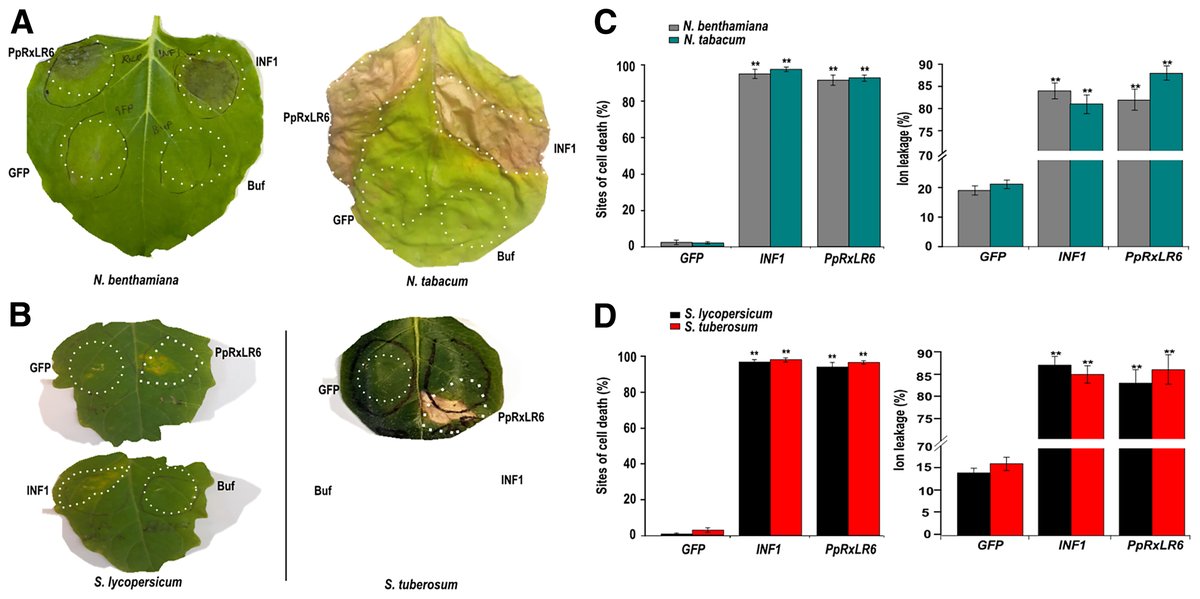
Editor’s Pick: “Structural Insights into WY Domain SLiM-Containing Conserved RxLR Effectors: A Case Study of Five Important Phytophthora Species,” by B. C. Salasini et al. Learn more: https://t.co/eAFSuP1HP5
Read the Commentary by Nawaraj Dulal and Meenu Singla-Rastogi: https://t.co/sCLELs2Tv5
Read the press release: https://t.co/DoMtd5BeE0
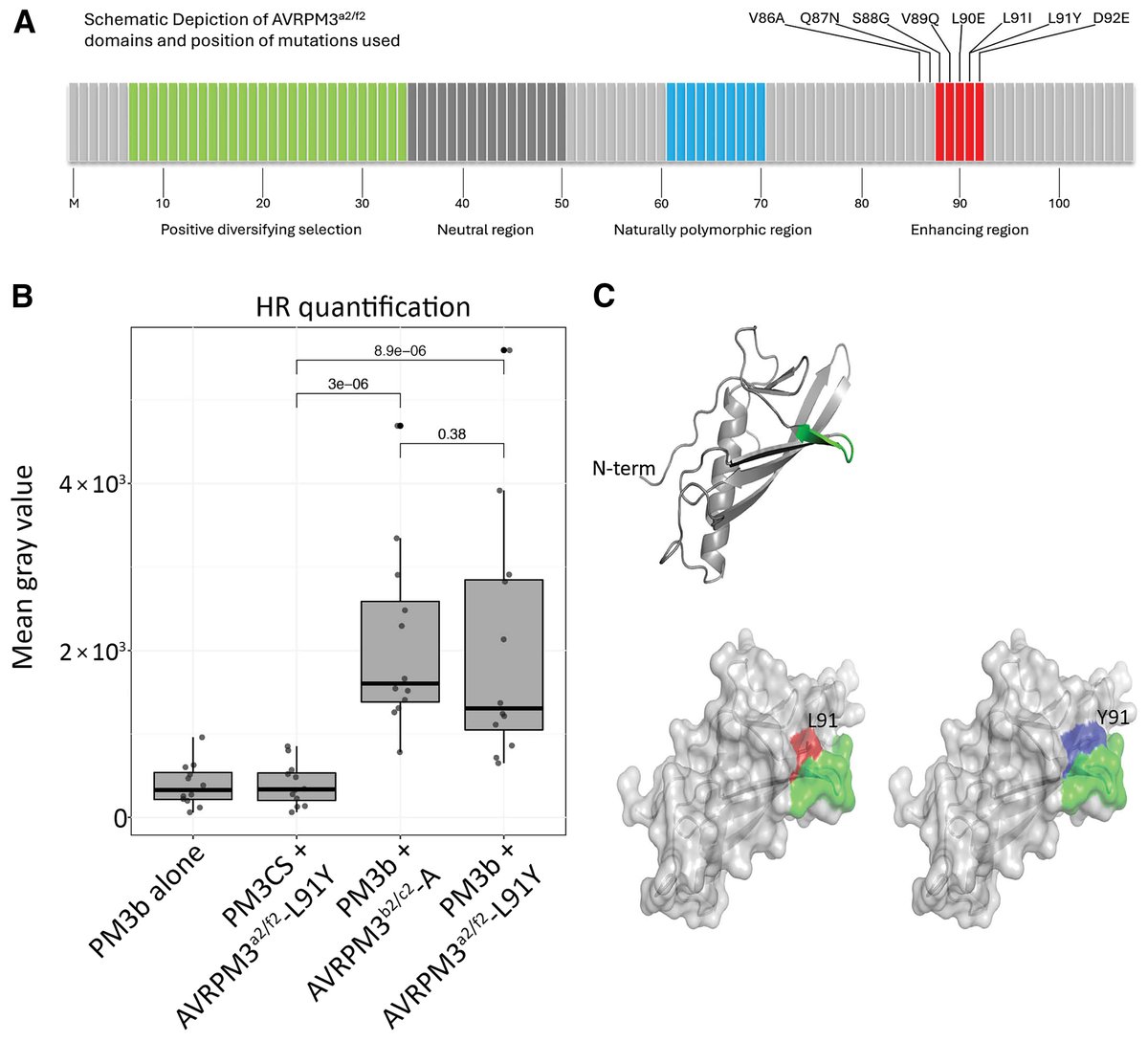
Editor’s Pick: Jonatan Isaksson et al. reveal complex molecular interactions between powdery mildew effectors. Their findings suggest that structural similarity, rather than sequence conservation, underlies both the promiscuous multimerization of these effectors and their recognition by specific PM3 immune receptors. Learn more: https://t.co/j32T7Pa3bc
We have a new preprint that sheds light on Magnaporthe effector evolution and secretion: AA-ending codon-based computational analyses uncover novel cytoplasmic effectors in the Magnaporthe oryzae secretome https://t.co/BhC2xu9xZM
Got the opportunity to attend symposium at KSU, celebrating Barbara Valent’s retirement. Inspiring to see brilliant minds advancing Magnaporthe research under one roof. Grateful for this experience. Thanks to my PI, @WilsonLab , for making it possible!
We have updated our IS-MPMI poster (https://t.co/BqHtMXUaSN) to feature some ER retention data we had lying around but neglected to include in the first version. This shows recoded Pwl2-HDEL is retained in the ER, confirming it is secreted via the ER, and virulence is restored
Delighted to receive three more years of NSF support for our new work investigating codon-mediated effector evolution and secretion. Huge thanks to all behind the scenes for keeping US science moving forward.
#NSFfunded
https://t.co/s2XUBgsOCQ
📢 Exciting News!
Become an Assistant Features Editor (AFE) for Molecular Plant-Microbe Interactions (MPMI) and boost your skills in science communication, networking & leadership! 🌱
Showcasing #MPMI at #ISMPMI2025 – Apply now!
👉 https://t.co/OUgP7ufoim