@KamounLab@ATinyGreenCell@GetGenome@nanopore This move seems to go directly against the consumers, especially in labs where the sequencer doesnt run 24/7 (or where basecalling is done on a cluster).
@KamounLab@ATinyGreenCell@GetGenome The worst decision by @nanopore is to discontinue the P2 solo (to push the P2 integrated)! Currently we can use the external computer (with powerful GPU) for other applications (e.g. modelling) while not sequencing (i.e. basecalling). Now nanopore is taking this flexibility away.
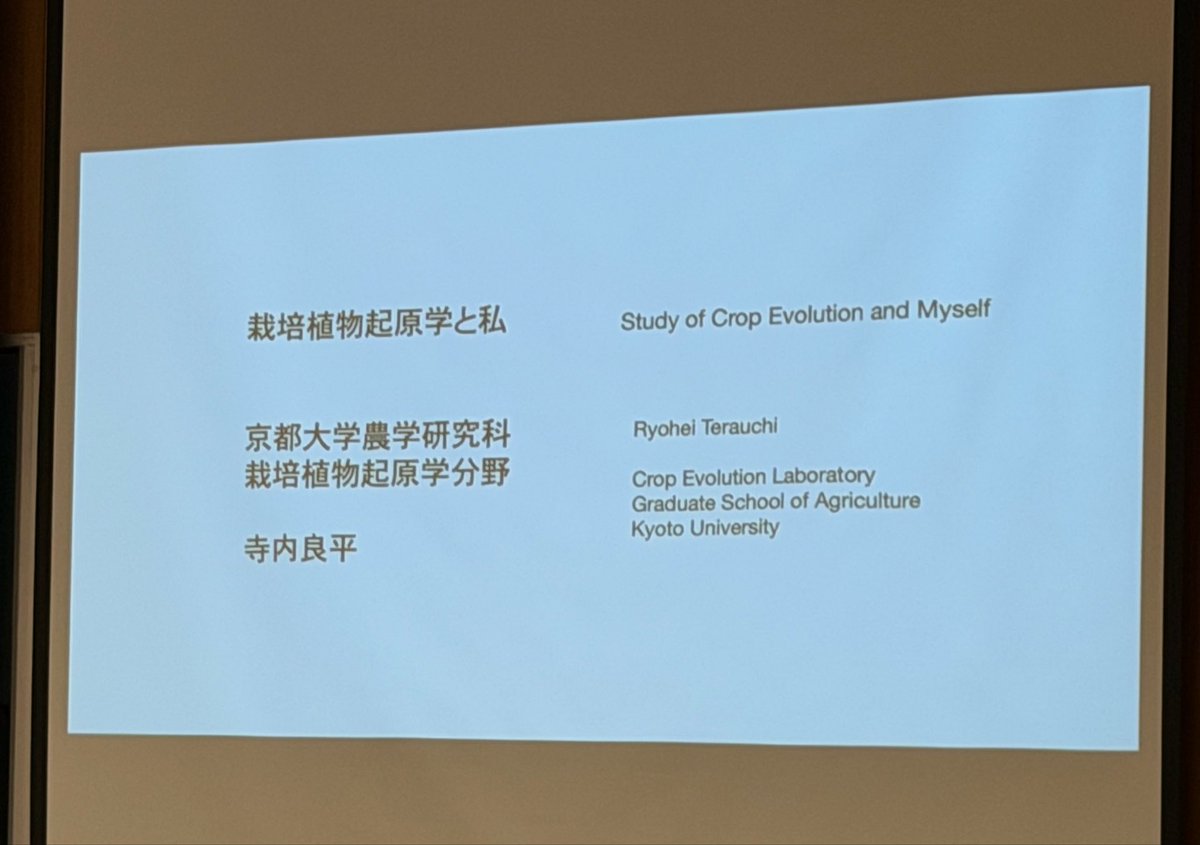
Hugely honored to attend Professor Ryohei Terauchi's @ryoheiterauchi lecture at Kyoto University @KyotoU_News.
What a spectacular career exploring crop evolution and molecular plant pathology / immunity. And a lasting impact on many Early Career Scientists.
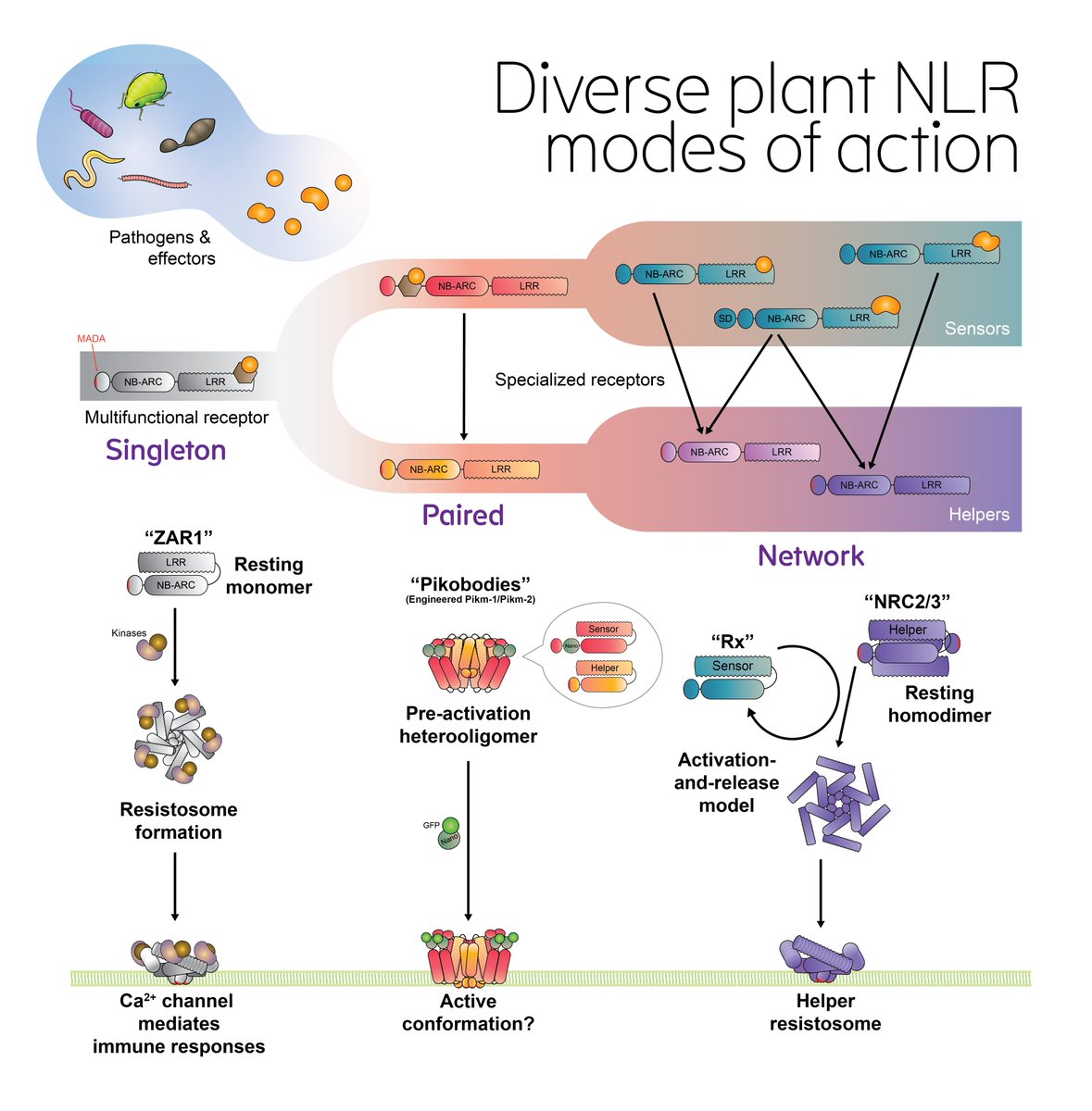
Check out our new story on the famous rice Pik NLR pair, led by @ClemMarchal and @HsuanPai1 ! Turns out they form a massive 1 MDa membrane-associated complex before activation 🤯 A cool new example of the diversity of NLR resting states!
The Pik NLR pair does more than just wait for activation!
Adding to the known modes of action for NLR proteins: from monomer/dimer to a novel pre-activation heterocomplex 🤜🤛
Get the full mechanism in our new preprint!
Our long-lasting research project on an amazing stinkbug-fungus relationship "Defensive fungal symbiosis on insect hindlegs" finally comes out in Science! https://t.co/J3y9mLJHuR #symbiosis#insect#fungus#stinkbug
🔬 PhD opportunity alert! Join us at the @CropSciCentre@camplantsci to decode sensor–helper NLR communication mechanisms in plant immunity. Apply by 14th November! 🔍 More info 👉 https://t.co/RwM3TMiWaR #PhD#PlantScience#Biology Please RT
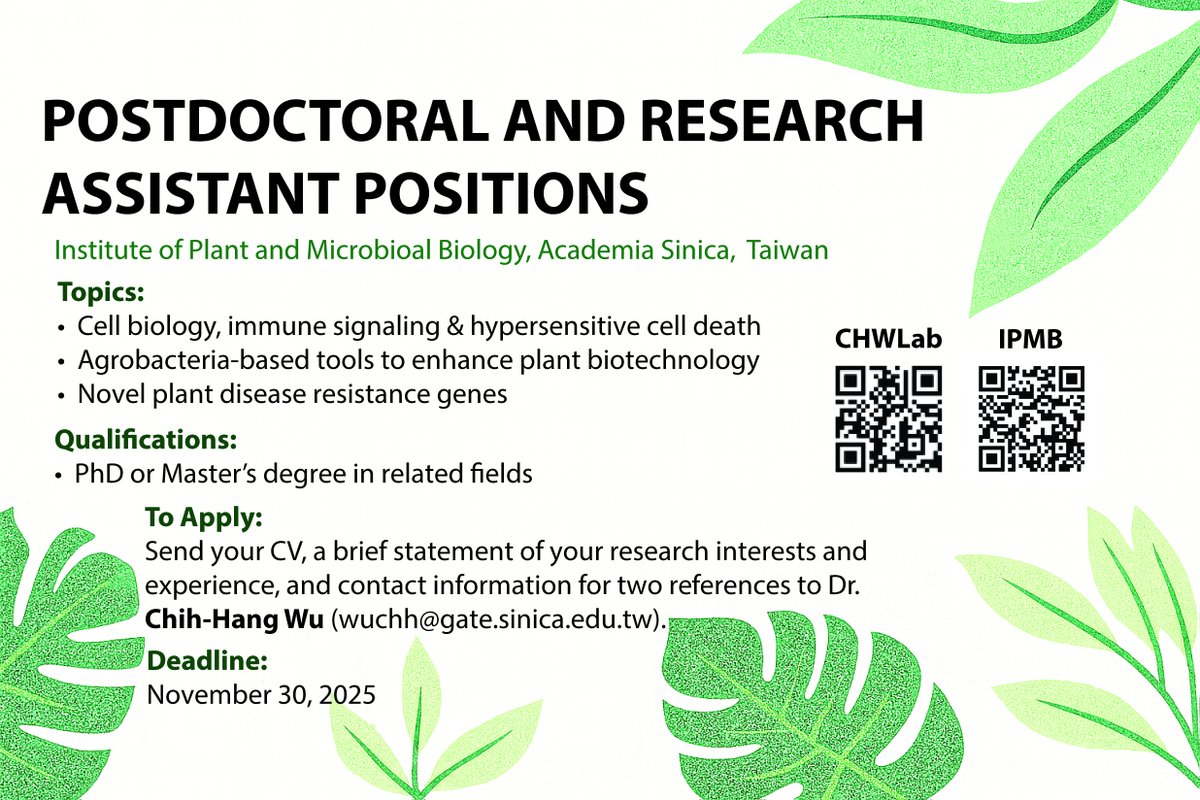
Please RT! Exciting opportunities in plant–microbe interactions!
My lab @IPMBSinica is looking for passionate postdocs & RAs to join us in one of the following areas:
✨ Cell death & immune signaling
🧬 Discovery of resistance genes
🧫 Development of Agrobacterium-based tools
Please read here about a plant disease resistance protein that makes an octameric resistosome. We describe about its identification, architecture, action and assembly.
Congrats to all involved. @GuanghaoGuo, He Zhao @mhz1989@jonathandgjones@KamounLab@TheSainsburyLab 👇
📣 NEW PREPRINT 📝
We identified evolutionary origins of many fungal effectors!
We show that fungi secrete lots of antimicrobial proteins, and that some of them were repurposed by plant pathogens for host immune suppression.
cc @Team_Thomma
https://t.co/aeyB8xWnRC
Where is this type of work heading? We propose an experimental framework for predicting and testing of evolutionary outcomes of pathogen effector—host target interactions. This has implications for preparing for the next disease outbreak and plant disease resistance breeding.
We’re excited to share our latest work on plant pathogen effector protein evolution @biorxivpreprint. With @KamounLab and Abbas Maqbool.
https://t.co/qAEgS6hOes
Two of these homoplasic amino acids are located in the binding interface to host HMA proteins! Interestingly, previous functional studies already suggested an adaptive role of these sites.
https://t.co/LSdmUD3MIm
https://t.co/iu8K8ts7BQ
Two of these homoplasic amino acids are located in the binding interface to host HMA proteins! Interestingly, previous functional studies already suggested an adaptive role of these sites.
https://t.co/LSdmUD4kxU
https://t.co/iu8K8tsFro