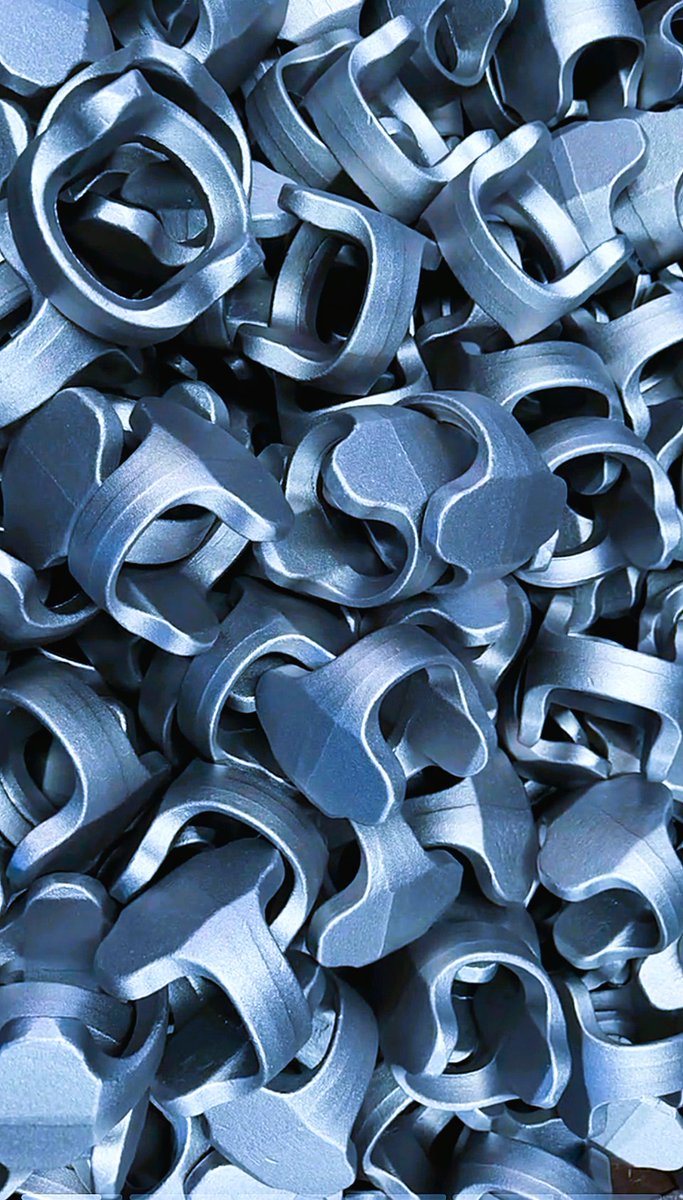
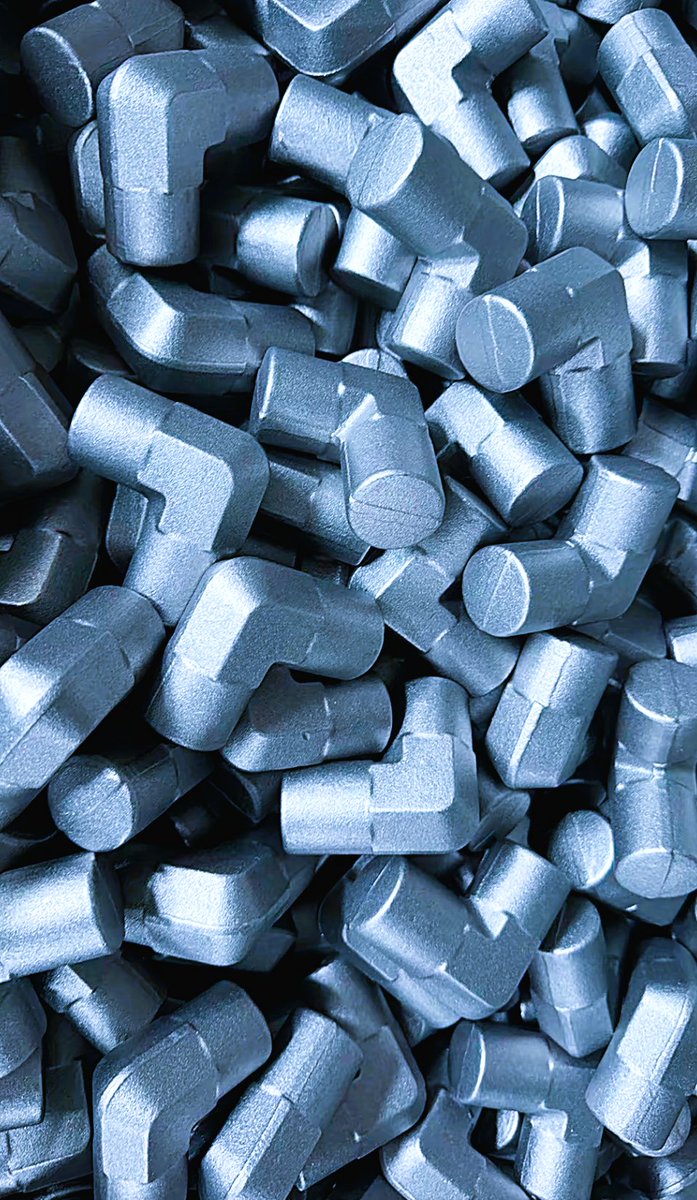
Premium Industrial Metal Components: Forged Seal Rings, Gear ring, Bushings, Sleeves and Custom Alloys CuSn12-C, ASTMC90800, CuSn12Ni2-B Copper sleeve and rings.
When it comes to demanding industrial applications in oil and gas, marine engineering, aerospace, and heavy machinery, material reliability is everything. Sourcing high-performance metal components—such as stainless steel forged seal rings, bushings, sleeves, and specialized alloy rings—ensures structural integrity, wear resistance, and long-term durability under extreme pressure and temperature.
Key Product Offerings and Material Advantages Engineers and procurement specialists rely on a diverse portfolio of precision-engineered components designed to meet international standards (ASTM, ASME, DIN, ISO):
Stainless Steel Forged Seal Rings amp; Flange Rings: Manufactured from superior grades (including Duplex stainless steel flange rings like UNS S31803/S32750), these components offer exceptional corrosion resistance and high tensile strength for critical sealing and piping applications.
Industrial Bushings, Sleeves: Precision-machined to tight tolerances, our bushings and sleeves reduce friction, minimize wear on moving parts, and extend the operational lifespan of heavy-duty rotating equipment.
Copper Copper-Alloy Rings: CuSn12-C, ASTMC90800, CuSn12Ni2-B Copper sleeve and rings. Valued for their excellent thermal and electrical conductivity, as well as natural anti-seize properties in high-friction environments. Aluminum-Nickel Bronze Rings, Tubes: Known for high load-carrying capacity, outstanding shock absorption, and superior resistance to seawater corrosion and cavitation, making them ideal for marine and heavy industrial use.
Why Choose Our Precision-Forged Metal Components from Wind Industrial Supplied Co.,Ltd?
Superior Forging Technology: Closed-die and open-die forging processes refine the metal grain structure, eliminating internal defects and maximizing mechanical strength.
Custom Engineering Machining: We supply custom-sized tubes, rings, and sleeves tailored to exact technical drawings and specifications.
Global Compliance, Quality Assurance: Rigorous non-destructive testing (NDT), ultrasonic testing (UT), and dimensional inspections guarantee zero-defect performance on the job site.
#copperring #bronzesleeve #CuSn12ring #C90800copperbushing #windindustrial #stainlesssteelring #duplexsteelsleeve #sealring #gearrings #forgedrings #centrifugalcastingsleeve
High-Precision Custom Forging Solutions: Delivering Durability and Precision.
In demanding industrial manufacturing, component reliability is non-negotiable. Our high-performance forging solutions are engineered to meet the strictest structural and dimensional specifications across industries.
We specialize in premium steel forgings, utilizing top-tier carbon, alloy, and stainless steel grades to produce heavy-duty components with unmatched tensile strength, structural integrity, and fatigue resistance. Whether you require robust industrial machinery parts or structural components, our products thrive under high-stress conditions.
To achieve precise internal grain structures and superior mechanical properties, our advanced closed die forgings process ensures optimal density, exceptional surface finish, and minimal material waste. This controlled manufacturing technique guarantees consistent quality across large-volume production runs.
When tight tolerances and complex geometries are critical, our precision forgings eliminate or significantly reduce the need for secondary machining, delivering cost-effective, ready-to-assemble parts.
Additionally, we manufacture a comprehensive range of custom hardware forgings, including high-strength shackles, eye bolts, brackets, and rigging fittings trusted in construction, automotive, and heavy equipment applications.
Partner with us for reliable forging solutions tailored to your exact technical specifications. Contact our engineering team today to discuss your project requirements or request a custom quote!
For safety-critical and highly stressed components, drop forging, closed die forging, precision forging, and automotive forged components are not interchangeable terms, but rather distinct manufacturing decisions. For purchasing, design, and production planning, not only the component geometry is important, but also how reliably tolerances, fiber orientation, material utilization, and delivery dates are ensured.
Where closed die forgings offer advantages
Closed die forgings are suitable where high production volumes, defined contours, and load-adapted material properties are required. Forming in a closed die creates a dense, oriented fiber orientation, which offers advantages in strength and fatigue behavior compared to machined or cast alternatives in many applications. This is particularly relevant for shafts, hubs, levers, flanges, and safety-relevant connecting parts.
Precision forgings go a step further. Here, the focus is on near-final contours to reduce rework, material waste, and cycle times. The economic benefits are high when geometry, batch size, and tooling are precisely coordinated. However, for small production runs or frequent design changes, tooling costs can limit the advantages.
Precision forgings in series production
For OEMs and Tier 1 suppliers in the automotive industry, automotive forged components are particularly advantageous when components are subjected to cyclical stress and stable process capability is required over long production runs. Typical examples include chassis, powertrain, and steering components. In these areas, dimensional deviations, uncontrolled microstructure variations, or fluctuating raw part quality lead directly to scrap, rework, or assembly problems.
Therefore, supplier selection should not end with forging capacity. Crucial factors include tooling control, temperature control, material traceability, inspection planning, and the ability to manage the raw part and post-processing as a cohesive process. A supplier with experience in closed-die forging not only reduces technical risks but also schedule and inventory risks.
We support such requirements with a production-oriented approach: controlled production planning, rapid tool preparation, quality-assured processes, and disciplined execution for both standardized and custom forged parts. For industrial procurement, this is often the decisive difference – not just receiving a single part, but a robust series production solution.
What Industrial Buyers Really Look for in Forgings?
Drop Forgings and Closed Forgings are suitable for components where fiber orientation, strength, and repeatability are crucial. Precision Forgings become relevant when machining allowances, dimensional stability, and material utilization must be tightly controlled. For OEMs and project teams, this isn't just a catalog item, but a question of manufacturing strategy.
The key is mastering the entire process. A reliable supplier must coordinate tool design, material selection, forging parameters, heat treatment, machining, and testing. If only one part of this chain is poorly controlled, fluctuations arise that only manifest later as fit problems, hardness variations, or premature wear.
Correctly Classifying Closed Forgings and Precision Forgings
Closed Forgings are the right choice when complex geometries are required with reproducible quality. The process reduces material loss compared to coarser preforms and improves consistency across production runs. Precision forging goes a step further when tight tolerances and reduced post-processing are more economically important than a low tooling cost.
This doesn't mean that precision forging is always the best option. For smaller batch sizes, varying geometries, or very large cross-sections, the economics may differ. Experienced procurement teams therefore always consider batch size, material, machining requirements, inspection specifications, and tool life together.
Surface failure is rarely caused by one factor alone. In spray-applied coatings, wear, oxidation, light corrosion, and dimensional loss often act together, which is why the Application of Alloy Steel Powder 430L, particle size 40–15 µm stainless steel powder in the spraying industry deserves close technical review. For buyers and process engineers, 430L powder is not a general-purpose answer for every coating job, but it is a practical material where controlled deposition, stainless behavior, and economical performance need to be balanced.
430L is a low-carbon ferritic stainless steel powder. In spraying applications, that chemistry matters because it supports corrosion resistance better than plain alloy steel while keeping material cost below many austenitic and nickel-based alternatives. The 40-15 µm particle size range is also significant. It is fine enough to promote stable feed behavior in suitable spray systems and support relatively dense, even deposits, but process compatibility still depends on equipment type, powder handling, and target coating thickness.
Where 430L powder fits in the spraying industry
In practice, 430L stainless steel powder is used where a component needs surface restoration or a functional overlay rather than full replacement in high-alloy solid stock. Common targets include shafts, sleeves, pump parts, valve components, roll surfaces, sealing areas, and machinery parts exposed to moderate abrasion or mildly corrosive service. In these cases, thermal spraying can extend service life while controlling total repair or manufacturing cost.
The main value of 430L is its middle-ground performance. It offers better resistance to oxidation and atmospheric corrosion than many non-stainless spray powders, while remaining more economical than premium corrosion-resistant alloys. That makes it relevant for OEM production and maintenance work where the service environment is not severe enough to justify nickel-chromium or cobalt-based systems.
Application of Alloy steel Powder 430L in spray processes
The application of Alloy Steel Powder 430L in spray processes depends on matching the powder to the operating method. With a 40-15 µm cut, the powder is generally considered for thermal spray methods that can handle fine stainless feedstock with good control over heat input and particle velocity. Depending on the equipment setup, this may support coating work requiring smoother surface finish, better layering control, or thinner build profiles.
Feed consistency is one of the first process checks. Fine powder improves the potential for refined coating structure, but it can also be less forgiving if storage conditions, moisture control, or feeder calibration are poor. For industrial buyers, that means powder specification alone is not enough. Consistent particle size distribution, flow behavior, chemistry control, and packaging discipline all affect final coating quality.
Substrate preparation remains equally important. 430L powder will not compensate for weak surface preparation, incorrect roughness profile, contamination, or poor parameter control. If the coating is intended for dimensional rebuild, bond integrity and deposit uniformity are often more critical than nominal chemistry. A stainless coating that lifts, cracks, or varies in thickness does not protect production uptime.
Performance benefits and practical limits
When correctly applied, 430L coatings can provide useful wear resistance, moderate corrosion protection, and improved surface recoverability for parts that would otherwise be scrapped or machined from more expensive material. The low-carbon composition helps reduce some sensitization-related concerns compared with higher-carbon stainless grades, which can be relevant where post-spray thermal exposure is part of the service cycle.
That said, there are limits. 430L is not the right selection for aggressive chemical exposure, marine immersion, or severe high-temperature oxidation. It is also not the first choice where maximum hardness or extreme erosion resistance is the design driver. In those cases, carbide systems or higher-alloy corrosion-resistant powders may be more appropriate. The correct question is not whether 430L is good, but whether it is sufficient for the actual duty cycle.
This is where disciplined qualification matters. Coating porosity, adhesion strength, hardness, machinability, and post-spray finishing requirements should be reviewed against the component function. For sealing surfaces, finish quality may control material choice. For rebuilt shafts, machinability after spraying may matter more than peak hardness. For large maintenance programs, powder cost and supply repeatability may outweigh marginal performance gains from exotic alloys.
Why the 40-15 µm particle size matters
Particle size directly influences spray behavior, deposit efficiency, and coating structure. In the 40-15 µm range, 430L powder can support finer spray response than coarser grades, which is useful when coating geometry, finish control, or thin-layer build-up are part of the requirement. Finer powder can also contribute to more uniform melting behavior in properly tuned systems.
However, finer is not automatically better. Very fine powder may increase sensitivity to handling conditions and can require tighter control of carrier gas settings, stand-off distance, and spray energy. For production teams, this becomes a process capability issue, not just a material selection issue. A qualified supplier should be able to support consistent powder characteristics lot to lot so spraying results do not shift unexpectedly between batches.
For industrial sourcing teams, the decision should be based on component service conditions, selected spray method, finishing plan, and repeatability requirements across production or repair volumes. Companies such as Wind Industrial Supplied Co., Ltd. operate in this space with a clear focus on specification control, manufacturing discipline, and dependable powder supply, which is what serious production environments require when coating performance must translate into stable downstream operations.
Wenn Maßhaltigkeit, Gewicht und Bearbeitbarkeit gleichzeitig gefordert sind, werden Aluminum forged pipe, Aluminum forgings, and tubes, Aluminum forged blocks and milling zu einer klaren Beschaffungsfrage - nicht nur zu einer Materialfrage. Für OEMs, Anlagenbauer und technische Einkäufer entscheidet die richtige Fertigungsroute darüber, ob ein Bauteil unter Last, Temperaturwechsel und engen Toleranzen zuverlässig arbeitet.
Aluminum forged pipe, Aluminum forgings, and tubes im Einsatz
Geschmiedete Aluminiumrohre und Aluminium-Schmiedeteile werden dort eingesetzt, wo Gussporosität, ungleichmäßige Gefügestruktur oder unnötiges Gewicht zum Risiko werden. Durch den Schmiedeprozess entsteht ein verdichtetes Gefüge mit guten Festigkeitswerten und hoher Reproduzierbarkeit. Das ist besonders relevant für Komponenten in Energieanlagen, Fluidtechnik, Transporttechnik und Maschinenbau.
Bei Rohren und Tubes kommt es jedoch auf mehr an als nur auf das Grundmaterial. Wanddicke, Rundlauf, Endbearbeitungszugaben und spätere Verbindungspunkte müssen früh festgelegt werden. Wer diese Punkte erst nach der Rohteilfreigabe klärt, erhöht Ausschuss, Nacharbeit und Lieferzeit.
Aluminum forged blocks and milling für präzise Geometrien
Aluminium-Schmiedeblöcke sind oft die wirtschaftlich richtige Vorstufe für stark bearbeitete Bauteile. Statt Material aus überdimensioniertem Walzmaterial zu entfernen, kann ein Schmiederohling näher an der Endkontur ausgelegt werden. Das reduziert Zerspanungszeit, verbessert die Materialausnutzung und unterstützt eine stabile Serienkalkulation.
Fräsen ist dabei kein nachgelagerter Standardschritt, sondern Teil der Prozessplanung. Entscheidend sind Schmiedeorientierung, Bearbeitungsaufmaß, Spannkonzept und Toleranzkette. Bei funktionskritischen Flächen oder komplexen Taschengeometrien ist die Abstimmung zwischen Schmiedeprozess und CNC-Bearbeitung besonders wichtig.
Worauf industrielle Käufer achten sollten
Für die Beschaffung zählen nicht nur mechanische Kennwerte. Ebenso wichtig sind dokumentierte Werkstoffspezifikationen, konsistente Chargenführung, kontrollierte Werkzeugvorbereitung und belastbare Liefertermine. Bei kundenspezifischen Aluminium-Schmiedeteilen sollte außerdem früh geklärt werden, ob das Teil als Freiformschmiedestück, Gesenkschmiedeteil oder bearbeiteter Block wirtschaftlicher hergestellt werden kann.
Der beste Fertigungsweg hängt vom Bauteil ab. Dünnwandige Geometrien, hohe Stückzahlen, enge Formtoleranzen oder große Materialabträge führen jeweils zu unterschiedlichen Entscheidungen in der Vorproduktion. Genau hier liegt der Wert eines Fertigungspartners mit breiter Prozesskompetenz. Petrie Metal Products Manufacturing Pte. Ltd. unterstützt industrielle Kunden dabei, Aluminium-Schmiedeteile und bearbeitete Rohlinge so auszulegen, dass Qualität, Kostenkontrolle und Lieferdisziplin im Projektalltag zusammenpassen.
Forged rings are preferred over cast or welded alternatives due to their superior structural integrity and fatigue resistance. Common applications include:
Energy & Power: Wind turbine slewing bearings, nuclear reactor pressure vessel flanges, and gas turbine components.
Oil & Gas: High-pressure metal seal rings for subsea pipelines, blowout preventers , and API-standard flanges.
Aerospace & Defense: Rocket engine casings and jet engine fan cases.
Heavy Industry: Gear blanks for mining equipment, kiln tires for cement plants, and large-diameter hydraulic cylinder components.
Process & Product: Seamless rolled ring forging, Forged metal seal rings, Large diameter forged rings, Heavy duty forging.
Material Specific: Carbon steel forged rings, Stainless steel forged rings (304/316L), Copper alloy forged tubes, Chromium Zirconium Copper (CuCrZr) , High conductivity copper forged rings.
Dimensions: Large scale forging 300mm to 3500mm, Custom OD forged rings.
Application of Alloy Steel Powder 430L, particle size 40–15 µm stainless steel powder in the spraying industry.
430L powder( Particle size 40–15 µm) is a low-carbon ferritic stainless steel powder. In spraying applications, that chemistry matters because it supports corrosion resistance better than plain alloy steel while keeping material cost below many austenitic and nickel-based alternatives. The 40-15 µm particle size range is also significant. It is fine enough to promote stable feed behavior in suitable spray systems and support relatively dense, even deposits, but process compatibility still depends on equipment type, powder handling, and target coating thickness.
Centrifugal cast tubes, sleeves, cylinder and spools are used where concentricity, soundness, wear resistance, and material consistency matter. the sleeve is expected to perform under friction, heat, pressure, or corrosive media while maintaining dimensional stability.
Cast grey Iron, Ductile Iron Castings, Green Sand Casting, Spheroidal Graphite Cast Iron and cast steel parts, the material grades include Germany standard GG 25 Grey Iron Castings, EN-GJL-250, FC25, EN-GJS- 700-3 casting, ANSI/ASTM A48 Class 35B Grey Iron Castings, Pulley parts.