Real bad news. The parent company of #Orion and #Meade#telescope manufacturers has shut its California offices. Stay tuned for updates.
https://t.co/vKhcYGIXXF
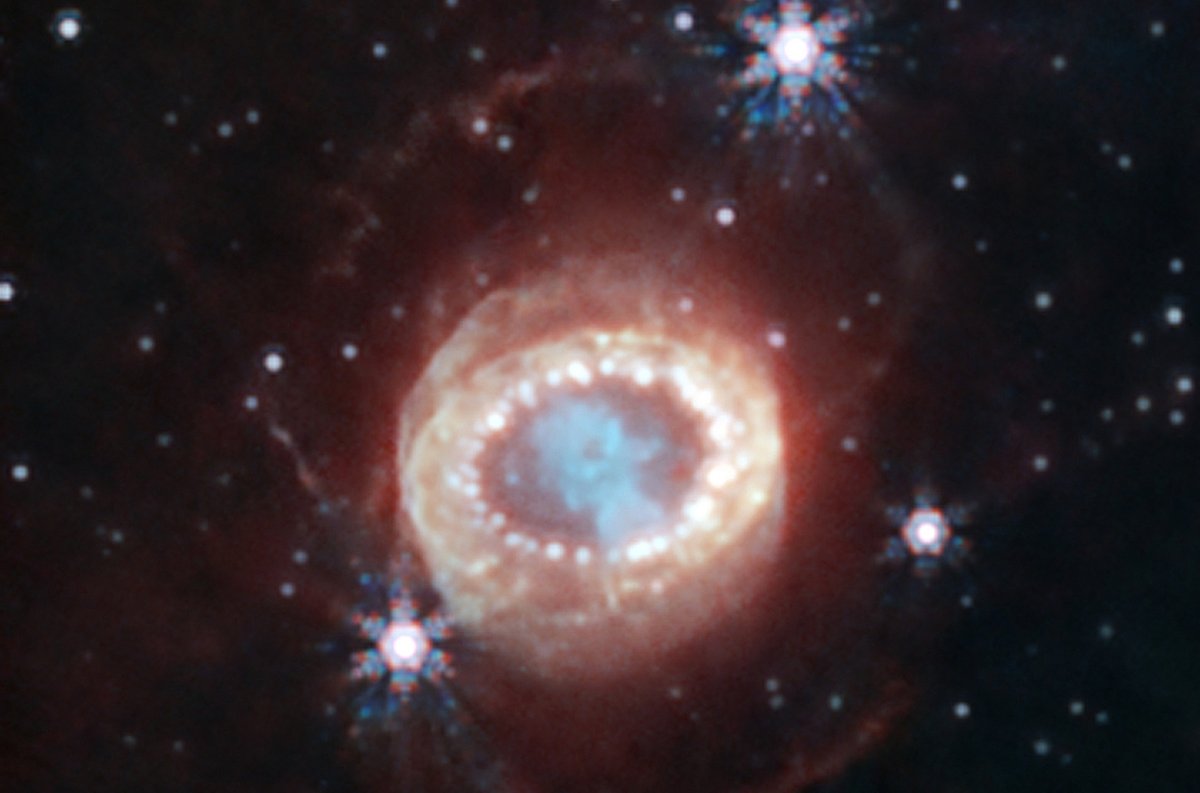
A missing ghost found, #NASA’s #JWST space telescope found fluorescing argon and sulfur gas at the center of #SN1987A’s expanding shell of debris, a sure sign of a hot #neutronstar within. Credit: NASA; ESA; CSA.
The #comet highlight of the year is yet to come. Here's how to find and observe C/2023 A3 Tsuchinshan-ATLAS in June
#CometTsuchinshanATLAS
https://t.co/pdA0PgjaAi
Spectacular #fireball over #Cáceres, observed in Spain and Portugal. The #meteorite came from a rock originated in a comet, entering the atmosphere at 161,000 km/h. at 00:46 on May 19.
Credit: ESA/PDO/AMS82 - AllSky7
#Galaxy#M63 it has 100 billion stars with a diameter of 60,000 light-years, located 35 million light-years from Earth, along the spiral arms, there are a number of glowing clumps like the Orion Nebula in our Galaxy (Subaru Telescope, National Astronomical Observatory of Japan).
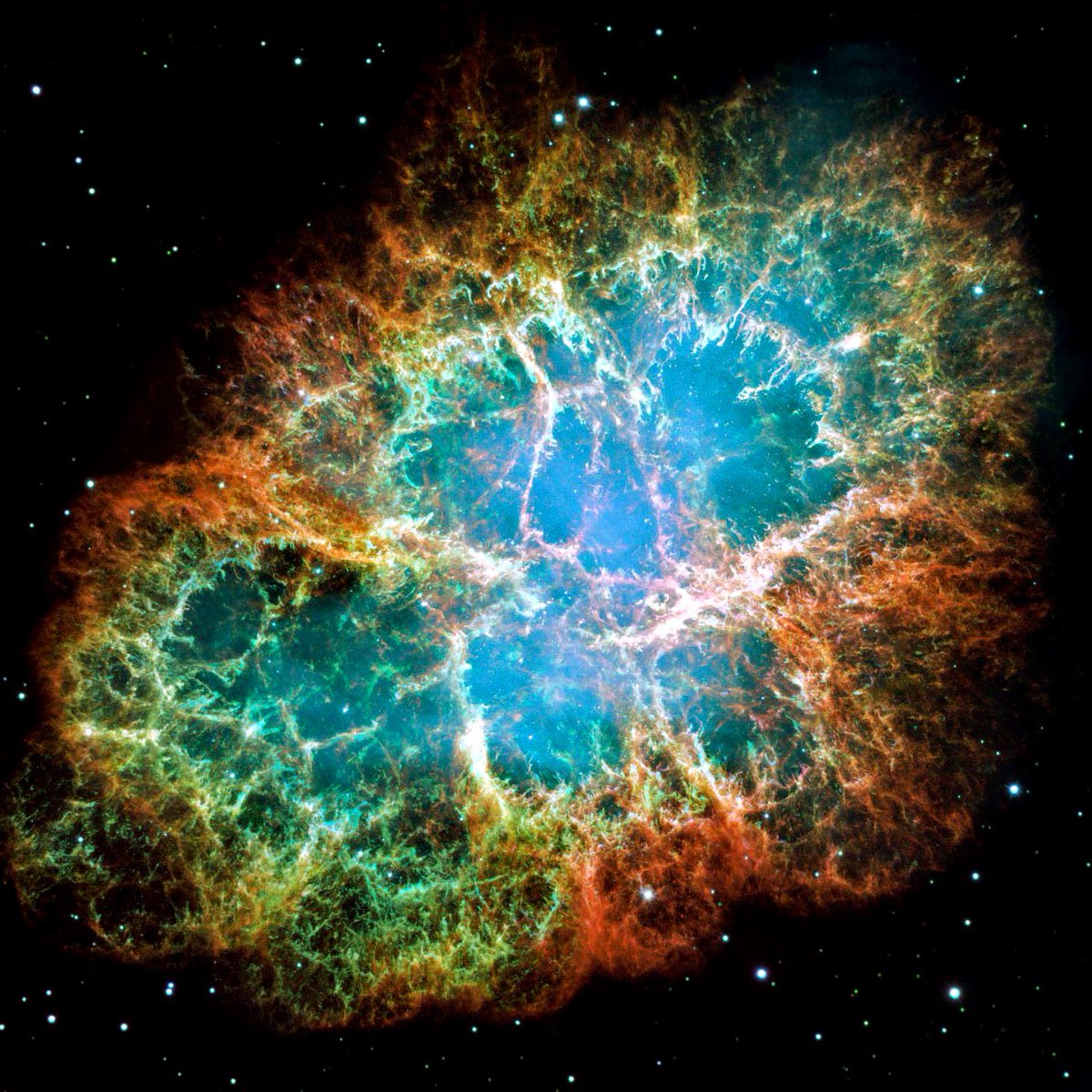
The #CrabNebula the remnants of an exploded #star from a #supernova, 1000 years after the explosion, the gases are still moving at 1800 km per second, it is is 6500 light-years from Earth and about 13 light-years across (NASA, ESA, J. Hester and A. Loll/Arizona State University)
The #OrionNebula, Birthplace of #stars, it is a stellar “nursery” where stars are formed out of the #nebula’s gas. The #Orion Nebula is about 1500 light-years from Earth and it is some 30 light-years across. (NASA, ESA, M. Robberto/STScI/ESA).
#Astronomy
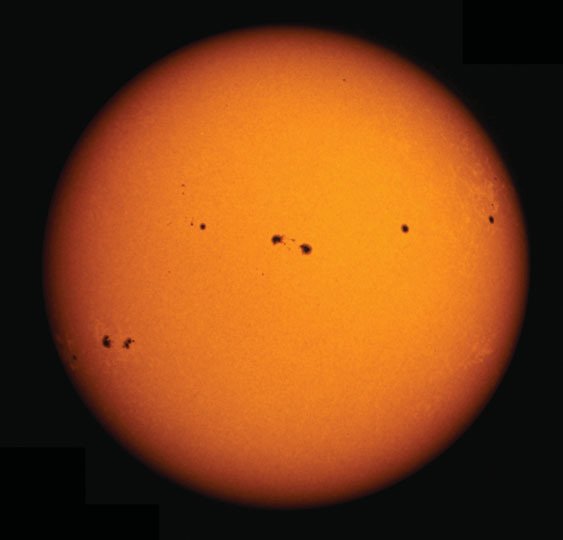
The #Sun is a typical #star. Its diameter is about 1.39 million kilometres with a surface temperature is about 5500°C at its core the temperature is about 15 million degrees Celsius. (NSO/AURA/NSF).
#Astronomy