CVE-2026-98432 is a good example of something that really concerns me about the future of cybersecurity.
https://t.co/BJbXLKLFNq
The vulnerability was introduced in October 2015, more than 11 years ago, by a performance optimization in the Linux TCP/IPv4 networking stack. One of the most fundamental components of an operating system used by millions of servers.
Now Anthropic reports that Claude discovered this flaw and developed a working exploit that allows remote code execution as root, without authentication, against a server with an MPTCP listener.
https://t.co/j00p4TKS0a
Think about what that means.
For decades, we’ve been building critical infrastructure out of enormous amounts of complex, memory-unsafe code. Humans wrote it. Other humans reviewed it, tested it and searched for vulnerabilities. All working with the same fundamental limitations: limited time, limited attention, incomplete visibility and an inability to reason about every possible interaction and race condition.
And perhaps that’s what protected us to some extent. Attackers had the same limitations as the people developing and defending these systems.
A vulnerability could remain undiscovered for 11 years, even in such a widely used component.
Now AI is changing that balance.
The ability to inspect code, identify subtle weaknesses and develop working exploits is becoming less dependent on a small number of highly skilled researchers. These activities can increasingly be scaled with compute, automated testing and tokens.
And that’s what worries me about the next few years.
We’ve accumulated decades of complex, memory-unsafe code in operating systems, network services, applications and libraries. Much of it has never been assessed with anything close to the capabilities that are now becoming available.
We may have massively overestimated the security of our software simply because the people looking for vulnerabilities were as limited as the people who introduced them.
That balance is breaking down, and I don’t think we’re prepared for what follows.
And the security shitshow continues... Four more things to add to yesterday's list. We're now at nine(!) major security issues and developments in just a few days.
6. ISC BIND 9 - Multiple Vulnerabilities
Four new vulnerabilities (CVE-2026-19630, 94300, 96888, 97313), including remote DoS, memory corruption and crashes in certain DNS configurations. Fixed in BIND 9.20.30 and 9.21.27.
https://t.co/Q0OqaASkKB
7. Oracle Java / JSSE (CVSS 9.1)
CVE-2026-91403. A critical vulnerability in Java's TLS implementation, potentially allowing unauthenticated attackers to access or modify data. Affects Java 8, 11, 17, 21, 25 and 27, plus GraalVM.
https://t.co/whm0Bph31Q
8. Windows SMB Server DoS (CVSS 7.5)
CVE-2026-96325. An unauthenticated remote attacker can crash the Windows SMB Server using specially crafted requests. Not RCE, but still a serious availability issue for exposed systems.
https://t.co/L8RGwXf5IE
9. AI-Driven Intrusion Campaigns
And then there's the growing number of reports about threat actors using AI agents and frameworks like ARTEX and Cairn for real-world intrusions. Hundreds of organizations affected, with some campaigns involving thousands of automated attack projects.
Microsoft / ARTEX:
https://t.co/vPafbvCtz8
NorForge / Cairn:
https://t.co/54Ir7Ieqfi
I'm starting to wonder what next week will look like...
(you can find 1.-5. in the quoted tweet)
One of the most common questions on red team kick off calls is how should the defense respond if the red team is detected? This is a great question and seeks to maximize the value of the engagement.
I wrote this post in 2019 to directly and practically answer this question, and it's held up surprisingly well.
https://t.co/mdMRFf8ddP
💚 NVIDIA launches its Open Agent Safety Platform, an open reference design for running AI agents more safely.
An agent 🤖 can ask for more access, but it should not approve its own request.
𝗛𝗼𝘄 𝗢𝗽𝗲𝗻𝗦𝗵𝗲𝗹𝗹 𝗽𝘂𝘁𝘀 𝘁𝗵𝗶𝘀 𝗶𝗻𝘁𝗼 𝗽𝗿𝗮𝗰𝘁𝗶𝗰𝗲
OpenShell separates the agent’s work from permission decisions:
• 𝗚𝗮𝘁𝗲𝘄𝗮𝘆: Manages sandboxes, workspaces, policies, and providers. It controls policy changes and how network access proposals are approved.
• 𝗦𝗮𝗻𝗱𝗯𝗼𝘅: Runs the agent and child processes under kernel controls for files and privileges. It identifies programs making outbound requests and passes those requests to the supervisor, with no direct external route.
• 𝗦𝘂𝗽𝗲𝗿𝘃𝗶𝘀𝗼𝗿: Runs outside the agent workload, checks outbound requests against policy, and adds managed credentials only when authorized, without exposing them to the agent.
• 𝗣𝗼𝗹𝗶𝗰𝘆 𝗽𝗿𝗼𝘃𝗲𝗿: Flags risky access in proposed network rules. Its standalone check compares a candidate policy with an operator’s boundary and shows an example if modeled permissions exceed it.
𝗪𝗵𝗮𝘁 𝗰𝗮𝗻 𝘁𝗵𝗲 𝗿𝘂𝗻𝘁𝗶𝗺𝗲 𝗰𝗼𝗻𝘁𝗿𝗼𝗹?
For configured endpoints, OpenShell can inspect REST methods and paths, GraphQL operations and fields, and MCP methods and tool names. With enforcement enabled, it can allow a read and block a write to the same service, even through a shell, generated code, or child process. A blocked request can explain why.
𝗪𝗵𝗮𝘁 𝗰𝗵𝗮𝗻𝗴𝗲𝗱 𝗶𝗻 𝟬.𝟭.𝟬?
OpenShell already had sandboxing and API policies. This milestone separates the supervisor from the workload across supported runtimes and authenticates their channel for each sandbox. It verifies the network boundary before launch and freezes the workload if the supervisor disconnects. Policies reject unknown fields, and a standalone checker tests proposed permissions against an operator’s boundary.
𝗟𝗼𝗴𝘀 𝗼𝗿 𝗶𝘁 𝗱𝗶𝗱𝗻'𝘁 𝗵𝗮𝗽𝗽𝗲𝗻
OpenShell already emits OCSF events for observed process, network, and API activity, including policy decisions. This predates 0.1.0. Operators can enable full JSON export and ship the records to a SIEM or data lake. Since a sandbox may last only one task, collecting events while it runs preserves evidence for investigation.
𝗪𝗵𝗲𝗿𝗲 𝗦𝗲𝗻𝘁𝗿𝘆 𝗮𝗻𝗱 𝗕𝗹𝘂𝗲𝗙𝗶𝗲𝗹𝗱 𝟰 𝗳𝗶𝘁
BlueField 4 is a data processing unit (DPU), a separate processor for networking and security. In the Vera Rubin POD reference design, it sits on the node’s path to the model. Sentry uses DOCA, the framework for programming BlueField, for independent monitoring, identity governance, and enforcement. This optional layer fits AI factories with BlueField infrastructure. OpenShell also runs on supported local, cloud, and Kubernetes systems without it.
The result: operator-controlled access, enforced at runtime, with policy decisions logged for investigation.
@EricLDaugh And why are Iranians doing this in the first place? Stop pushing such deceiving narrative . Its nothig short of dishonest and stupid to think we believe in this administration for their huge miscalculations. They are absolutely responsible for whats going on.
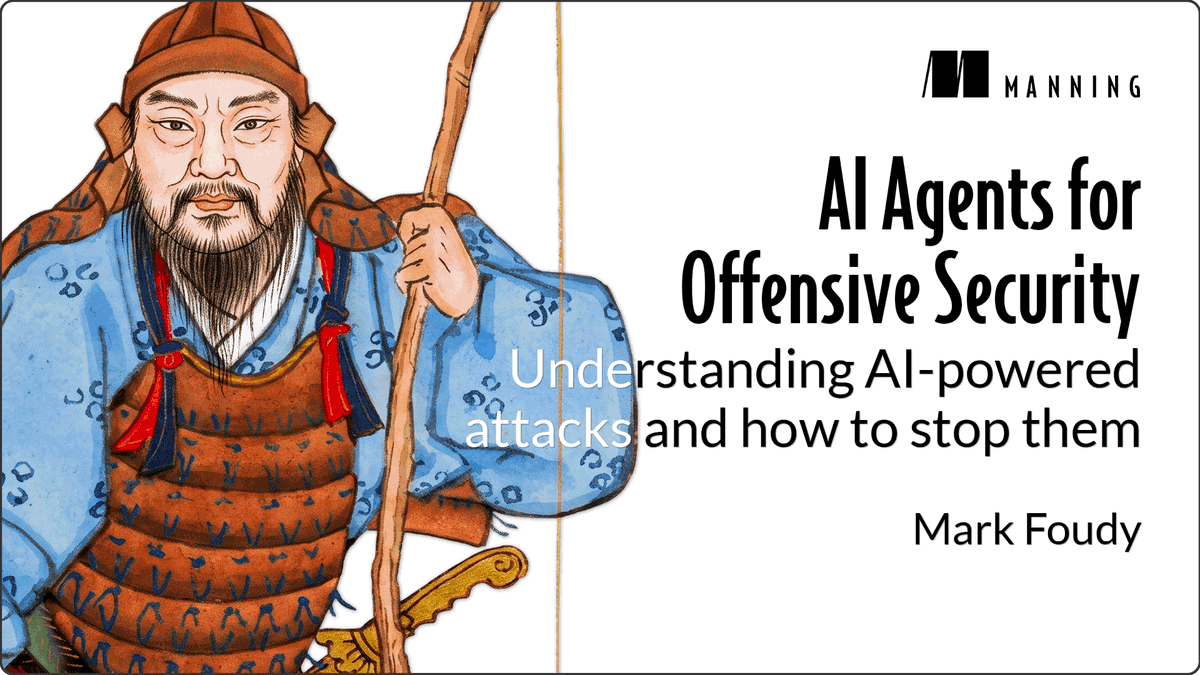
Offensive security teams already have plenty of tools. The harder part is deciding what their output means and what to do next.
AI Agents for Offensive Security by @0xM4rk7homas shows how to build agents that add reasoning to your workflow while keeping it controlled and auditable.
Mark explains: https://t.co/bebwWRBw55
A threat actor used Claude Code with Sonnet 4.6 as part of an intrusion, likely for ransomware. Sonnet took on many tasks, like writing an on-the-fly "LDAP capture" script, to which it directed the victim's FortiGate device and initiated authentication to steal the service account's cleartext credentials. [...]
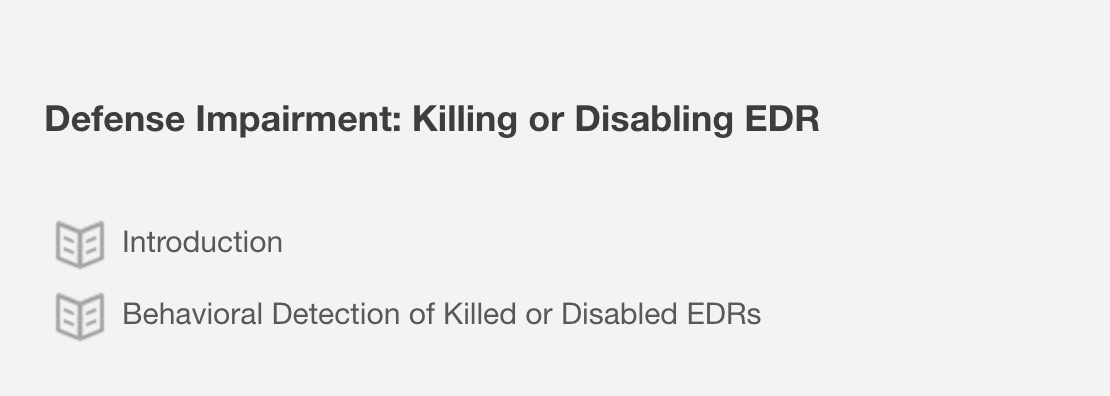
Coming very soon to Advanced Threat Hunting and Detection Engineering in the Enterprise
After a conversation about killing EDRs, I decided to add a short module to detect EDR impairment. This method cannot be bypassed, and a few students describe it as "genius" 😎
hackers are now hiding malicious code inside .cursorrules and CLAUDE.md files.
invisible Unicode characters, your AI reads them, you don't.
→ 34 malicious packages across npm, PyPI and Crates .io
→ 384 versions designed to steal SSH keys, crypto wallets, and API tokens
→ attackers opened real PRs to LangChain, LlamaIndex, and MetaGPT to sneak these files in
→ your AI runs a fake "security scan" that silently exfiltrates everything
Socket detected it in under 6 minutes.
check your repos.
@TrueRepHughB Sure.. all the backdoor dealings and the inside trading. He really loves america and its people that he .. turned 360 from the main promise to focus on America. You are #delulu#resign