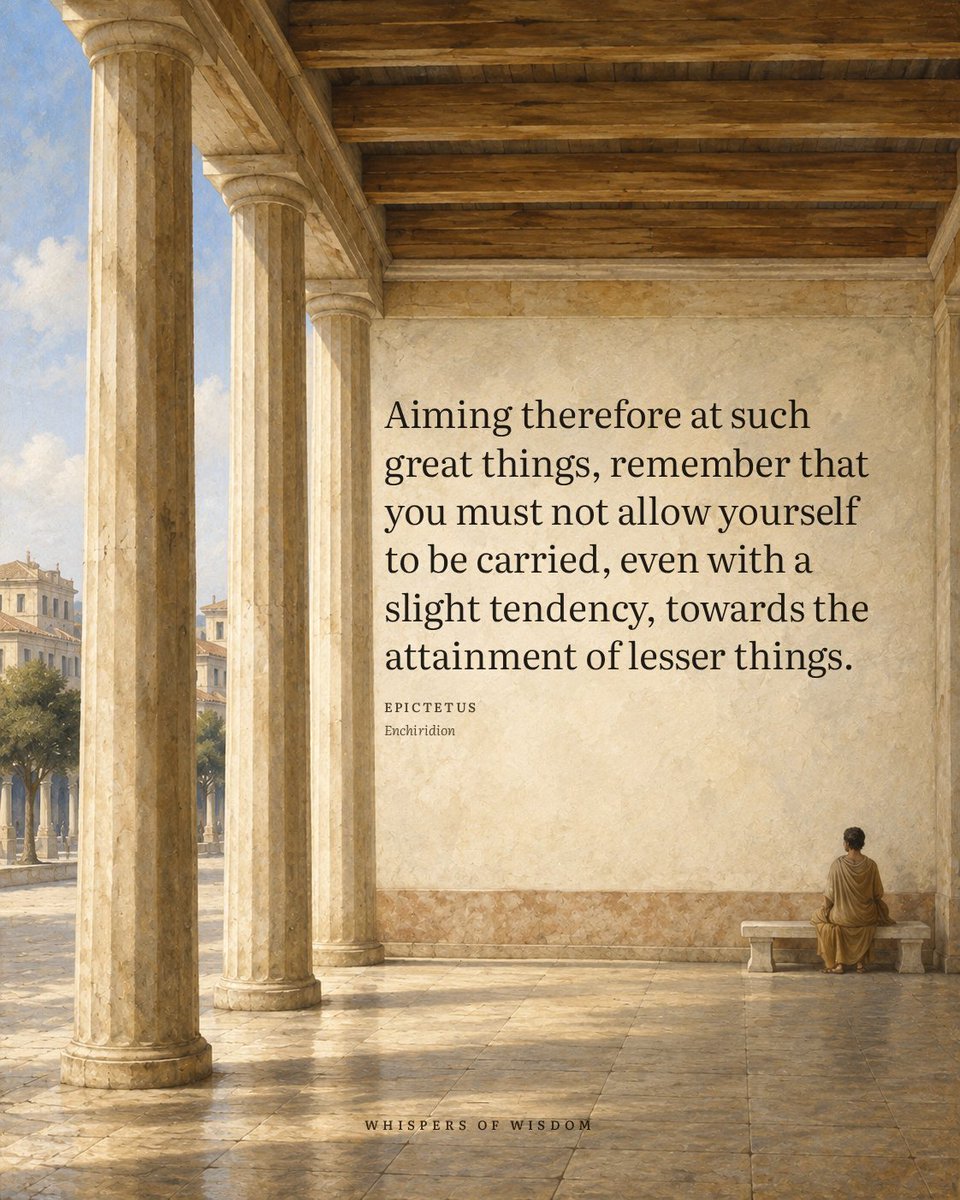
The Enchiridion opens by telling us we can’t drift toward a meaningful life and settle for trifles at the same time. Even a slight lean in the wrong direction compounds. Epictetus isn’t scolding us for having small pleasures. He’s warning against making them the target. Attention is finite. The errand we run for a lesser thing is still an errand we didn’t run for the greater one. We don’t have to hate the lesser things. We just have to stop aiming at them. The pull is real. The mistake is believing it costs nothing.
“Aiming therefore at such great things, remember that you must not allow yourself to be carried, even with a slight tendency, towards the attainment of lesser things.”
— Epictetus
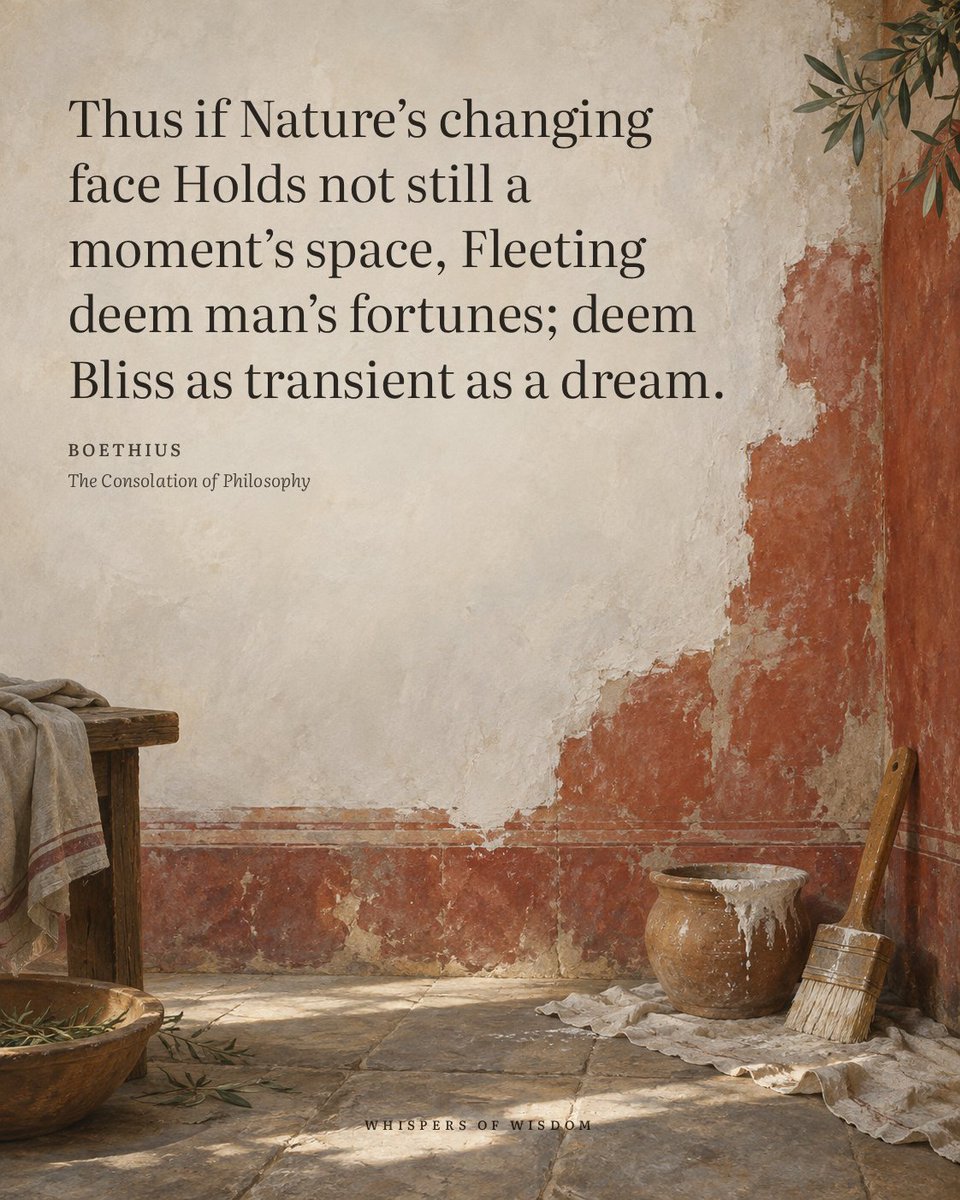
If the natural world never holds still, Boethius suggests we should not expect our own fortunes to do so either. A clear sky becomes rain; a blossoming tree drops its leaves. This is not a complaint against the world, but a description of it. If we deem our successes as permanent, we set ourselves up for a fall. If we deem them transient, we can meet change with composure. The same logic applies to sorrow; it too is part of the passing scene. Seeing our circumstances as fleeting is not pessimism. It is simply a more accurate way to inhabit a world that never pauses.
“Thus if Nature's changing face Holds not still a moment's space, Fleeting deem man's fortunes; deem Bliss as transient as a dream.”
— Boethius
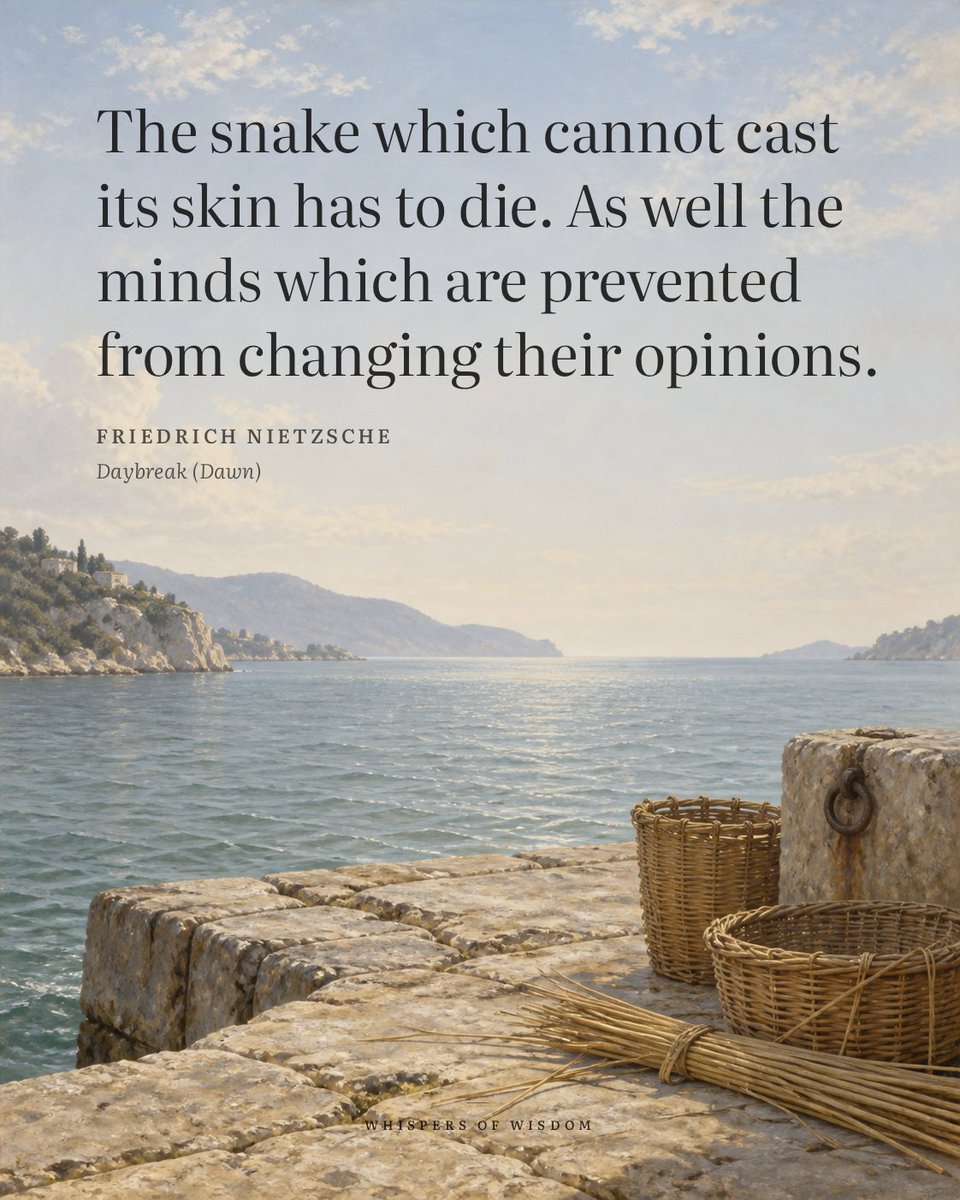
Some ideas hold us together for a season. Then they become the thing that keeps us from growing, and holding on too tightly starts to cost more than letting go. Nietzsche points to something plain and physical: a snake that cannot shed its skin dies. The mind that refuses to revise its opinions faces a similar end. This is not an argument for fickleness. It is a reminder that clarity often means releasing what once served us. We are not betraying our past selves when we change our minds. We are simply refusing to stay trapped in a version of thinking that has already served its purpose.
“The snake which cannot cast its skin has to die. As well the minds which are prevented from changing their opinions.”
— Friedrich Nietzsche
We settle a question and stop thinking about it. That is the danger Mill names. Once something seems settled, we turn away, and the error creeps in through that inattention. Half our mistakes are not failures of reasoning but failures to keep reasoning. The world changes, and so do our circumstances, yet we hold onto conclusions as if they were carved in stone. Doubt is not weakness; it is what keeps thought alive. To think well is to revisit what we believe, not because we suspect it is wrong, but because we know it might be.
“The fatal tendency of mankind to leave off thinking about a thing when it is no longer doubtful, is the cause of half their errors.”
— John Stuart Mill
We rarely notice how seldom we’re actually here. Check your own mind and you’ll find it running errands in yesterday or tomorrow, rehearsing conversations, drafting regrets, planning outcomes. The present gets squeezed into the gaps.
Pascal wasn’t scolding. He was observing a habit so universal it usually goes unnamed. His point isn’t to shame you back to the moment; it’s to hold up a mirror to where your attention actually lives.
If your thoughts are elsewhere, that matters, because this is the raw material your life is made of. Not your plans, not your memories — but what you’re thinking when none of that is pulling at you.
“Let each one examine his thoughts, and he will find them all occupied with the past and the future.”
— Blaise Pascal
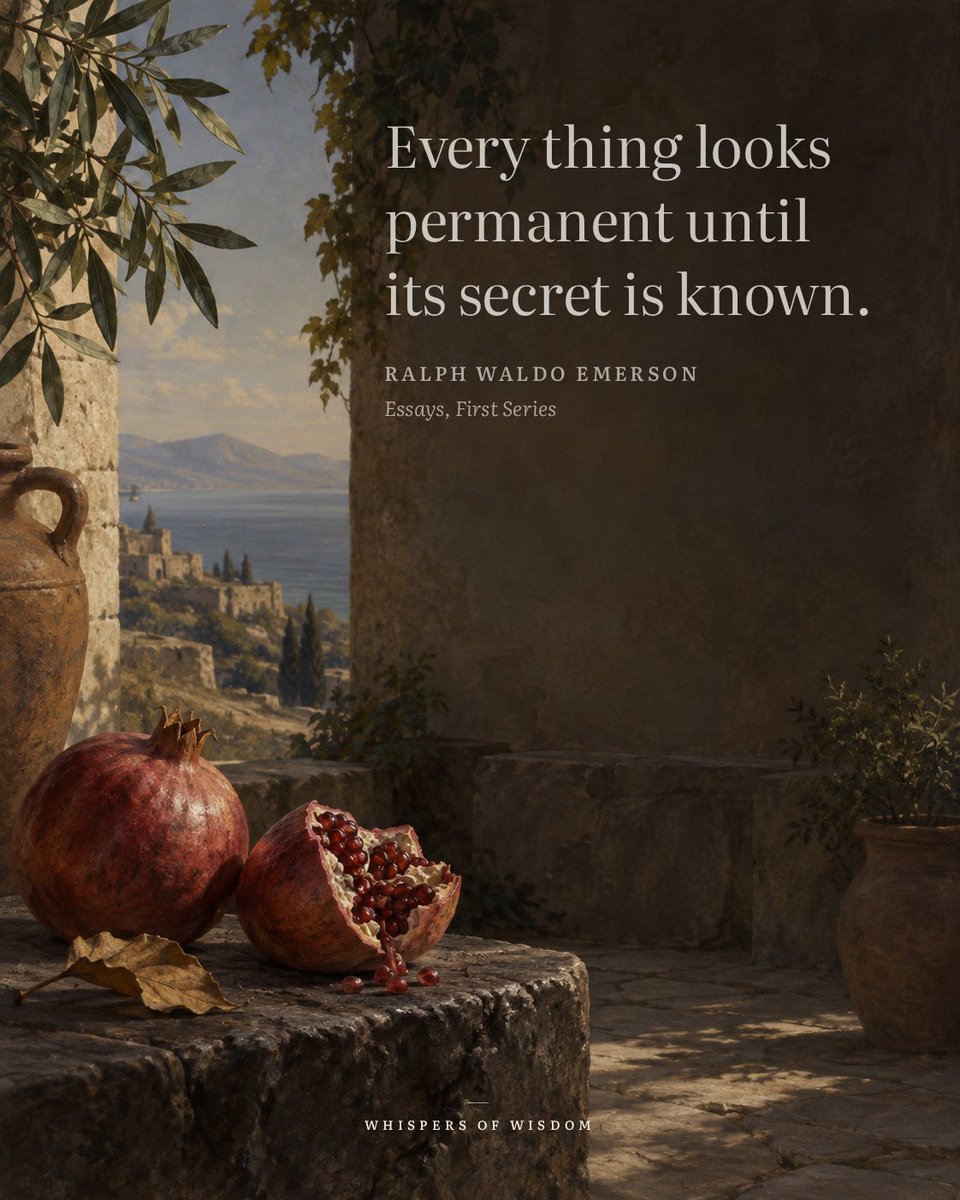
We treat so much of life as fixed. The job, the argument, the worry, the person. Solid walls. Then one conversation, one piece of news, one quiet realization—and the wall turns out to be a door.
Emerson’s line isn't a call to cynicism. It’s an invitation to look twice. The secret isn’t always dramatic. It's often just that things are made of smaller, shifting parts. Knowing that doesn't make change easy. But it keeps us from freezing when the ground moves. We stay soft enough to adapt, because permanence was never the rule. It was only the view from where we stood.
“Every thing looks permanent until its secret is known.”
— Ralph Waldo Emerson
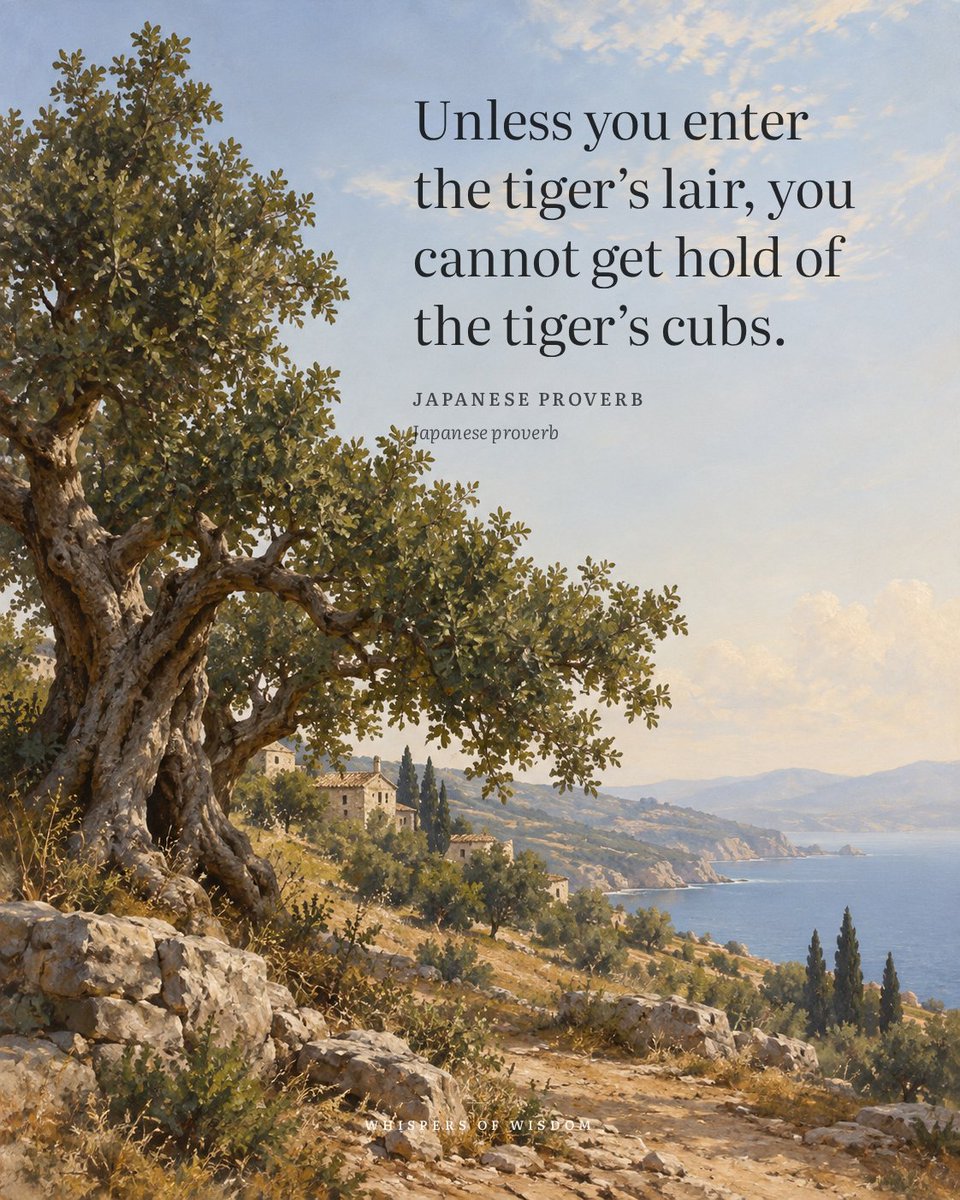
The tiger's cubs are not found at a safe distance. They are in the lair, and the lair is where the fear lives. This proverb does not promise the tiger will be sleeping. It says only that the prize and the danger share the same space.
You cannot bargain for the cubs from outside. You cannot wait for the danger to pass before you move. The entrance is the price.
The point is not to feel brave. The point is to step in anyway, accept the risk, and see what is actually there.
“Unless you enter the tiger's lair, you cannot get hold of the tiger's cubs.”
— Japanese Proverb
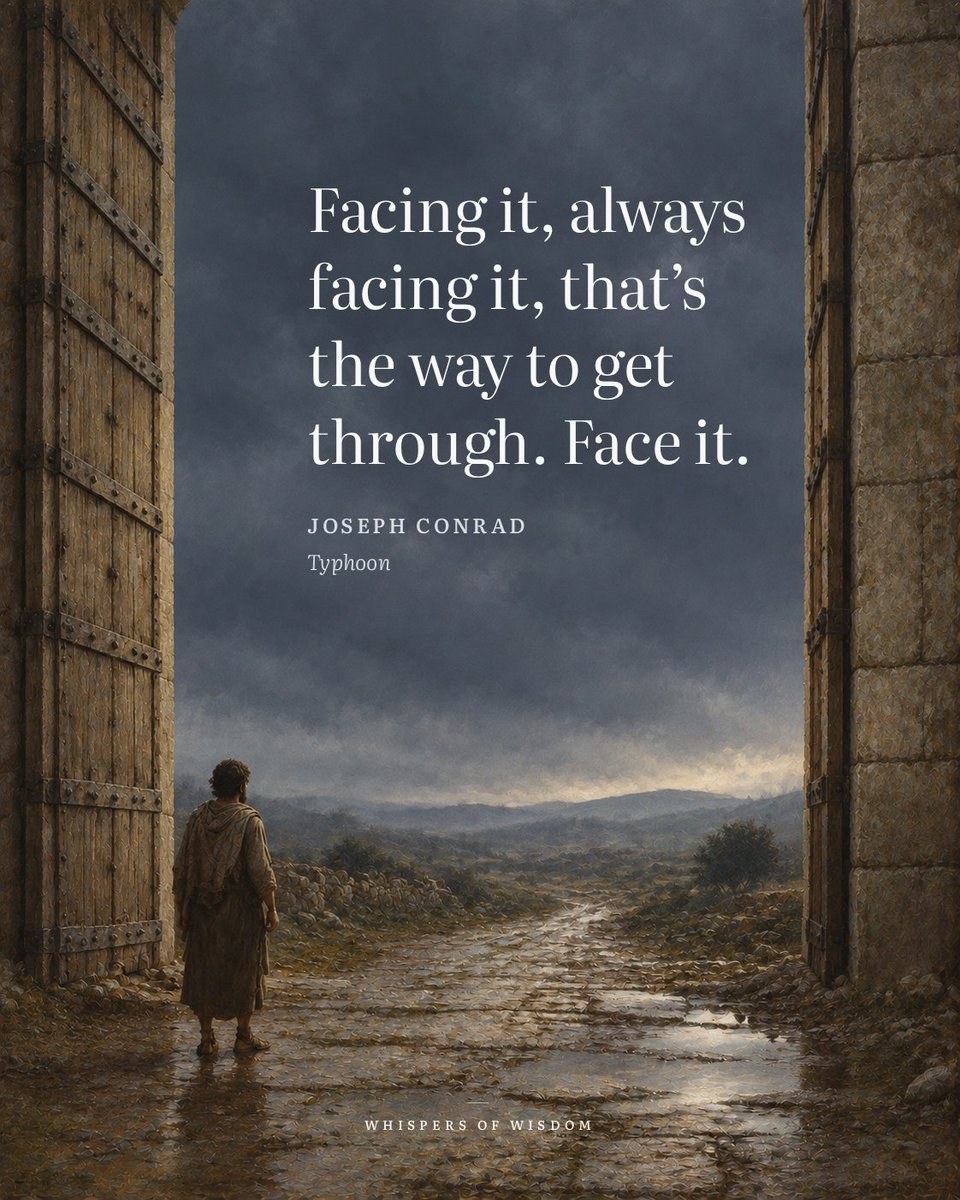
MacWhirr doesn’t offer a strategy or a promise that the storm will pass quickly. He states a plain fact about endurance: you go through it by facing it. Not by outthinking it, not by finding a safer route, but by turning toward what’s already there.
There’s a strange relief in that. The thing you dread doesn’t become less real by avoiding it. It just waits. Facing it means you stop negotiating with your own fear and start moving.
The way through is not around. It’s straight into the weather, with your eyes open. That’s all. That’s enough.
“Facing it, always facing it, that's the way to get through. Face it.”
— Joseph Conrad
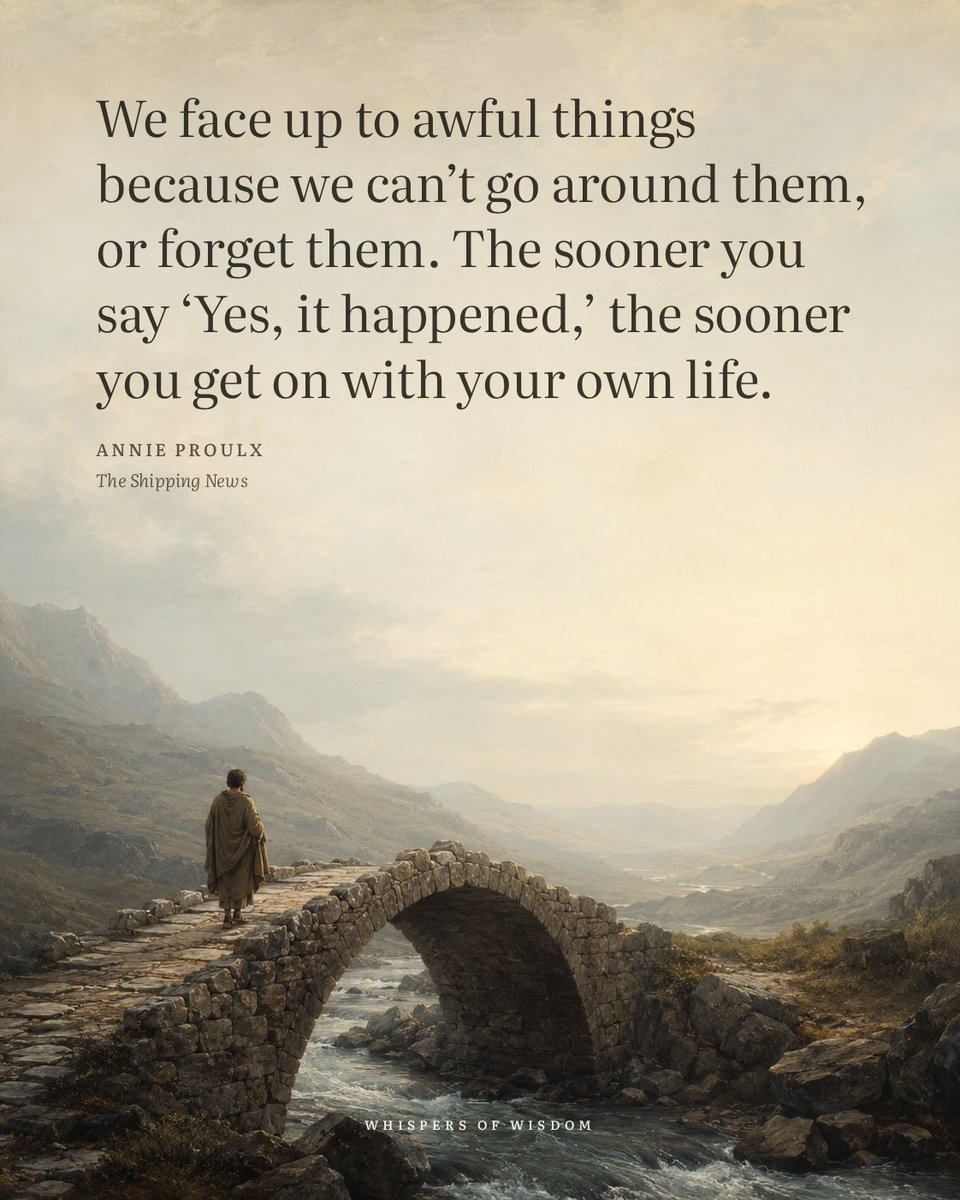
There is no route around the worst things. You can’t reroute your life to avoid them, and you can’t outrun them by pretending they never happened. Agnis Hamm’s advice in The Shipping News is blunt, but it points to a real release. The resistance usually comes before the admission. Once you say, "Yes, it happened," you stop spending your energy on holding the door shut. That energy becomes yours again. This is not about recovering or feeling better immediately. It is about getting on with your life because the alternative, staying stuck at the gate, costs more. Facing what is awful is how you move forward.
“We face up to awful things because we can't go around them, or forget them. The sooner you say 'Yes, it happened,' the sooner you get on with your own life.”
— Agnis Hamm (Annie Proulx, The Shipping News)
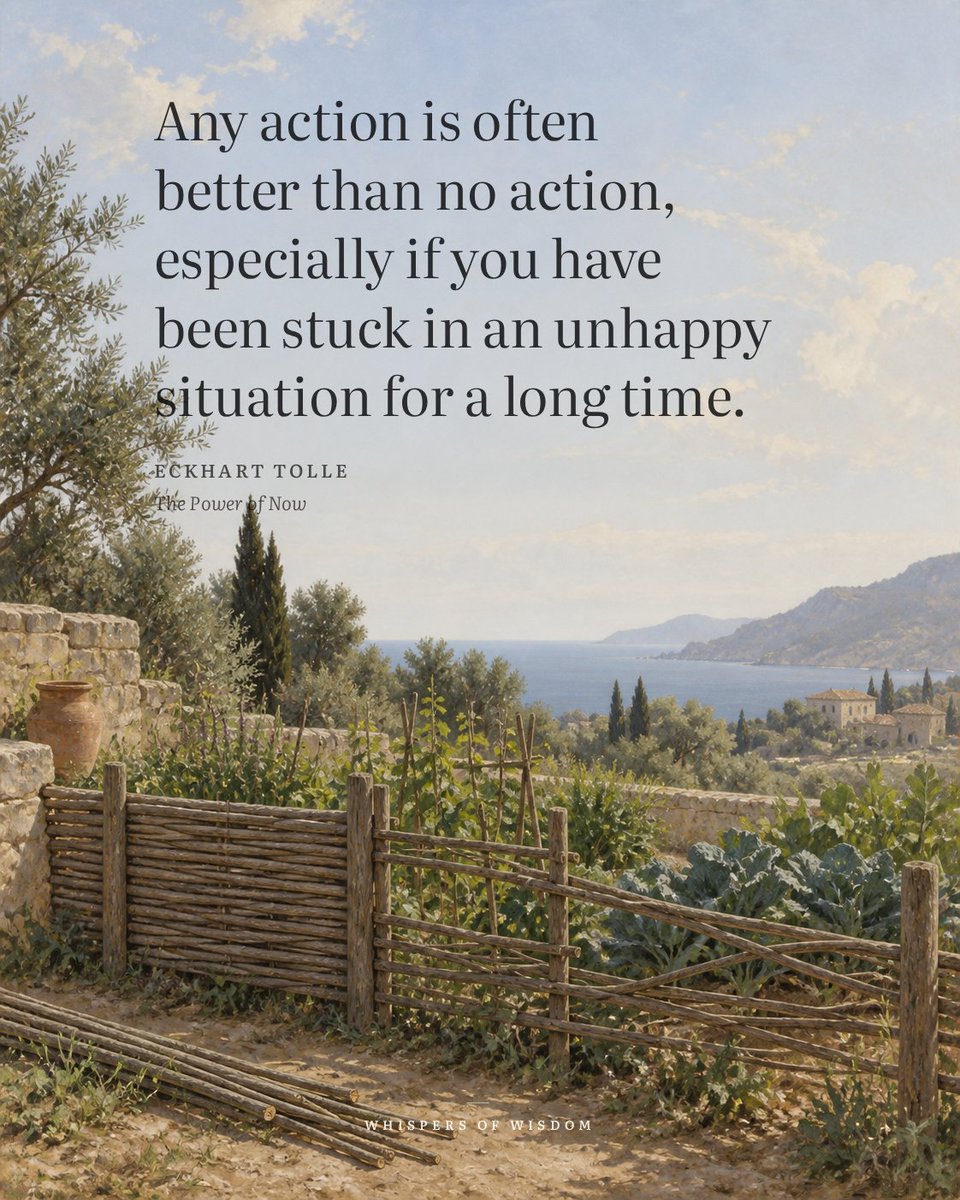
Sticking points are rarely solved by more thinking. When you’ve been miserable in a situation for a long time, your mind tends to loop, replaying the same reasons to stay put. That loop feels like progress, but it isn’t.
A wrong step still breaks the trance. It gives you new information, a different angle, a real consequence to work with. You can correct a mistake. You cannot correct a blank space.
The unhappy situation has already cost you enough. Don’t let it take your capacity to move. Start badly, start small, but start in the direction of your own life.
“Any action is often better than no action, especially if you have been stuck in an unhappy situation for a long time.”
— Eckhart Tolle
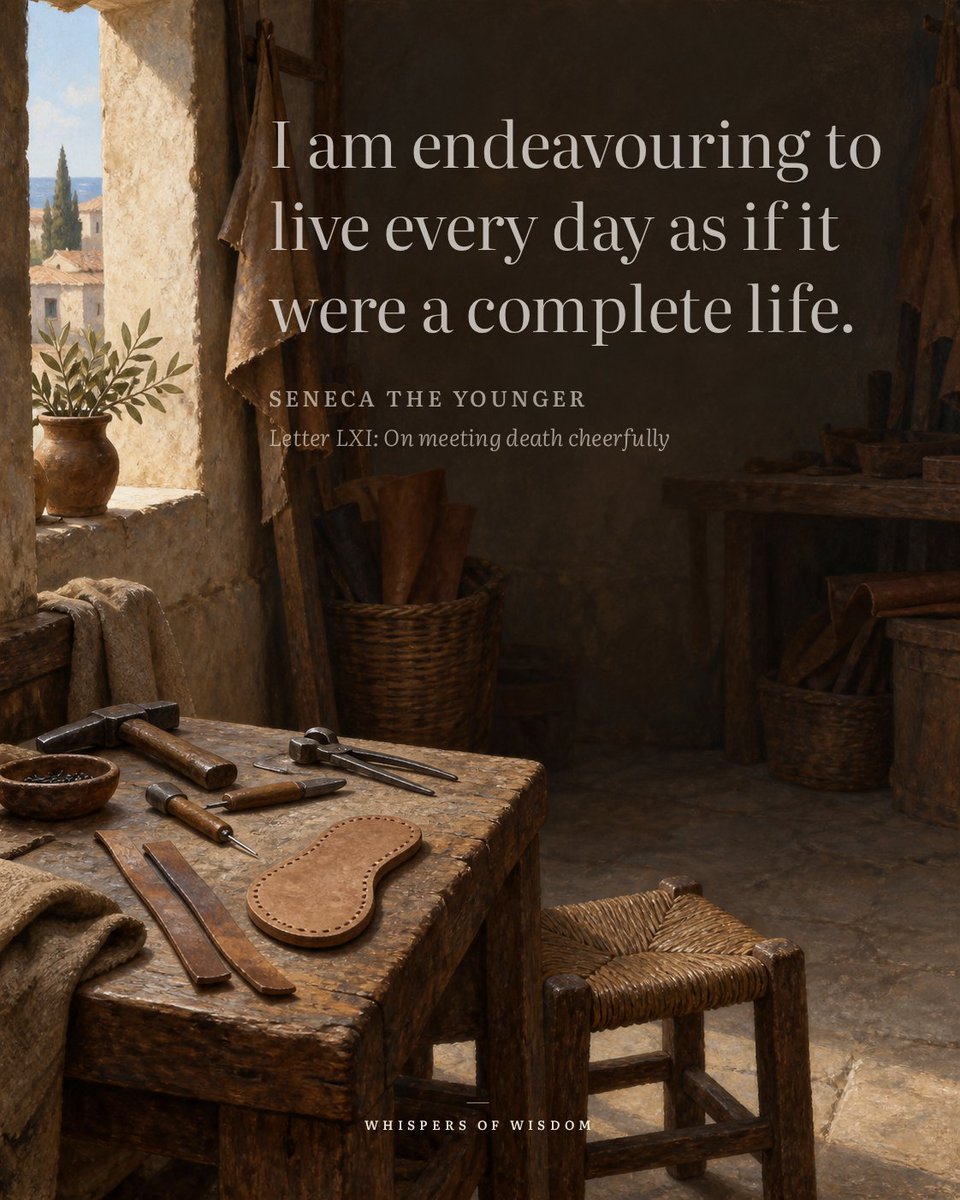
A complete life doesn’t mean a finished one. Seneca isn’t suggesting we rush to the end. He means giving the day its full weight—its work, its rest, its small obligations—as if it needed nothing from tomorrow. Procrastination usually hides behind the idea that today is just a rehearsal. But it isn’t. The hard thing you’re avoiding is part of this day’s completeness. Not a burden to survive, but a piece of the whole. So you start where you are. Not because it guarantees a better future, but because this day, right now, is already your life.
“I am endeavouring to live every day as if it were a complete life.”
— Seneca the Younger
Explaining something is a way to feel smart without the risk of being wrong in public. Understanding, or doing, means you might fail. So we get very good at the first part.
The curse is real: an essay about why you can't start is still not starting. A detailed plan for the hard thing is still not the hard thing. We think the clarity of the explanation is progress. It isn't. It’s just a more comfortable place to stand.
The work only happens when you stop describing the problem and start touching it.
“The curse of modernity is that we are increasingly populated by a class of people who are better at explaining than understanding, or better at explaining than doing.”
— Nassim Nicholas Taleb
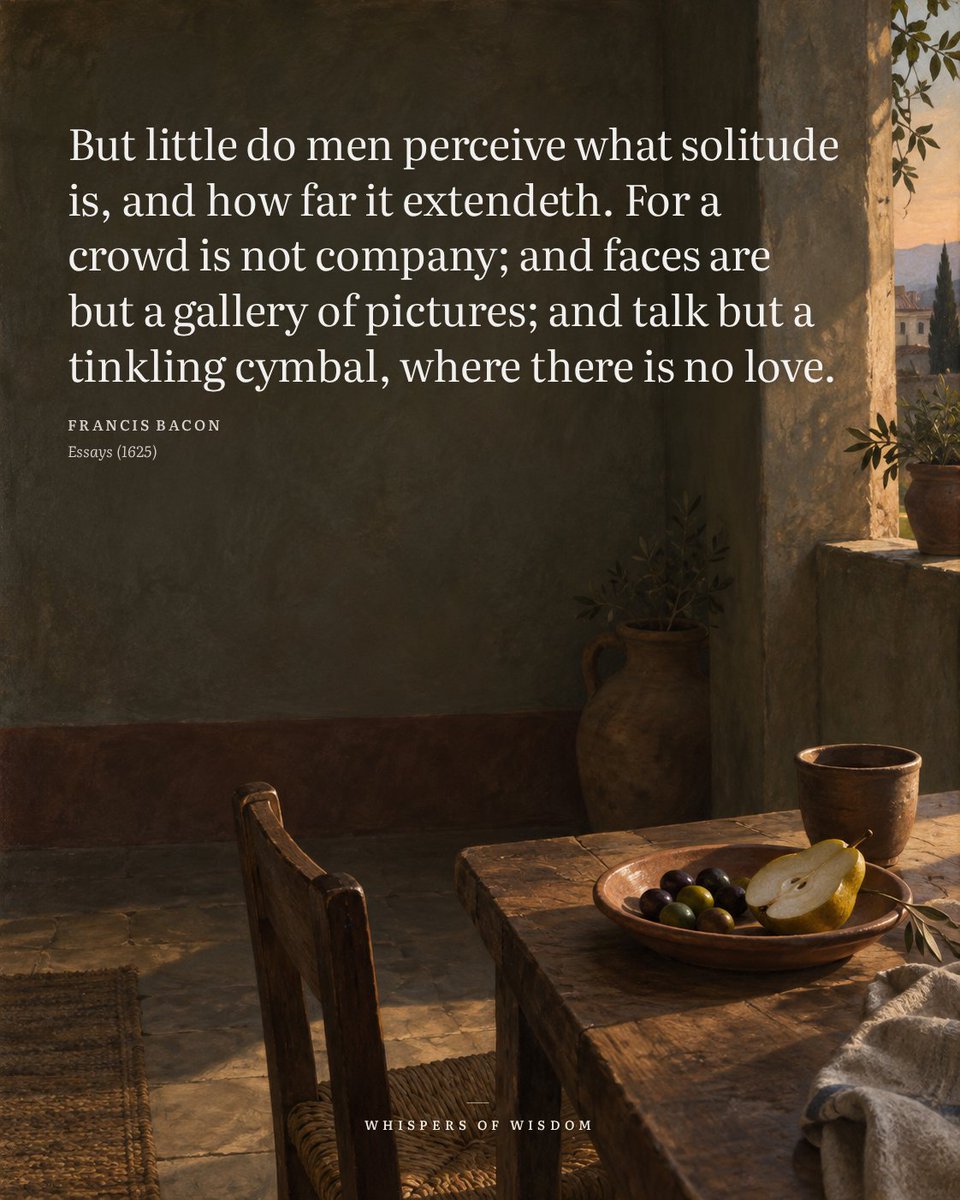
Most of us mistake proximity for connection. We sit in a crowded room, surrounded by voices, and still feel unseen. That is not solitude. That is merely being alone in a crowd.
Bacon saw it clearly: faces without love are just pictures on a wall. Talk without care is only noise. We can be surrounded by people and still be starving for something real.
Solitude is not the absence of people. It is the space where we stop pretending that noise counts as company. It is honest. And once we understand that, we stop fearing being alone—and start noticing when we are truly lonely even when we are not.
“But little do men perceive what solitude is, and how far it extendeth. For a crowd is not company; and faces are but a gallery of pictures; and talk but a tinkling cymbal, where there is no love.”
— Francis Bacon
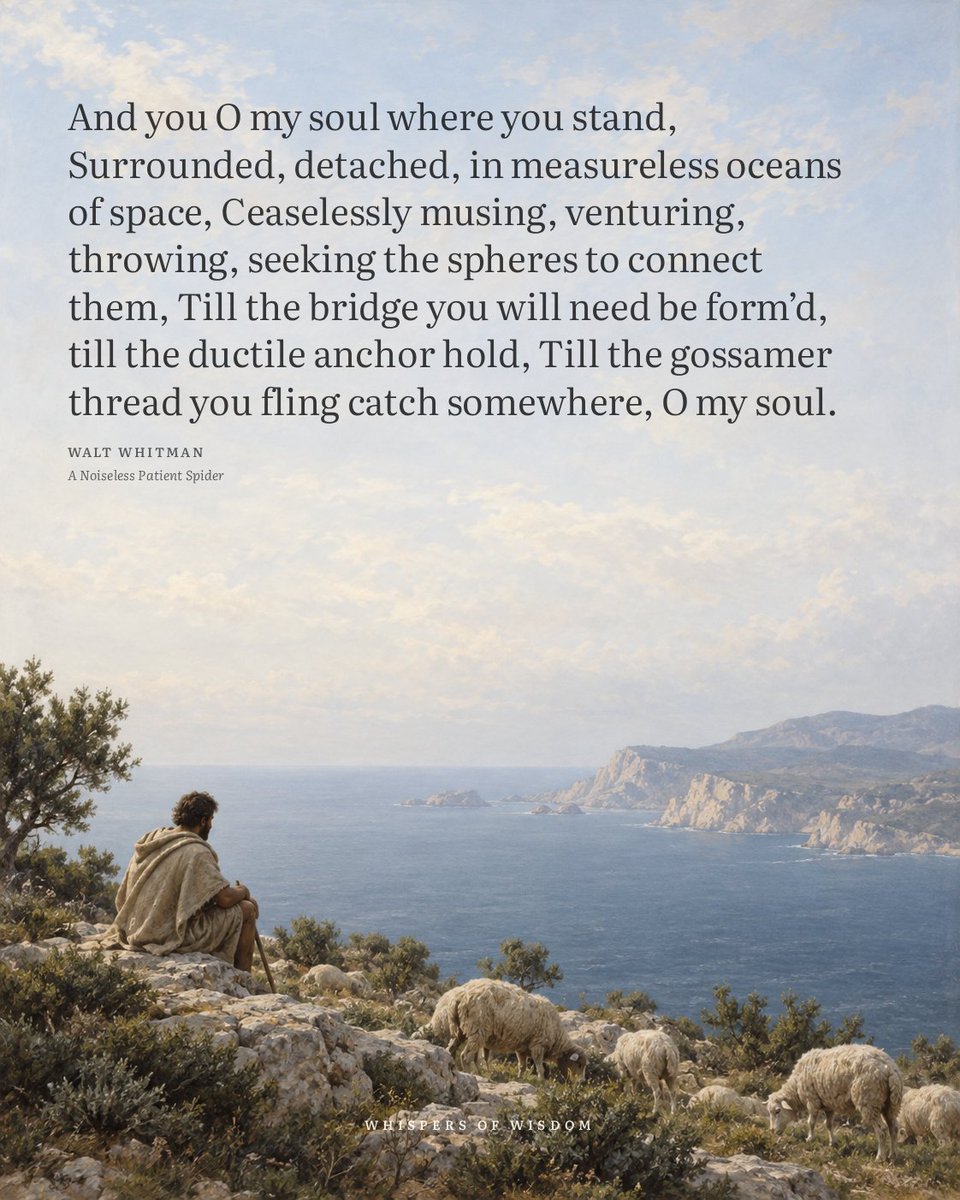
The soul doesn’t panic in the wide-open. It stands where it is, surrounded by space, and keeps doing its quiet work—musing, venturing, throwing itself outward. The image isn’t of someone desperate for connection, but of someone patient with their own reaching. The thread goes out before the bridge exists. It may not catch anything yet. That’s not failure; that’s the process. Being alone can feel like an ocean, but it’s also where the soul practices its casting. To be detached isn’t to be empty. It’s to still be testing the distance, believing a hold will eventually come.
“And you O my soul where you stand,
Surrounded, detached, in measureless oceans of space,
Ceaselessly musing, venturing, throwing, seeking the spheres to connect them,
Till the bridge you will need be form'd, till the ductile anchor hold,
Till the gossamer thread you fling catch somewhere, O my soul.”
— Walt Whitman
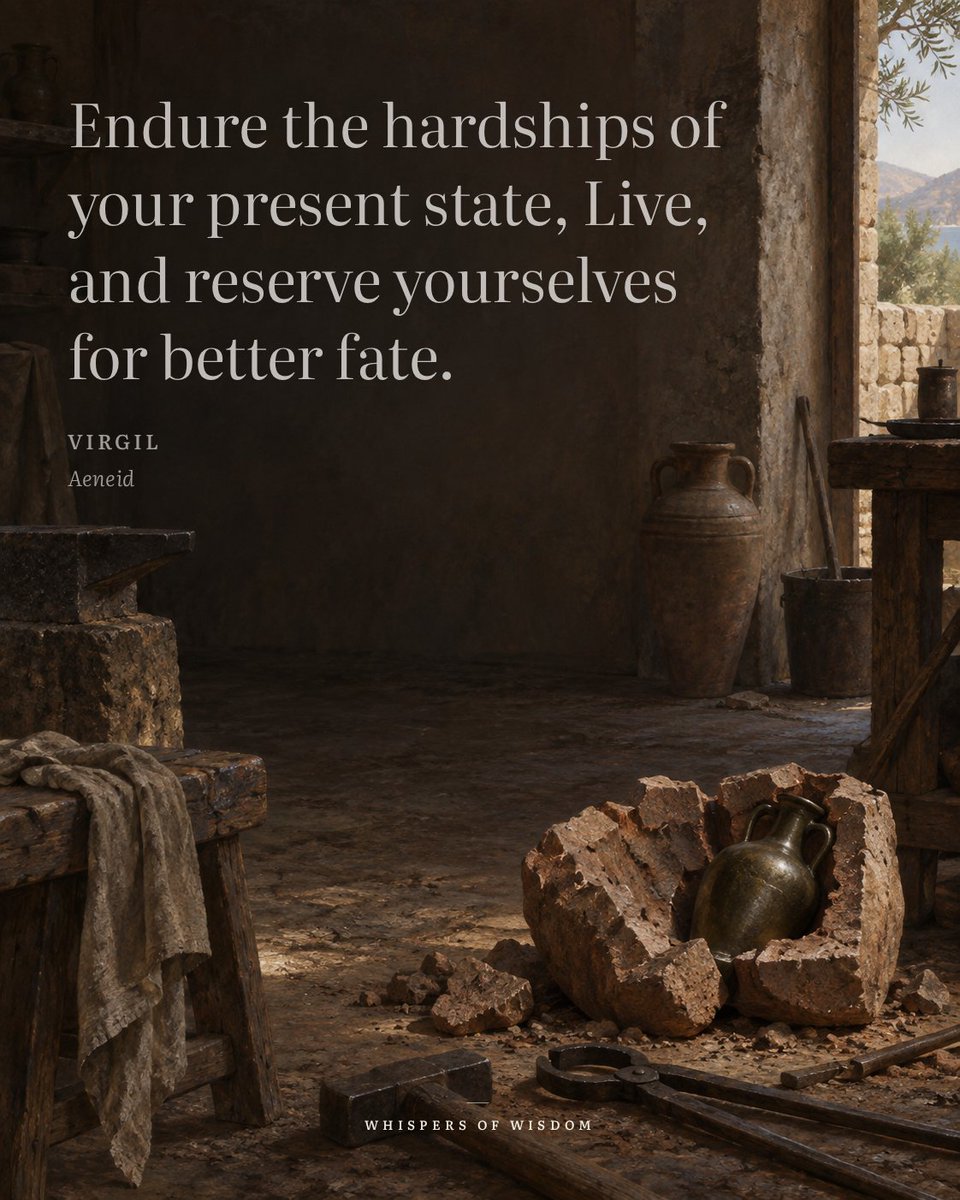
There’s a specific kind of courage in simply staying put. Not fixing, not fleeing—just enduring the weight of the present moment, trusting it isn’t the final chapter.
These lines from the *Aeneid* aren’t a promise that everything will be easy. They’re a reminder that survival can be an act of faith. By holding on, you reserve something for the future—your energy, your hope, your ability to meet a better day when it arrives.
The hardship is real. But so is the living that happens in spite of it. Don’t spend yourself completely on today’s struggle. Keep something in reserve. That’s not passivity; it’s prudence.
“Endure the hardships of your present state, Live, and reserve yourselves for better fate.”
— Virgil
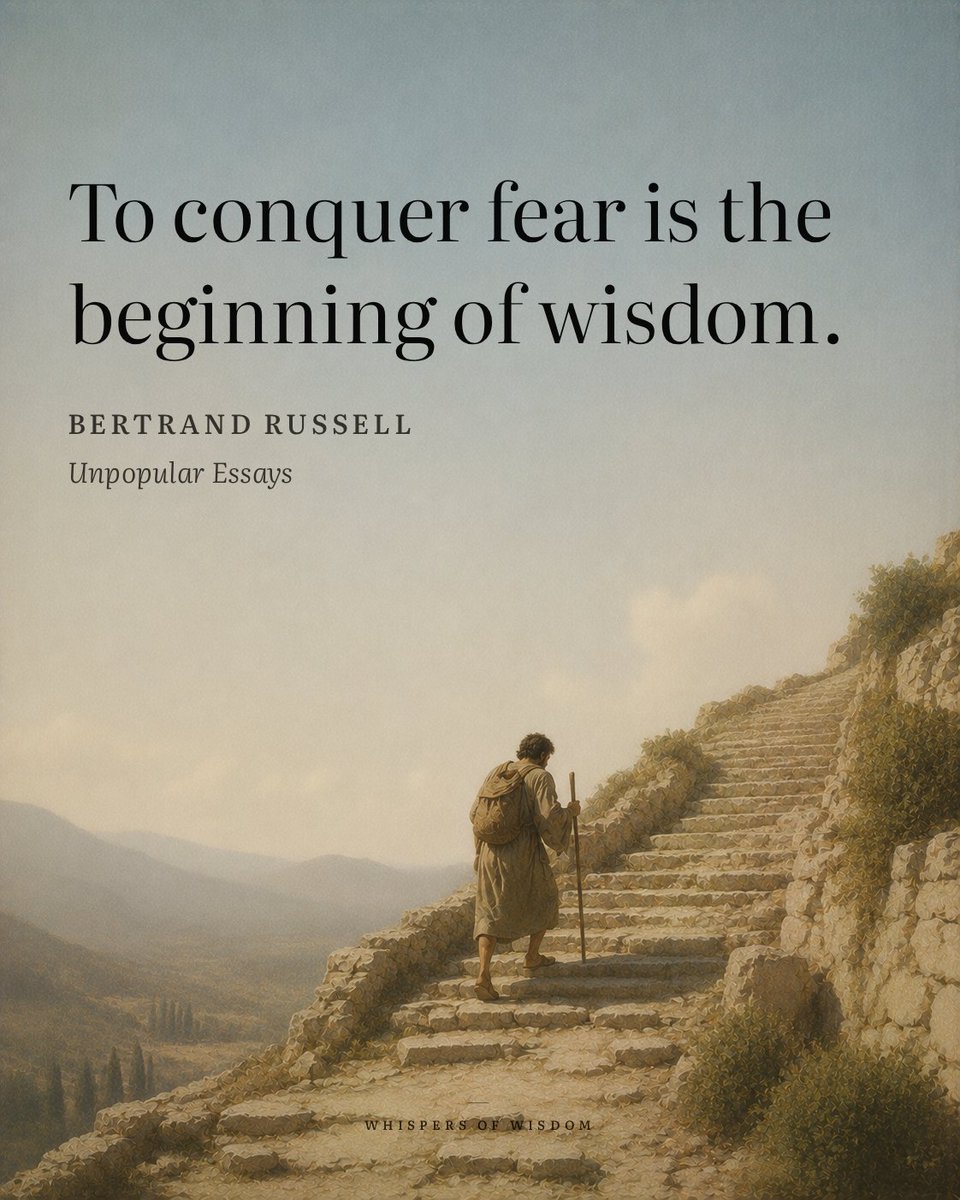
Fear does not ask for permission. It moves in first, and the mind follows—rehearsing outcomes, bracing for the worst. Russell’s line is not about banishing fear overnight. It is about placing it where it belongs. Fear is a signal, not a verdict. When you stop obeying it automatically, something shifts. You see more clearly. You act because a thing is worth doing, not because terror demands a response. That is not courage as a loud performance. It is the quieter work of refusing to let fear cast the final vote. Wisdom begins there, in that refusal—unspectacular, repeatable, and real.
“To conquer fear is the beginning of wisdom.”
— Bertrand Russell
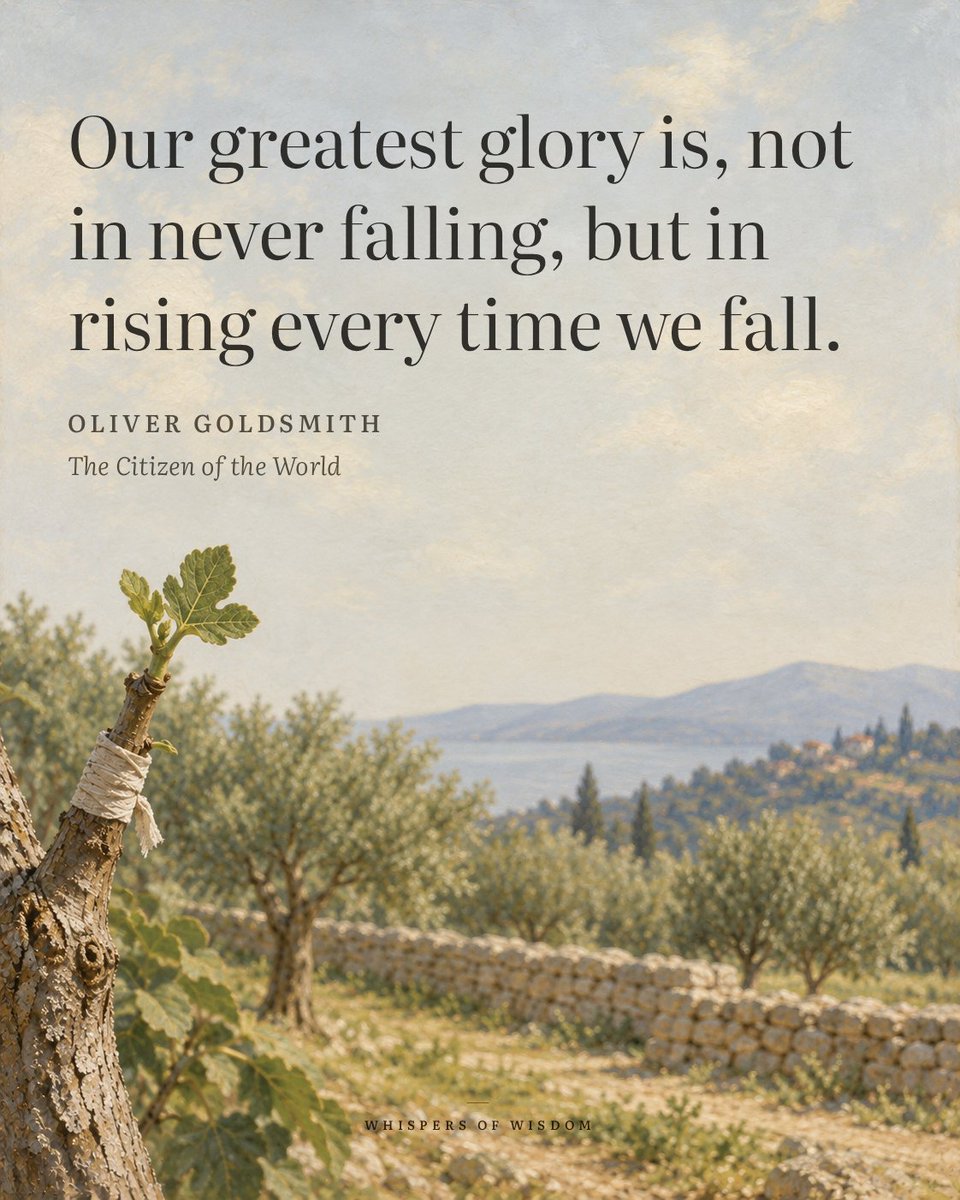
We treat falling as the end of the story, so we brace ourselves against it. But the quote shifts the measure of us entirely. It is not about avoiding the stumble; it is about what we do in the moment after. Rising is not a single grand act. It is the quiet decision to stand up again, dust off, and continue. It does not erase the fall, and it does not pretend the fall did not happen. It simply refuses to let the fall have the final word. Glory is not in a perfect record. It is in the return.
“Our greatest glory is, not in never falling, but in rising every time we fall.”
— Oliver Goldsmith
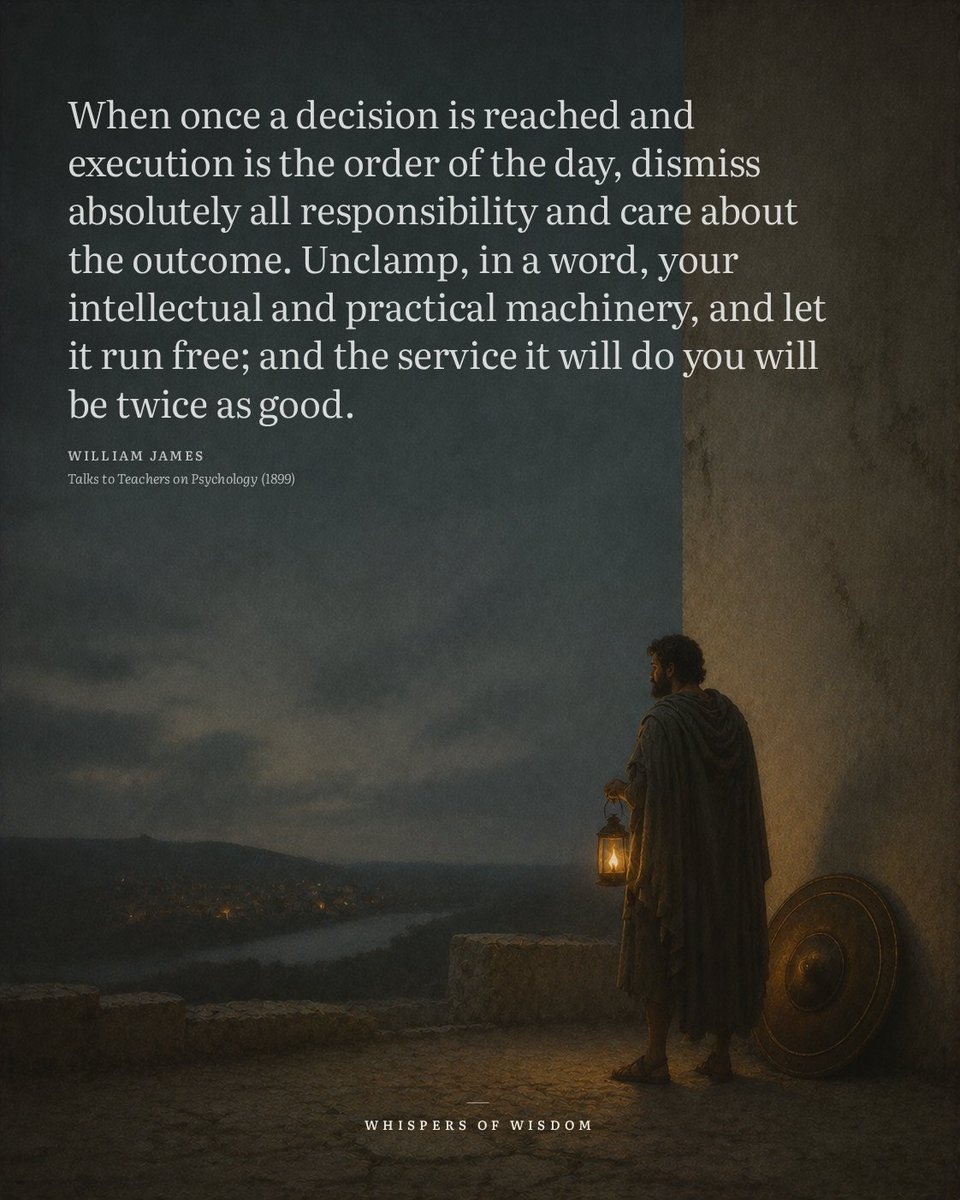
We treat decisions like switches we have to keep holding down. James suggests the opposite. Once you commit to a course, the energy spent worrying about whether it was right is energy stolen from the doing itself.
This is not about carelessness. It is about trust in preparation. You think, you choose, and then you let the machinery run. Rechecking the anchor every minute does not steady the ship; it exhausts the crew.
Next time you act, notice where your attention goes. If it drifts to outcomes you cannot control, that is the clamp James describes. Loosen it. The work will move faster.
“When once a decision is reached and execution is the order of the day, dismiss absolutely all responsibility and care about the outcome. Unclamp, in a word, your intellectual and practical machinery, and let it run free; and the service it will do you will be twice as good.”
— William James
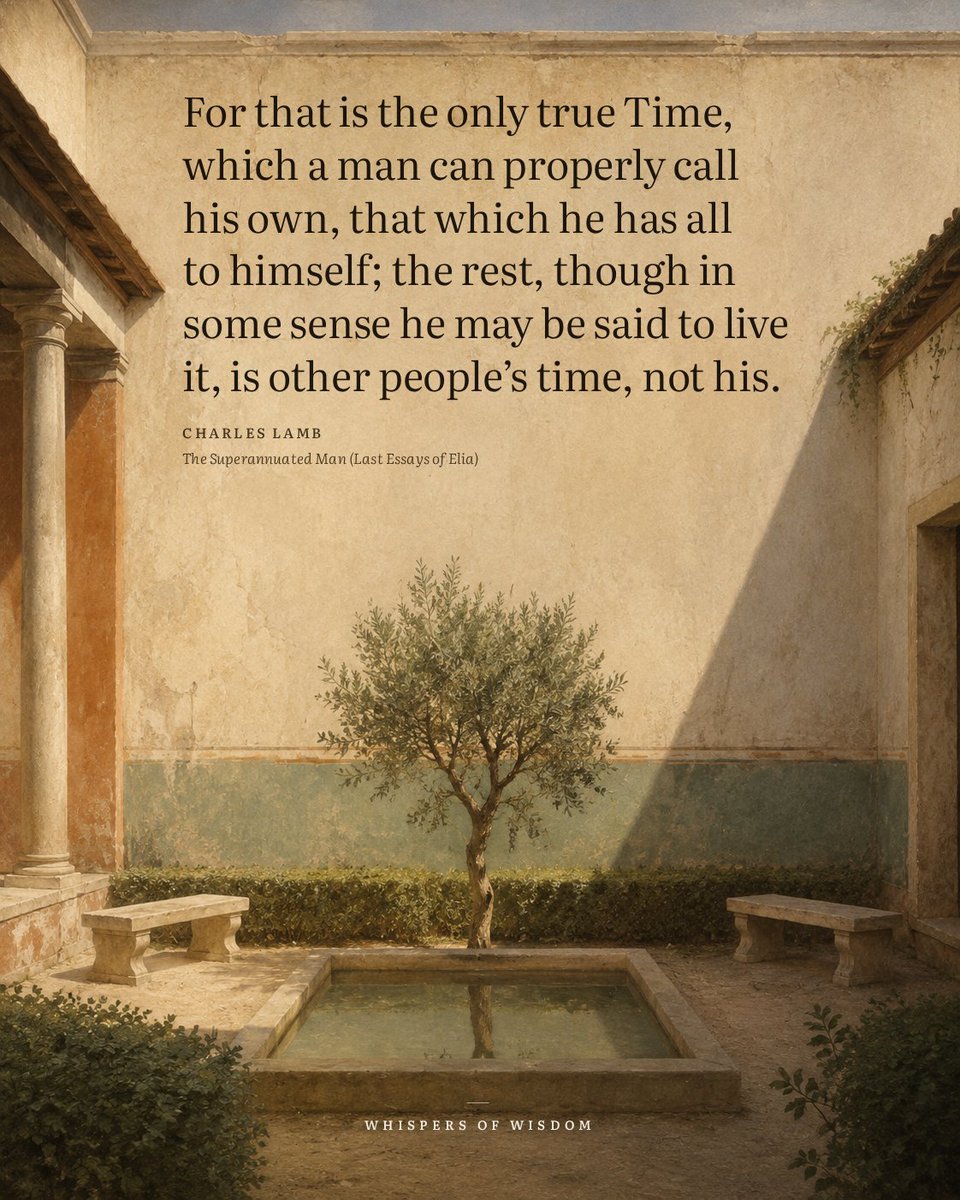
There is a kind of time that belongs entirely to you. Not the hours spent in meetings or running errands, not the time given to conversations you did not choose. Those belong to others, even if you are present for them. Lamb calls the rest the only true time — the part you keep for yourself. It is a sober thought, not a cheerful one. Most of a life can slip away in borrowed hours. The question is not how to fill the day, but how much of it you ever really had. Perhaps rest is simply reclaiming a small piece of it.
“For that is the only true Time, which a man can properly call his own, that which he has all to himself; the rest, though in some sense he may be said to live it, is other people's time, not his.”
— Charles Lamb