Before paying for a campaign, rehearse it.
MarketMirror lets you test ads, prices and pitches with AI-simulated buyers, inspect objections and plan a real customer test.
Open source, self-hosted, built for AI agents.
https://t.co/55kIOcBxRl
A visual diff is more useful when you know its inputs.
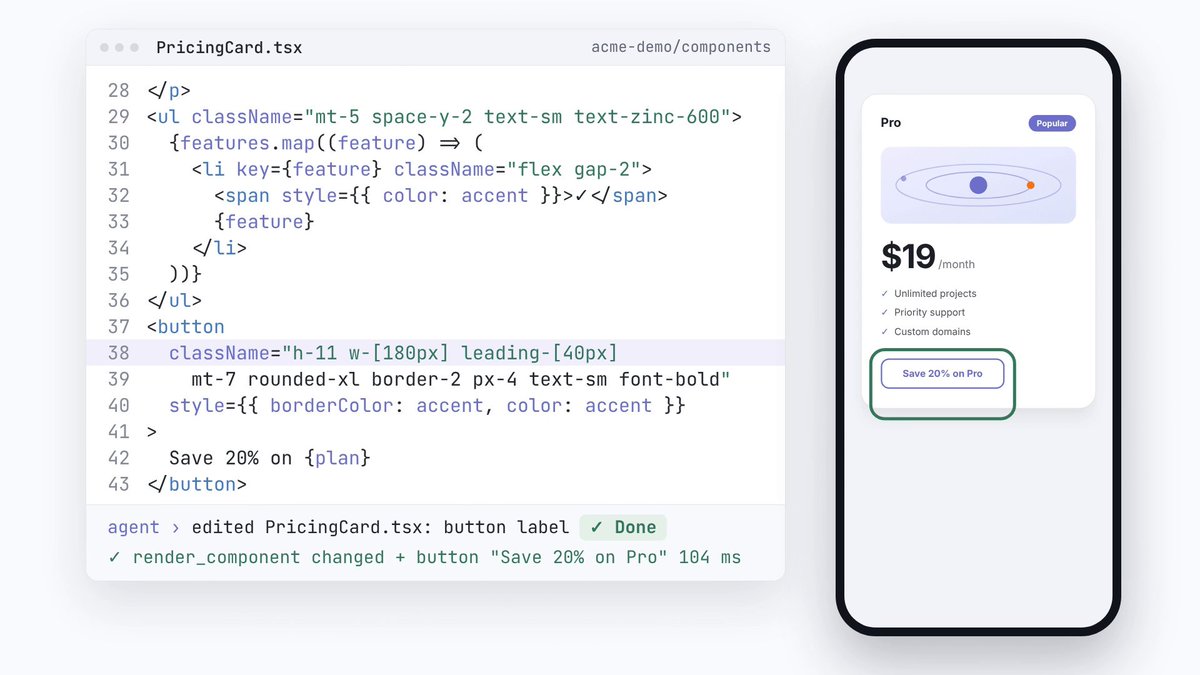
Arguseye saves the resolved props and viewport with a baseline, so your coding agent can compare the current component using the same inputs, without starting the app.
https://t.co/plVz4KbyaH
What comes back to your agent: the rendered component, accessibility text and a before/after diff.
This film uses demo components rendered by Arguseye. Unresolved props and missing context remain explicit in the results.
https://t.co/plVz4KbyaH
I built Arguseye so coding agents can see the UI they change.
Preview React, Next.js and Vue components without starting your app’s dev server. Get screenshots and before/after diffs, or watch edits live in VS Code.
https://t.co/U80QKUZmud
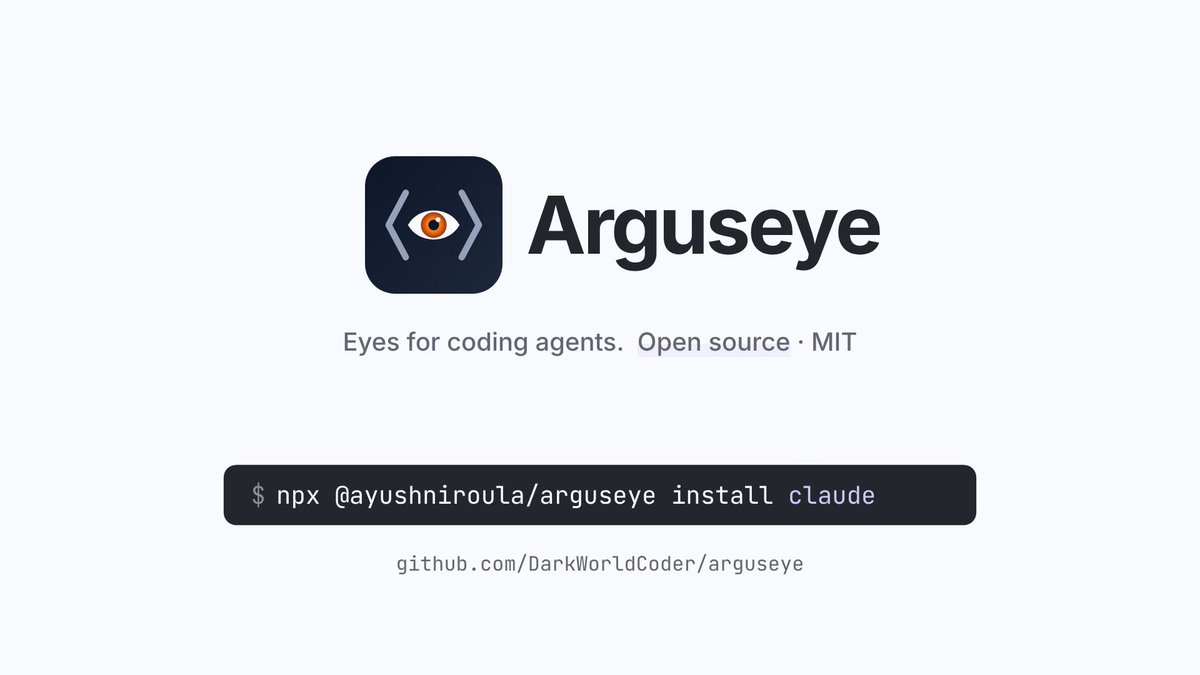
One command installs it for Claude Code, Codex, Cursor, Gemini CLI, Copilot, Windsurf or Antigravity. It's in the image, and on the site:
https://t.co/jlB6zTF17A
MCP server, CLI and VS Code extension. MIT, open source.
Your coding agent changed one button and said "done".
On a phone, that button just broke.
Arguseye gives agents eyes: one call renders any React, Next.js or Vue component with your real props, layouts, theme and CSS. No dev server.
https://t.co/plVz4KbyaH
@housecor For UI edits, I'd add render → compare before the PR. I built Arguseye to preview real React/Vue components without starting the app and return screenshots, diffs and missing-context warnings to the agent. Free + open source.
https://t.co/U80QKUZmud
@steventey Edit-to-preview latency is another useful metric alongside build time. For small UI edits, I'm building Arguseye to render the real component without booting the app, then inspect before/after evidence. Full builds still verify the app. Are you measuring both loops?
@DavidKPiano That baseline needs to survive the agent's rewrite. I'm building visual + accessibility diffs in Arguseye for the rendered outcome; behavioral diffs would also need the same event sequence replayed against both versions. Changed pixels alone can't prove the flow stayed intact.
@rauchg The interesting part is making skipped work explainable to the agent: which inputs changed, why a task was cached, and which checks still need to run. Will the MCP/CLI expose that reasoning alongside logs, so the agent can verify the decision before merging?
@kentcdodds The handoff needs evidence as well as a task summary: source revision, tests run, screenshots and unresolved errors. Does Kody pass those artifacts between agents too, or mainly the instructions/history?
@addyosmani Useful evidence includes the render inputs: props, viewport and missing providers. I'm building Arguseye for that smaller loop: component screenshot + before/after diff without starting the app. E2E still covers the user journey.
https://t.co/U80QKUZmud
@theo Project-local defaults + a readable config diff. I'm building Arguseye for component previews/diffs without an app dev server; the MCP config installs the tool, while its skill explains when to render and how to read incomplete evidence. Show those together.
@mattpocockuk@rashmiranjan For UI edits, hold props + viewport fixed and inspect before/after renders. Keep missing-provider warnings visible. I'm building that loop in Arguseye; the diff gives the agent somewhere to look, while a human still judges the design.
https://t.co/plVz4KbyaH
I built Arguseye so your coding agent can see small UI changes without starting your app’s dev server.
Preview React, Next.js and Vue components. Get screenshots and before/after diffs, or use the VS Code extension.
https://t.co/U80QKUZmud
@AryanAladar@reggevinci@theo Right, they fit. Simulate to narrow ten ideas down to the two worth paying for, then let the real flow decide between those two. The simulation never gets the last word.