Which big pharmas have the most fragile revenues?
Merck, Pfizer, Johnson & Johnson, BMS, GSK and Amgen are most exposed, with >50% of current revenue coming from drugs that lose exclusivity by 2029
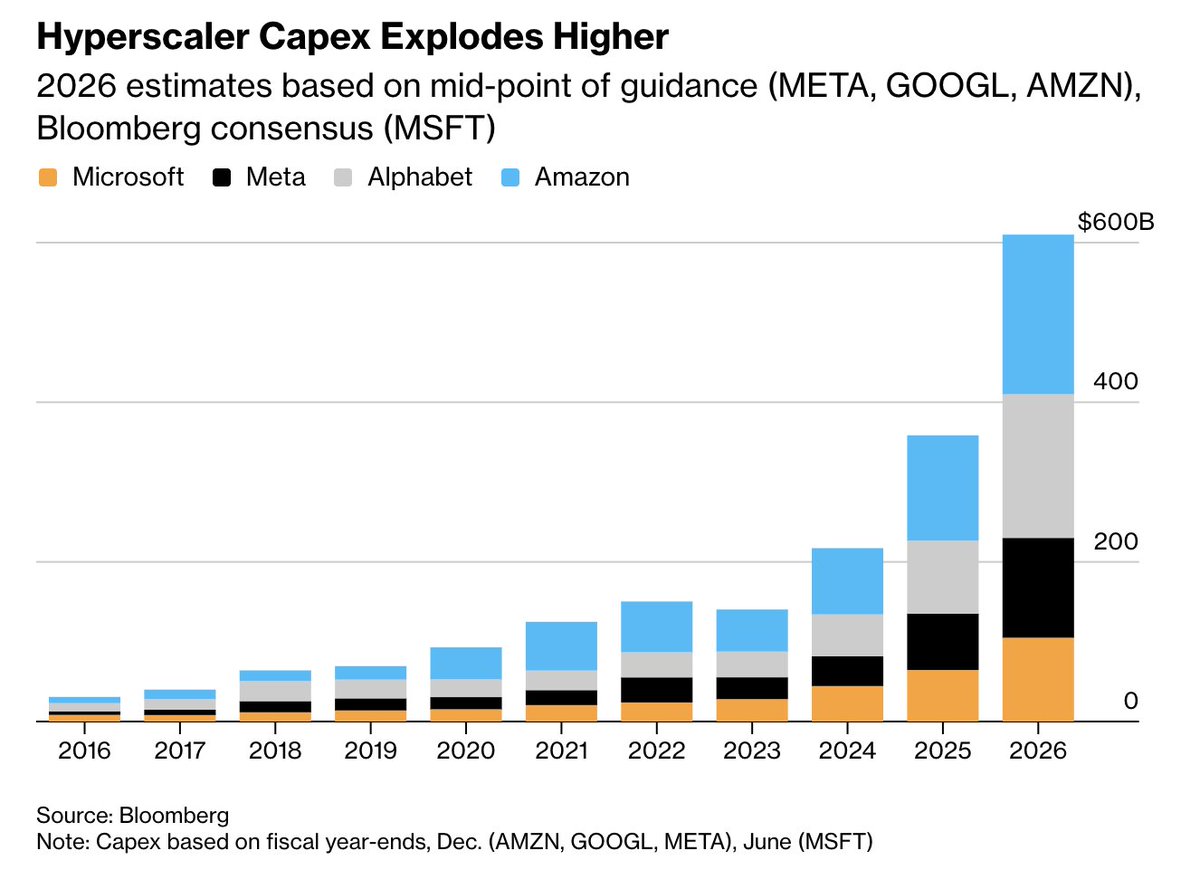
Putting the AI capex boom from hyperscalers into context...
The entire global biopharma ecosystem spent ~$300B in R&D last year to enable new medicines
This year, AI capex will be 2x+ that number, just from four tech co's, to enable Skynet's Terminator
Synthetic lethality in cancer drug discovery: challenges and opportunities
https://t.co/SHxTsYZHYK
https://t.co/YpYklqknlD
PARP inhibitors have been very successful, but clinical translation of other synthetic lethal interactions has been challenging. This Review discusses why.
We asked the biotwit some interesting industry questions. The answers were telling...
5 takeaways from last week’s biotech polls:
1️⃣ When efficacy ceilings are hit, risk wins.
Safety, tolerability, and long-term risk profile now beat novelty and precision once drugs work “well enough.”
2️⃣ Human proof is the real bottleneck.
Capital is available. Molecules are plentiful. What’s scarce is clean, convincing human data that de-risks the program.
3️⃣ China’s edge is speed, not price.
Faster early clinical development, not cheaper molecules, is the structural advantage reshaping global pipelines.
4️⃣ Phase 1 success is about linkage.
Biomarker → PD → clinical relevance matters more than dose, exposure, or execution theater.
5️⃣ Durable value favors controllable risk.
siRNA/ASO and rare monogenic gene editing win because durability, reversibility, and clarity beat ambition.
🗣️ TLDR modern biotech rewards de-risking, speed, and evidence, not flash.
$XBI [2007-2025]: Rallies vs Drawdowns
**Nov24-Apr25 Tariffs/MFN drawdown of -32% to eoy 2025 rally of +35%
**Every spectacular rally on the chart was preceded by a "cleansing" drawdown of at least -30% to -64%
2026 JPM Conference Notes $PRME
• FDA will allow multiple mutations within the same disease under 1 IND
• European regulators are beginning to pay attention to this as well
• Able to leverage some of their IND enabling studies from Wilson’s Disease for AATD
• “we’re going to very vigorously defend and enforce our intellectual property at the right time”
• US+EU+Japan: can probably get to 25,000 WD patients with the 6 most common mutations and 300 new patients per year
• AATD has 20,000-30,000 in US+EU and 99% of those have the same mutation so much easier to go after with only one editor
• Wilson’s Disease requires a transversion edit which can only be done by prime editing
• CEO basically called out Tessera and CRISPR for using prime editing
• “it sounds like a provocative statement, but I really think this (technology) can impact millions of people across the world”
• resolution of arbitration sometime in 1H of this year with Beam over AATD
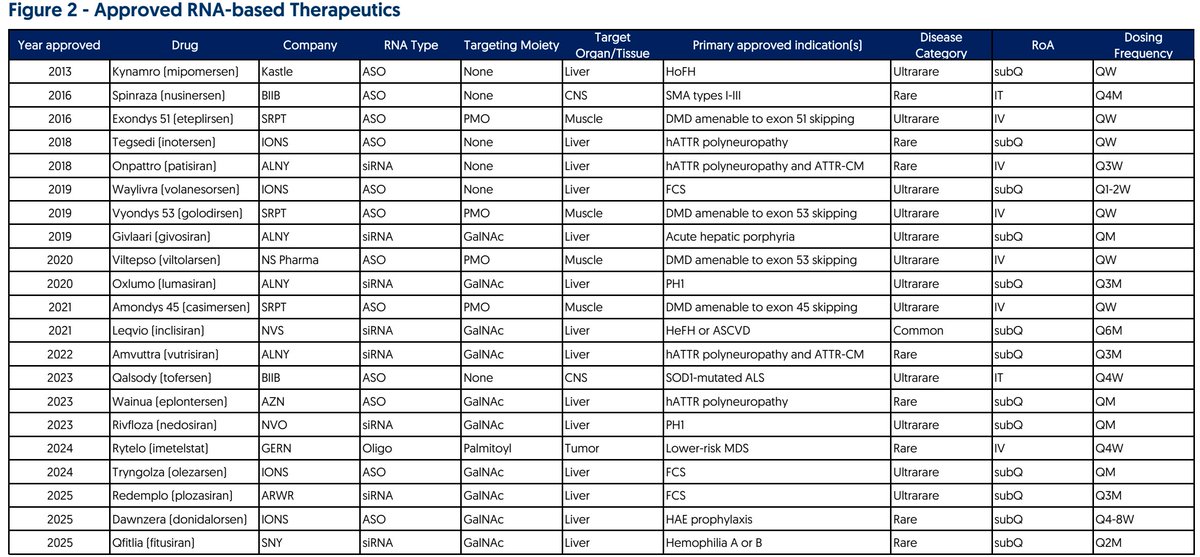
RNA therapeutics landscape from Needham.
Liver is still the primary target tissue, muscle also very active but less clinically validated.
Despite all the activities in neuromuscular indications CV indications still represent the largest commercial opportunities (TTR, Lpa, PCSK9).
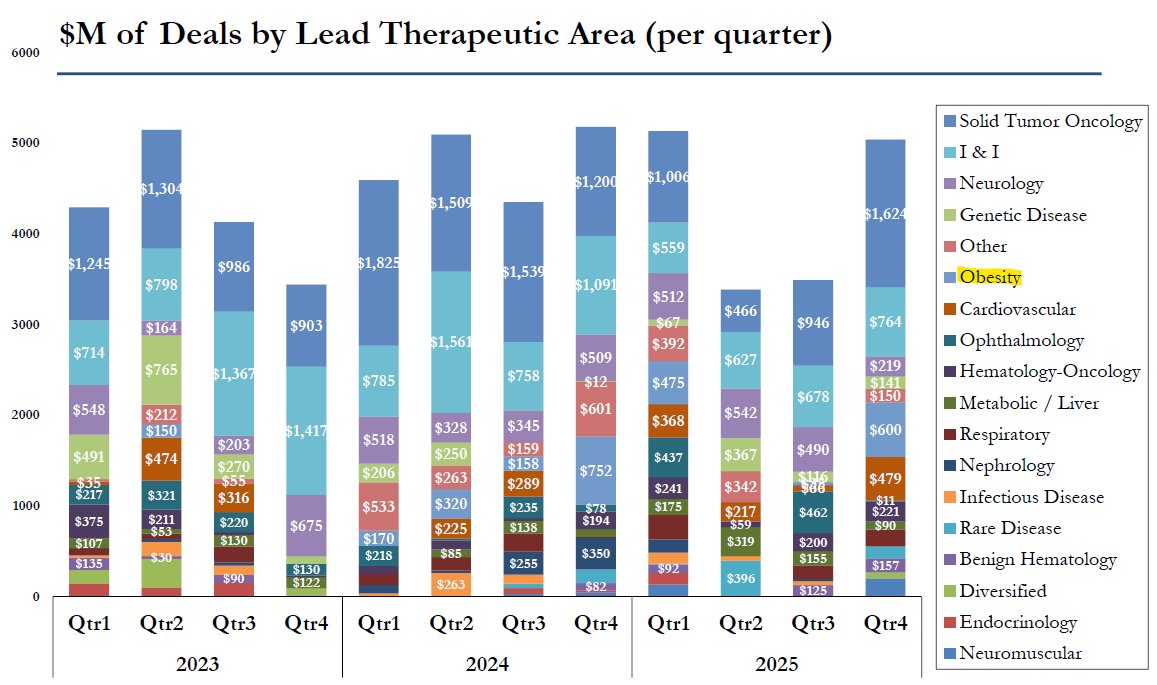
VC Biotech Financing by therapeutic area
- $9.15B raised in 2H25 vs $8.9B in 1H25
- In 1H25, there were 32 deals $100M+ vs 36 in 2H25
- 4Q notably picked up mirroring public market sentiment
- ~2/3 of total $ invested were in clinical-stage companies
Source: Evercore
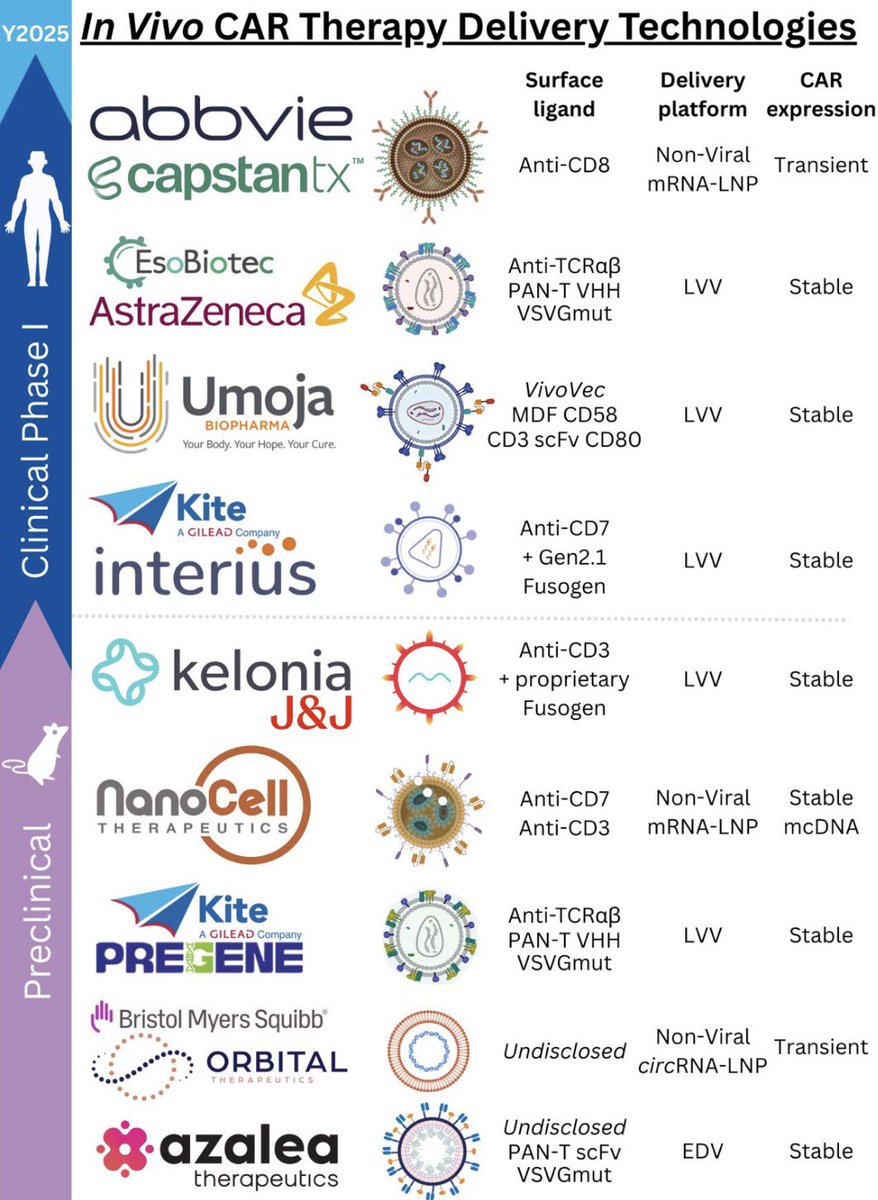
In-vivo CAR-T is getting hot, fast, and the “how” is now the whole game.
This chart is a clean snapshot of where the field is clustering, and where it’s splitting.
A few observations:
1️⃣Clinical activity is leaning heavily viral, LVV with stable CAR expression, multiple groups converging on T-cell targeting ligands.
2️⃣Non-viral is the wild card, mRNA-LNP for transient CAR, circRNA-LNP, mcDNA, EDV, all aiming for repeat dosing, cleaner CMC, and scalable supply, but the biology has to cooperate.
3️⃣“Stable vs transient” isn’t a footnote, it’s the product strategy, transient may fit autoimmunity and tunable dosing, stable may win where persistence is mandatory.
Bottom line, we’re past “is in-vivo possible”, now it’s “which delivery vector hits the right cells, at the right % editing/transduction, with the least chaos.”
Credit: Cesare Di Nitto on the HR app
The greatest innovation of our time is not AI — it’s GLP-1.
For the first time in history, obesity is declining. And as obesity declines, so too will diabetes, hypertension, heart disease, and the many cancers linked to excess weight.
Making Ozempic for All a reality in America would revolutionize public health.
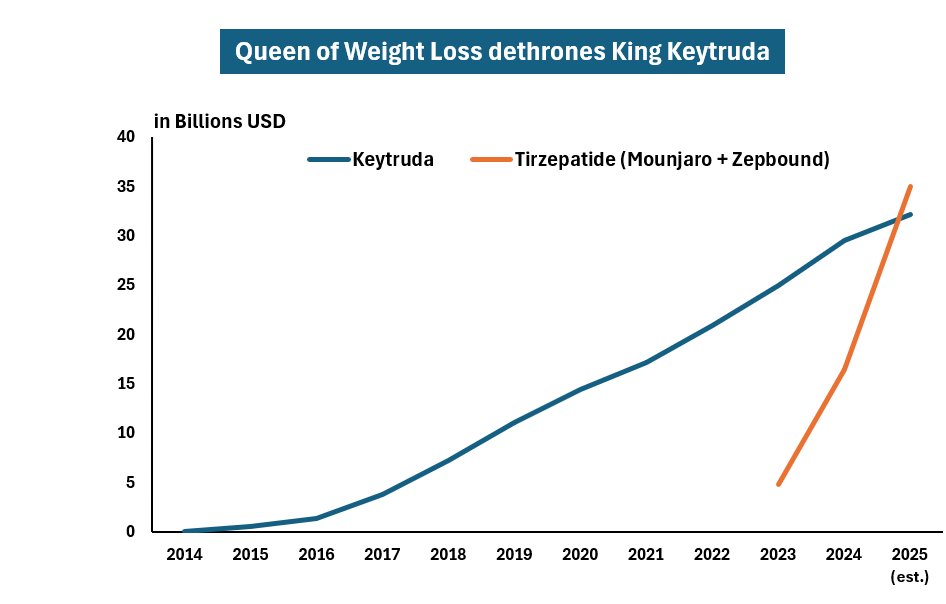
In just 3 yrs, Eli Lilly’s tirzepatide overtakes Merck’s Keytruda — $35 B vs $31.8 B est in 2025. The fastest-growing drug ever. From oncology to obesity, the pharma crown shifts to GLP-1s.
나름대로 가정에 충실하고 좋은 남편으로 살고싶어서 고민하고 늘 돌아보면서 살아왔는데
와이프와 말다툼하다가 남들 가정좀 보고 그만큼만 하라는 말을 들었는데
존재자체를 부정당하는 기분이고 내가지금까지 노력했던건 물거품이 되는 기분
나름 경제적으로도 인품적으로도 가정적으로도 잘해왔다고 생각했는데
결국 와이프에게 90점 이상이 안되면 이런 말을 듣는거구나 싶으니 더 노력하기가 싫어진다
솔직하게 오늘 그 말은 상처를 떠나 내 자존심이 바닥을 치게 만들었다









![paras_biotech's tweet photo. $XBI [2007-2025]: Rallies vs Drawdowns
**Nov24-Apr25 Tariffs/MFN drawdown of -32% to eoy 2025 rally of +35%
**Every spectacular rally on the chart was preceded by a "cleansing" drawdown of at least -30% to -64% https://t.co/6VMCpaHZej](https://pbs.twimg.com/media/G-6Q8ikXsAAniPI.jpg)