Valuation-wise, Indonesia is arguably one of the cheapest equity markets in Asia today. Many well-known blue-chip companies are trading at what can only be described as crisis-like multiples despite maintaining healthy balance sheets, dominant market positions, and attractive dividend yields.
BBCA trades at roughly 11x forward earnings and 2.6x book value. Bank Mandiri trades at around 6x forward earnings and 1.2x book value. BRI trades at approximately 7x forward earnings and 1.3x book value. Astra sits at 6x forward earnings. Kalbe trades at 9x forward earnings. Amman trades at roughly 10x forward earnings. The list goes on.
Many of these companies also offer high single-digit dividend yields, with some names approaching double-digit yields. On paper, this should attract significant investor interest. Yet share prices continue to drift lower.
The obvious question is: where are the buyers? Where are all the investors who have spent years believing Indonesia’s long-term potential? Indonesia’s weight in MSCI Emerging Markets remains only around 0.5-0.6%, remarkably small relative to the size of its economy, population, and long-term growth aspirations.
More importantly, where is Danantara? It was presented as a potential new source of domestic capital and a stabilizing force for Indonesian financial markets. If the local market is trading at distressed valuations, this should be the type of environment where a large domestic institutional investor helps establish confidence.
The problem, however, is that cheap valuation alone is rarely enough. Markets ultimately pay for growth.
Indonesia’s core challenge today is not valuation. It is earnings growth. Aggregate earnings growth for the market has slowed materially, with many sectors struggling to generate meaningful expansion. Compare that with South Korea and Taiwan, where investors are being offered direct exposure to AI, semiconductors, advanced manufacturing, memory, and high-performance computing. Foreign investors are naturally willing to pay higher multiples for companies whose earnings are compounding rapidly.
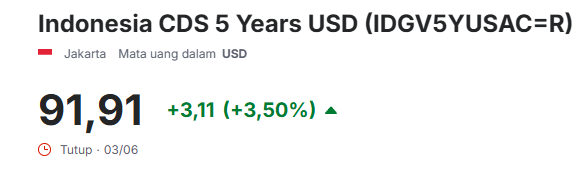
Currency concerns add another layer of complexity. Investors are not simply underwriting Indonesian corporate earnings. They are also underwriting the rupiah. If currency depreciation continues to offset equity returns, valuation discounts can persist far longer than expected.
There is also a credibility issue that should not be ignored. For years, many foreign investors have complained that parts of the Indonesian market function primarily as distribution channels rather than genuine capital formation venues. Domestic equity sales teams routinely promote names that later become exit liquidity for local institutions seeking to reduce exposure. Over time, repeated experiences like this erode trust.
The persistent allegations of wash trading, questions around effective free float, concentrated ownership structures, and concerns over genuine liquidity have further damaged confidence. Investors do not simply buy low valuations. They buy governance, transparency, liquidity, and confidence in future earnings.
This is why cheap markets can remain cheap for years. A stock trading at 6x earnings can still fall to 5x. Valuation itself is not a catalyst.
The harsh reality is that Indonesia does not have a valuation problem. It has a growth and confidence problem.
Until investors see stronger earnings growth, more credible policy execution, better market governance, improved liquidity, and a clearer path for capital to generate attractive real returns, low multiples alone will not be enough to attract meaningful foreign capital back into the market.
Cheap without growth is a value trap. Cheap with deteriorating confidence is even worse.
Global investors are rapidly losing confidence in Indonesia as the nation’s stocks tumble at the fastest pace worldwide and its currency sinks to all-time lows https://t.co/laOzvsf8t2
Letter #8 has just been released.
The problem after MSCI was never the conglomerates. The problem is that the market's pressure point has shifted toward the big banks.
In this letter, we explain why $BREN and related names were flying on Friday, yet $IHSG still ended the session in negative territory. The answer lies in where the market's true driver now sits.
We also discuss GOTO's latest position following the President's speech, how GOTO could address the situation, and the ongoing MSCI overhang issue.
Read our latest report through the link below.
https://t.co/00YJKxPJom
#MeridianResearch
When conglomerates or market operators can repeatedly drive share prices higher through wash trading and the regulator does nothing, it is genuinely mind-blowing.
The regulator already has the concentration data. It already knows which stocks are controlled by a small number of accounts and where trading activity is heavily concentrated. The next step should be straightforward: identify the beneficial owners behind those accounts and determine whether the trading is occurring between related parties, nominee accounts, or entities under common control.
If ownership concentration is already established, then the investigation should not stop there. The real question is whether the apparent liquidity and price discovery are genuine or simply the result of the same economic interests trading shares back and forth to manufacture volume, momentum, and higher valuations.
This is not a complicated forensic exercise. Modern regulators have access to account-level data, broker records, beneficial ownership information, and transaction histories. If they genuinely want to know whether wash trading exists, the evidence should be relatively easy to trace.
What is difficult to understand is how stocks can rise hundreds or even thousands of percent while concentration remains extremely high, yet no meaningful enforcement action follows.
The contrast with most major global markets is striking. In the United States, South Korea, Taiwan, Japan, or Europe, the largest wealth creation stories are generally driven by companies delivering earnings growth, technological leadership, productivity gains, and improving fundamentals. Investors debate revenue growth, margins, market share, and future cash flows.
In Indonesia, too much attention is often diverted toward highly concentrated conglomerate-linked stocks that experience extraordinary price appreciation despite limited fundamental improvement. Instead of capital flowing toward businesses that consistently grow earnings, improve returns on capital, and create long-term shareholder value, market narratives become dominated by a handful of names whose valuations appear increasingly disconnected from underlying business performance.
A functioning capital market depends on trust that prices are formed through genuine buying and selling activity. If market participants increasingly believe prices can be engineered through coordinated trading among concentrated groups without consequence, confidence in the market itself becomes the casualty.
The issue is no longer whether the regulator has the tools. The issue is whether it has the willingness to use them.
🚨🇮🇩 Indonesia’s equity market crashed -4.2% in Asia opening hours, the worst underperformer in the region. Rupiah is also down near 17,700/USD as investors are running away from the country.
The significant selling pressures are happening on energy risk (oil >$100/b), MSCI rebalancing (weight lower to around 0.5%), and no confidence on the government, especially after the President's recent comment downplaying the weakness in Rupiah.