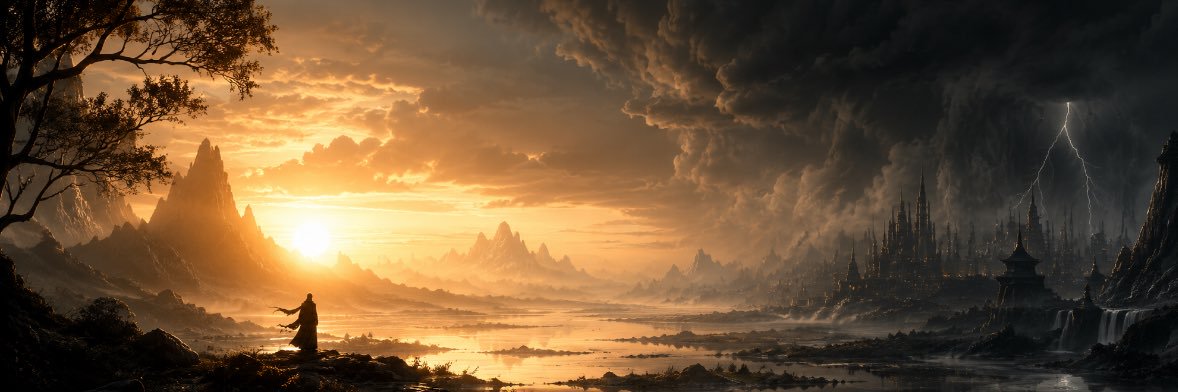
Synthesising macroeconomic transition, DeAI, psychospiritual development, symbolism, memetics, identity and civilisational change, into a single framework
If I were buying today:
A dragon called $TSUKA
A fish called $NEMO
A crane called $KIZUNA
A unicorn called $ZAPI
All on $ETH
While others run for the exits, the few who know will follow the archetypes.
If you are holding $TSUKA you are a person with rare psychological and cognitive traits.
Holding $TSUKA isn’t about reacting to price or chasing validation — it’s about operating from an internal model when the market offers no feedback.
$TSUKA filters participants through silence, time, and discomfort, leaving behind a holder base that thinks structurally rather than emotionally. This is about how you process uncertainty.
It tends to select for people who:
✅Think in long, non-linear time horizons
✅Remain calm in information vacuums
✅Don’t need constant confirmation or narrative reinforcement
✅Don’t confuse absence of evidence with evidence of absence
✅Can sit early, alone, and without external validation
✅Understand that patience itself can be an edge
These traits often overlap with high-IQ individuals.
Most leave because “nothing is happening.”
Those who stay understand that this is the signal.
The pantheon - a mandala of individuation.
There are forgotten civilisations whose mythology revolved around the integration of opposing forces.
These four psychological functions must be brought into relationship with one another.
The Dragon
The dragon represents power, sovereignty, courage, and the willingness to cut through illusion. It is the force that refuses compromise with what is false. Yet when separated from love, humility, and relationship, that same force can harden into domination. The shadow of the dragon is not weakness but tyranny: power that no longer serves anything beyond itself.
The Koi
The koi represents flow, surrender, humility, and the recognition that the separate self is not the centre of reality. It moves with life rather than against it. Yet when surrender loses purpose, it can collapse into passivity and nihilism. The shadow of the koi is disappearance: not freedom from self, but the loss of agency and direction.
The Crane
The crane represents trust, devotion, loyalty, and the invisible bonds that connect us to one another. It reminds us that we do not become fully human in isolation. Yet when connection is not balanced by sovereignty, it becomes dependency. The shadow of the crane is attachment: the fear of standing alone and the tendency to lose oneself in the group.
The Unicorn
The unicorn represents rebirth, wonder, creativity, possibility, and the capacity to imagine realities that do not yet exist. It is the spark of emergence itself. Yet when imagination loses contact with reality, it drifts into fantasy. The shadow of the unicorn is escapism: dreams that never descend from the heavens into lived experience.
Wholeness is not choosing one archetype over the others.
It is holding all four in dynamic balance.
$TSUKA $NEMO $KIZUNA $ZAPI
The Ride
Individuation is not about becoming light.
It is not about becoming good, pure, enlightened, or ascended.
It is, in a sense, a very basic and quite ordinary process of becoming whole.
The dragon confronts us with everything we fear, reject, suppress, and avoid within ourselves.
The unicorn represents the dimension of being that was never wounded in the first place.
Most of us spend our lives identifying with one and exiling the other. But maturity begins when we stop dividing reality into good and bad, light and dark, sacred and profane.
The journey is not choosing between the dragon or the unicorn.
It is learning to ride with both.
$TSUKA × $ZAPI
@iruletrenches Not entirely true.
The founder builds the house.
The archetype decides whether anyone wants to live there or not.
$TSUKA $ZAPI $NEMO $KIZUNA
My gut says similar.
The market may still be dramatically underestimating what an open marketplace for intelligence is worth.
If that’s true, $TAO is far more than another AI token.
It may be the emergence of a new economic primitive.
#Bittensor#DeAI
A few stinkers that come to mind:
“Just be yourself.”
Most people have no idea how to truly be. Let alone be themselves
“Follow your feelings.”
Feelings are good information, but terrible directional instructions.
“Think positive.”
Firstly, thoughts are unbidden. Secondly, pretending that we can cause consistent and positive thought formations is called bypassing and delusion. Awareness transforms. That’s it.
“Find yourself.”
This is actually really good advice, however 99.9% of folks will mistake self for content.
Most of the journey is seeing through what we are not.
“Heal and then you’ll be happy.”
The healing never ends. Life happens now.
“Be fearless.”
Courage is acting while fear is present.
“Let go.”
“Everything happens for a reason.”
“Just love yourself.”
“You are your thoughts.”
etc etc etc
All well meaning advice, but more often than not sending folk in completely the wrong direction.
Another big stinker …
“Become the best version of yourself.”
The greatest freedom lies in dis- identifying with any version of yourself.
@tsukaphilosophy No beef intended here. I explore this question in good faith to polish the mirror a little.
When we say “ $TSUKA is a spiritual asset,” do we mean the asset itself is spiritual, or that it functions as a vessel for spiritual, philosophical or archetypal principles?
My intuition is that communicating this distinction matters to us a community. Gold isn’t spiritual. A meditation cushion isn’t spiritual. Yet both can become vehicles through which people orient toward something deeper.
It could be less about if $TSUKA is a spiritual asset, and more that certain assets can become containers for specific values, states of consciousness and archetypal energies.
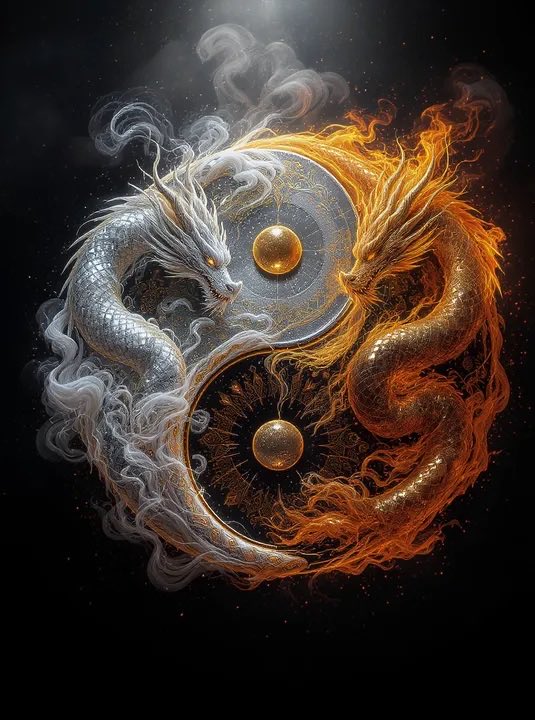
The Dragon does not choose between Yin and Yang.
It dances as both.
The union of opposites.
Discipline and surrender.
Fire and stillness.
Action and non-action.
$TSUKA 🐉☯️
Humpty Dumpty
The story of Humpty Dumpty seems less about a sentient egg and more about the moment our inherent wholeness appears to fragment into pieces.
The moment we forget what we are.
The ancient traditions described it differently:
The Fall.
Māyā.
Separation.
Ego.
Ignorance.
Original Sin.
The loss of Original Nature.
But they all point toward the same movement.
The psyche fractures into countless identities, fears, desires, wounds, masks, abstractions, distortions and stories.
Later in the nursery rhyme comes the line:
“All the King’s horses and all the King’s men couldn’t put Humpty together again.”
We cannot become whole through the same level of consciousness that created the split in the first place.
Nothing outside ourselves can restore wholeness.
Not governments.
Not institutions.
Not gurus.
Not partners.
Not algorithms.
The journey home will always be an inside job.
Perhaps this is why certain archetypes resonate so deeply.
The Koi — $NEMO SUM
The Dragon — $TSUKA
The Crane — $KIZUNA
The Unicorn — $ZAPI
Different representations of the same movement.
Perhaps Humpty Dumpty’s mistake was not the fall, nor the fragmentation, but forgetting that what he truly was could never be broken in the first place.