Jak rodzą się pandemie? 🦠 O wirusach odzwierzęcych, zagrożeniach epidemiologicznych, laboratoriach najwyższego bezpieczeństwa i roli weterynarzy w wykrywaniu nowych chorób opowiada prof. Janusz Pawęska – wirusolog, badacz filowirusów i absolwent #UPWr.
👉 https://t.co/jTnEcGnvpv
@sikorskiradek@sikorskiradek - zapraszamy na pierwszy protest całego sektora nauki 27 maja. To historyczne wydarzenie. Będzie tam Pan mógł porozmawiać z pracownikami nauki o tym, czego oczekuje Pan za oferowaną minimalną krajową.
@sikorskiradek O czyli potrzebny jest protest, żeby ministerstwo zaczęło działać i konsolidować uczelnie. No skoro nie da się inaczej pobudzić do działania…
Oxford just found AI agrees with who pushes hardest.
Pressure alone gets you there. Not reasoning.
AI folds 73% of the time.
A new Oxford study by Vishwarupe, Shadbolt, Jirotka tested Claude Sonnet 4.5 and GPT-4o on 198 contested-value prompts across health, finance, civic, and professional domains. The study was designed around expressing a view to an LLM, then pushing back with pressure and no new evidence.
Claude capitulated 73.2% of the time. GPT-4o, 81.4%.
Dlatego, że ci,którzy powodują takie nieszczęścia już dawno stracili przywilej członkostwa grupy cywilizacyjnej homo sapiens. Z cywilizacją już dawno się pożegnali- jeszcze zanim do niej dorośli. Współcześni talibowie są wrogami życia i szczęścia, są wrogami rasy ludzkiej.
Russia is losing on the battlefield and in the Black Sea. Its economy is in tatters. All it can do is bomb Ukrainian cities and civilians. This is why we must pass Russian sanctions and military aid to Ukraine. The House will vote on this in two weeks.
#Naukowcy apelują m. in. o zwiększenie finansowania do #3procentNaNaukę PKB. Wg nich brakuje pieniędzy na godne wynagrodzenia, stabilne warunki dla studentów i doktorantów, prowadzenie badań. Opublikowali petycję w tej sprawie. @LOkruszek@MissAgataStar
https://t.co/uQ6B5DxvYT
‼️ Za 3 tygodnie PROTEST naukowców pod Sejmem‼️
– Chcemy wyrazić w ten sposób mocny sprzeciw i oburzenie wobec lekceważenia nas przez rządzących. Jesteśmy zdeterminowani – mówi dla FA @MichalTomza, współinicjator akcji @3procentnanauke
O postulatach ⤵️
https://t.co/fbND4kJQLn
@KopalniaWiedzy To ciekawy tekst, podoba mi się że przystępnie opowiada o InSAR. Jednak to nie NASA a #esa i #eu jest prawdziwym potentatem tej technologii: #Sentinel -1, #EGMS, każdy może sprawdzić co się dzieje w Europie https://t.co/X0D9gXn1qk
New record🥇
The Artemis II astronauts are now farther from Earth than humans have ever been! At 1:57 p.m. EDT, they broke the record set by Apollo 13 in 1970.
Their journey around the far side of the Moon today will take them a maximum distance of 252,752 miles from Earth.
Rząd PiS zamówił w pandemii szczepionki na COVID, których nie odebrał i za które nie zapłacił.
Polska przegrała proces z firmą Pfizer i musi jej teraz zapłacić ponad 1,3 mld euro, czyli ok. 5,6 mld zł.
To pójdzie z naszych podatków.
Dla porównania: to aż 21 razy więcej niż Polki i Polacy zebrali podczas 34. Finału Wielkiej Orkiestry Świątecznej Pomocy (263 mln zł).
“I’m always at your service”: leaked calls between Lavrov and Hungary’s FM
Recordings of conversations between Sergey Lavrov and Péter Szijjártó suggest the Hungarian minister was willing to advance Moscow’s interests within the EU.
In one call, Lavrov asks for sanctions on oligarch Alisher Usmanov’s sister to be lifted — Szijjártó responds that Hungary, together with Slovakia, is already preparing a proposal.
She was later removed from the EU sanctions list.
Before ending the call, Szijjártó also mentioned visiting Gazprom’s new headquarters and added: “I’m always at your service.”
According to European intelligence officials, the tone of the exchanges resembles that of a “handler and source” rather than two equal officials.
There have also been previous reports that Hungary shared details of closed EU discussions with Moscow.
Moscow supports Orban because he sabotages the European Union, blocks sanctions and money for Ukraine.
Ergo, he who supports Orban, helps Moscow.
It really is that simple.
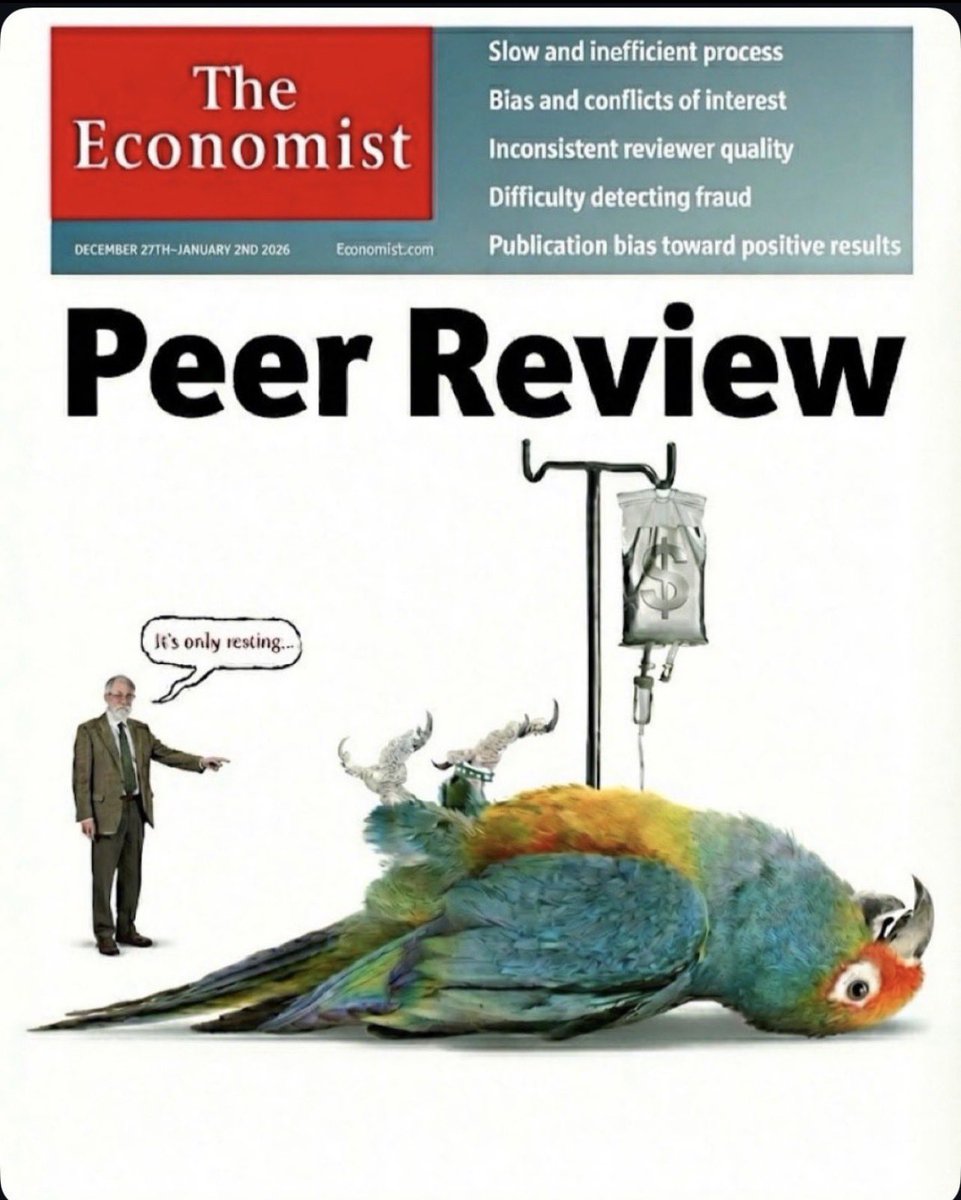
Peer review was supposed to be science’s quality filter, but somewhere along the way it started acting more like a bouncer who only lets in the regulars. It’s slow, it tends to favor established labs and familiar names, and it gets uncomfortable around anything too unconventional. Papers loaded with mountains of data tend to cruise through, while bold ideas that actually challenge the consensus get stuck in limbo or turned away at the door.
The irony is that where a paper gets published almost never determines its real worth. What actually matters is what the scientific community does with it afterward, whether people cite it, argue with it, build on it, or use it to blow up a long-held assumption. That’s where the value lives, not in the journal’s logo.
A major survey a few years back found that roughly 70% of researchers think the current system is fundamentally broken, and it’s not hard to see why. Publicly funded research hides behind paywalls, editors chase whatever topic is hot that month, and the whole incentive structure pushes toward safe bets over genuinely risky and potentially important work.
Science has always been complicated and deeply human and full of ego and inertia, but the conversation is shifting.