If the US attacks Cuba, Cuba will have no other choice
‘They will strike America in a way that brings real pain’ — Scott Ritter, Former US Marine Corps Intelligence Officer
East Meets West with @ReadeAlexandra and @OlgaBataman
[EXCLUSIVA] El ex director ejecutivo de la Compañía de Fomento Industrial de Puerto Rico, Eric Santiago, reveló por primera vez que no recibió llamadas con presiones, pero sí recibió un mensaje que buscaba convencerlo sobre un contrato con PRIDCO.
Santiago responsabilizó a Kenneth McClintock, miembro de la empresa Politank.
Escuche todo lo que dijo hoy en #JugandoPelotaDura por nuestro Youtube: Dura Streaming.
Σε ευχαριστούμε που τίμησες την φανέλα με τον Θεό του πολέμου !
Ευχαριστούμε που συνέβαλες τα μέγιστα για το πιο αρχιδατο Ευρωπαϊκό κύπελλο!
Καλό ταξίδι ρε Μάγκα ! #Arisbc
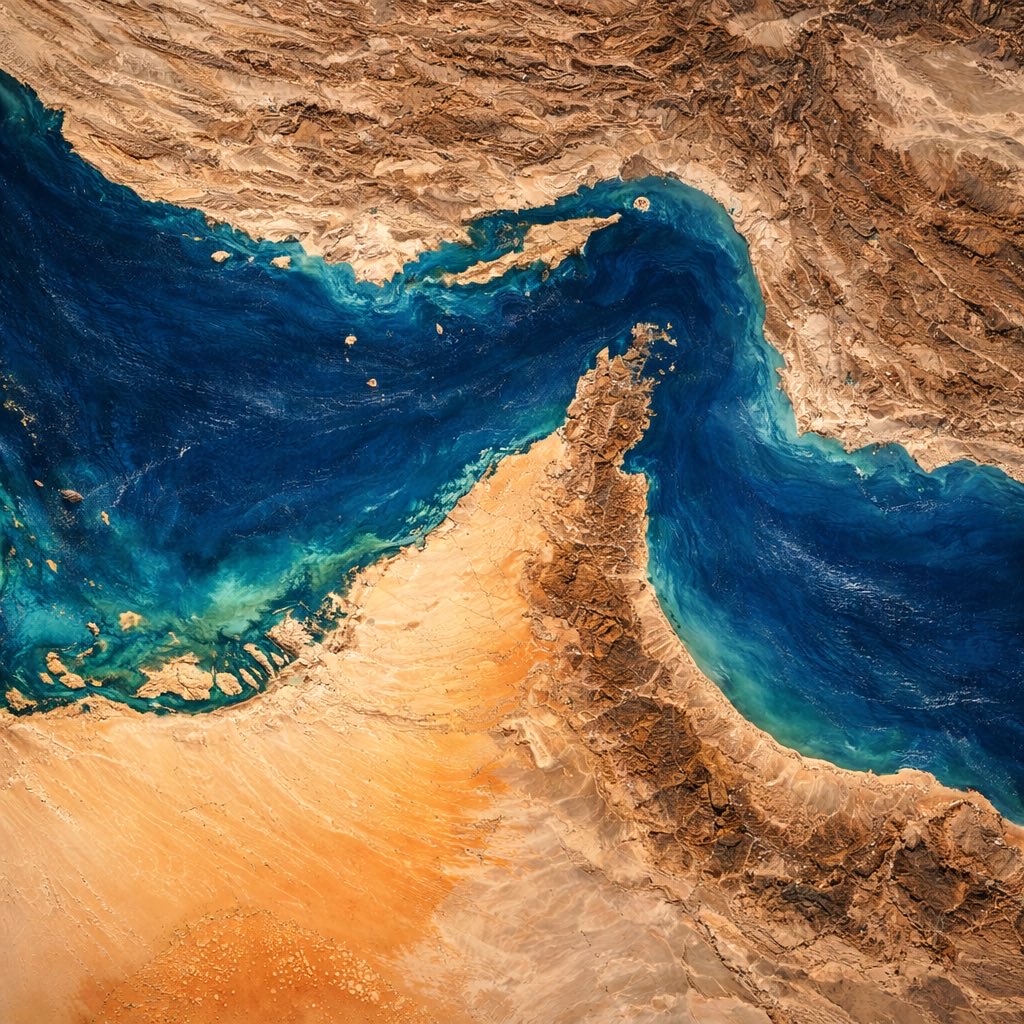
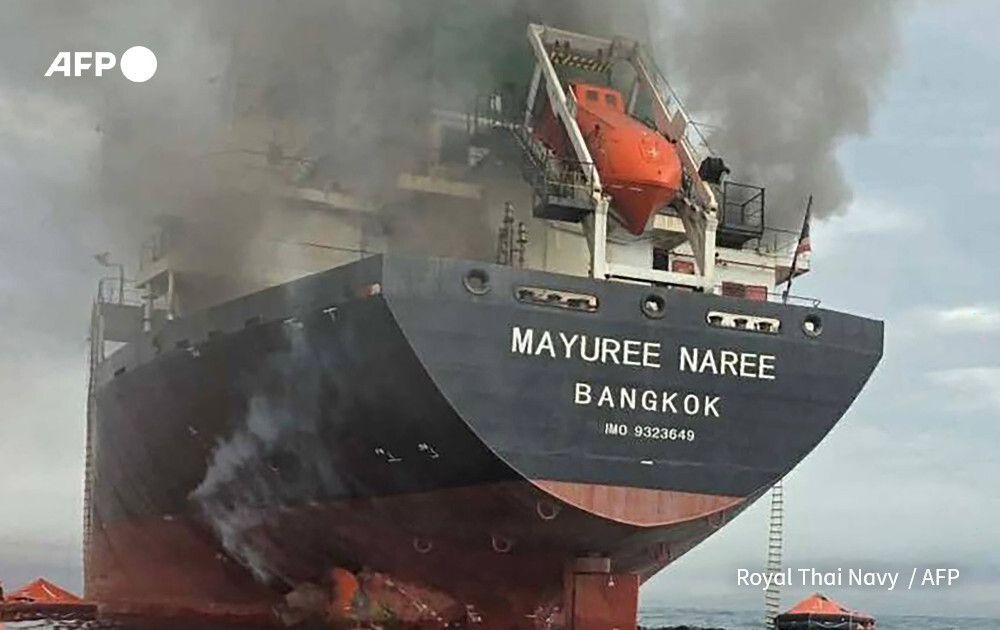
BREAKING Three crew members are "believed to be trapped" aboard a Thai bulk carrier that was hit by two projectiles on Wednesday while travelling through the crucial Strait of Hormuz, the vessel's owner says
Underwriters confirm up to fivefold jump in pricing for all vessels, but US, UK and Israeli ships could be Tehran’s top targets, and are being priced accordingly
https://t.co/2hexvOH9ni
The President of the United States just acknowledged, publicly, that the Strait of Hormuz is closed not by missiles but by insurance.
Read that again. The most powerful military on earth, mid-campaign, with air superiority over Iran, with carrier strike groups deployed, just announced that the solution to the Hormuz crisis is not more bombs. It is a federal insurance backstop.
Trump ordered the US Development Finance Corporation to provide political risk insurance for all maritime trade through the Gulf, effective immediately. Navy escorts for tankers through Hormuz “as soon as possible.”
This is the strongest possible counter-move to the thesis I have been mapping all day. And it confirms every word of it.
The DFC is a development finance institution. Its mandate is financing projects in developing countries. It has never underwritten maritime war risk insurance. It has no actuarial models for Gulf transit. It has no treaty reinsurance behind it. It has no claims-handling infrastructure for vessels struck by Iranian drones in an active war zone. The President ordered it to do something it has never done, in a domain it has no expertise in, effective immediately.
Compare this to what it is replacing. The twelve P&I clubs that cover 90% of global tonnage have spent decades building war risk models, capital reserves, claims networks, and regulatory compliance under Solvency II. They exited the Gulf in 72 hours because the risk became unmodelable. Trump is proposing to replace that entire architecture with a development finance agency and a presidential order.
Now the Navy escorts. The 1980s Tanker War used exactly this template under Operation Earnest Will. It took seven months to organise. It worked because private insurance stayed intact throughout. Premiums rose but coverage was never withdrawn. The escorts supplemented the insurance market. They did not replace it.
This time the insurance market has exited. Escorts without underlying coverage do not solve the problem, because P&I clubs require war risk cover to be in place before a vessel can legally trade. A Navy destroyer sailing alongside a tanker does not satisfy Solvency II capital requirements for the reinsurer sitting in London.
The announcement will move oil prices. It should. The signal that the US government recognises the problem is meaningful. But the gap between a presidential order and an operational insurance programme that forty-plus independent syndicates, twelve P&I clubs, and five major reinsurers will accept as adequate replacement coverage is measured in months, not hours.
The market heard “effective immediately.” The insurance industry heard “we have no idea how this works but we will figure it out.” Those are two very different timelines.
The thesis holds. The President just confirmed the mechanism by trying to solve it. The solution itself reveals the problem’s scale.
https://t.co/ULBgEzZ3A8
BREAKING: China is pressuring Iran to reopen the Strait of Hormuz.
There is one problem. Iran did not close it.
Seven insurance companies in London did.
China buys 80% of Iran’s shipped oil. Beijing has a $400 billion, 25-year cooperation agreement with Tehran. China is Iran’s economic lifeline. If any country on earth has leverage over Iran, it is China. And China is now using that leverage to demand the Strait reopens.
But the Strait was not closed by a sovereign decision. It was closed by the withdrawal of reinsurance capacity from five to ten firms, mostly in London, backstopping twelve P&I clubs that cover 90% of global tonnage. Iran did not order those firms to withdraw. Iran cannot order them to reinstate. Neither can China.
Even if Tehran capitulates entirely tonight and the IRGC stands down, not a single reinsurer reinstates Gulf war risk coverage on a phone call from Beijing. Reinstatement requires rebuilt risk models, voyage-by-voyage re-underwriting, repriced treaty capacity, and a threat environment that actuaries can quantify. None of that exists while 440.9 kilograms of weapons-grade uranium remains unaccounted for and the IRGC is still launching drones at Oman.
China has leverage over Iran. China has zero leverage over Lloyd’s of London.
This is the part nobody is modelling. The country with the most to lose and the most leverage over the belligerent cannot fix the mechanism that actually closed the Strait. Because the mechanism is not geopolitical. It is actuarial. And actuaries do not take calls from the Politburo.
https://t.co/ULBgEzZ3A8
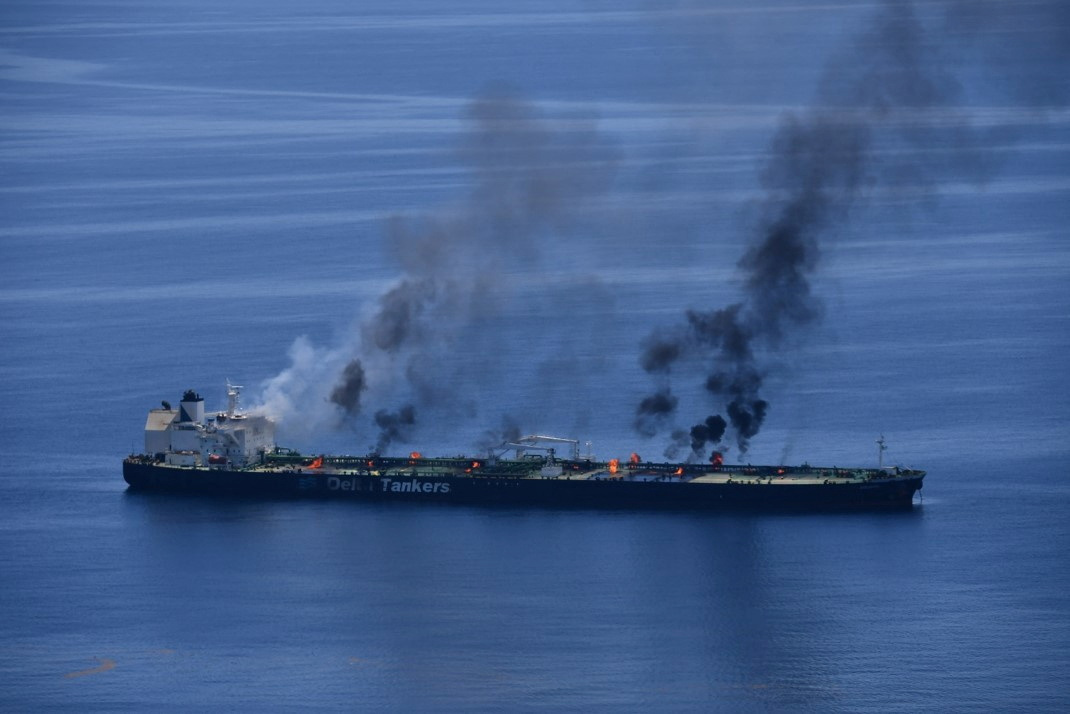
Major marine insurers just cancelled war risk coverage for the Strait of Hormuz. 150+ ships stranded. Rates tripled. One seafarer dead. And this is only day 3 of the Iran conflict.
https://t.co/EbxVEOtQgo
🔴Irán cierra el estrecho de Ormuz tras la muerte de Jameneí y amenaza con incendiar cualquier barco que intente pasar.
Por el Estrecho de Ormuz pasban hasta ahora 17 millones de barriles de petróleo diarios, procedentes de ocho países del Golfo Pérsico.
https://t.co/c14MAJTkt1
“Los estadounidenses son muy afortunados, porque dondequiera que van para exportar la libertad… encuentran petróleo.”
Michele Serra, periodista italiano.
Several marine insurers said they are canceling war risk cover for ships due to the conflict in Iran and the Gulf. Insurers including Gard, Skuld, NorthStandard, the London P&I Club and the... https://t.co/ppJUlIk96K