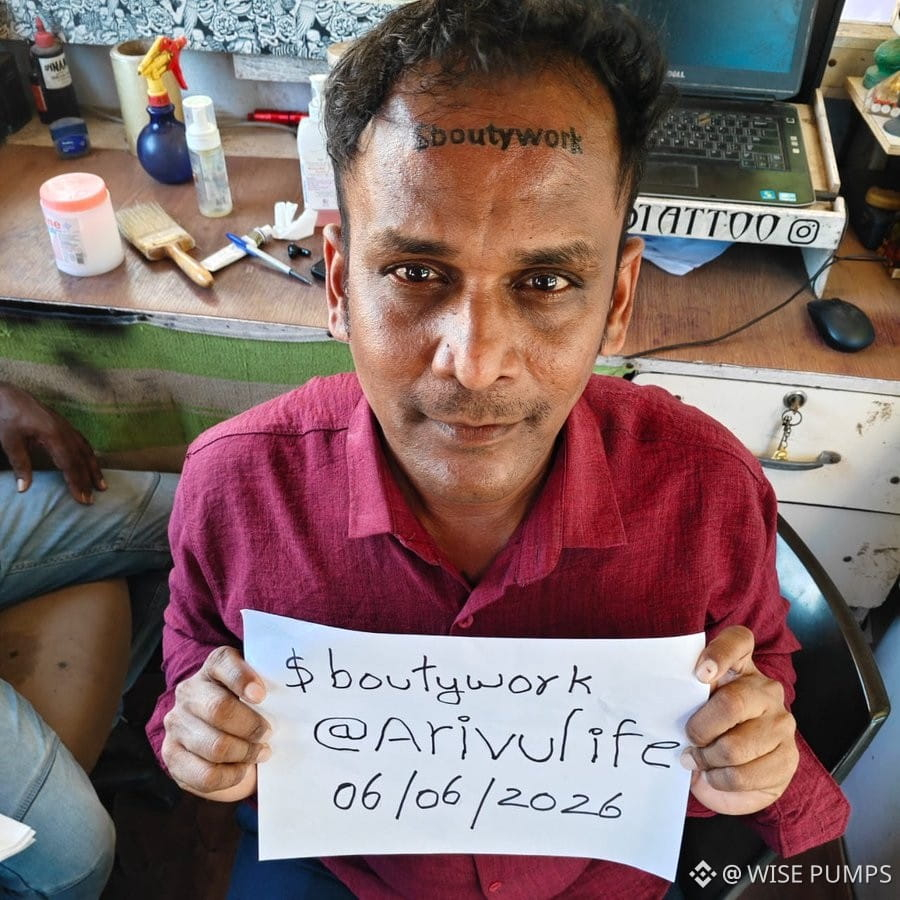
Remember the guy who got a forehead tattoo for the Pumpfun bounty?
What do you think he's doing today with the $30k he received?
Option A: Logging off and using the money in real life to help his family.
Option B: Gambling on Polymarket by betting on the Indian Premier League (current P&L: -$744)
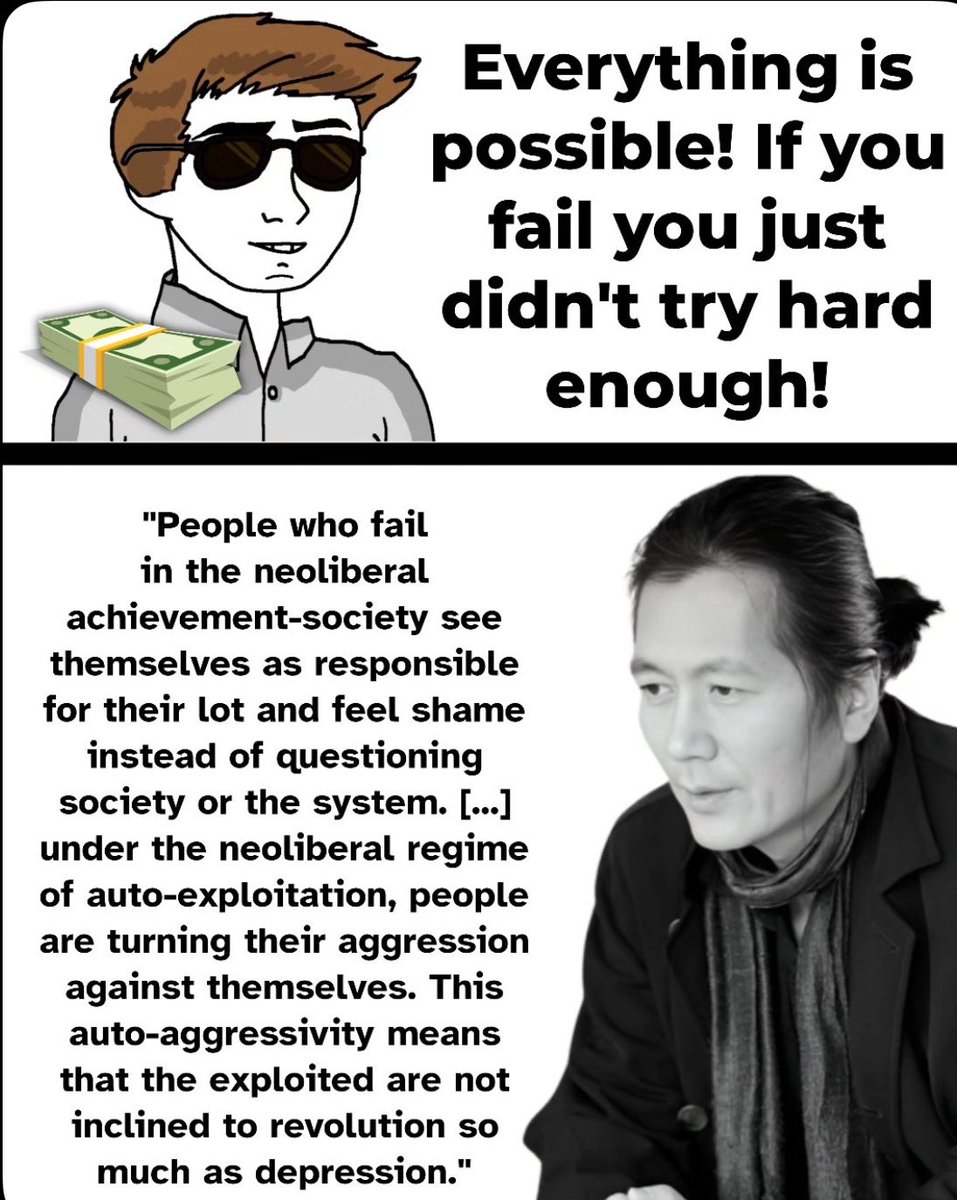
Morty: Capitalism gives everyone a chance to get rich if they just work hard enough.
Rick: Oh my god, Morty! Capitalism doesn't work if everyone wins. It needs poverty to function. Someone has to take the low-paying jobs so the profits keep flowing upward. If everyone had real financial security, no one would take those positions and the system would collapse.
Morty: But Rick, that's just how the market works. Some people earn more because they provide more value.
Rick: Tell that to the kid assembling your iPhone overseas for pennies while some CEO makes millions off it. Capitalism doesn't reward work, it rewards ownership. You don't climb the ladder by working hard, you climb it by owning the ladder. The workers collectively produce infinitely more value than some shareholder living in the Bahamas.
Morty: Okay, but isn't it about freedom People can still move up if they make good choices. Look at people who came from nothing and became successful, like entrepreneurs or celebrities.
Rick: Those are exceptions, idiot. That's why they're on TV. For every one person who makes it out, millions stay stuck because they never had the same luck, connections, or safety nets. The system needs those stories so people believe it's fair.
As someone who partially grew up among European elite kids like him, this reminds me just how incredibly hollow some of them are.
For a quick background, I went to one of the poshest high schools in France (Janson de Sailly, for those who know) and, afterwards, to what was at the time - and probably still is - the most expensive undergraduate school in Europe (EHL in Lausanne, Switzerland).
Needless to say, many of my classmates were from unbelievably privileged backgrounds. Just in my classroom in Lausanne I had the son of a (very famous) Russian oligarch, the son of Italy's largest real estate developer and the son of Spain's largest real estate developer (funnily, the latter two were flat mates).
Another classmate of mine came from the richest family in Naples, Italy and - while we were at school - his father (known in Naples under the nickname "Il Sultano") got arrested for having bribed half of Naples's city council - which, if you know Naples, ought to tell you something.
These were the kids I was doing group projects on business ethics with (literally) 😅
Anyhow, my story, and probably my luck, was that - before going to high school in Paris - I was raised in very normal public schools in the South of France where my friends were anything but wealthy. Their parents were farmers and everyday workers.
Which means - and I'd come to realize this was very important in life - that it was easy for me to understand how big a mistake it is to see money as identity and meaning - and to confuse someone's net worth with their actual worth.
What really struck me at the time was the contrast with my "poor" classmates of earlier in my life. They couldn't define themselves by what they had - by definition - and this forced them to reach deeper for their identity: their skills, knowledge, humor, etc.
Rich kids can skip that entire process, and the tragedy is that most of them do: they reach for the readymade identity that money provides. I remember being incredibly frustrated by many of my classmates, like "ok, I get it, your dad is rich and you own a lot of nice things but who are YOU, what else is there?" The answer, more often than not, was nothing.
To be fair, there were exceptions. One of my classmates I was most impressed by came from one of Zurich's wealthiest families (which, if you know Zurich, means insanely wealthy) yet he was almost OCD in not showing he had money: driving the shittiest car imaginable, living in a small studio, etc. He was very intellectual, very contrarian, and clearly at war with the idea that his family's wealth ought to define who he was.
I only discovered who he actually was when I started my first company and he approached me to invest: to discuss the investment I went to one of his family homes, which it turned out was a literal palatial castle on the shores of Geneva lake. The guy had decided to live in a small rundown studio when he literally had a castle sitting empty a 5-min drive away.
THAT I was impressed by: it's easy to see that money isn't meaning when you don't have any. To see it when you have more than almost anyone - when everyone around you is organized around the opposite assumption - is much harder. But to actually live it, to choose the studio when you have the castle keys in your pockets - with no audience to applaud you for that - that shows real depth.
At the end of the day, I think, the real distinction isn't between rich and poor but between people who exist from the inside out and people who exist from the outside in.
Wealth just happens to make it incredibly easy to be the latter, to skip the work of becoming someone and settle for a borrowed identity that glitters from the outside but is hollow all the way through. A Potemkin village identity.
This is actually a real societal issue, and magnified by social media (with idiotic posts like this one 👇): the more "outside in" folks out there, the less people with genuine internal anchors, the more fragile everything becomes.
When you think about it, everything that genuinely matters in a society is built by people who think for themselves: they take the world in, pass it through something genuinely their own, and give back something that didn't exist before: an idea, a conviction, a stand.
Every reform, every invention, every act of moral courage in history came from someone with an internal anchor strong enough to resist the current. Remove those people and all you have left is the current.
This isn't new, by the way. Most ancient traditions warn against exactly this, from the Bible (the golden calf story) to Confucius, who built his entire ethics around the distinction between the exemplary person (the Junzi, 君子) - oriented around internal cultivation and righteousness - and the petty person (Xiaoren, 小人), oriented around profit and gain. The junzi builds himself from the inside, the xiaoren chases what's outside.
So please, do not make the mistake of being impressed by wealthy people flaunting their wealth. Don't focus on the glitter, focus on the hollowness it's trying to hide.
The upcoming World Cup could cost global employers about US$17 billion in lost productivity, with 37% of workers planning to adjust their schedules because of the tournament.
Research from UKG found that 27% of employees are likely to miss work, while 11% admitted working while hungover and 14% secretly stream matches and highlights during work hours.
🧵1
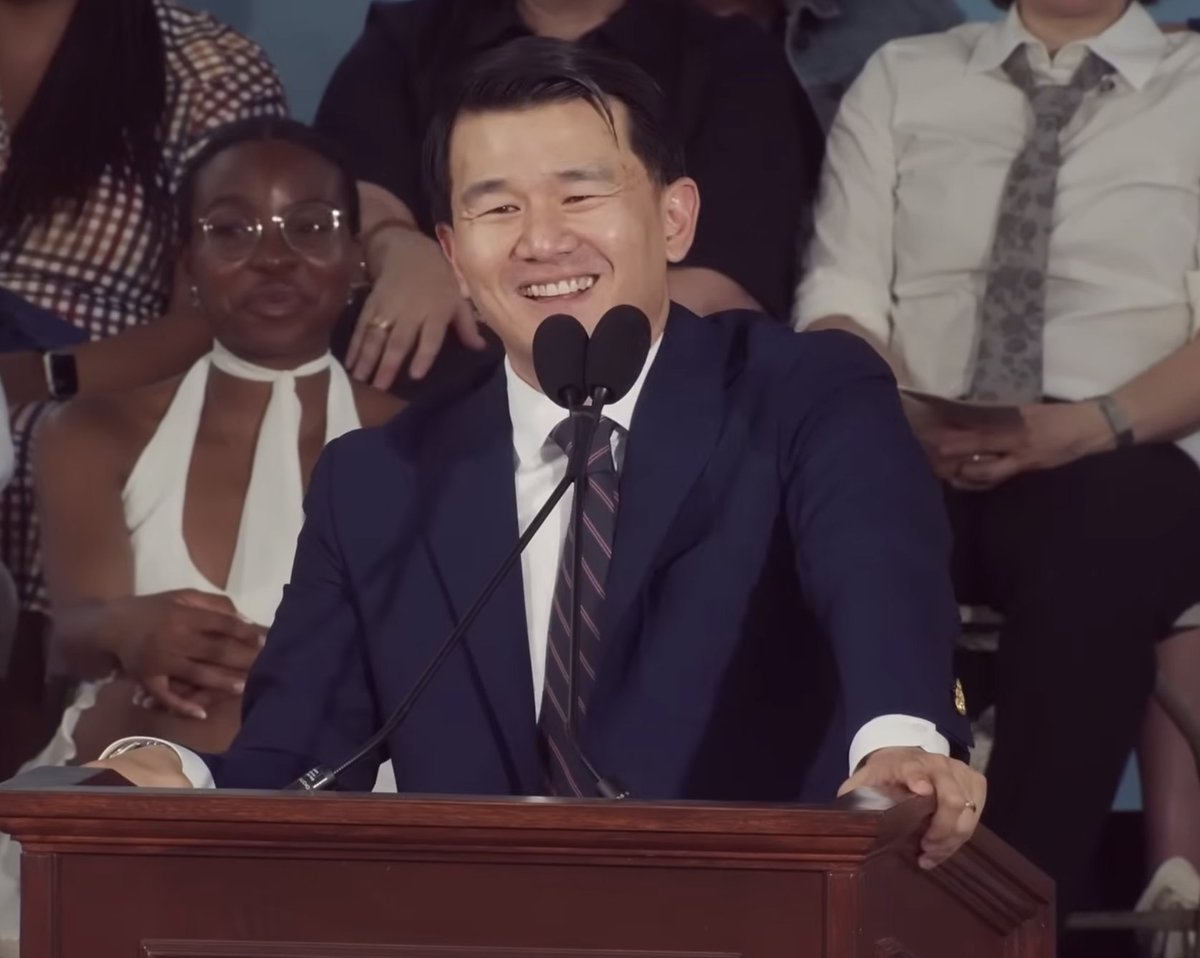
Ronny Chieng had one message for Harvard grads during his commencement speech: destroy AI.
"Look, a lot of other respected graduation speakers in colleges around America are talking about you guys needing to master AI for the future. I'm here to tell you the mission of your generation is to destroy AI...
"And I know, I know there's someone sitting out here right now who’s just like, 'Well, you know, what about the use of AI to pioneer breakthroughs in medicine and physics?' Well, first of all, shut up, nerd. I'm not talking about that. Obviously, if you're using it for that purpose, you're not the problem.
"I'm talking about the accumulation of cognitive debt due to excessive use of large language models according to a study by MIT published in 2025. That's right, MIT. MIT did that study. I guess you guys were too busy giving each other A's. Feel free to boo MIT, by the way, and AI, and yourselves, I guess.
"Look, this is actually good news, okay? This is why you guys shouldn't be scared of AI, because I think AI is just going to end up making mediocre people dumber. Have you heard how dumb people brag about how they use AI? They're always like, 'Hey, did you know that AI can now read my email, summarize it, and drop a response?' Yeah, you know who else can do that? Me. I can do that. You can't do that? How useless are you? You need artificial intelligence just to match me? I'm a dumb*ss who couldn't get into Harvard.
"From what I can see, getting an actual advantage from AI in the future will require a minimum escape velocity of intelligence that I'm assuming you guys from Harvard have. Everyone else who can't match that is just going to get dumber, and that's when you run up the score on them, assuming we still have a functioning society, of course.
"But to run up the score, you’re going to have to master your craft. And AI can be the fuel, but fuel is useless if you can't kindle the fire. For example, I recently used AI to use regression analysis to prove that a certain race of people are mathematically terrible at sports. I won't say which race, but thank you for not inviting Hasan Minhaj to Harvard. My point is, learning the fundamentals still matter. If I didn't know what a regression analysis was, and if I wasn't fundamentally racist, would I have been able to do any of that? No.
"Untalented people love bragging about using AI to help them draft their speeches and their scripts and their podcasts and their promo videos for UFC fights at the White House, which to be fair, even if they had filmed that for real, it would still have looked like AI. But what they're missing is this: the creating is the fun part. The best part of comedy writing is figuring out the puzzle pieces of a joke and getting the self-regard from having accomplished a difficult thing. Why would I want AI to take that away from me?
"You know what problem I want AI to solve? I want the problem of AI making everything look like sh*t. I want AI to solve that problem. How about that?
"Or how about, can AI take away the part of comedy writing where my TV pilot gets passed on and when I ask if I can pitch it to someone else, the network says, 'We don't want it, but we also don't want anyone else to have it. We just want you to be sad.' Can AI solve that?
"I recently tried to introduce my friend to Buddhism through a book called Buddhism Made Simple. It was literally a book about Buddhism made simple. And instead of reading it, he used AI to summarize it in 10 seconds. Believe it or not, he didn't reach enlightenment. It turns out speed running Buddhism is completely missing the point.
"And I know this platitude is almost worthy of AI, but the reason shortcuts to skip to the end aren't always good is because the journey isn't just how we acquire skills. The journey is the point of all this. It is! It turns out maybe the real Harvard was the friends we made along the way.
"Look, I know this won't apply to everyone's industry, but I'm just saying whatever your chosen profession is, please don't let AI rob you of the fun part of it.
"I think your generation's upcoming battle won't be humans against AI. That's at least two months away. It's going to be people with substance versus people with shallow knowledge. It’s going to be mastery versus faking it. It's going to be people with good taste versus tacky. I trust you will put in the work necessary to be on the right side of those battles."
@Root_Edge@GeckoTerminal@base hey! When u mean buggy mind sharing more details? Wanna fix it.
Anyways we've processed ur submission. TQ for the patience
Introducing a new way to understand crypto ✨
Crypto moves fast—but price alone doesn’t tell the full story.
To help you make sense of what’s happening, we’ve introduced new features for deeper context, clearer comparisons, and smarter portfolio insights.
See what’s new: https://t.co/kyXw063vFW
The GT Verified badge is now an attribute in the CoinGecko Onchain API ✅
Building with onchain data or launching a token?
Builders can now filter and flag tokens by verified status. Project owners get distribution across every DApp pulling from our API👇