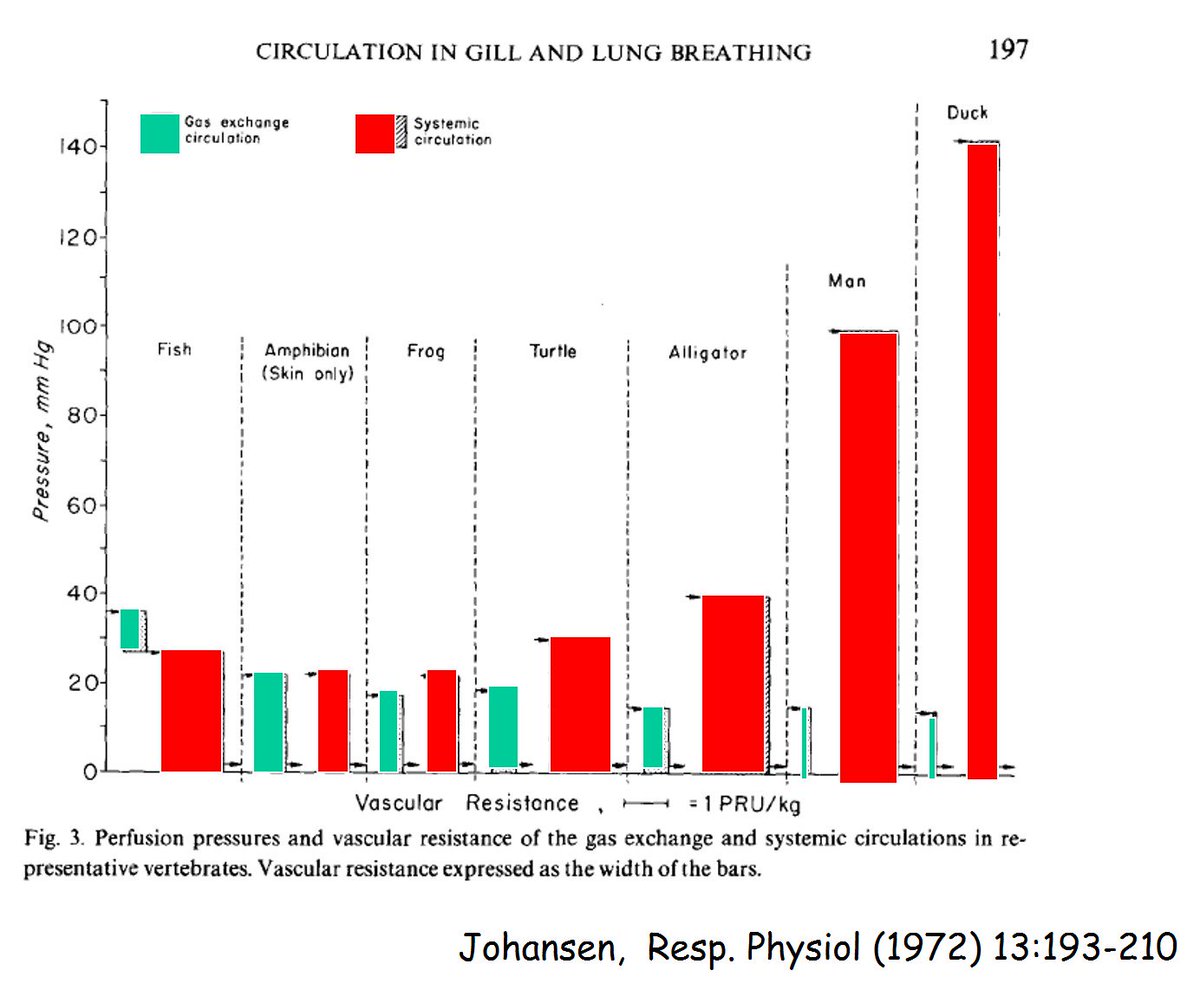
@wllm_ptrs @JJRyanMD @MariaLevitinMD Thought I would drop this back into an old conversation about the consistency of "pulmonary/branchial circulation pressures across all vertebrates.
Kjell Johansen, Heart and circulation in gill, skin and lung breathing, Respir. Physiol 1-2, 193-210 from 1972.
@zhumeng123@MZG_Lab@ZernickaGoetz Interesting review and lots of unanswered questions. With all the talk of 'polarity', 'topology', 'energy', why don't you consider basic redox activity, electron transport, paramagnetic vs diamagnetic forces? Cells require energy to do their thing
Unexpected result - the mitochondria contributed by both oocyte and sperm contribute to cell polarity through producing H202.
An example for how cellular metabolites affect cortical polarity @wllm_ptrs
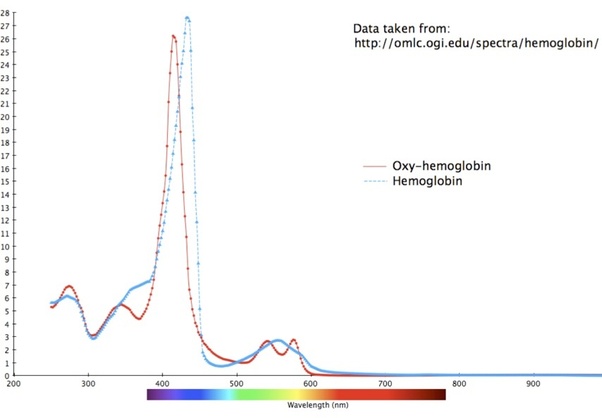
Not that iron itself doesn’t matter! The slight difference in color between arterial & venous blood, for instance, results from the state of the iron ion (ferrous vs ferric), which influences the π → π* and n → π* electronic transitions of porphyrin and optical properties./7
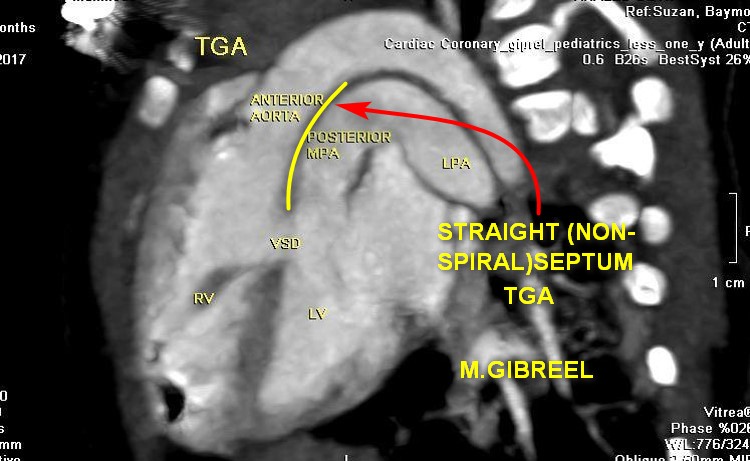
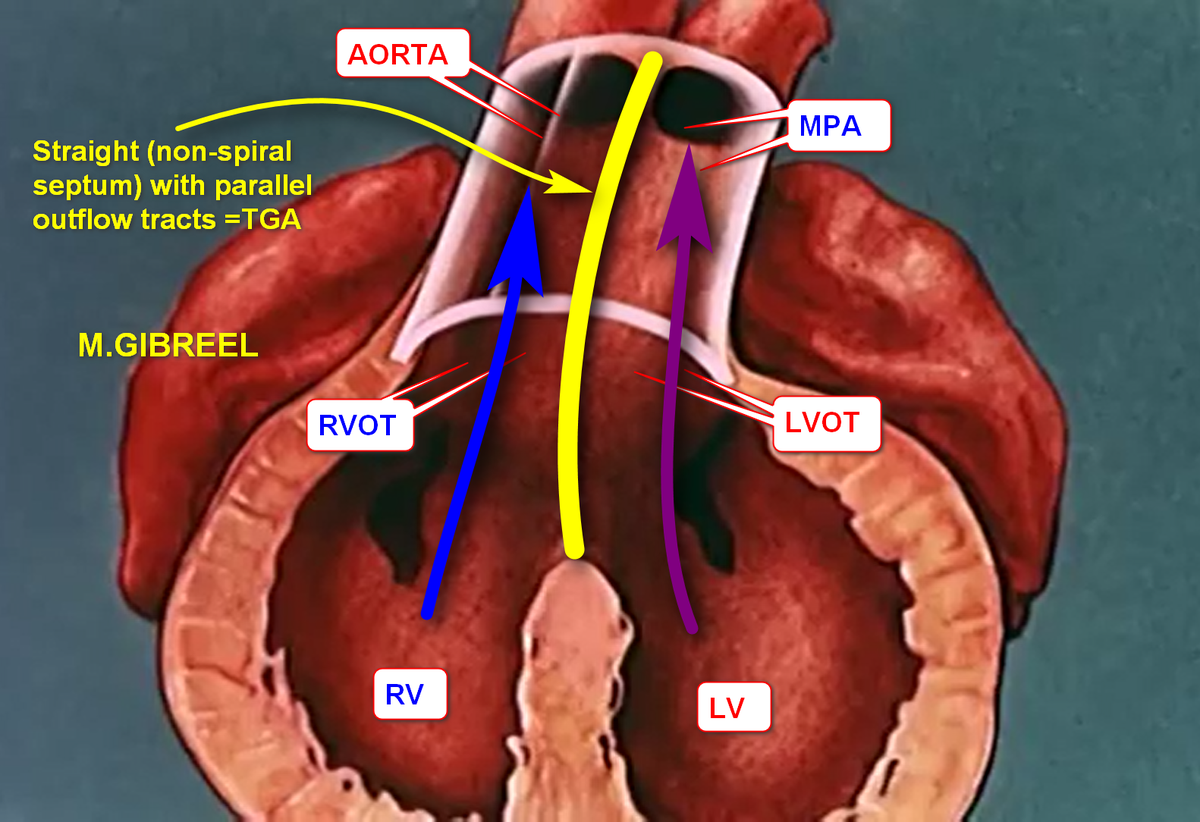
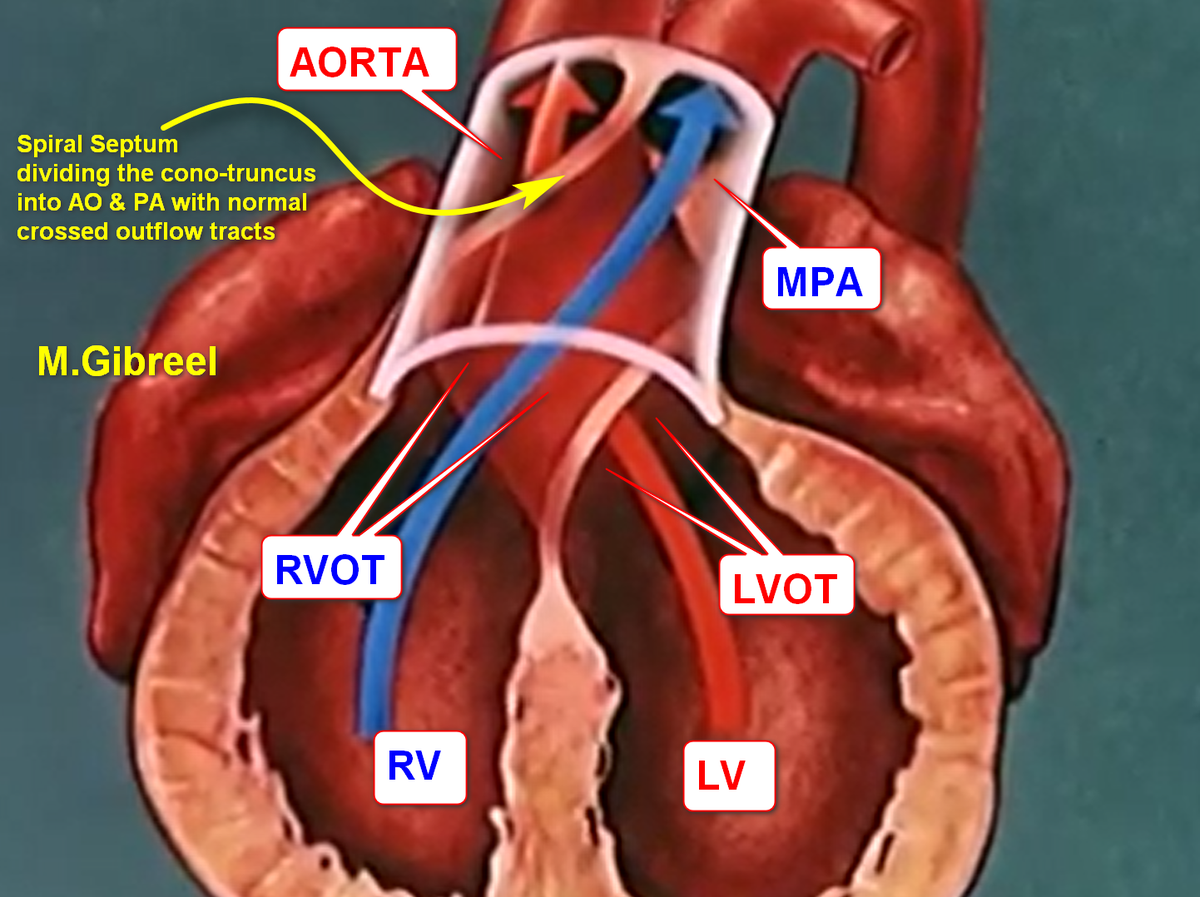
Regarding the TGA
i always say "TGA= aorta from RV".
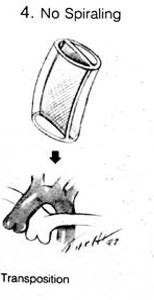
Normally the septum that divides the conotruncus into LVOT/AO & RVOT/PA should be spiral if being straight =TGA , if no septum at all=truncus arteriosus , if anterior cranial septal deviation=TOF, if there was defect=APW
@jamil_tajik @adnanalkhouli@JaeKOh2 This really intrigued me when we did some of the basic science works @MayoClinic There is more to the momentum than eye meets—When a group of researchers confirmed our early observations, I wrote this editorial that links the story https://t.co/xcR389uyuP
@wllm_ptrs @jamil_tajik @adnanalkhouli@JaeKOh2@MayoClinic There are reasons for that as well, but not well established...your questions are making me think of new projects to help answers, most are hypothesis, here’s a more of a hypothesis for RV form and function https://t.co/Z9FjDWh4uE
📢Most viewed #Review 2024-2025
🌟The Functional Significance of Cardiac Looping: Comparative Embryology, Anatomy, and Physiology of the Looped Design of Vertebrate Hearts
by Jörg Männer from Georg-August-University Goettingen
Full paper: https://t.co/fteHYUkgGt
The original Dracula novel is far stranger and more profound than modern adaptations suggest.
Dracula is a deeply Christian story about the reality of evil and the struggle for the human soul. Bram Stoker's symbolism of blood, for example, and the contrast between vampiric immortality and Christian eternal life are fascinating to unpack.
The titular Count is not the brooding, romantic figure of modern vampire stories, but something far darker that lurks at the edge of our consciousness...
---
Athenaeum Podcast Ep. 21:
The Real Meaning of Dracula
w/ @megha_lilly
Thermoregulation and Invasion 🐢 Invasive population of Trachemys scripta elegans maintained high thermoregulatory capability despite suboptimal habitat thermal conditions, potentially providing a competitive advantage over native species #InvasiveSpecies
https://t.co/H6NfhbqvGR
Our internal organs are evolutionary marvels. New technologies are transforming our understanding of the evolution of vertebrate organs. You can find more by reading here: https://t.co/HkfDJl1dzo #EvoBio#EvoDevo
🐟🦎🐢🦇🐊🦜
Motivated by the remarkable discovery a decade ago that the cell body of the green algae Chlamydomonas acts as a lens to focus light on to the cell's photoreceptor, we consider two related contexts in geometrical optics: the "incoming" and "outgoing" problems.
Here's a tortoise embryo developing inside its egg. Check out our new article in @iScience_CP to learn how molecular and mechanical systems sculpt their intricate head scales 🐢🔬
Very excited to share our @Trends_Ecol_Evo review paper on #punctuated_evolution: a pattern of long-term stability interrupted by dramatic changes. A thread on the origins of rapid change, from large #extinctions to socio-technological #disruption.🌍🧬🛠 https://t.co/95Db5TqGPP
I am thrilled to be leading a new institute funded by NSF and Simons Foundation. It is called the National Institute for Theory and Mathematics in Biology or NITMB. Check it out a https://t.co/o9S5yNLDcO and @nitmb_ to learn more!
With the return of Asimov Press, I am delighted to share an article on a topic I’ve been obsessed with for a while: theory in biology as a generative element of discovery.
Indeed, theory serves not only to explain known phenomena and find patterns in collected data but also to predict the existence of new biological entities and entire mechanisms of biological processes. When I set out to study the history of theoretical biology, I was surprised to find out how wide-ranging its realm is: from biosemiotics and philosophy of biology to computational neuroscience to population genetics to cybernetics and systems biology. And yet, theoretical biology as a whole seems to have less prominent institutional standing compared to theoretical physics.
I tried to find out why, and along the way also address a deeper question: is there a fundamental difference between theories in biology and physics? Can biology be as compressible into laws as physics?