@sukenwoo@raspishake @obspy @matplotlib The code as it was over a year ago, is on github here: https://t.co/y28qcWTQ8y it uses the version of ObsPy from then and the way to access raspberry shake data may have changed, but it would be a start.
A section from today's M7.6 earthquake from Kepulauan Tanimbar, Indonesia at 2023-01-09 17:47:34UTC recorded across the globe on the @raspishake#CitizenScience seismology network. See: https://t.co/h5746TBjxy. Uses @obspy & @matplotlib libraries.
Responses on @raspishake network to the M6.5 earthquake in Papua New Guinea on 2024-04-14. It's good to have data available for the Raspberry Shake network via fdsn from https://t.co/AdvZEv6Qlg, using @obspy and @matplotlib. Interesting to see strong responses in the shadow zone.
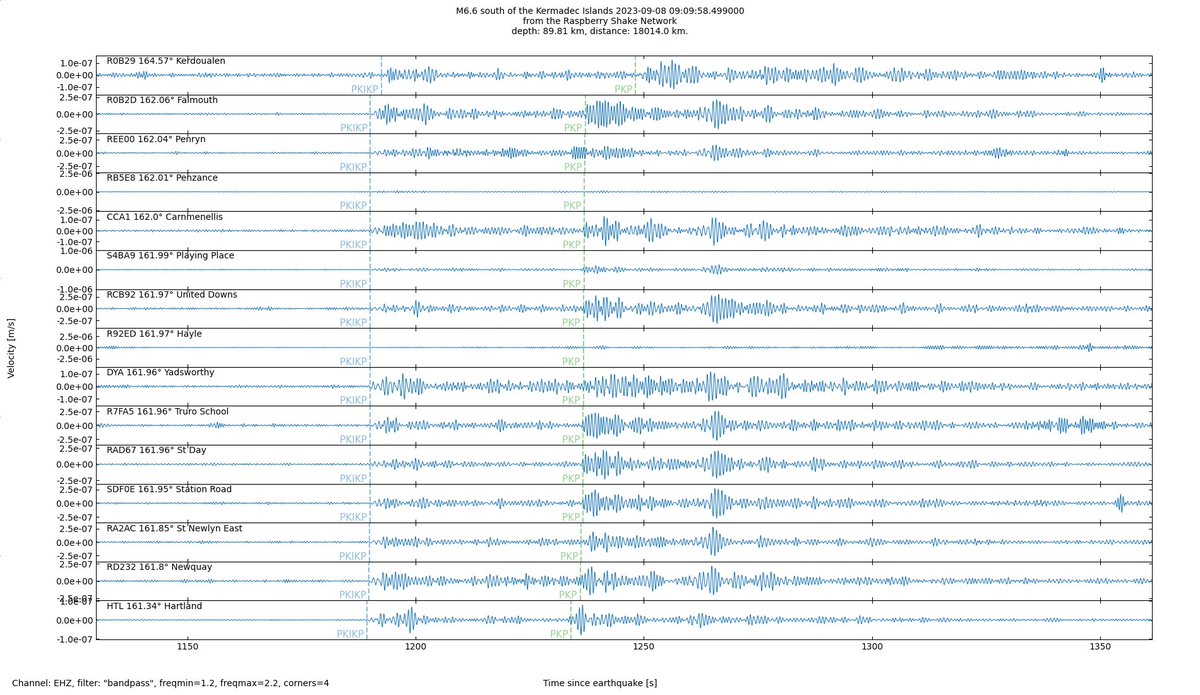
@marcdgodfrey@raspishake Here it is in Cornwall, PKIKP and SKIKP have both passed through the inner core, PKiKP and SKiKP have both reflected off the inner core. Two very clear sets of signals received in the core shadow zone, which I find really cool.
ESRI ArcGIS map with Spilhaus One World Ocean projection, emphasising the connectedness of the world's oceans. Magma colour scheme and more traditional bathymetry colour scheme with the last 12 months M5.5+ earthquakes from the United States Geological Survey. #cartoMOOC.
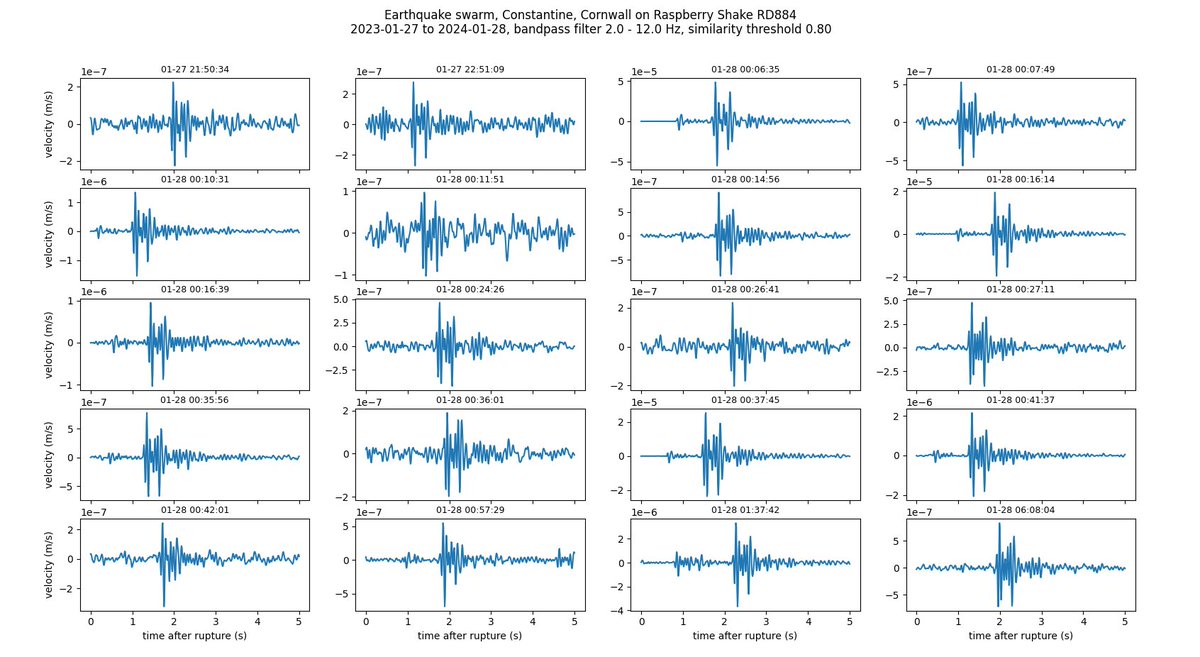
On 2024-01-28 @BGSseismology reported seven earthquake events at Constantine in Cornwall, the largest being a M1.6 here: https://t.co/GQxJrgsOwp. Using @obspy cross-correlation, I have identified 20 events on @raspishake RD884 in Constantine on 27-28th, plotted using @matplotlib.
Section from today's M7.1 earthquake in Vanuatu, with responses from the worldwide @raspishake citizen science seismology network. For more information see: https://t.co/fe8SGwKpx0.
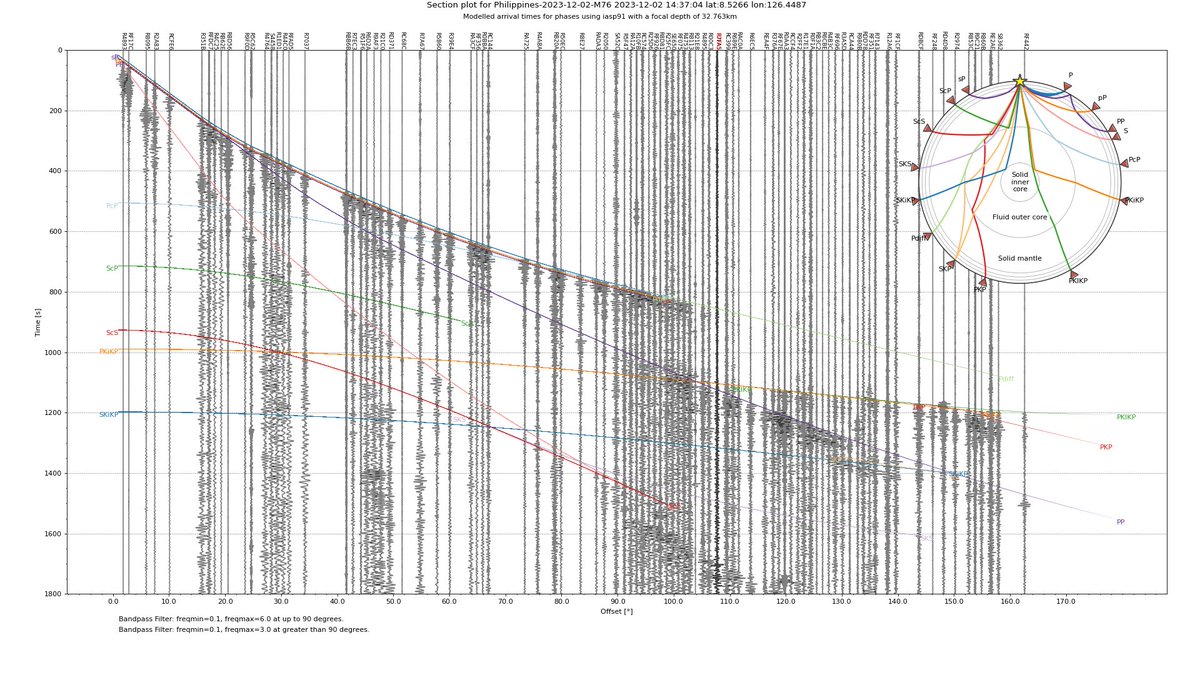
Section from the M7.6 earthquake in Mindanao, Philippines at 2023-12-02 14:37:04UTC recorded on the global @raspishake network. See: https://t.co/2B9LVSXrES. Uses @obspy and @matplotlib libraries.
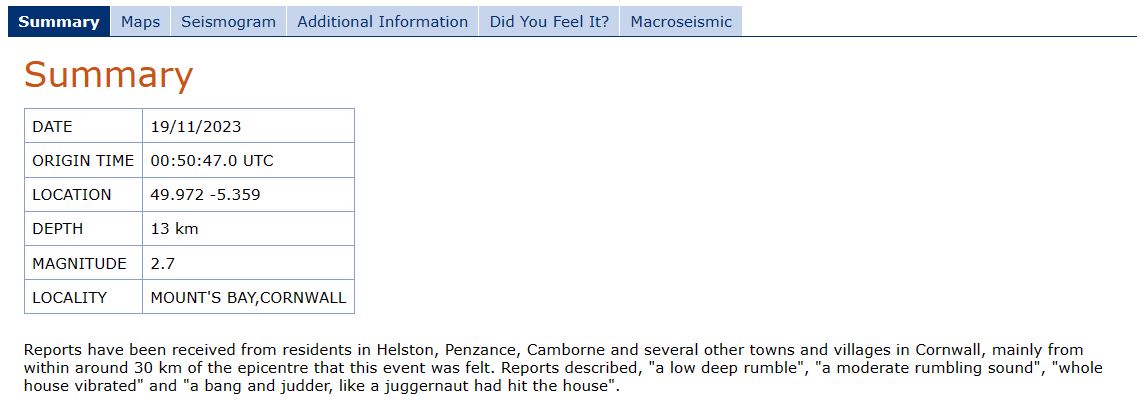
@planetkooler@raspishakEQ@raspishake @GeoScienceGeot1 @Raspberry_Pi Mount's Bay earthquake responses from @raspishake and @BGSseismology seismometers, with BGS showing a slightly revised location, now a little bit closer to Penzance. Revised screenshots of BGS summary, map and seismograms. I don't know where seismometer SBD, though.
@2footgiraffe Thanks for contacting me. The guided practical that I used in class for earth's layered structure and size of the core was by @EarthScope_sci here: https://t.co/dNyIlRTQFr. I used @raspishake data from a recent quake, but the video guide might make it easier to use their data.
Saturday's 509 km deep M5.6 earthquake from Indonesia was detected 12809km away, 115° from the epicentre, in SW England and Brittany, France on @raspishake and @BGSseismology seismometers. See https://t.co/lkeE3qRAdg. The first arrival is a PKiKP reflection from the inner core.
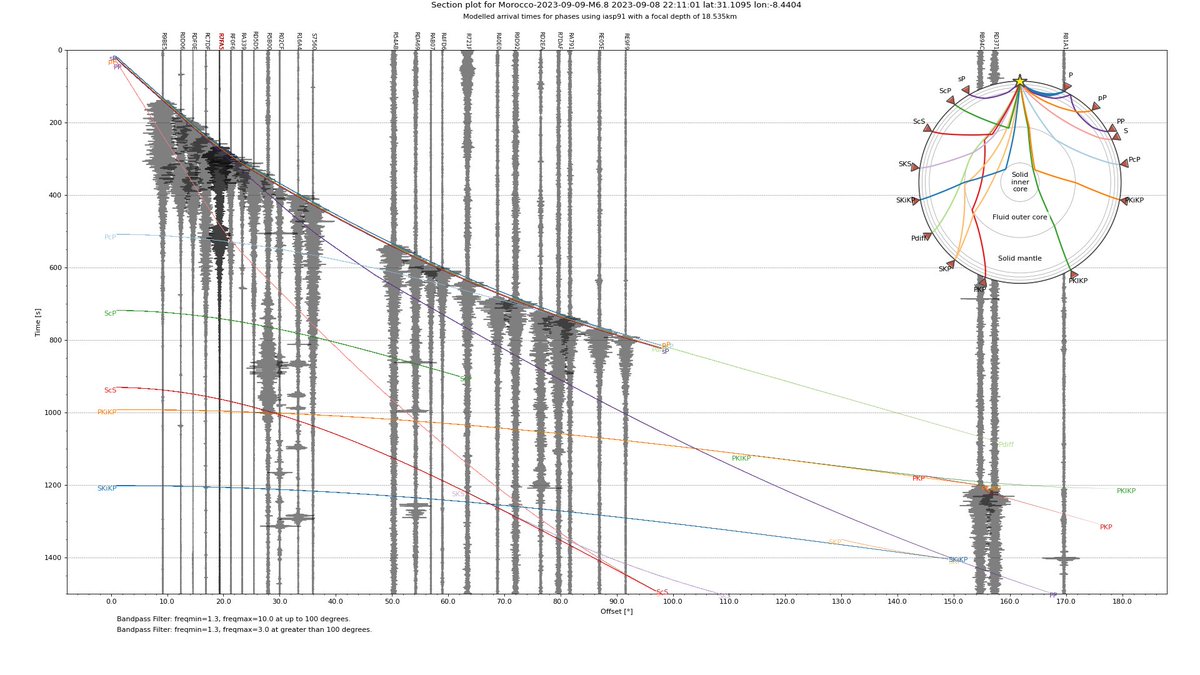
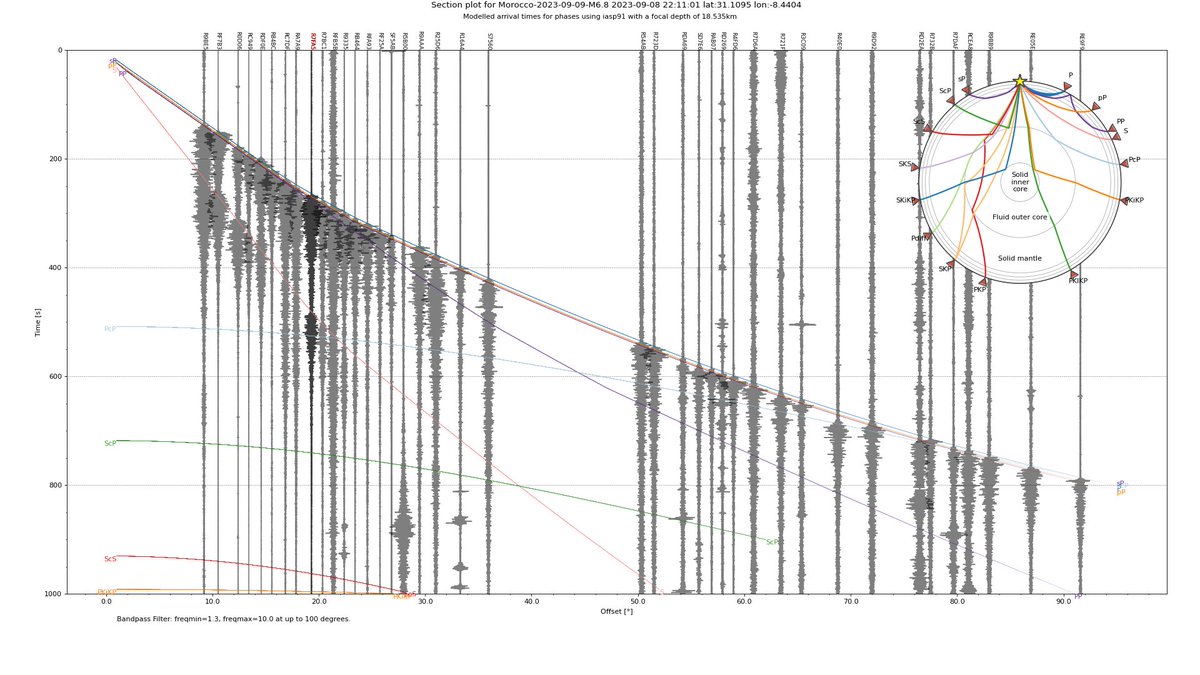
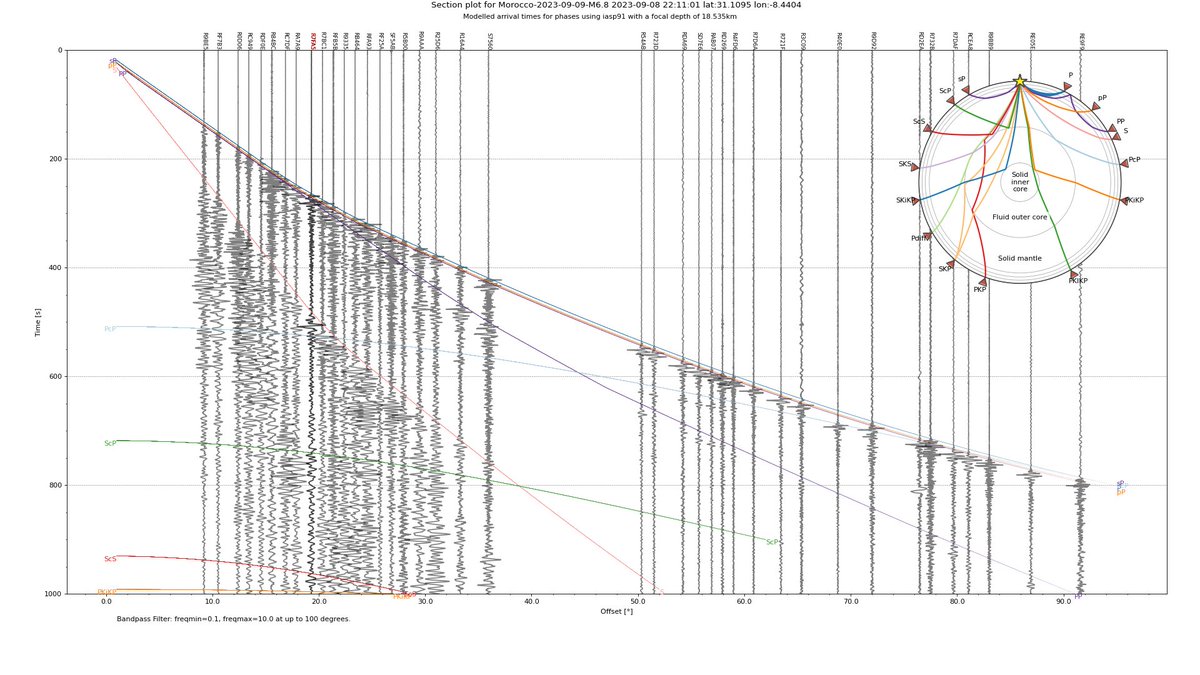
Sections showing responses on @raspishake citizen seismometers across the globe, to yesterday's deadly M6.8 earthquake in Morocco. On the 0-180° section, a response can be seen in Wellington, NZ. On the 0-95° section, filtered at 0.1-10Hz, there are PcP reflections from the core.
@JudithGeology Thank you for Earthquake Insights, a very informative read about this destructive, unfolding event and helpful background to news of the accompanying human tragedy.
@SteveBCaron@raspishake The M6.8 in Marrakesh, Morocco is the big news this morning in the UK and the news is sad, of many fatalities, people relatively unprepared in a zone that does not frequently get large earthquakes and historic buildings that were not very earthquake-proof.
@SteveBCaron@raspishake For us, the Kermadec quake at 18,000km is the 5th most distant that we have ever recorded, our first arrivals are PKIKP phases, which have passed through the solid inner core and so have arrive here ahead of the PKP phases that just passed through the molten outer core.