Some passengers fled the plague-infected cruise ship.
Twenty-three passengers from the plague-stricken cruise liner MV Hondius disembarked on the island of Saint Helena — the very island where Napoleon Bonaparte spent his final years and eventually died, though not from rat plague.
Back on April 21, the 23 tourists left the ship and scattered to their homes across different countries. One of them has now been hospitalized in Switzerland with a confirmed hantavirus infection. An anonymous passenger still remaining aboard the vessel revealed this in an interview with the newspaper El País.
The twenty-three passengers left the liner ten days after the first death on board and returned to countries including Australia, Taiwan, the United States, the United Kingdom, the Netherlands and others. The WHO only managed to establish contact with them more than two weeks after their departure.
The passenger said:
“Twenty-three people got off on Saint Helena. They’ve been wandering around there, and until three days ago nobody had even contacted them.”
According to the WHO, eight cases of infection have been recorded so far, three of them laboratory-confirmed. Three people have died, one British citizen is in intensive care in Johannesburg, and another patient is hospitalized in Switzerland.
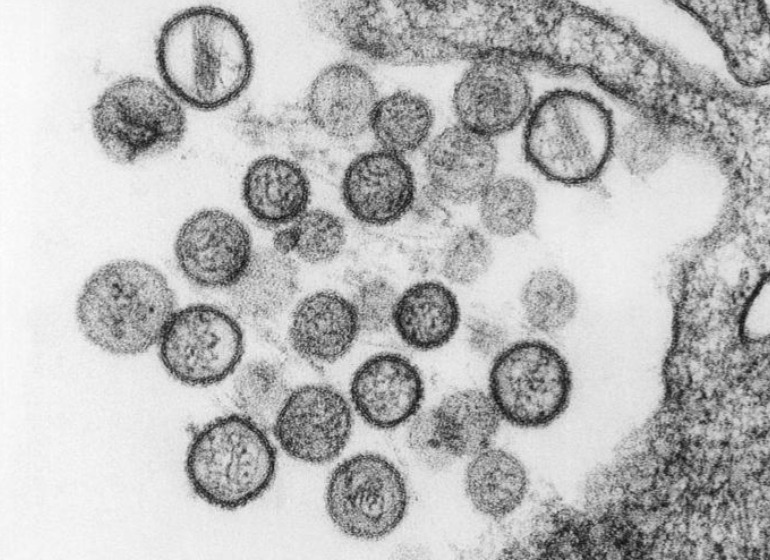
On Wednesday, the organization confirmed that the outbreak was caused by the “Andes” virus — the only hantavirus strain capable of spreading from person to person. Its fatality rate is even higher than plague: around 40% of those infected die. There is no vaccine and no specific treatment.
Last night, the Hondius departed from Cape Verde bound for Tenerife. Docking is expected on May 9. After arrival, the ship will remain isolated until inspectors confirm that all viral danger on board has been eliminated.
Passenger evacuation will begin on May 11. Those who show no symptoms will undergo medical screening before being repatriated to their home countries.
🇺🇸 Why was Moderna working on a hantavirus vaccine?
Since 2023, Moderna has been quietly developing an mRNA hantavirus vaccine with South Korea's VIC-K. Preclinical, mouse trials, no human data yet.
Then a cruise ship, the MV Hondius, reports an outbreak of hantavirus cases, resulting in 3 deaths.
Moderna’s stock spikes 10% almost immediately.
A vaccine that is still years from human trials, for a virus that doesn't spread easily between people, suddenly moves markets because a boat had an outbreak.
Hantavirus kills 30-40% fatal in severe cases. There's no approved vaccine anywhere in the Western world. So yes, the concern is real.
But the stock move wasn't based on a breakthrough, it was based on fear. And some were positioned for it before the headlines hit.
Source: AP
SAR Scan of Khafre Pyramid Shows Huge Underground Structures. Deep beneath the Great Pyramid of Giza, hidden from the eyes of the world, archaeologists have made a discovery that could change everything we think we know about our history. Eight gigantic, spiral-shaped cylindrical structures descend more than 600 meters into the depths reaching toward the Earth’s core, into a concealed dimension of knowledge. If this discovery proves to be true, it would not only be the most significant archaeological revelation of our time but also evidence that our past is far more complex than we have been led to believe. Perhaps it is the confirmation of what many have long suspected: that there is a hidden history one that has been deliberately kept from us. What secrets might lie within these deep chambers? Who built them, and for what purpose? The answers could forever change our understanding of humanity. Let's explore this together on the 4bidden Tour Of Egypt 2025. LINK IN BIO