This is a bronze votive cart from Etruscan origin. It shows in the middle and Mediterranean god related with rivers, Aqueloo, and two griffins on each sides.
Supporting this car axle we see two unknown men who could be other gods or important people. In short, a unique finding.
New archeological discovery in Turuñuelo (Badajoz).
This is one of the most important archeological site in Spain that corresponds to the late Tartessian culture in the 5th century BCE.
This site is known as an abandoned temple or palace with interesting findings like this one.
Although these paintings may seem similar to children’s drawings at first glance, their creation was based on a elaborate method that allowed artists to express their emotions and ideas freely.
Others argued that this art was accessible only to a wealthy and educated elite.
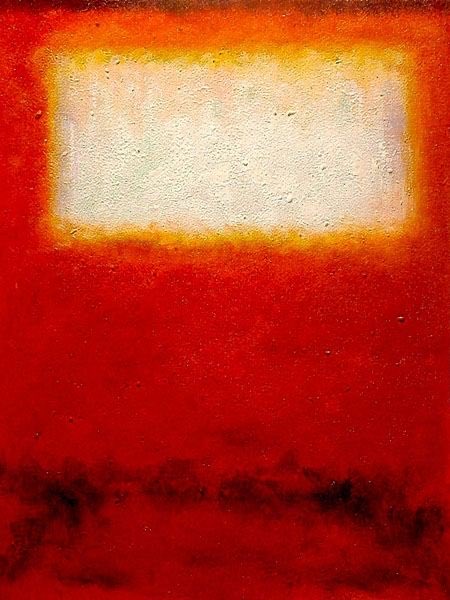
White over Red II by Mark Rothko.
This painting belongs to the Abstract Expressionist movement. He used large rectangular fields of colour with soft, blurred edges, creating a sense of depth and luminosity. He also add texture to produce tonal variations and shadow effects.
These artistic resources are intended to evoke emotional responses and encourage viewers to immerse themselves in the work.
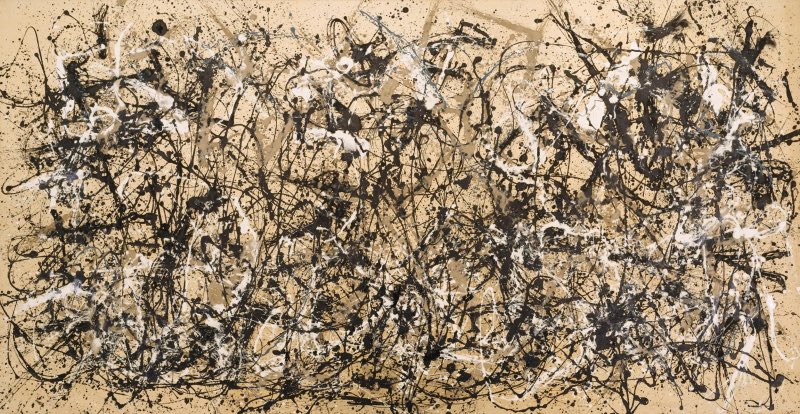
This artistically principles were also followed by Pollock who used his personal application of colour to create powerful compositions, like Autumn Rhythm.
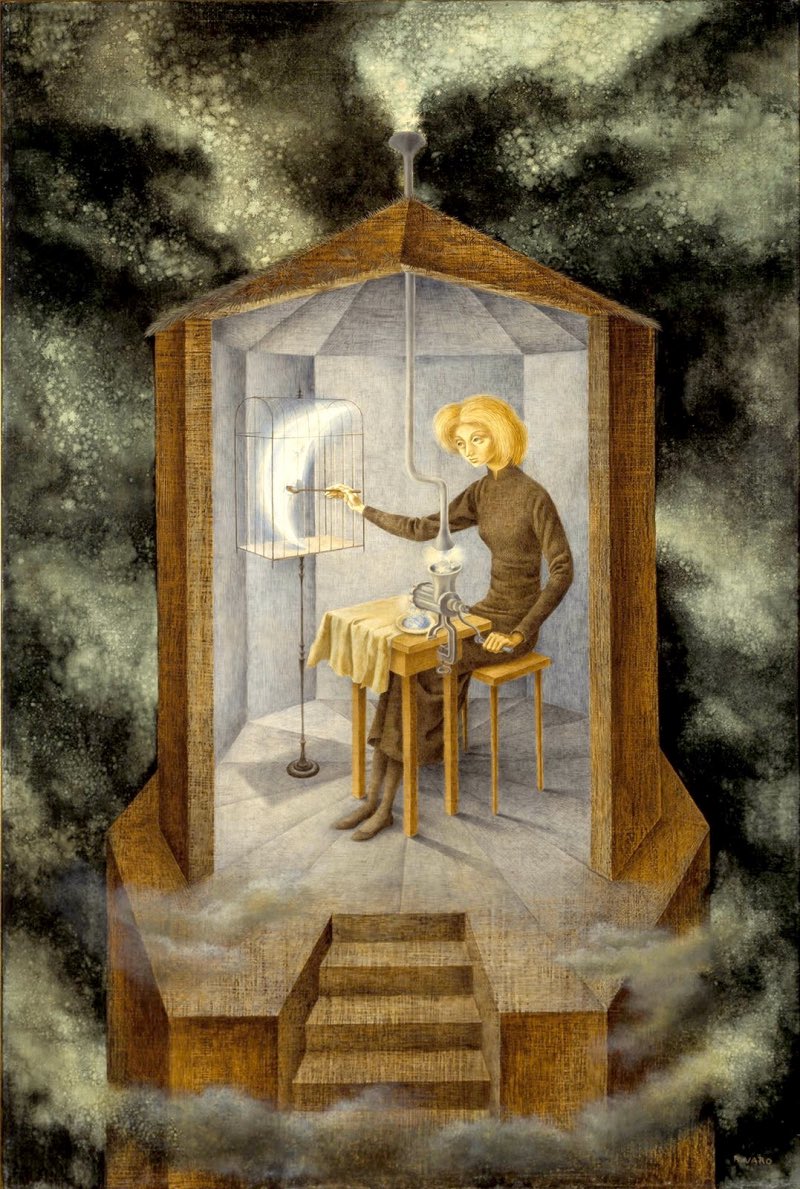
Another brilliant female artist associated with Surrealism and Magical Realism is Remedios Varo.
Like Ángeles Santos, she developed unique and imaginative worlds, using magical and dreamlike scenes to express her ideas and explore the limits of reality. An example is Star Maker.
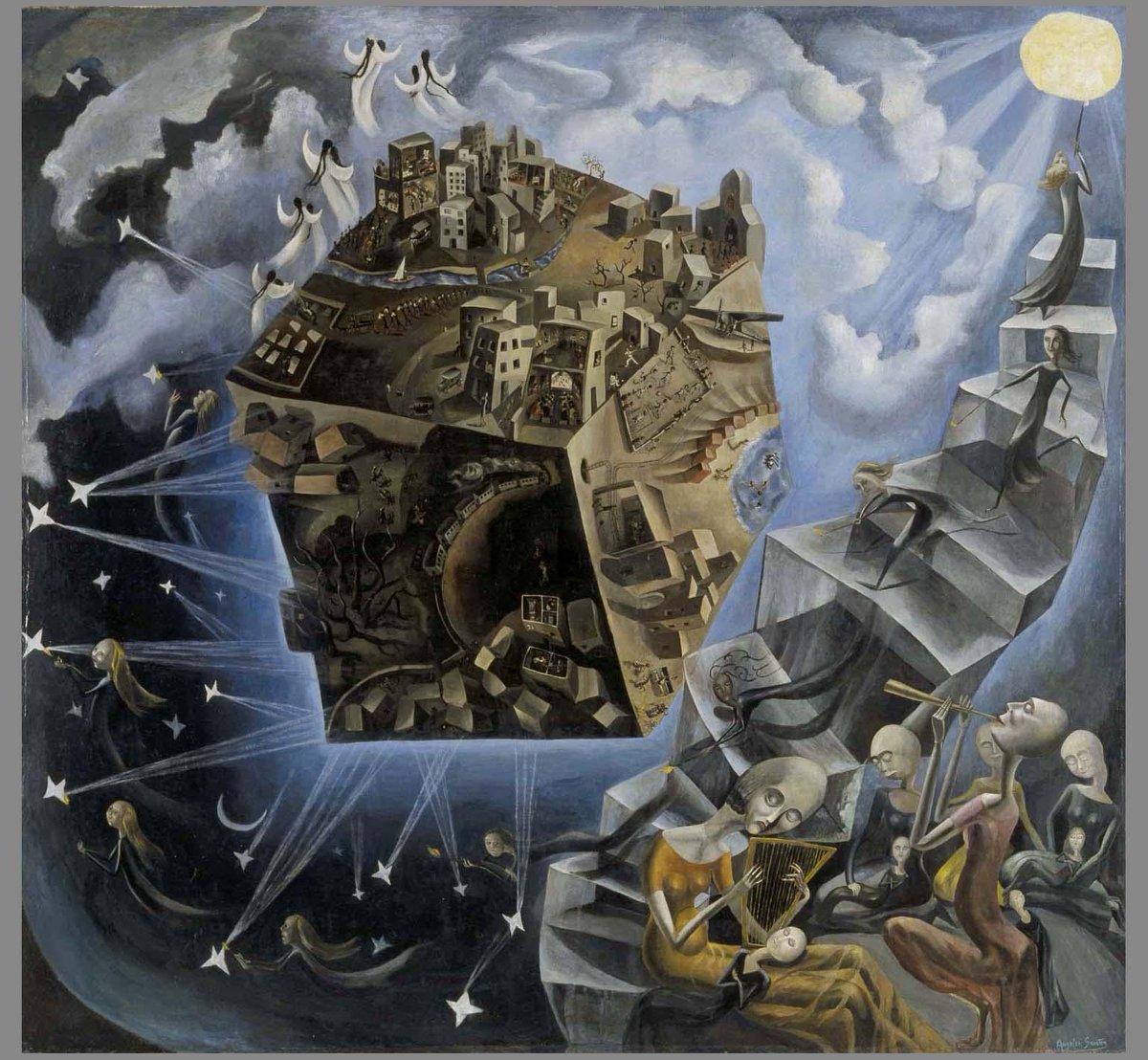
“A World” by Ángeles Santos.
She painted it when she was only eighteen years old and it reveals a unique imagination and artistic vision. Her work was overlooked, however she is now known as one of the most significant Spanish artists in Surrealism and magical realism movement.
This allowed to spread art among low resources people in Japan. Also, it influenced European art in late 19th century, specially Impressionism and Postimpressionism with simple compositions and application of colour in uniform sections.
Ukiyo-e is a Japanese way of art that loterally means “picture of floating world”. It flourished during 17th to 19th century to represent nature, figures, historical events or folk tales.
Maybe the most famous example could be the Big Wave by Kanagawa.
The topic of the painting was usually used by artist as an excuse to represent naked woman body. Gentileschi give it a feminist discourse vindicating the abuses and violence woman have to deal with.
We can see the differences with other representations like Rube’s or Tiziano’s.
Susana and the Elders by Artemisia Gentileschi in 1610.
It represents Susana, a young girl who was taking a bath when two men stated telling her indecent proposals. She refused them due to they accuse her of adultery. The Lucas managed to save her and condemn the old men.
Dubuffet broke with rationalism and academic art, he try to create something more dynamic and spontaneous. He got back to the primitive art to found in the beginning a new and more significant art language.
L’instant propice (1962) by Dubuffet in the Guggenheim Meseum of Bilbao.
This painting participates in the movement called European informalism. The author created an abstract environment, from all this chaos some figures seem to emerge.
The piece is composed from vibrant colours that contrast between them. In addition, some irregular lines draws some figures as an act of creation.
These are not beautiful at all, they are horrible, even frightening what makes we realise that sometimes humans could be monsters.
It’s symbolise that sometimes the opposites are attracted to each other.
In other painting of this series, n°2, Hilma represents the black swam, the masculine, with his wing broke due to the colliding of both swam.
The swam, N° 1, Group IX/SUM by Hilma af Klint in 1912.
It’s an abstract painting that represents a symbolic message the author came up in esoteric sessions.
She anticipated other abstract artist like Kandinsky, creating her works through automatism and intuition.
This painting has a strong symbolic meaning in which two swam almost symmetrical touch in one point, in something similar to a kiss. The swam are opposites, the author contrast white and black, that following researchers interpretations, represent the famine and the masculine.
This is made by many allegorical icons that represent Spain hugged by the constitution and surrounded by many values such as liberty, strength, justice, agriculture, rivers, canals, peace or industry.
They promote the values in which are going to be based the new liberal nation.
Set of sculptures on the Congress of Deputies of Spain in 1848 by Ponzano in neoclassical style.
It was uncharged by Isabel II to decorate the building, being the biggest set of sculptures done in that century.
When it was founded, Bernini was in charge of restoring it. It’s thought that Bernini made the right bent leg.
However some researchers uphold that Bernini didn’t participate in the piece.
Barberini’s faun 1st century BC.
It’s a sculpture in marble, a roman copy of the original Greek made of bronze.
It’s amazing how that piece was made in the classical antiquity, as we see the technique it’s quite modern. The pose, drama and anatomy is so advanced.