The world's income map has shifted since 1987.
Low-income countries went from 30% to 11%
High-income economies went from 25% to 41%
Learn more with the recently launched 2026-2027 @WorldBankGroup Country Income Classifications: https://t.co/mqfXBmeQot
Closing employment gaps in poor households could reduce extreme poverty by about one-fifth. Raising the earnings of poor workers could cut it by nearly half.
Our new #3PR explores why both more and better-paid jobs are critical to ending poverty: https://t.co/usra5X4hLp
Firms in high-income economies innovate more—and productivity is more evenly distributed.
28% introduced a new product or process, vs. 16% in low- and lower-middle-income economies.
What the first complete global Enterprise Surveys cycle reveals: https://t.co/NuadPwIoTx
We asked AI to read building energy laws in 119 cities. Not summarize them, but answer 60 legal questions per city, cite the exact provision and say “insufficient evidence” when needed.
Then another model—and humans—checked every answer.
See what worked: https://t.co/EuSm1Wnuhg
Nearly one in five people worldwide are estimated to be at high risk from climate hazards.
The new PARCH map lets you explore where exposure to floods, droughts, heatwaves and cyclones overlaps with poverty and other vulnerabilities.
Explore the map: https://t.co/mEbISuncrg
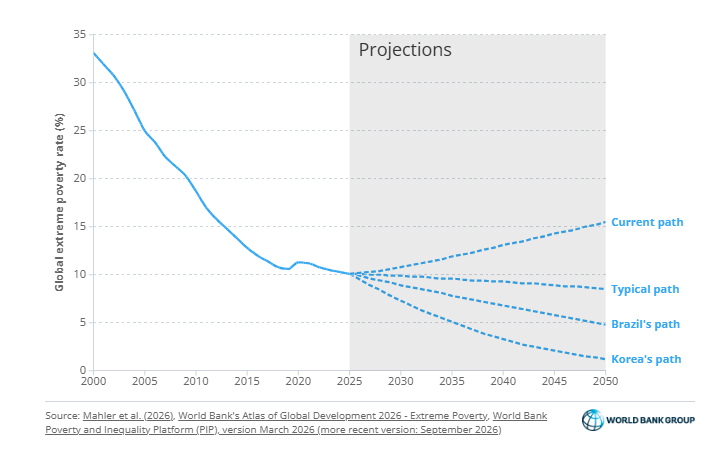
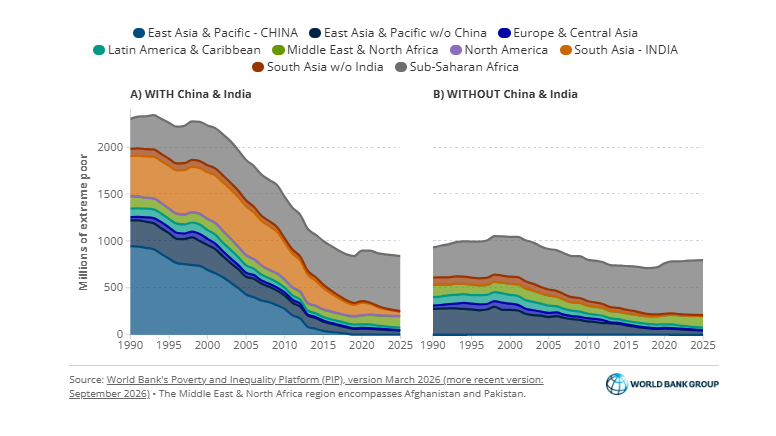
1950: 60% of the world lived in extreme poverty.
2025: 10%.
One of the biggest development gains of the past 75 years.
But progress has stalled—and the path to 2050 is far less certain.
Five facts from the data: https://t.co/Bov1BKBpaa
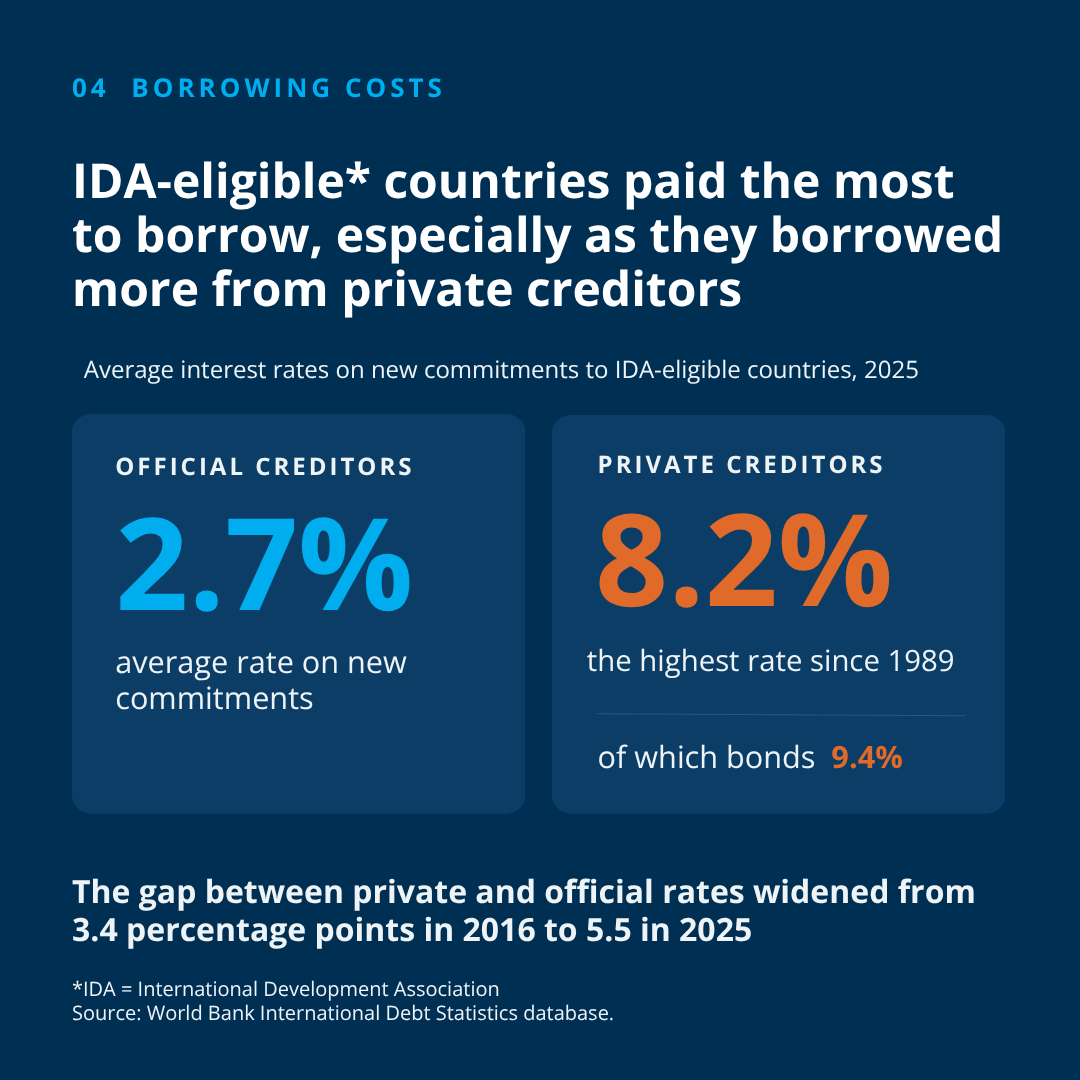
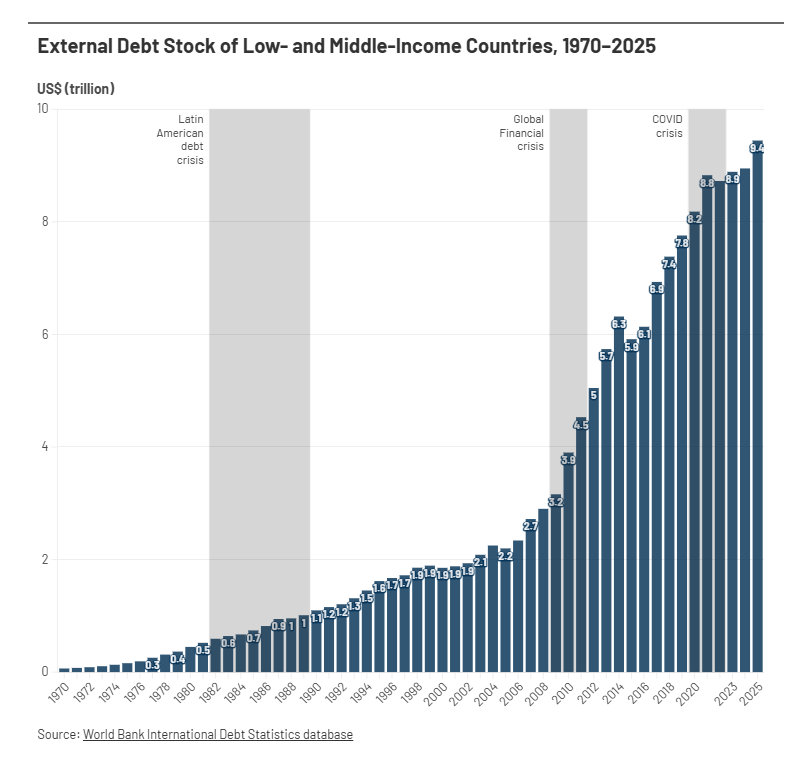
External debt of developing countries jumped 5.5% to a record $9.4 trillion in 2025, the fastest pace since 2021, and about four times the 2022–24 average.
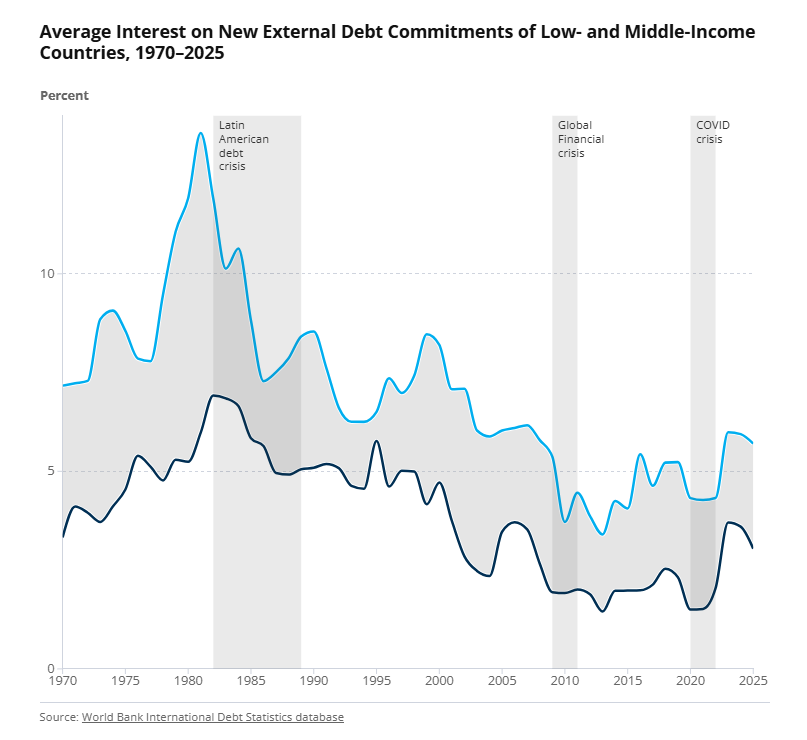
Access to international finance has improved, but the price of finance has not.
Read #IDR2026 ➡️ https://t.co/uOvTqiJcR5
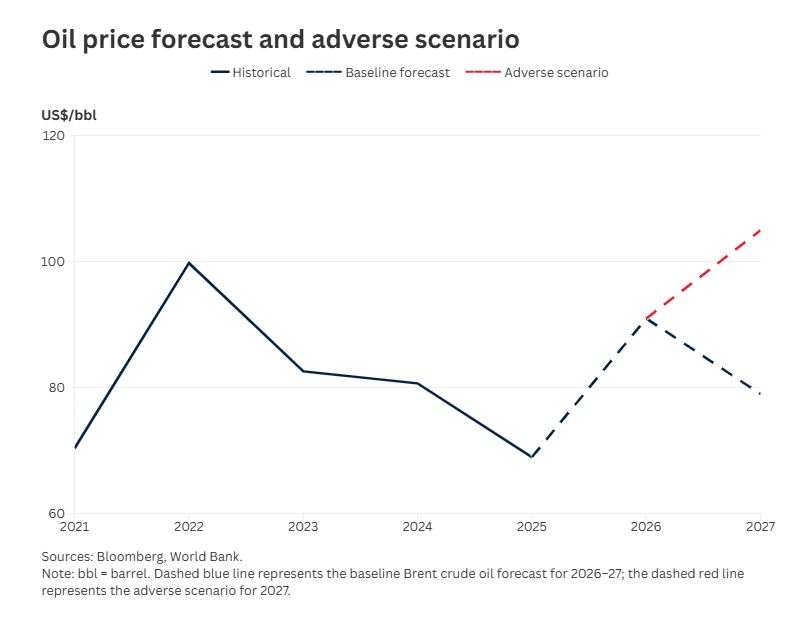
Global commodity prices are forecast to rise 23% in 2026 as conflict drains oil inventories and leaves markets exposed to new shocks.
The #CMO2026 shows energy, food, and metals prices all under pressure.
➡️ https://t.co/hWalr4Ebh2
Poverty.
Food security.
Jobs.
Governance.
Energy.
Agriculture.
Innovation.
The October 2026 World Development Indicators update brings new and revised data across the development agenda.
See what’s new and explore the data: https://t.co/WeEsi8PmKZ
Low- and middle-income countries paid $436 billion more in principal and interest between 2022-25 than they received in new financing.
Access to finance has improved. But the price of it remains high.
What does our new International Debt Report reveal?: https://t.co/vxkCyBxMv0
In 1950, 6 in 10 people worldwide lived in extreme poverty. By 2025, it was 1 in 10—even as the global population more than tripled.
Five data-driven facts on 75 years of progress—and what could happen by 2050: https://t.co/Bov1BKBpaa
#Oil markets have absorbed major supply disruptions in 2026. But inventories have paid the price.
Global stocks declined by an average of 2,400,000 barrels/day from March to September, leaving less buffer against future shocks.
See what's next: https://t.co/xeIe8zV3bb #CMO2026
External debt in low- and middle-income countries reached a record $9.4 trillion in 2025. At the same time, debt service rose to $1.4 trillion.
Our latest International Debt Report #IDR2026 shows why access to finance alone is not enough, see the charts: https://t.co/vxkCyBxMv0
As new data from the International Debt Report show, private creditors returned in force and bond markets reopened in 2025, but the poorest countries' borrowing faced the highest costs in decades.
➡️ https://t.co/uOvTqiJcR5
Our International Debt Report is out!
Developing countries' external debt hit a record $9.4 trillion in 2025, up 5.5% and growing nearly 4x faster than the 2022–24 average.
Access to finance is improving, but it remains costly.
#IDR2026 ➡️ https://t.co/uOvTqiJcR5
AI adoption is widespread. Deep adoption is not.
Among surveyed firms using AI internally, 57% are still experimenting or deploying it on a limited scale. Just 10% have embedded it across core processes.
What’s keeping firms from moving further?: https://t.co/r55aLZsB6V
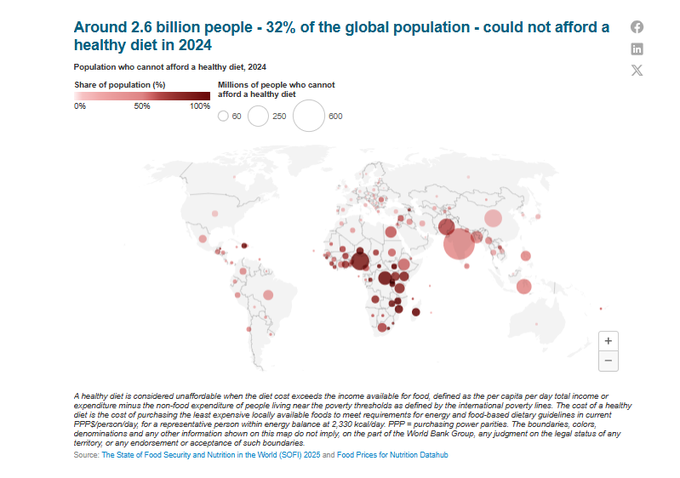
Global access to healthy diets is improving—2.6 billion people couldn’t afford one in 2024, down 48.8 million from the year before. But progress is leaving low-income countries behind.
Read what the latest @WorldBankGroup and @FAO data show: https://t.co/UKOLf7c3p1
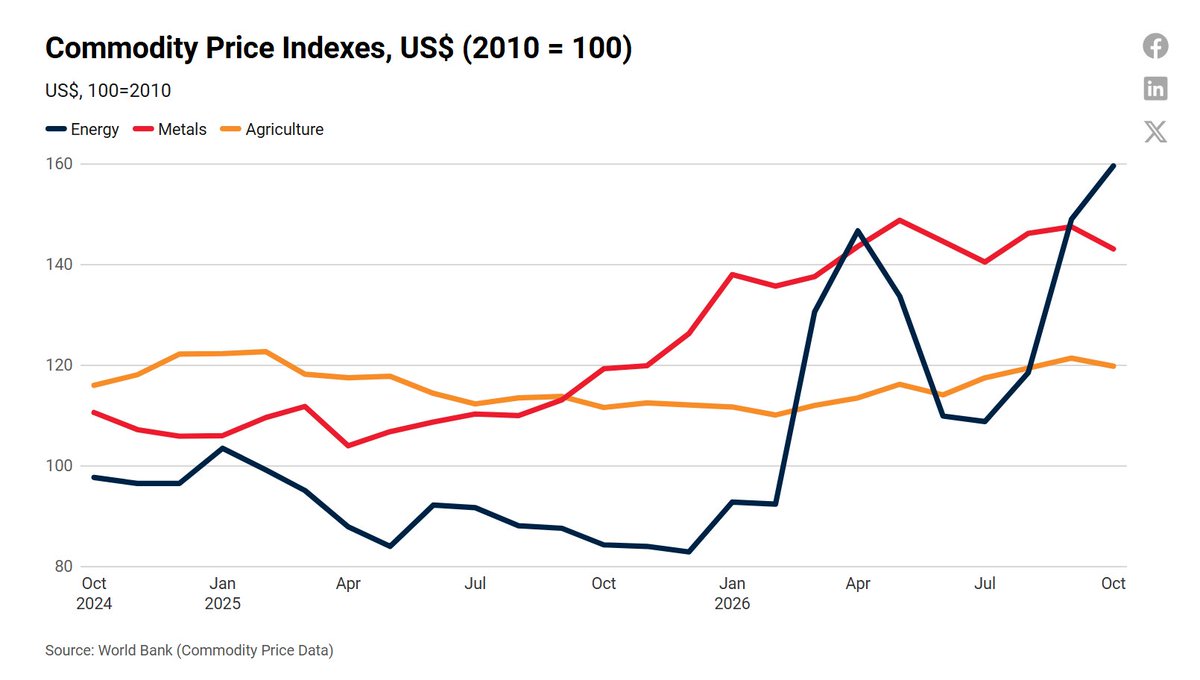
Energy prices rose 7.1% in October, driven by higher natural gas prices in Europe (+12.1%) and Brent crude oil (+7%).
Meanwhile, metals prices fell 3% and food prices declined 1.8%.
The latest Pink Sheet tracks commodity price movements across energy, agriculture, and metals:
Caribbean statistical systems are improving.
Across eight upper-middle- and high-income Caribbean countries, the average SPI score rose from 42.8 in 2016 to 60.1 in 2024.
But the region still trails its income peers.
What needs to happen next: https://t.co/C4SnhH2B3g
Conflict and weather shocks are driving food insecurity across vulnerable regions, while escalating conflict and displacement are increasing the need for food assistance.
More details in our latest Food & Nutrition Security Update: https://t.co/6whPgciUPh
Are the developing economies of Europe and Central Asia capitalizing on AI’s potential to create jobs and boost growth?
The @WorldBankGroup’s latest #ECAUpdate outlines how firms and governments across the region are adopting this tech and ways forward: https://t.co/kvMdrYhwxO