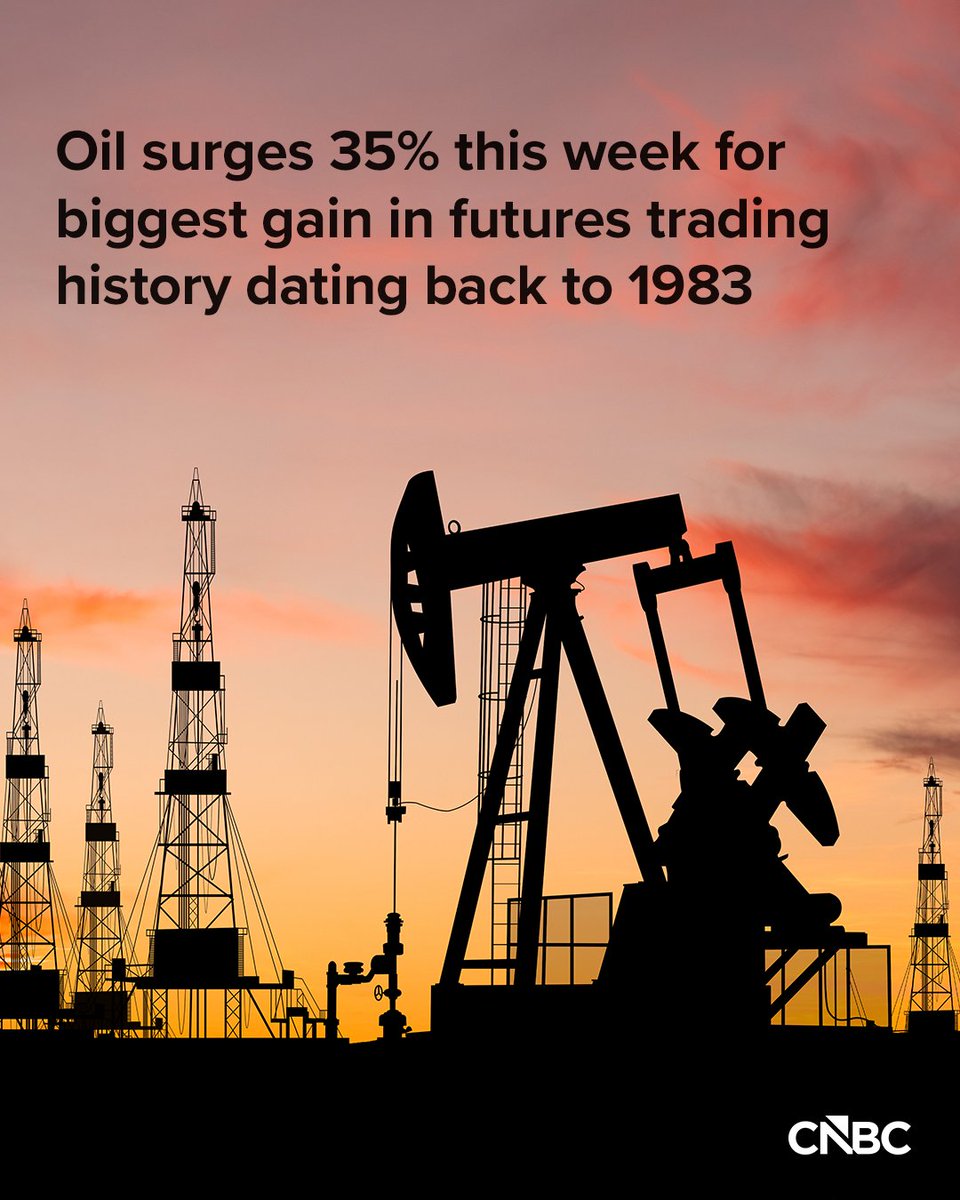
U.S. crude oil on Friday posted its biggest weekly gain in futures trading history, after President Donald Trump demanded unconditional surrender from Iran, raising fears of a prolonged war that will cause a cascading disruption to global oil supplies. https://t.co/MByMrPJFkR
#FinanceDaily
Key Topics and Discussion Points
1. Geopolitics & Energy War (The Core Thesis)
The Catalyst: The discussion centers on a recent major event—an attack on Iran. The speakers argue this is not a simple, short-lived conflict.
Control of Waterways: A central theory proposed by Anas and David Levinson is that the U.S. is strategically using the conflict to gain control of key global waterways, specifically the Strait of Hormuz. This is seen as a move to control global energy flow and exert power over competitors (like China and the EU) and adversaries.
The Insurance Angle: A unique point is raised about how the Strait of Hormuz was effectively "closed" not by Iran, but by European insurance companies (like Lloyd's of London) canceling policies for tankers. This is presented as a politically convenient move that gave the U.S. a reason to step in and offer government-backed insurance and naval escorts, effectively taking control.
Winners and Losers: The panel concludes that the big winners are the U.S. and Russia, while the losers are China, the EU, and especially emerging markets (India, Egypt, Bangladesh, etc.) that are highly dependent on energy imports.
Syria's Role: The conversation connects the conflict to Syria, suggesting that opening up Syria is a prerequisite for building new pipelines to the West (Europe), redirecting energy flows away from Asia.
2. Financial Markets & Macroeconomics
Oil Prices: The initial spike in oil prices is discussed. However, the panel believes it will be contained (in a $10-15 range) due to massive inventories being pushed out of the Gulf before the attack and the expectation of a demand-destroying global economic slowdown.
The Dollar and Emerging Markets: A key debate is the strength of the U.S. dollar. One view (David Levinson) is that the dollar will strengthen as capital flees emerging markets and flows into U.S. assets, particularly mortgages. This will be devastating for EM currencies (like the Korean won, Indonesian rupiah, etc.).
Inflation vs. Deflation: The panel argues that rising oil prices in the current environment are deflationary, not inflationary. They "soak up" consumer capital that could be spent elsewhere, and without wage growth (which is being suppressed by AI), it doesn't lead to a wage-price spiral.
Interest Rates & Mortgages: There's a detailed analysis of the U.S. mortgage market. David Levinson argues that the entire market is positioned for a "steepener" (long-term rates rising), but a "bull flattener" (long-term rates falling) is coming. This will crush mortgage-backed securities and private credit funds but will ultimately lower mortgage rates, benefiting mainstream America and boosting home prices ahead of the election. This is framed as a massive, deliberate liquidity grab.
Private Credit: The panel discusses troubles in the private credit space, specifically mentioning Blue Owl and Blackstone facing redemption problems and Apollo's CEO stoking fears, calling it a slow-moving trainwreck.
3. Tech, AI & Crypto
AI Competition (Anthropic vs. OpenAI): The discussion revisits the "ban" of Anthropic from government contracts and OpenAI filling the void.
Brandon points out that this might be a huge win for Anthropic, as public attention and consumer adoption (Claude's app skyrocketing) surged due to the controversy. He also notes talent is leaving OpenAI over the military partnership.
The differing strategies are highlighted: Anthropic is seen as more enterprise/B2B, while OpenAI is more consumer/B2C.
AI in Banking/Enterprise: Paul and Timothy discuss the challenges of implementing AI in highly regulated sectors like banking and insurance. While AI is used for fraud detection and personalized offers, banks are terrified of using it due to compliance, cybersecurity, and data leak risks. They often resort to "shadow IT" (using separate laptops) to get work done.
Perplexity & AI Agents: Carlo and Timothy discuss Perplexity and the future of AI as a "general contractor" that uses multiple AI agents (GPT, Grok, Gemini) simultaneously to perform complex tasks, moving beyond simple chatbots.
Stablecoins & Banking War: Carlo provides a detailed update on the legislative battle.
Jamie Dimon's comments (stablecoin issuers should become banks) are seen as a sign banks are "existentially threatened."
Trump's subsequent Truth Social post attacking the banks is viewed as a major confirmation that the White House is on the side of crypto/decentralization in this fight.
The news that Kraken received a Federal Reserve master account is hailed as a massive milestone, allowing crypto exchanges to become "neo-banks" and provide an alternative to the traditional banking system for moving money.
Bitcoin & Crypto: Carlo and David Levinson note Bitcoin's resilience during the war, trading north of $71,000. Levinson sees it as a long-term beneficiary of geopolitical instability.
SpaceX IPO: The panel briefly discusses the hype around a potential SpaceX IPO, with Brandon tempering expectations about its size compared to giants like Saudi Aramco.
4. Corporate & Market News
Nvidia's Investment: Nvidia is investing $4 billion into Lumentum and Coherent for silicon photonics to build next-gen AI factories.
AES Buyout: A massive $35 billion power deal where EQT and BlackRock (with CalPERS and others) are buying AES.
BYD's Struggles: Eric and David Levinson discuss BYD's 41% year-over-year drop in sales, the intense competition in the Chinese EV market, and the challenges of expanding overseas due to higher costs and different infrastructure needs (favoring plug-in hybrids in North America).
Apple's New Strategy: Eric closes with a note on Apple launching a more affordable MacBook, seeing it as a smart move to capture more market share and get its AI-capable hardware into more hands.
Elliott & Pinterest: David highlights Elliott Management's $1 billion investment in Pinterest, framing it as a "baby thrown out with the bathwater" situation where a value investor is betting on financial engineering (buybacks) over business repositioning during a market downturn.
The Martians will decide how they are ruled. I recommend direct, rather than representative, democracy.
Uncrewed Starships landing on Mars in ~2 years, perhaps with crewed versions passing near Mars, and crewed Starships heading there in ~4 years are all possible.
Elon Musk: Be careful what you wish for.
“You want to be careful of these things where you wish for something that sounds good, but if you get it, it's actually a dystopian situation.
You could run a hypothesis, like if you wish for world peace, it sounds good, but how is it enforced?��At what cost, eternal peace?
It might actually be worse to have eternal peace, because of what that would entail. It might be the suppression of progress. It might be an ossified society that never changes.
There is an argument that, if you wish for no war, you should be careful what you wish for because what's required in order for there to be no war might be worse than a little war.”
Lex Fridman Podcast, November 9, 2023
🔥🔥 Big Breaking 🔥🔥
Sonam Wangchuk has received threats to halt his protest against the Modi govt, with warnings of potential arrest in PMLA.
An anonymous letter from his supporters has alerted him to the risk of facing actions similar to those against @ArvindKejriwal under the PMLA.
#SupportSonamWangchuk
#LokSabhaElections2024
Brief glimpse of what happened today:
- No farmer attempted to cross borders today.
- They were waiting for their leaders' final decision.
- Agriculture Minister @MundaArjun invited farm leaders for another meeting.
- Farm leaders were ready for talks, but the government was continually firing tear gas shells.
- Some government officials met with farm leaders and tried to convince them to meet with the union government.
- Farm leaders from the Khanauri border traveled to the Shambu border for this meeting.
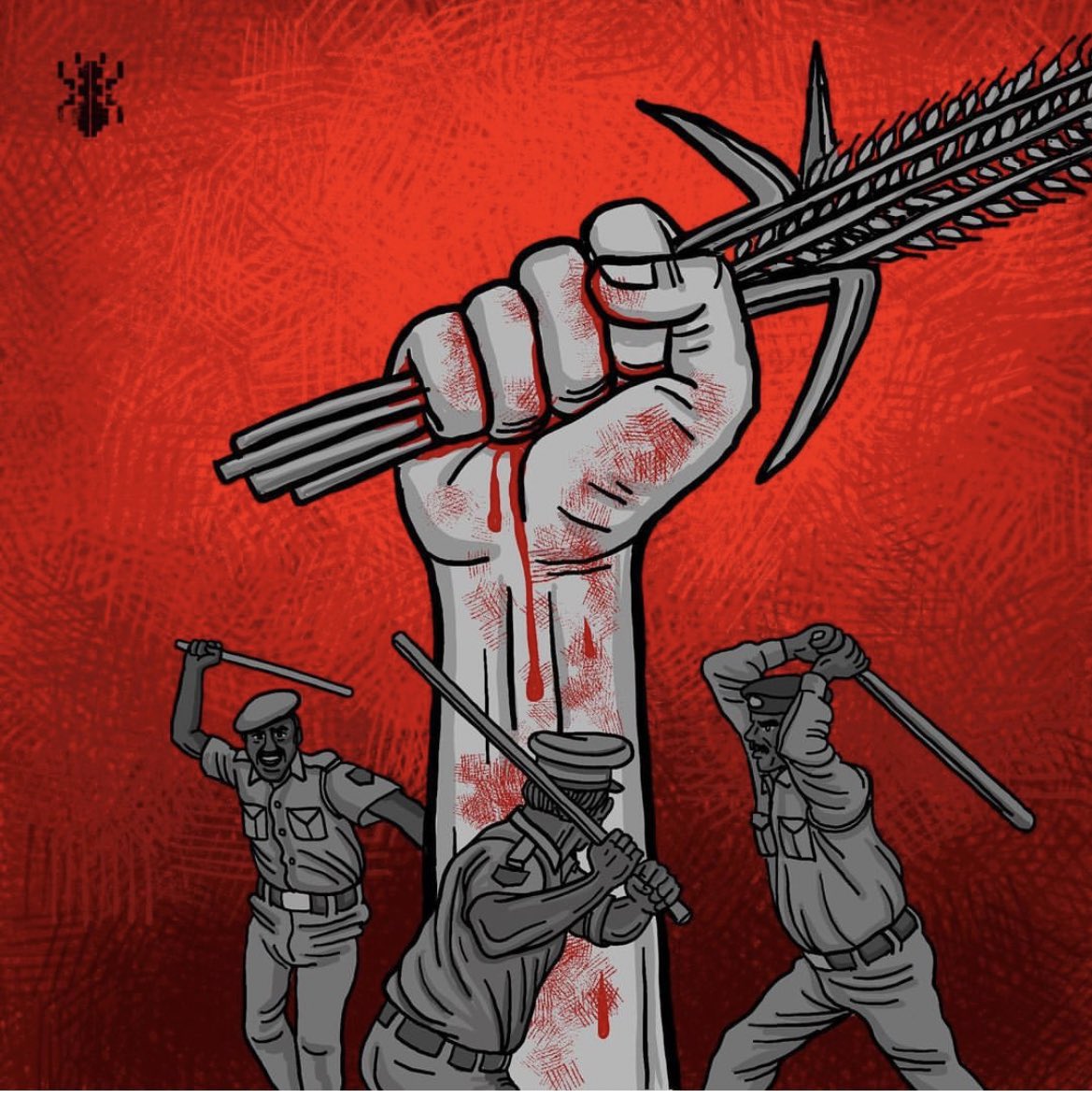
- While the meeting was in progress, paramilitary forces entered Punjab at Khanauri border, attacked farmers, and vandalized their tractors.
- Three dozen farmers were attacked, one was killed, and a couple of them were seriously injured and taken away by police in jute bags.
- Amid all these developments, farmers did not attempt to cross borders.
#FarmersProtest