"Ada pengurus makan bergizi, tapi backgroundnya serangga. Ada yang main domino dengan pembalak hutan liar, tapi Menteri Kehutanan. Ada yang mengurus aneka urusan luar negeri, tapi bacgroundnya militar. Ada yang mengurus manajemen kabinet, tapi pokoknya ada."
Polda Papua Tengah menyatakan foto jenazah anak laki-laki yang tewas di Dogiyai sebagai hoaks alias kebohongan. Namun para saksi yang berbicara kepada BBC mengungkap fakta sebaliknya.
Apa yang sebenarnya terjadi di Dogiyai? Baca: https://t.co/DN7QZD5jeK
Oladélé, this is the logical next step from the conversation we had yesterday. If you still remember, I argued about how we subconsciously shrink God to fit our finite human clock. Today, your question shows how we shrink God to fit human utility.
The question of "what is their purpose" assumes that the universe is centered around human beings. We subconsciously think that if humans cannot live on a planet, build houses on it, or use its resources, then it is a waste of space. However, the universe was not created to be a human terrarium. It is theocentric. That is, it is centered around the Creator, not us as humans.
To make it even clearer, think about it like this. A great king does not build a big palace because he intends to sleep in every single room. He builds it to reflect the scale of his power, his majesty, his wealth, and his sovereignty.
If we apply this analogy to an infinite Creator, what does that tells you? It means that if God only created one tiny rock called Earth suspended in an empty void, it would not reflect infinite majesty.
The terrifying vastness of space, the billions of galaxies, the brightness of stars, and the countless planets are there to force the human mind to look up and realize how incredibly small we are, and how immensely powerful He is.
As a Muslim, I am forced to reflect how the Almighty God in the Quran addresses our human arrogance directly. In Surah Ghafir 40:57, Allah states that the creation of the heavens and the earth is far greater than the creation of mankind, but most people do not know.
If we reflect on this, we would see that we are just a fraction of the story. The rest of the cosmos is fulfilling its own purpose and glorifying Him in ways we do not comprehend.
Having said that, even on a purely physical and mechanical level, those other planets in our solar system serve a direct purpose for our survival.
Take Jupiter and Saturn for specifics. Those huge gas giants act as cosmic shields. Their immense gravity pulls in comets and rogue asteroids that would have otherwise struck Earth and wiped out life long ago. They are standing guard in the dark so you can live down here.
God did not create anything as a meaningless accessory. Every single rock floating in the dark has a purpose. We are just too focused on ourselves to see the broader architecture.
Allah knows best.
Orang miskin JAUH lebih kalkulatif daripada orang kaya, tapi justru ini yang bikin mereka susah keluar dari kemiskinan.
- Ga ambil kredit usaha bukan karena gamau berkembang, tapi kalo gagal bisa jadi keluarga ga makan
- Ga berani merantau, gabisa go big or go home, bukan karena kurang ambisius tapi kalo gagal gada yg bisa diandalkan
- Ga mau coba teknologi baru, bukan karena gamau berkembang tapi karena coba-coba itu hasilnya belum tentu
- Ga sekolahin anaknya bukan karena underinvestasi pendidikan, tapi sistem pendidikan yg dianggap gak bisa kasih jaminan orang selalu sukses ketika punya pendidikan tinggi
In the Dayalpur area of Northeast Delhi, 16-year-old Hafiz-e-Quran, Subhan Malik,
was called out of his home by some of his Hindu friends and stab*bed to death!
Terro*rists bru*tally mur*dered a Muslim minor child. 😡 😥
Kenapa kisah Nabi Yusuf disebut Ahsanal Qashash? (أَحْسَنَ الْقَصَصِ)
artinya secara bahasa:
“kisah yang paling baik .
Al-Qur’an, Surah Yusuf ayat 3:
Kamu simpan beras 6 bulan aja biasanya udah jadi sarang kutu..
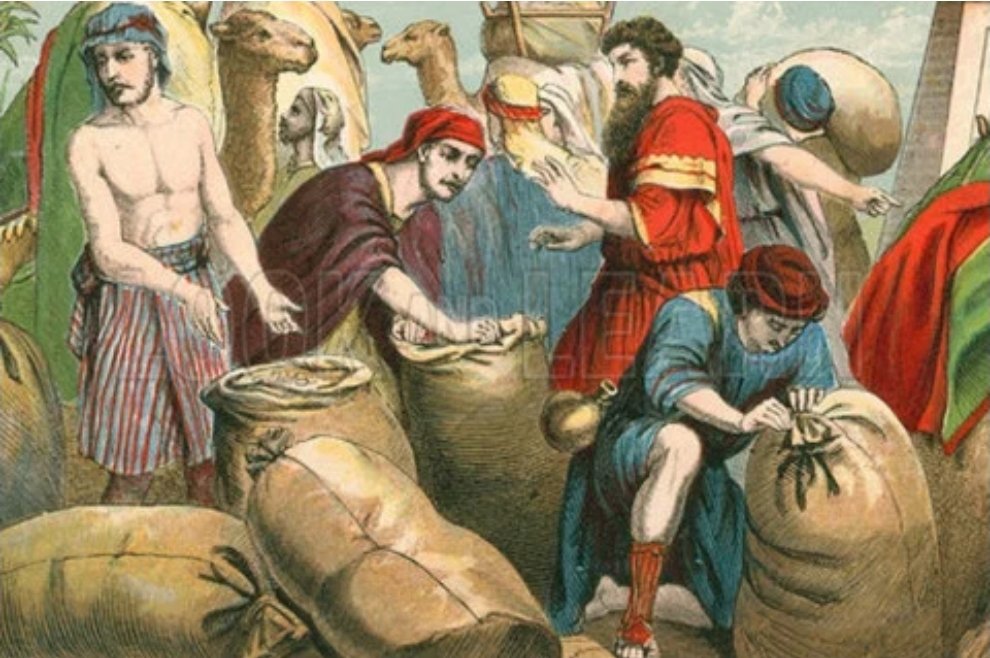
Gimana cara Nabi Yusuf simpan gandum buat seluruh Mesir selama 7 tahun paceklik?
Hampir nggak ada yang rusak atau busuk..
Dan Al-Quran catat instruksi teknisnya cuma dalam 3 kata.Surah Yusuf ayat 47 catat instruksi langsung dari Nabi Yusuf..
"dzaruhu fisunbulih" biarkan gandum dalam tangkainya.
Sekam gandum ternyata adalah natural packaging yg bagus nahan serangga masuk, jaga kelembaban tetap stabil, cegah oksidasi, dan kurangi gesekan antar biji yg bikin cepat rusak.
Gandum yg disimpan utuh dalam sekamnya bisa tahan 10 tahun lebih..
Yang udah dipisah? Jauh lebih cepat rusak.
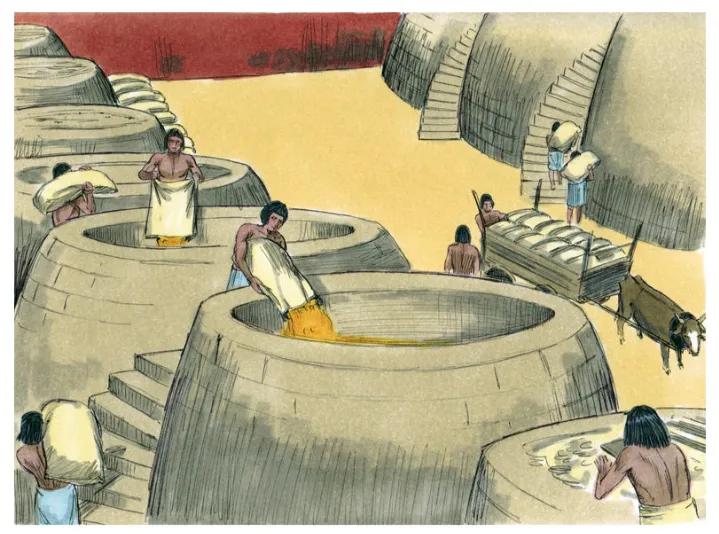
Ilmu pangan modern baru jelasin ini di abad 20.Arkeolog nemuin situs penyimpanan Mesir kuno bukan lumbung biasa, tapi silo (bentuk beehive atau silinder dari batu bata lumpur).
Dinding tebal stabilin suhu, lantai elevated cegah lembab dari tanah, ventilasi pasif sirkulasi udara kering tanpa listrik.
Hasilnya kelembaban rendah, nggak ada kondensasi, serangga susah masuk. Teknik ini bikin stok grain tahan bertahun-tahun persis yang dibutuhin buat 7 tahun paceklik.Nabi Yusuf nggak cuma tau cara simpan dia rancang sistem logistik skala negara.
Selama 7 tahun subur, setiap daerah wajib setor sebagian hasil panen ke lumbung pusat. Bukan disimpan sendiri-sendiri. Ini sengaja supaya nggak ada yang nimbun, distribusi tetap merata, dan stok nggak hilang karena penyimpanan buruk di rumah tangga.
Waktu paceklik datang, Mesir punya cadangan yang cukup untuk seluruh wilayah bahkan negeri tetangga yang datang minta bantuan.Dalam satu kisah ini berkumpul sekaligus Ilmu pangan, arsitektur, manajemen krisis, hingga kebijakan ekonomi makro yang dunia modern pun masih pelajari.
Belum ada kisah sejarah lain yang sekompleks dan seakurat ini dalam satu rangkaian instruksi.
Al-Quran menyebutnya "Ahsanal Qashash" Kisah Terbaik. Dan sekarang kita tahu, itu bukan sekadar julukan puitis tapi pengakuan atas presisi manajemen yang melampaui zamannya.
Have you ever seen a bat nursery?
These baby bats are completely hairless, can’t fly and of course can’t see. They are totally dependent on their mothers, but they already attached upside down.
These are mexican greater funnel-eared bats (Natalus mexicanus) in a roost with young. The bats’ chosen caves are known as ‘hot caves’ with near 100% humidity and temperatures sitting around 40°C (104°F).
Nat Geo Explorers and researchers from Project CETI witnessed the birth of a sperm whale! Since the team was equipped with advanced technology, their data could reveal more than we’ve ever known about the species.
https://t.co/oscTL1WkJa
📹: @ProjectCETI, hosted by Allie Yang