@thsottiaux GPT-5.6 and Codex helped me turn LTE-GOLD from a router config into a real OpenWrt product for Cudy routers - WAN/USB-LTE modes, policy routing, VPN, diagnostics, automated installs, and hardware-tested releases I deploy for real customers
Or… what if we gave you $100 in Codex credits if you tell us what you love about GPT-5.6 Sol or why you switched?
Tweet it, claim your gift, enjoy more usage. First 10k get the free tokens!
https://t.co/8mU93eA13i
Gambling, Earnings, Deception. Yes, you got it right. Today we’re talking about Polymarket
Today we’ll discuss what is probably the largest betting platform in Web3. I’ll break down the project itself, investments, the team, statistics, opportunities, and what’s happening around Polymarket overall. Enjoy the read. I hope you’ll find something useful and interesting here.
Polymarket(@Polymarket )
Is a decentralized prediction market platform that allows users to speculate and place bets on the outcomes of real future events such as politics, sports, economics, culture, and more using USDC. The platform runs on the Polygon blockchain.
Deposits can be made from most blockchains via an automatic bridge. The project also has an active Twitter account, currently ranked 702 by Twitterscore.
Twitterscore → https://t.co/QvcGsOekS8
How it works:
If you believe an event will happen, you buy YES shares.If you think it won’t, you buy NO shares.
The price of a share ranges from $0.00 to $1.00 USDC and effectively represents probability:
• A price of $0.70 means the market assigns a 70 percent chance to “yes”.
• If you predict the outcome correctly, the share settles at $1 and you make a profit.
• If you’re wrong, the share drops to $0.
Investment:
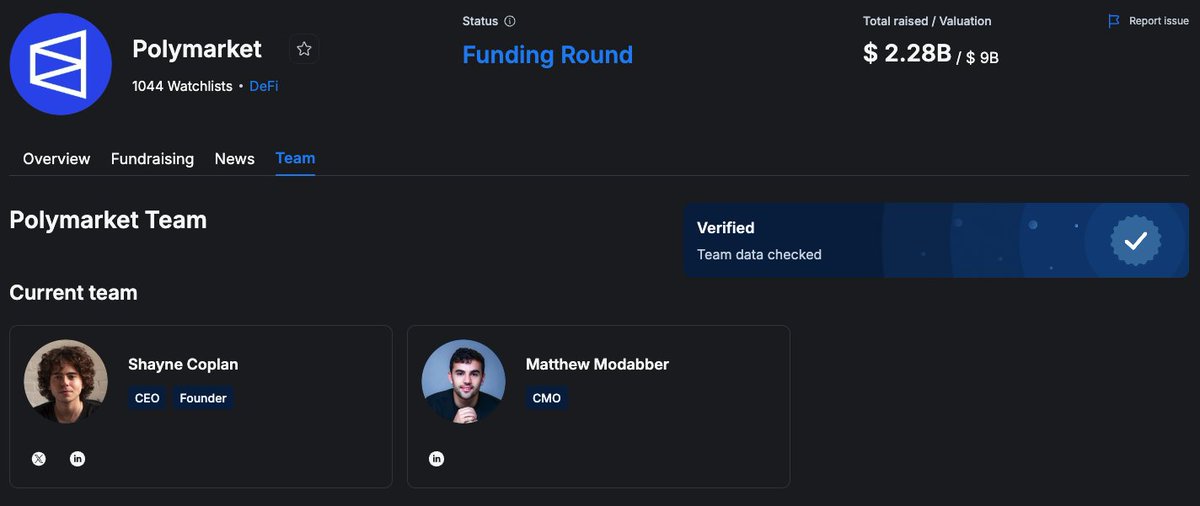
The project has raised around $2.28B, which is an extremely large amount, especially for a Web3 product. Funding came from major players such as Polychain, Blockchain Capital, Coinbase, Dragonfly, as well as Vitalik Buterin and others. More details are available on CryptoRank. The project’s valuation reaches up to $9B.
CryptoRank → https://t.co/auLSmkKqGB
Team:
• Shayne Coplan(@shayne_coplan ) (CEO and Founder). Founded Polymarket in 2020. The main driver behind growth and strategy. Known for turning a niche crypto product into the largest prediction market, while constantly operating on the edge of regulatory risk.
• Matthew Modabber(@MatthewModabber ) (CMO). Responsible for marketing and user growth. Focuses on media presence, expanding beyond political markets, partnerships, and long-term engagement.
• J. Christopher Giancarlo(@giancarloMKTS ) (Advisor). Former Chairman of the CFTC. Provides regulatory expertise and helps legitimize Polymarket in the eyes of traditional finance and regulators.
• Nate Silver(@NateSilver538 ) (Advisor). A well-known analyst and forecasting expert. Adds intellectual credibility and media trust to the project.
• Development team. Experienced Web3 engineers working with DeFi, smart contracts, and scaling, along with developers from Web2 startups and fintech. Most names are not public due to regulatory pressure.
Statistics:
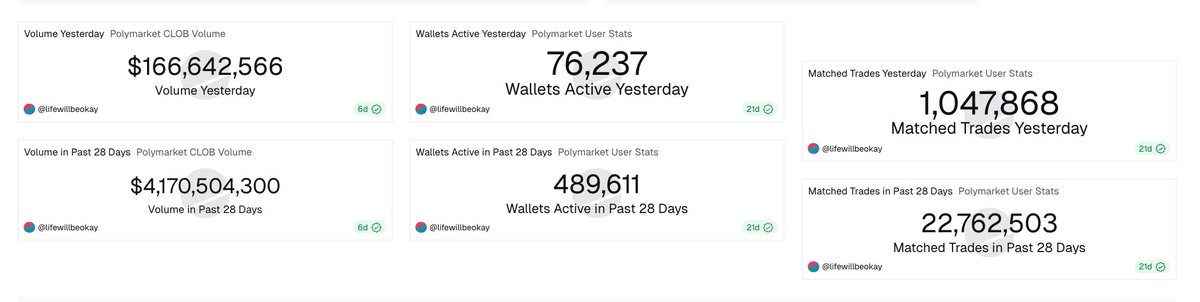
To put things into perspective, the platform has around 500,000 monthly active wallets and over 80,000 daily. What’s interesting is that only about 30 percent of Polymarket’s 1,730,000 trading addresses are actually profitable. Almost all profits are concentrated in a very small group:
• Just 0.04 percent of addresses account for over 70 percent of total profits, or $3.7B.
• Most profitable users earn very little. About 25 percent of them made $1,000 or less.
• To rank in the top 350,000 to 400,000 of the all-time leaderboard, earning just $1 in profit is enough.
• More detailed stats can be found on Dune.
Leaderboard → https://t.co/GPtuUlFvuc
Dune → https://t.co/a30x6RA90X
Opportunities:
Although the project isn’t new and was launched in 2020, its main hype wave came quite recently. I believe it’s still not too late to approach it from an anti-FOMO angle or use it as a liquid market for arbitrage against similar platforms such as Opinion(@opinionlabsxyz ), https://t.co/3KIzasD6rZ(@predictdotfun ), Limitless(@trylimitless ), and others.
Now let’s talk about working with the project more deliberately.
The team has repeatedly hinted at launching their own token called $POLY and running an airdrop.
Due to the nature of the platform, it’s hard to predict exactly what criteria the airdrop will be based on. Likely factors include betting volume, number of active days, and activity quality. The simplest approach is to steadily build these metrics. Creating and promoting your own referral link can also be a solid bonus.
Personally, I treat the platform as calculated gambling with a long-term bet on a potential airdrop. The most I do is place bets on esports or crypto-related events. At the same time, there have been enthusiasts who made money using bots or exploiting platform loopholes, though those methods come with their own issues, which we’ll discuss next.
*Arbitrage is a strategy of extracting profit from price differences of the same asset across different markets or platforms.
Problems:
• The project faces issues not only with regulators, but also with rule changes that favor the platform itself. One recent case involved a bet on a U.S. invasion of Venezuela, where payouts were denied. Polymarket argued that the capture of President Nicolás Maduro does not qualify as a full-scale invasion. According to the rules, the bet would only resolve as “yes” in the case of a military operation aimed at establishing control. At the same time, the platform is expected to pay out $436,000 to an unknown user who bet $30,000 on Maduro being captured and removed from Venezuela by January 31, 2026.
Unknown Bet Page → https://t.co/GlHoMdXqiZ
• Another case involved a bot that earned $480,000 using temporal arbitrage by exploiting inefficiencies within the platform. After that, Polymarket introduced fees specifically for 15-minute crypto markets, effectively shutting the bot down.
Bot Page → https://t.co/OWf6M8v6pr
Conclusion:
The cases described above are not unique and will likely happen again. At the same time, the bot example shows that it’s possible to make money even under unconventional conditions. The potential launch of a token and an airdrop makes Polymarket an interesting platform to experiment with, especially amid fresh hype and growing activity.
Whether to use this platform or similar ones, or simply stay away, is a personal choice. This niche may become a long-term pillar of crypto, in which case understanding it early makes sense. Or the current attention could turn out to be just another temporary spike.
@AdrienStern@gxreveel@r3vl_xyz
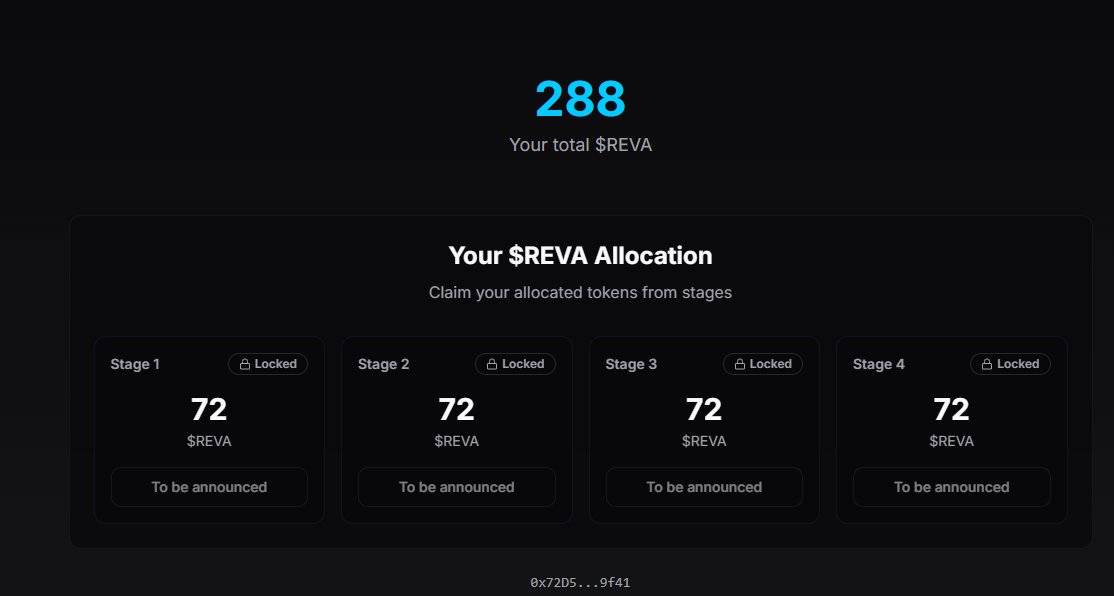
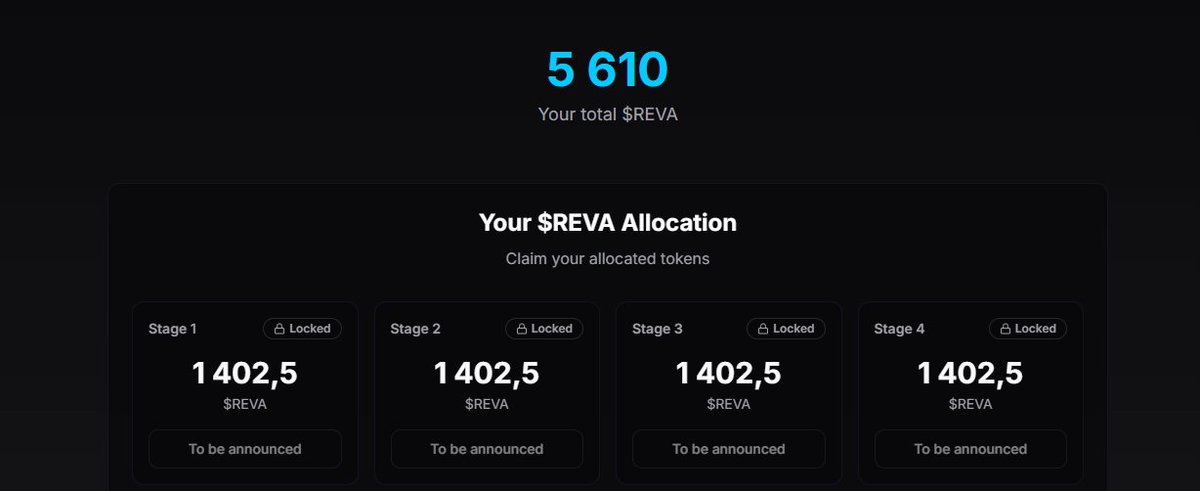
I was involved in your project from the very beginning, helped develop Revapay, and personally participated in the conference call with Andree. But on Airdrop, I get the minimum allocation? For all these years?
The First Sale from Jupiter(@JupiterExchange)
We’ll break down all the known details about the project, the sale stages, the token price, and also share a few of my own thoughts. So, a couple of months ago Jupiter announced the launch of its own token sale platform. This is quite an interesting update, since Jupiter, in my opinion, is the main project on Solana. Personally, I’ve been staking $JUP almost since listing, although in a small amount. And on December 2 they announced their first sale - the HumidiFi project.
What is HumidiFi?
HumidiFi(@humidifi) is a leading decentralized exchange on Solana. The platform specializes in proprietary automated market makers (prop AMMs), sometimes called “dark pools,” which route trades privately through aggregators like Jupiter to reduce slippage, front-running, and MEV attacks. The project also has a TwitterScore of 65, which is quite good -they’re followed by giants such as Solana(@solana ) and Meteora(@MeteoraAG ).
TwitterScore → https://t.co/u1TbGaUxuh
Token Information:
• Ticker: $WET
• Chain: Solana (SPL)
• Max supply: 1,000,000,000 WET (fixed)
• Launch type: token sale via Jupiter’s decentralized token formation system (DTF) with trading enabled on HumidiFi and Meteora
• TGE: December 9, 5:00 PM
The Sale and Its Phases:
PHASE 1: WL
• HumidiFi participants — interesting who that is 😉
• Selling 60,000,000 WET (6% of supply)
• Sale price: 50M FDV ($0.05)
• Start: December 3, 5:00 PM
• End: December 4, 5:00 AM
PHASE 2: $JUP Stakers
• Selling 20,000,000 WET (2% of supply)
• Price: 50M FDV ($0.05)
• Allocation depends on the amount of staked $JUP (minimum 1,000). Snapshot was taken.
Tier 1: 1,000–9,999 JUP — 200 USDC
Tier 2: 10,000–49,999 JUP — 500 USDC
Tier 3: 50,000–499,999 JUP — 2,500 USDC
Tier 4: 500,000–999,999 JUP — 5,000 USDC
Tier 5: 1,000,000+ — 10,000 USDC
• FCFS
• Start: December 4, 5:00 AM
• End: December 4, 5:00 PM
PHASE 3: Public (The most interesting, but also the hardest — not everyone will make it)
• Selling 20,000,000 WET (2% of supply)
• Sale price: 69M FDV ($0.069)
• Limit: 1,000 USDC per wallet, with no minimum threshold as far as I understand
• Start: December 4, 5:00 PM
• End: December 5, 5:00 AM
Price and Possible Multipliers
There’s already a pre-market for the token on MEXC and Bybit, where the price is around $0.12–0.18, which gives x2–3 from the sale price great. Although at the moment of listing the price will likely dip, securing 20–30% profit is already solid, especially in this market. Holding the token after the sale is a tough question. But the project’s Dune stats look strong. And the first sale from Jupiter is unlikely to go negative early on. As always, the decision is yours.
Dune (Briefly):
• 24h Volume: $1.5B
• 64% of volume in its niche
• Over 2M traders since launch
Dune → https://t.co/tW2ZIIPS2x
My Plans
I’ll try to enter the public sale with a small amount:
• first, to test the platform,
• second, because I believe in 20–30% profit - which is nice.
If you want to try as well, prepare a Solana wallet like Backpack(@Backpack ) or Phantom(@phantom ), fund it with USDC, and also add some SOL for fees. Go to the sale website, log in beforehand, and wait for the start. There will be very little time the staker phase sold out in 78 seconds.
Participate in the sale Jupiter DTF → https://t.co/VqtLDhIRID
Reply to this post with your EVM wallet address for some MON on Monad mainnet.
The MON will cover your first few gas fees so you can start using the chain right away.
You must be following @monad to receive it.
Base - a sign of stability in chaos
I couldn't resist making a big and detailed post about the Base network, so today let's talk about what this project is, who is behind it, the metrics, ecosystem, and near future. I think this post will be useful for every crypto layman, especially those who plan to stay in it for a long time.
So, Base (@base ) is a reliable and inexpensive L2 network on Ethereum, created by Coinbase to simplify web3 entry for millions of new users. It provides security, scalability, and low fees (on average $0.005–0.1 per transaction) for decentralized applications, allowing easy asset transfer from Ethereum mainnet and interaction with other L2 solutions. Built on open source jointly with Optimism and aimed at gradual decentralization. The network also simplifies integration with Coinbase products, providing convenient access to fiat, users, and ecosystem assets.
*Official project website - https://t.co/yRVbYsF8KF
Because of all these advantages, I use this network more often than others, even for daily interactions. And importantly, not for “sybil” transactions, but to solve specific tasks. Few L2 solutions can boast that. Therefore, the Base network will be in demand as long as Ethereum lives, and even the token launch will not change its position, unlike zkSync(@zksync ), where there was almost no organic traffic before the drop.
Who is responsible for and developing the project?
• Jesse Pollak (@jessepollak ) - Founder of Base project / lead engineer. Creator of Base, previously led product division at Coinbase Wallet.
• Will Robinson - VP of engineering at Coinbase, head of Base development. Previously CTO at ASAPP, various engineering roles at Google.
• Brian Armstrong (@brian_armstrong ) - CEO of Coinbase, strategically influences Base. Founder and CEO of Coinbase, Base network is incubated inside the company.
• Kevin M. Lobo - Head of Base network operations / Coinbase.
• Sarah Wolf (@sarahzorah ) - Head of Marketing for Base.
• Eddie Kago (@BasedKago ) - Regional lead (East Africa Lead) for Base. Focus on emerging markets and local communities.
• Sam Frankel - Head of Ecosystem (Base). Participates in ecosystem development of apps and projects within Base.
• Sebastian Aldasoro - Country Lead, Argentina (Base). One of the regional leaders for Base network launch in Latin America.
*And many others, I didn't mention all to keep the post from being too long, but that doesn't diminish their merits. Every cog in this mechanism is important.
Let's talk about metrics at the time of writing this post. Most data taken from Dune and DefiLlama.
• Total value locked in DeFi - $4.925b
• Total revenue (base, daily, network) - 166MM
• Average daily transactions over 7 days - 10.5MM
• Daily active addresses - 850 thousand, although before October the average was about 1M
• Daily network revenue (in USD) - 160 thousand
• Leader in meme token issuance for 1 month ≈800 thousand shitcoins.
• Gas: 0.005 Gwei - $0.01 | ~8 sec
*I also want to add Twitter Score - they have 760, which is an incredibly high result.
Dune - https://t.co/IMhjGwoQvI
DefiLlama - https://t.co/zHOToqpngj
Twitter Score - https://t.co/QaIRmYltCy
Now let's talk about the ecosystem. During its existence, the blockchain has built a whole world of DeFi and SocialFi. Some bright and quality representatives are:
• Seamless Protocol @SeamlessFi (SEAM) - native lending/borrowing protocol
• Aerodrome Finance @aeroxyz (AERO) - DEX/liquidity hub, built with a focus on Base as the main network
• Avantis @avantisfi - decentralized platform for trading synthetic assets and leveraged derivatives, actively developing on the Base network
• Thirdweb SDK @thirdweb - infrastructure SDK/tool, deeply integrated with Base, simplifying dApp launches
• Moonwell @MoonwellDeFi - lending and yield staking protocol
• Noice @noicedotso - micropayment/social reward app
• Base Name Service - name service (similar to ENS)
Link - https://t.co/oP4YeRSs10
• Virtuals Protocol @virtuals_io - infrastructure for AI-oriented launches and tokens
*And many more examples, as well as various multichain projects also supported on Base, such as Morpho, Aave, Farcaster, Uniswap, Compound Finance, PancakeSwap and others (you can check protocol rankings - https://t.co/zHOToqpngj. Also, soon the Base App will launch - an app combining social network, apps, payments, and finance. A single place for earning, trading, and communication.
You can apply for the whitelist - https://t.co/8YHSpQJbci
And to finish with my thoughts: this is one of the best L2 solutions on the market, if not the best. The advantages have already been mentioned above, and the prospect of a token release further fuels network usage. Although, as I recently wrote, there is a possible scenario where the token will be given only to builders in the network. But if they please the community, it will be great, and I would think twice before selling the drop. We are waiting for $BASE and will see the implementation and use of the token in the ecosystem. I want to warn: I am not encouraging using the network or especially spending your money and time on it, I just wanted to share thoughts and data I found while studying the blockchain.