When we instruct an agent to design something, its first output may not be precisely what we want. Humans collaborating refine their creations iteratively. Can we instruct an agent to refine its output? Is language the best medium for these instructions? We explore this in mrCAD.
New #ICCV2025 paper: ✨ Aligning Constraint Generation with Design Intent in Parametric CAD ⚙️
We apply post-training techniques to the task of generating engineering sketch constraints found in parametric CAD, using a constraint solver for verifiable rewards.
Our #UIST2023 Closing keynote will be @StanfordPsych Prof. Judy Fan (@judyefan) who will discuss “Cognitive Tools for Uncovering Useful Abstractions" https://t.co/PA1lRIcV82
Cognitive scientists! You don’t want to miss our #CogSci2023 Workshop: “How does the mind discover useful abstractions?” https://t.co/fBWH2L3jUr Co-organized w/ the peerless @wkvong + Lio Wong + @marcelomattar!
Job alert!🚨🧠🛠️ We @cogtoolslab@Stanford@StanfordPsych are recruiting a full-time lab manager to join our team Summer/Fall 2023. More information available here: https://t.co/Fewky1FJ3N. Please share widely! 🙏
Job alert!🚨 We @cogtoolslab@UCSD are recruiting a full-stack web applications engineer to build engaging online games that will advance understanding of human cognition and guide development of more human-like AI.
Come see our poster at #CogSci2022, Saturday 1:00-2:40pm, and check out our recorded talk from the @images2symbols workshop on Wednesday!
Arxiv: https://t.co/xJVwVJVqAs
Github: https://t.co/ieoW2c6STM (10/10)
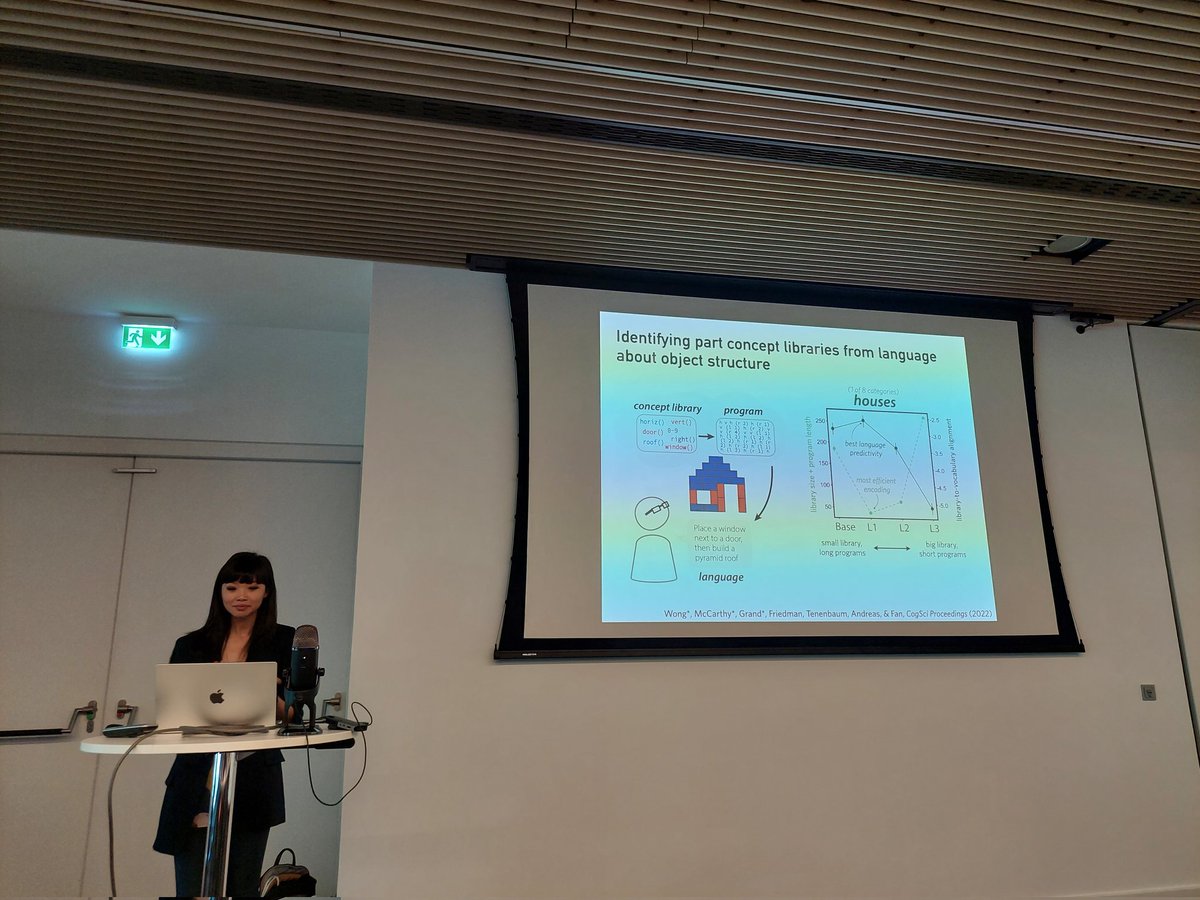
When we look at a car, we don’t just see pixels; we see windows, doors, and wheels. In our #CogSci2022 paper, we use the words people use as a window into the ‘library’ of parts they use to represent novel objects like these!
https://t.co/n6qYo120xm
(1/10)
And it turns out that these “sweet spot” libraries tend to align most strongly (solid line) with people’s descriptions — suggesting people use language that efficiently represents each individual object, AND the set of objects overall. (9/10)
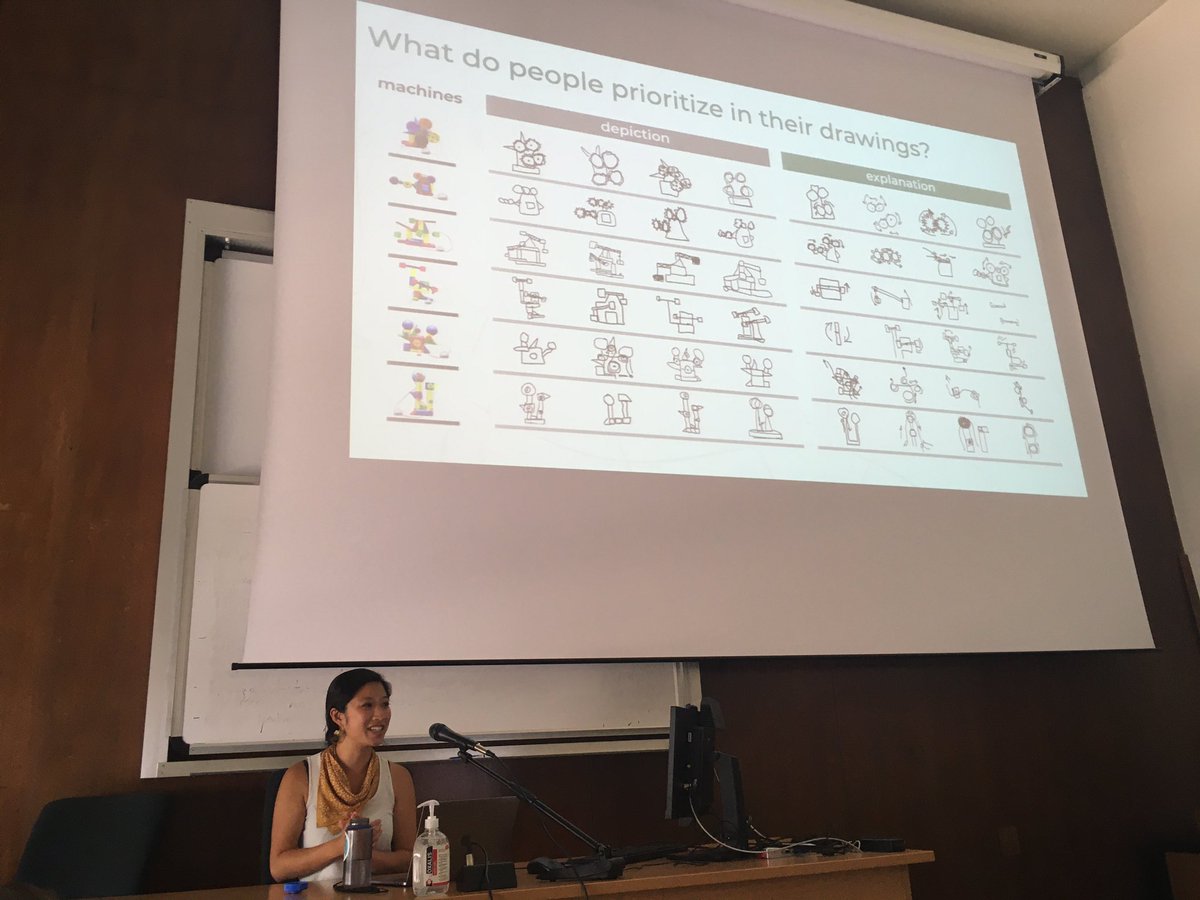
When people are asked to draw devices, they include more causal parts, more symbols, less structural information, and more spatial distortions if their goal is to explain the device rather than depict it. Research by @hollyahuey et al. at #SPP2022
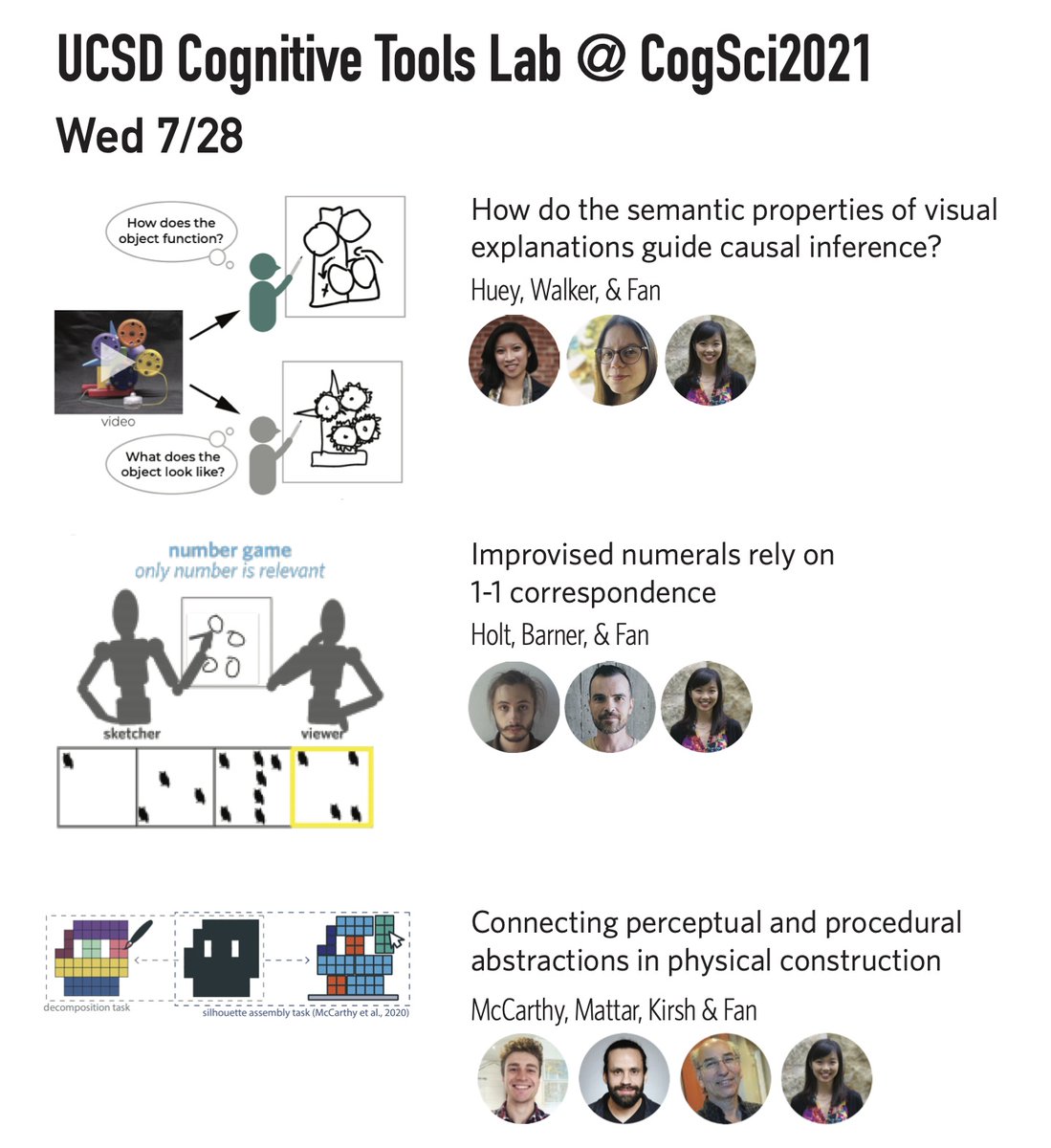
Day 3: Supercool papers by @hollyahuey & Sebastian Holt investigating how people use graphical representations to communicate about abstract concepts like causality & number. And fascinating study led by @wp_mccarthy exploring links btw perceptual & procedural abstractions.