I gave a TEDx talk about how economists have ruined climate change policy. The only hope we have of reducing emissions is to re-design our neighborhoods.
https://t.co/3ZEtfM8vVW
BREAKING—Canada’s announcement of progress on a new pipeline & weakening of industrial carbon pricing erodes the last pillar of Canadian climate policy.
IISD's Nichole Dusyk warns changes risk the carbon price no longer delivering on its intended purpose.
https://t.co/W5UBasIJFj
If we refuse to build walkable neighbourhoods and allow EVs to be used as a cheap excuse for climate policy, we will need to disregard environmental protection to mine as many critical minerals as possible.
🇦🇷 Milei Opens Argentina’s Glaciers to Mining in Win for BHP, Glencore and Lundin
Argentina’s Congress voted 137-111 Thursday to gut the country’s 2010 Glacier Law, handing a major victory to President Javier Milei and the global mining industry after nearly 12 hours of debate and thousands of protesters outside parliament.
🔹The projects most immediately unlocked include the Vicuña joint venture between BHP, the world’s largest miner, and Lundin Mining, the Vancouver-based mining group, along with Glencore, one of the world’s largest raw materials traders, and its El Pachón copper project in Argentina’s San Juan province near the Chilean border.
🔹El Pachón alone carries a $9.5 billion price tag and had been delayed by glacier protection rules. U.S. mining entrepreneur Rob McEwen copper venture is also expected to benefit through its Los Azules project, one of Argentina’s largest undeveloped copper deposits. Mining sector estimates say the new framework could unlock more than $30 billion in investment over the next decade, with 70% earmarked for copper, gold and silver.
🔹The key shift: the reform strips a federal scientific body of its authority to designate protected glaciers, handing that power to provincial governments — most of which are pro-mining.  Critics say provinces will simply greenlight any glacier that stands in the way of extraction.
🔹In the northwest, where mining is concentrated, glacial reserves have already shrunk 17% in the last decade.  Environmental lawyers warned the reform threatens the water supply of 70% of Argentinians.
🔹Environmental groups have vowed to challenge the law in court. Milei, who does not believe in man-made climate change, replied: “Environmentalists would rather see us starve than have anything touched.”
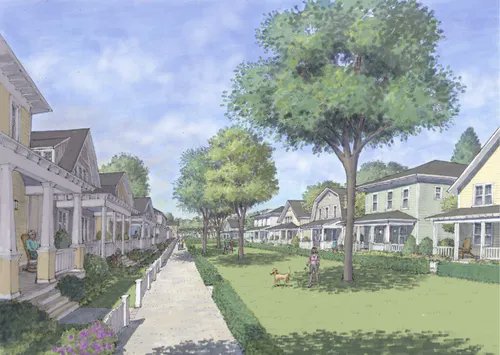
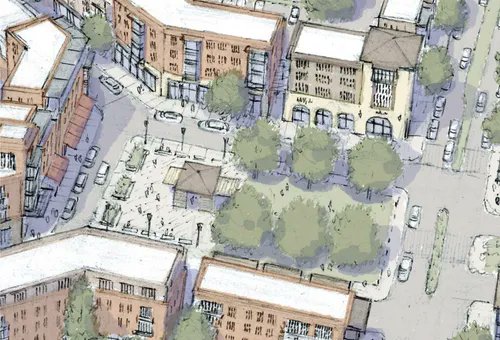
Walkable mixed use developments are possible, and people are building them. But those people have to fight:
the politicians
the planners
the engineers
the fire marshall
the bankers
the appraisers and
the neighbors
It will be some younger/future generation, perhaps already alive now (hard to say), that will finally have an open and honest discussion of all the things car culture stole from us.
But most of all, it stole our humanity. And we are suffering badly for it.
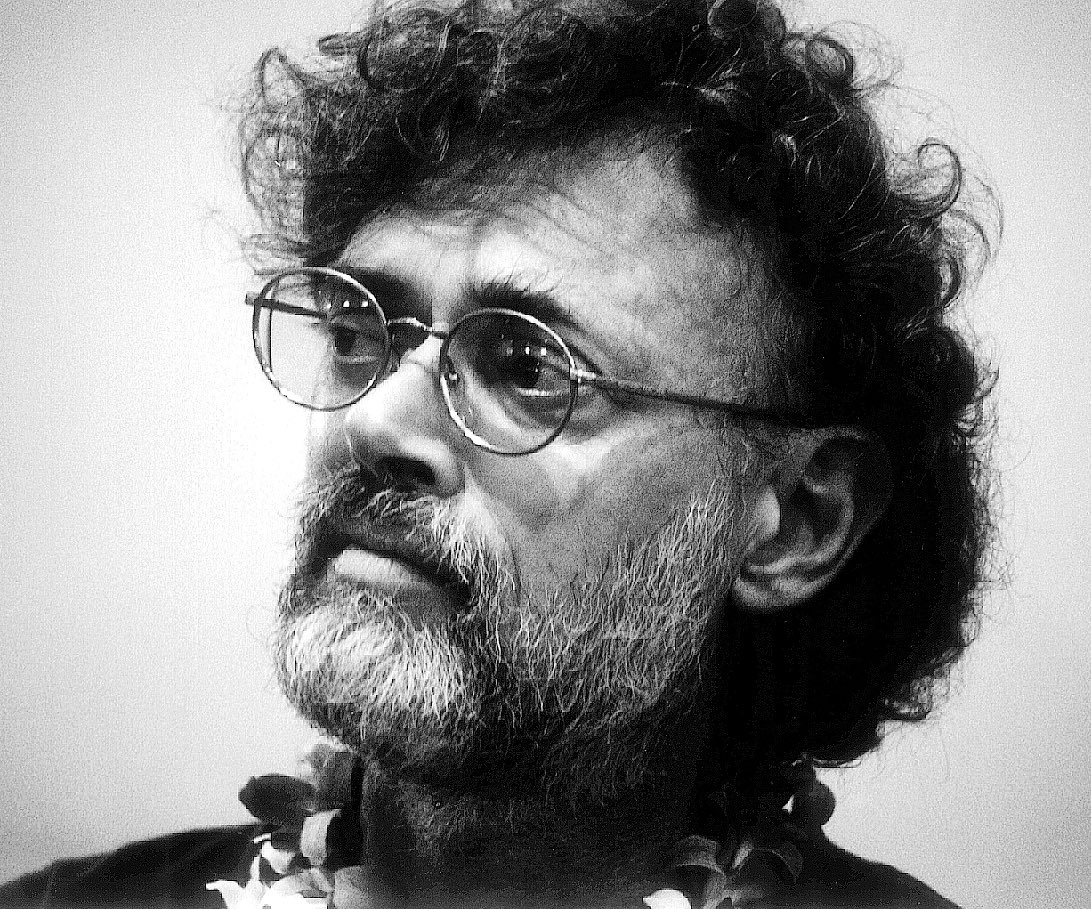
“We have the money, the power, the medical understanding, the scientific know-how, the love and the community to produce a kind of human paradise. But we are led by the least among us – the least intelligent, the least noble, the least visionary.”
— Terence McKenna
“Throughout the interview, Stewart seemed to believe that economics is just a sophisticated justification for letting rich people and corporations do whatever they want.” … that is what economics is! That is how our economy functions!
jon stewart, like many comedians and many people in general, appears to be a believer in stealth democracy, where he thinks all politicians (and economists) are corrupt, and that people could and would come together and do what's right if not for partisanship and corruption
Since it's a matter of public controversy: Last month we recorded an interview with Seth Harp but decided not to publish it as an episode of Interesting Times. As one of my producers told him in a message that he has published, the main reason for the decision was our own overcrowded schedule and our sense that we had missed the ideal spot in the news cycle for a conversation pegged to the Delta Force raid in Venezuela. But another reason was my own judgment that the episode did not hold together well. I was primarily interested in discussing Mr. Harp's reporting on drug dealing and corruption in the Special Forces and linking that to a discussion of how a reliance on special operations has shaped U.S. foreign policy and military preparedness. But I felt that the latter half of our discussion became unmoored from Mr. Harp's specific reporting in a way that undermined the first half of our conversation. "Interesting Times" is a show where I try to give a lot of space to the guest's perspective while posing challenging questions, creating episodes where the audience gets the best version of an idea or worldview that they might not have understood before. I don't think I succeeded in that goal in my conversation with Mr. Harp. If he believes I'm covering up the fact that he beat me in some sort of debate, I think I didn't make my intentions and the goal of the show clear to him -- which may help explain why it was an unsuccessful episode. Ultimately that responsibility is mine and I'm sorry for taking his time without steering us to a fruitful destination.
Vista Del Mar
2017: City installs then removes safety improvements
2021-2025: More people die
Pershing Dr
2017: City installs then removes bike lanes
2026: Pregnant mom killed
Westwood Bl
2015: Koretz removes Westwood from Mobility Plan
Today: 3 killed
https://t.co/mILD7V4eDD
For MLK Day I wrote a piece summarizing the overwhelming evidence that MLK was set up and shot by members of the Memphis Police Department. Why is progressive media so reluctant to say this? Link in bio
✨🇨🇳Villagers in Yongxing Village, Guizhou, tearfully farewell the first secretary. He served grassroots two years, did many good deeds – a microcosm of China’s poverty-alleviation cadres. 98.99M rural poor escaped poverty; 1M+ cadres in villages, dedicated to poverty alleviation
A reminder that we will install miles and miles and miles of these temporarily to protect construction workers but we can’t build a 5” curb or install bollards to prevent cars from driving into people on bike lanes or sidewalks used every day, permanently.
"Our communities need to use a lot less energy."
IISD’s Zachary Rempel says ⬇️emissions means making communities more sustainable with smart urban planning. This includes:
🏢Denser housing
🚴Active + 🚌public transportation
➕ More!
Watch with @TEDTalks:
https://t.co/FBaUXQ4K6G
I gave a TEDx talk about how economists have ruined climate change policy. The only hope we have of reducing emissions is to re-design our neighborhoods.
https://t.co/3ZEtfM8vVW