@CuteAishwariya She looks like and is acting like a ganwar. So excuse her behavior. Pade likhe ganwar also behave the same way...educated morons who litter like everything is their daddy's...
Some happy personal news ♥️🙏🏽
Alongside sports icon Prakash Padukone, actor Anant Nag & others, was honoured this month with the ‘Saraswata Bhushanam’ from the spiritual leadership of my Konkani Saraswat community.
From the ceremony in Karla, Maharashtra:
Airport पर कैसे गैर–जिम्मेदार तरीके से सामान फेंका जाता हैं
बैग में किसी की मेहनत और सपना का कीमती सामान हो सकता हैं
कोई अपने बच्चों के लिए गिफ्ट लाता है, जो टूटा हुआ मिलता है
उस दर्द और दुख को ये लोग कभी नहीं समझ सकते
क्या किसी के सामान को ऐसे तोड़ना सही है❓
This is Hussain, a Bangladeshi waiter working at a restaurant in Italy.
He made derogatory remarks about India in front of a group of Indian women.
The women neither ignored it nor remained silent. They stood up for their country, confronted him, recorded the incident, called the Italian police, and ensured that he apologized on camera for his remarks against India.
Far from home, these women showed extraordinary courage. They refused to be intimidated, stood their ground, and demonstrated that the true ambassadors of a nation are its fearless citizens.
Namaskaram
My name is Dhandapani Subramaniam (70),a bachelor.
Am a Kurukkal(Temple Priest) in Padagacheri,( a micro interior village ).
near Valangaiman - Kumbakonam,Tamilnadu.
Living here with my Widowed Sister,Vasantha (78).
I am doing Temple Kaingaryam for Sivan Temple,Perumal Temple,Vinayagar Temple,Murugan Temple,here in Padagacheri.
No income.
Struggling to buy medicines,pay for transport,etc.,
Night tiffin,tea is served daily for us by Balasaraswathy, neighbor.
She prepares Swami Neivedhyam daily.
The house where we both live is in very bad shape. Needs repairing.
Requesting you to please help for our survival.
Namaskaram.
Dhandapani Subramaniam
Canara Bank
17152210000058
IFSC CODE
CNRB0001209
Ph:9080256339
(no Gpay)
If the internet connection in our homes, the gas cylinder in our kitchens, and the fuel in our vehicles reach us without interruption, there is a woman working behind the scenes in the dark depths of the ocean, holding her breath and taking immense risks — Atulya K.V.
Born in the small village of Pattambi in Kerala's Palakkad district, Atulya is a Malayali woman who ventured into the world's deep oceans and made history. She is India's first female commercial diver.
While scuba diving is generally a recreational activity enjoyed for exploring the beauty of the sea, Atulya's work involves the far more dangerous field of commercial diving.
When major underwater oil and gas pipelines or internet cables are damaged, it is Atulya who dives beneath the sea to carry out repairs, welding, and maintenance work. She is also the only woman in India with the commercial license required to perform such operations.
She has visited many parts of the deep-sea world that most of us have never seen. Beneath the sea behind the Sree Padmanabhaswamy Temple in Thiruvananthapuram, Atulya discovered unusual cave-like underwater formations.
Similarly, while diving off the coast of Kozhikode, she discovered ancient boats and marks believed to have been caused by cannonballs in an area thought to have served as a hideout of Kunjali Marakkar.
One of Atulya's long-standing dreams is to ensure that such discoveries are properly documented and preserved as part of history.
She completes these missions while facing powerful underwater currents and dangerous marine creatures such as stonefish and stingrays.
According to Atulya, nothing on the ocean floor truly belongs to us. The creatures living there are lives just like ours. Rather than disturbing them, we should become a part of their world, respect them, and appreciate them.
Atulya, a Malayali woman who safeguards both critical national infrastructure and remnants of history in the unseen depths of the sea, is herself a part of history.
Sadly, it must be said that even Wikipedia has not adequately recognized her with photographs and proper documentation.
The world should know about people like her—especially this young woman who is a pride of Kerala. Let that recognition begin with us.
His name is Ranjitsinh Disale.
He wanted to be an engineer. When that did not work out, his father suggested he train as a teacher instead.
In 2009, he was posted to a government primary school in Paritewadi, a small village in Solapur district, Maharashtra. The school was a crumbling building wedged between two storerooms, one of which had been used as a cattle shed.
What he found there troubled him.
Girls were being married off young instead of being sent to class. Attendance was poor. The textbooks were written in a language many of the children, who spoke Kannada at home, could not properly read.
He decided to fix all of it, starting with the books.
He learned the children’s mother tongue and rewrote their textbooks in a language they could actually understand.
Then he did something no one in India was doing at the time.
He printed unique QR codes inside the textbooks, allowing students with access to a phone to scan a page and instantly access audio poems, video lessons and practice questions.
A village school in Solapur had built a digital classroom out of paper and printed squares.
The results changed the village.
Girls’ attendance reached nearly one hundred percent. Teenage marriages in the area stopped. His QR code idea worked so well that the Maharashtra government adopted it across the state.
The following year, the national education body embedded QR codes in textbooks across the country.
In 2020, Ranjitsinh Disale won the Global Teacher Prize. He was chosen from more than twelve thousand nominations across roughly one hundred and forty countries and was the only Indian in the top ten.
The award carried one million dollars, around seven crore rupees.
Then he did something no winner had ever done before.
He announced that he would give away half the prize money, dividing it equally among the other nine finalists so that their work could continue as well.
He said teachers are the real change makers.
He meant all of them, not just himself.
A man who became a teacher only because engineering did not work out changed how an entire country learns, and then gave half his fortune to the people he had competed against.
Follow for stories India deserves to remember.
Experiences with Maha Periyava: An Exemplary Role Model
Periyava was an incarnation of God Himself and He followed all the daily rituals and observed all the vrathams to make sure He set an example for all us.
Aippasi pooram is the Janma Nakshatram of Kamakshi Amman. On this day, Periyava does milk Abhishekam for Devi Kamakshi. As usual on this day, as soon as Periyava woke up, He bathed and completed His daily rituals and Pooja. He did not drink a single drop of water until then.
Without further delay He started walking towards Kamakshi Amman temple. Periyava’s disciples carried milk and Periyava carried milk in His wooden pot.
It was 4 o’clock in the evening.
Periyava without drinking even a drop of water was walking to Kamakshi Amman temple. He could take Bhiksha only after returning to SriMatham after having darshan and seeing the abhishekam at the temple.
When He was walking towards the temple, a devotee fell at the feet of Periyava and touched His feet inadvertently.
Periyava’s disciples were worried that Periyava would have to bathe again. One of the disciples of Periyava named Kannan was very disappointed. He did not want Periyava to bathe again and do all the rituals again and stress His body.
He wanted to tell Periyava that it was alright since anybody who was visiting the temple was already clean and pure. He asked Periyava not to bathe again, since it is said that just witnessing the people who have come to temple during any festival in itself is a blessing. Also after having darshan, it was not necessary to bathe.
Kannan was telling this loudly so that Periyava would listen to this. Periyava understood the disciple’s intention, but as soon as He reached Kamakshi temple, He went directly to the temple pond.
Periyava looked at Kannan and said,”It is very auspicious to bathe in the Kamakshi Amman temple tank on Thula month pooram. All of you bathe now”.
Why this snanam now? Was it because of the devotee touching Periyava’s feet or was it because that was already ordained before. No one else other than Periyava could think of something like this tactfully.
Periyava would have already known about the devotee about to touch His feet and how Kannan will feel agitated about it.
Only after bathing at the temple pond did Periyava have darshan and did abhishekam for Kamakshi Amman.
After all this, He walked backed to SriMatham, did His daily evening rituals and then took bhiksha. The bhiksha for that day was only milk.
Maha Periyava never missed an opportunity to show us how to live an exemplary life by following rituals (Aacharam).
Así es la esclavitud en las minas en el este del Congo, de donde sale más del 70% del cobalto del mundo, miles de esclavos diariamente extraen el mineral por apenas 2$ al dia para llenar los bolsillos a las multinacionales capitalistas.
El capitalismo que no te enseñan, así es como se sostiene el nivel de vida y de consumo en Occidente, en estas minas al menos hay 40.000 niños esclavizados que pican piedra para que Apple saque 4 modelos de Iphone cada año.
Her name is Sarita Kashyap, single mother for the past 20 years.
She has a daughter who is studying in college. To support her family, she runs a Rajma Chawal (kidney beans and rice) stall on her scooter near a CNG pump in Peeragarhi, Delhi. The prices are:
Half plate: 40 rupees
Full plate: 60 rupees
But...
Even if you don't have money, she won't let you go hungry. She'll feed you, saying, "Eat, pay when you can, or don't pay at all," regardless of your caste, religion, or community.
She feeds poor children in her neighborhood for free, and buys them school supplies, books, uniforms, shoes – anything they need.
And yes...she also tutors the children in her free time.
Has any channel highlighted this woman?
No...
Because there's no glamour in this woman's story.
Anyway, I salute this woman from the bottom of my heart.
May she earn a lot and achieve great success in her life...
Terrible tragedy. 21 ppl dead in a fire at South Delhi hotel. It broke out at 8.40 am at Flourish B & B in Malviya Nagar, said police. Many are injured. Most are foreign nationals. Fire extinguished now. (Disturbing visuals). Video: Delhi Fire dept @NewIndianXpress@xpresstn
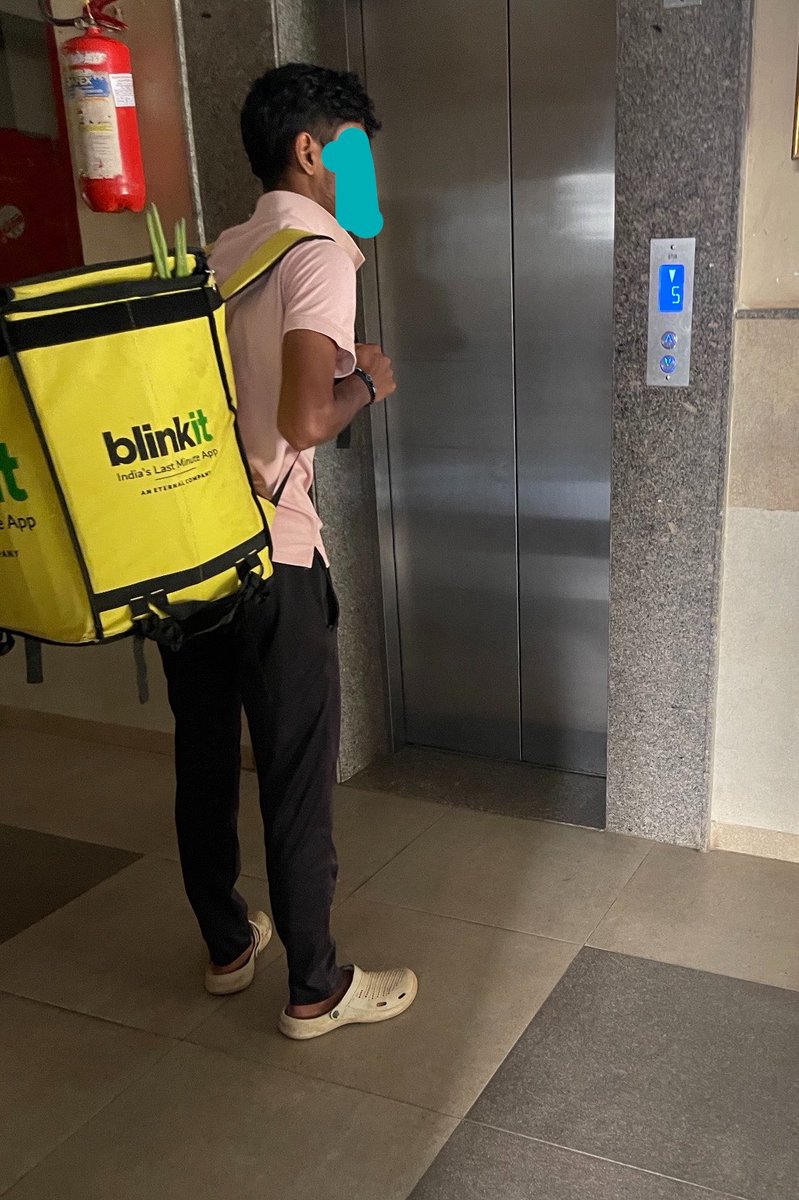
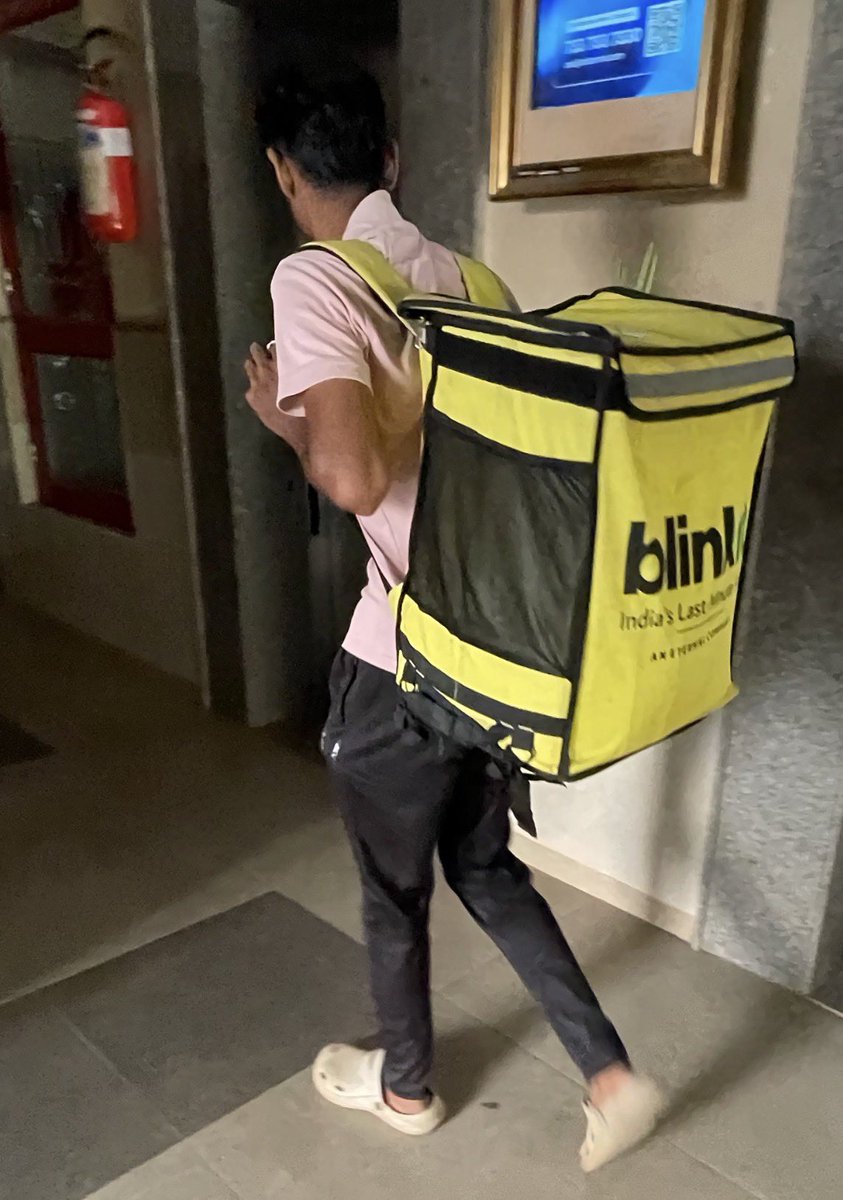
Saw this young delivery boy in our society this morning, carrying quick commerce deliveries.
Had a brief chat with him. He is a college student in Bhubaneswar, working part-time on a delivery platform. Sundays are full work days for him since college remains off.
He lost his father a year ago, who worked in a small private company. No pension for the mother, no savings left for the family. But, this young boy chose responsibility over excuses.
Today, he is managing his studies and expenses in Bhubaneswar through hard work and dignity, while also sending some money back to his mother, who lives in a village about 150 km away.
Stories like these remind you how many silent fighters walk among us every day.
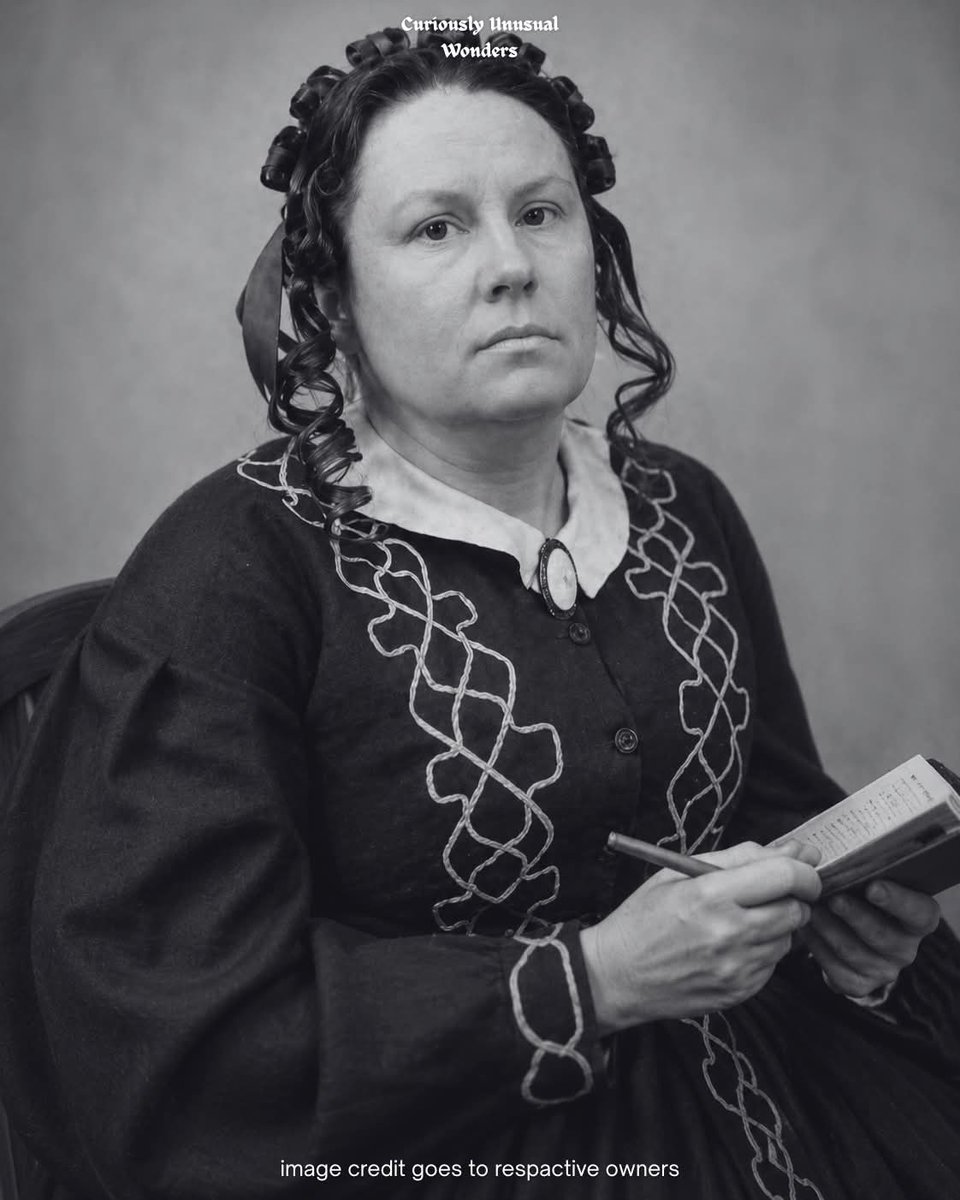
In May 1860, she kissed her six children goodbye. She thought about the dinner she would cook later. She thought about the laundry. She thought about the quiet life of a mother in Illinois.
She had no idea that when the front door clicked shut, it would stay locked for three long years.
Her husband, Theophilus Packard, was a respected minister. To the neighbors, he was a man of God. But inside their home, he was a man who could not stand a wife who thought for herself. Elizabeth Packard liked to read.
She liked to debate religion. She had her own opinions about life and faith. In the 19th century, for a woman to have a brain was considered a danger.
Theophilus decided to end the argument once and for all. He didn’t need a crime. He didn't need a witness. In those days, the law in Illinois said a man could commit his wife to an insane asylum without any evidence or a public hearing. He simply had to say she was "disturbed."
One morning, a group of men arrived at her home. They didn't listen to her logic. They didn't care about her tears. They dragged her away to the Jacksonville Insane Asylum. Elizabeth was 43 years old, perfectly sane, and suddenly a prisoner.
When she entered the asylum, she expected to see people who needed medical help. Instead, she found a warehouse of "inconvenient" women. There were wives who had argued with their husbands about money. There were daughters who refused to marry men they didn't love. There were women who were simply too loud or too independent.
"This is not a hospital," Elizabeth realized. "It is a cage for the unwanted."
The doctors tried to break her spirit. They told her that if she just admitted her husband was right and she was wrong, she could go home. They wanted her to say she was crazy for wanting her own thoughts. Elizabeth looked them in the eye and said, "I cannot buy my liberty by a lie."
She didn’t give up. Instead, she started to write. She hid scraps of paper in the linings of her clothes. She tucked notes under floorboards. She recorded every abuse, every scream in the night, and every story of the women around her. She became a secret journalist inside a living nightmare.
After three years, she was finally released, but her husband locked her in a room at home. He planned to move her to another asylum in a different state. This time, Elizabeth’s friends helped her get a message to a judge.
A trial was finally ordered to determine if she was actually insane.
The courtroom was packed. Theophilus was confident. He brought "experts" to say that her religious doubts proved her mind was broken. But then, Elizabeth stood up.
She didn't shout.
She spoke with the calm power of the truth. She explained her beliefs. She showed the jury that having a different opinion is not a disease.
The jury only needed seven minutes. They came back with a single word: Sane.
Elizabeth walked out as a free woman, but she found that her husband had taken everything. He had sold their furniture, taken her money, and disappeared with their children. She was alone and penniless.
Most people would have disappeared into the shadows. Elizabeth did the opposite. She spent the next forty years traveling the country. She stood before the legislature and demanded new laws.
She said, "A woman's mind is her own, and the law must protect it."
Because of her, states changed their laws. They made it illegal to lock a person away without a fair trial and a medical exam. She turned her private pain into a public shield for thousands of other women.
She proved that even if you take away a woman’s home, her money, and her children, you can never truly take away her voice.
His name is Venkat.
He left Vijayawada at 24 with an engineering degree and a job offer in Toronto.
His parents stayed behind in the house where he grew up. A two bedroom flat his father had bought in 1987 on a government salary saved over fifteen years.
For twelve years Venkat sent money home every month. He visited when he could. His parents grew older. His father’s health declined.
Then one morning his mother called. His father was gone.
Venkat booked the first flight back. He handled the funeral. He stayed for a month.
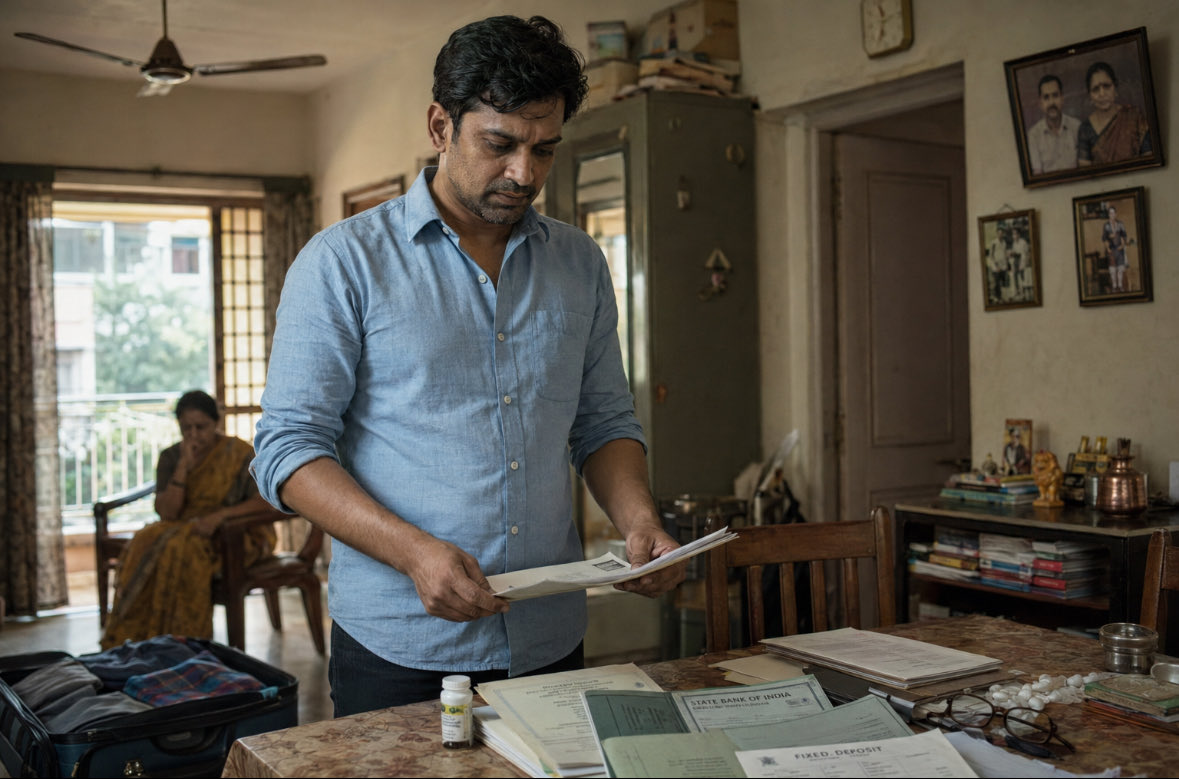
Before he left he went to the bank to transfer his father’s fixed deposit into his mother’s name.
The bank asked for a Succession Certificate.
He did not know what that was.
A Succession Certificate is a court issued document that authorises a legal heir to claim the deceased’s financial assets.
Without it no Indian bank will release funds, transfer accounts or allow access to deposits.
The court process includes a mandatory 45 day public notice period. It can take 6 to 18 months.
Legal fees can run into several lakhs depending on the value of the assets.
Venkat had to fly back to Canada. His mother was alone.
His father’s savings sat frozen in a bank account she could not touch.
This happens to thousands of NRI families every year.
Here is what Venkat wished his father had done.
One. Created a registered Will naming his wife and son as heirs. A registered Will avoids the Succession Certificate process entirely for most assets.
Two. Updated nominations on every bank account, fixed deposit, insurance policy and mutual fund. A valid nomination allows the nominee to claim assets directly without any court process.
Three. Kept scanned copies of all property documents. The sale deed, encumbrance certificate and property tax receipts. Courts and registrars ask for all of them.
There is no inheritance tax in India. What you inherit is not taxed. Tax only applies if you later sell the inherited property and capital gains arise.
As an NRI you have the full legal right to inherit property in India. The law is not the problem. The paperwork is.
One conversation with your parents today can save months of grief later.
Save this. Share it with every Indian you know who is living abroad.