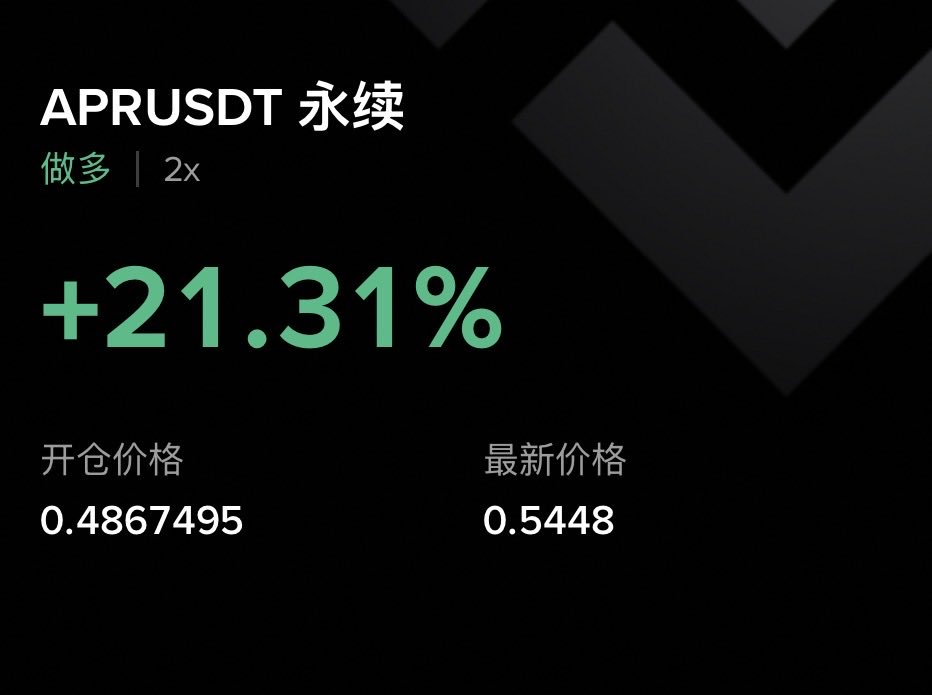
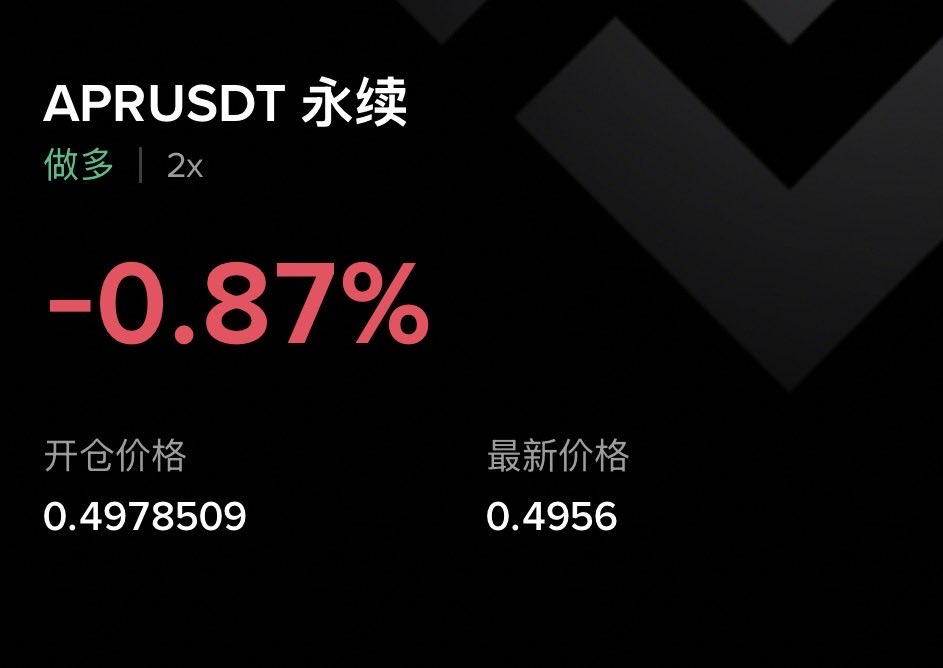
“Buffett once said the secret to investing is simple: you sit there and watch opportunity after opportunity come and go, patiently waiting for the perfect pitch. People may yell, ‘Swing, you idiot!’ Ignore them.”
2026 has been wild. First we got Trump mentioning Hyperliquid by name and now we have CZ openly glazing Hyperliquid and crediting HYPE for leading all coins out of the bear market.
“HYPE coin jumps and then every other coin follows. BNB went up…even Bitcoin went up!”
Some U.S.-listed companies are already preparing to launch their own Meme tokens and pair them with RWAs of their own stocks.
I think one business is about to grow extremely fast: providing Meme/RWA infrastructure and services for publicly listed companies.
The demand could be massive.
What’s truly worth paying attention to with HIP-4 isn’t the words “prediction markets.” It’s that Hyperliquid is continuing to expand what its infrastructure can support.
From perpetuals, to HIP-3 opening up permissionless market creation, and now HIP-4 bringing prediction markets into the picture, Hyperliquid’s direction is becoming increasingly clear:
It’s not simply adding more products. It’s gradually turning HyperCore into the underlying infrastructure where anyone can deploy financial markets.
The old exchange model was: “The platform decides what gets listed, and users trade it.”
The new model is becoming: “Builders decide what markets they want to create, and they create them.”
As asset issuance, trading, settlement, and prediction markets increasingly converge on the same underlying infrastructure, the value captured by $HYPE may no longer come solely from the growth of an exchange — it could come from the expansion of the entire Hyperliquid financial ecosystem.
That’s why I’ve always believed that understanding $HYPE requires looking beyond exchange revenue and buybacks.
The bigger question is:
How many markets can HyperCore ultimately support?
Insider Wallet Update:
The wallet has just opened a position in $STBL — its first entry.
Note: This is not financial advice and is for informational purposes only. Insider wallet activity should never be the sole reason for entering a trade.
What I find truly interesting about $HYPE has never been another wallet buying $1M worth of tokens.
It’s that more and more participants within the Hyperliquid ecosystem are voluntarily converting the money they earn back into $HYPE.
The Assistance Fund uses protocol revenue to buy HYPE. Ecosystem projects are also starting to use part of the fees they generate to buy HYPE.
This is creating an interesting flywheel:
Hyperliquid trading volume grows → ecosystem projects generate more revenue → part of that revenue flows back into HYPE → HYPE captures more value → the ecosystem continues to expand.
The best source of demand for a token isn’t people shilling it.
It’s demand that emerges naturally as the ecosystem grows.
That’s why I’ve always believed that when evaluating whether a token is worth holding long term, the question shouldn’t simply be:
“How many more people will buy it?”
The better question is:
“If this ecosystem becomes increasingly successful, will that success structurally create more demand for the token itself?”
That’s one of the main reasons I remain long-term bullish on $HYPE.
Insider Wallet Update:
The wallet has just opened a position in $STBL — its first entry.
Note: This is not financial advice and is for informational purposes only. Insider wallet activity should never be the sole reason for entering a trade.
Insider Wallet Update:
The wallet has just opened a position in $AIO — its first entry.
Note: This is not financial advice and is for informational purposes only.
$AIO appears to be using derivatives almost entirely to build and control its position.
So far, there haven’t been any notable on-chain alerts showing large withdrawals from CEXs.
Current data:
• Futures OI: ~$20M
• Futures volume: ~$75M
• Alpha spot volume: only ~$1.42M
One of the biggest advantages of building a position through derivatives is that you don’t have to worry as much about spot inventory showing up in exchange/on-chain data. At certain price levels, derivatives exposure can also be rotated into spot.
This rally looks largely driven by the market maker/whale building a long position through futures.
Which also means one thing:
Their cost basis probably isn’t that low. 🫢
Insider Wallet Update:
The wallet has just opened a position in $AIO — its first entry.
Note: This is not financial advice and is for informational purposes only.
Insider Wallet Update:
The wallet has just opened a position in $AIO — its first entry.
Note: This is not financial advice and is for informational purposes only.
On social media, you can show your beauty, kindness, ambition, expertise, connections, physique, discipline, and what you’re building — but be careful about showing your wealth.
The best kind of wealth isn’t the kind everyone can see. It’s the kind you quietly control.
Staying low-key is rarely a mistake. The less you flex, the less attention, envy, and unnecessary trouble you attract.
Real wealth doesn’t need to prove itself to anyone.
What’s truly worth paying attention to with HIP-4 isn’t the words “prediction markets.” It’s that Hyperliquid is continuing to expand what its infrastructure can support.
From perpetuals, to HIP-3 opening up permissionless market creation, and now HIP-4 bringing prediction markets into the picture, Hyperliquid’s direction is becoming increasingly clear:
It’s not simply adding more products. It’s gradually turning HyperCore into the underlying infrastructure where anyone can deploy financial markets.
The old exchange model was: “The platform decides what gets listed, and users trade it.”
The new model is becoming: “Builders decide what markets they want to create, and they create them.”
As asset issuance, trading, settlement, and prediction markets increasingly converge on the same underlying infrastructure, the value captured by $HYPE may no longer come solely from the growth of an exchange — it could come from the expansion of the entire Hyperliquid financial ecosystem.
That’s why I’ve always believed that understanding $HYPE requires looking beyond exchange revenue and buybacks.
The bigger question is:
How many markets can HyperCore ultimately support?