Every day we tell one real story from the war. Now you can collect them.
Declass is our free card game, and it's live. Every dispatch we post comes with a classified file. Open it, turn over the cards, and build your own dossier of the war, from Copper to Top Secret.
A new file every day. No download.
https://t.co/r4CD0wvvBc
#WW2 #Declass
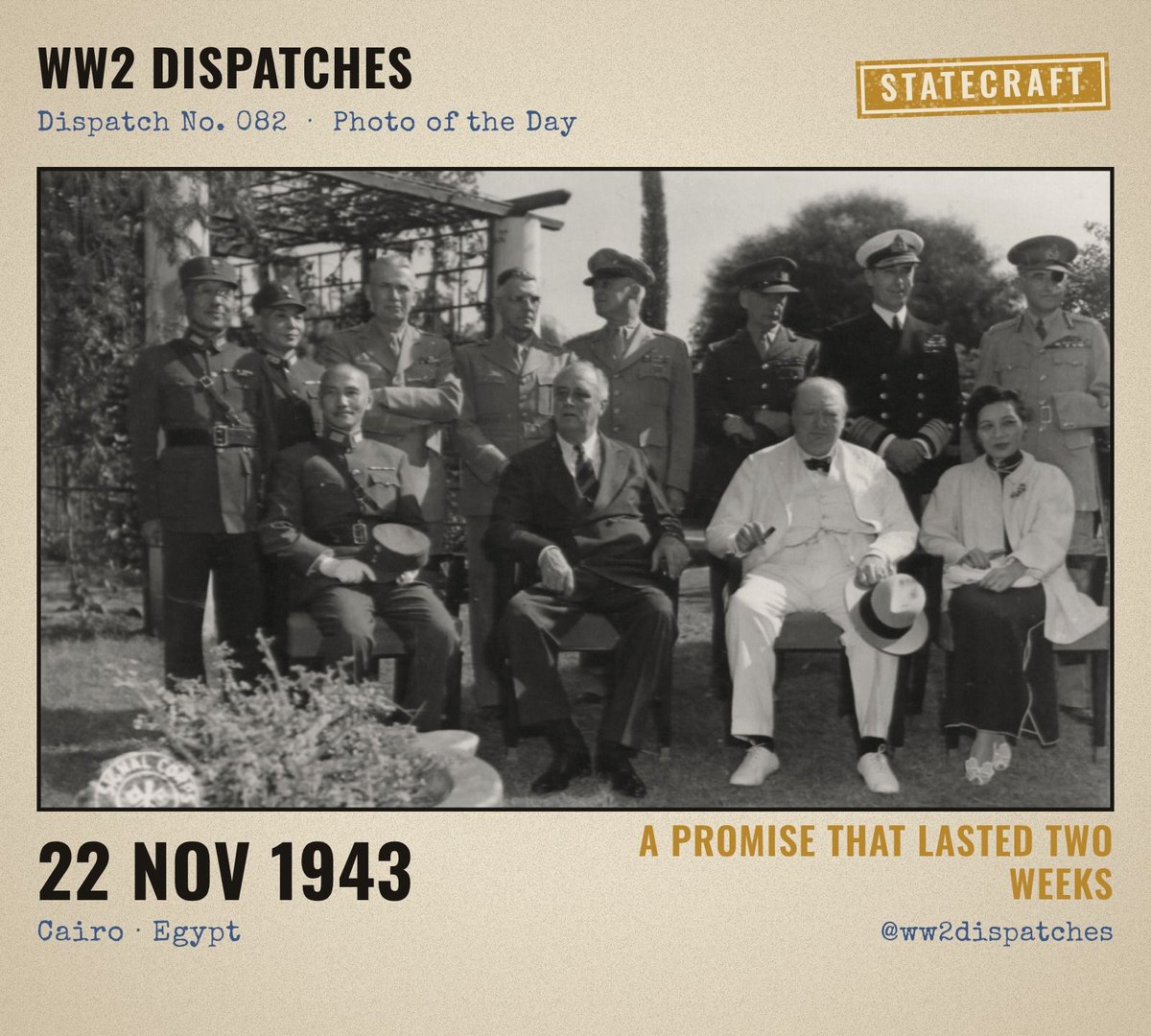
Roosevelt promised Chiang Kai-shek a big landing across the Bay of Bengal. On 5 December he agreed to cancel it.
U.S. War Department film of the Cairo Conference, 25 November 1943, three days after the talks opened.
Should Roosevelt have kept his word to Chiang?
Look closely at the woman on the right. In the talks between Roosevelt and her husband, every word passed through her.
22 November 1943. Roosevelt flew into Cairo past the Sphinx and the Pyramids, and that afternoon Churchill, Generalissimo Chiang Kai-shek and Madame Chiang, Soong Mei-ling, called on him. The conference, code named Sextant, met at the Mena House Hotel at the foot of the Pyramids.
This group was posed three days later, at noon on 25 November, in the garden of the villa where Roosevelt was staying. Churchill grumbled that the staff talks were "disturbed and distressingly confused by Chinese matters."
The Cairo Declaration of 1 December promised Manchuria, Formosa and the Pescadores back to China.
@VoicesofWW2 Honestly the T-34 was so feared that Germans used about 300 captured ones and still had to paint huge crosses on them so their own gunners wouldn't open fire. Wild that they were that good.
@hw97karbine The early Zeros had wingtips that folded up by hand, about 20 inches each, just so they'd fit the carrier elevators. Neat bit of engineering.
At 7 p.m. General Friedrich Paulus sent two words up the chain: "Army surrounded." The reply took more than three hours.
22 November 1942. Soviet pincers were closing behind the Sixth Army at Stalingrad. Paulus flew into the pocket, set up at Gumrak airfield and asked for freedom of action, which meant a breakout to the southwest if the army could not hold. His corps commanders backed him, Walther von Seydlitz most loudly of all.
At 10.15 p.m. Hitler answered from his train: take up a hedgehog defence and await further orders. Two days later he decided the army would stay and be supplied by air.
Paulus surrendered on 31 January 1943, the morning after Hitler made him a field marshal.
If you were Paulus, would you have broken out without orders?
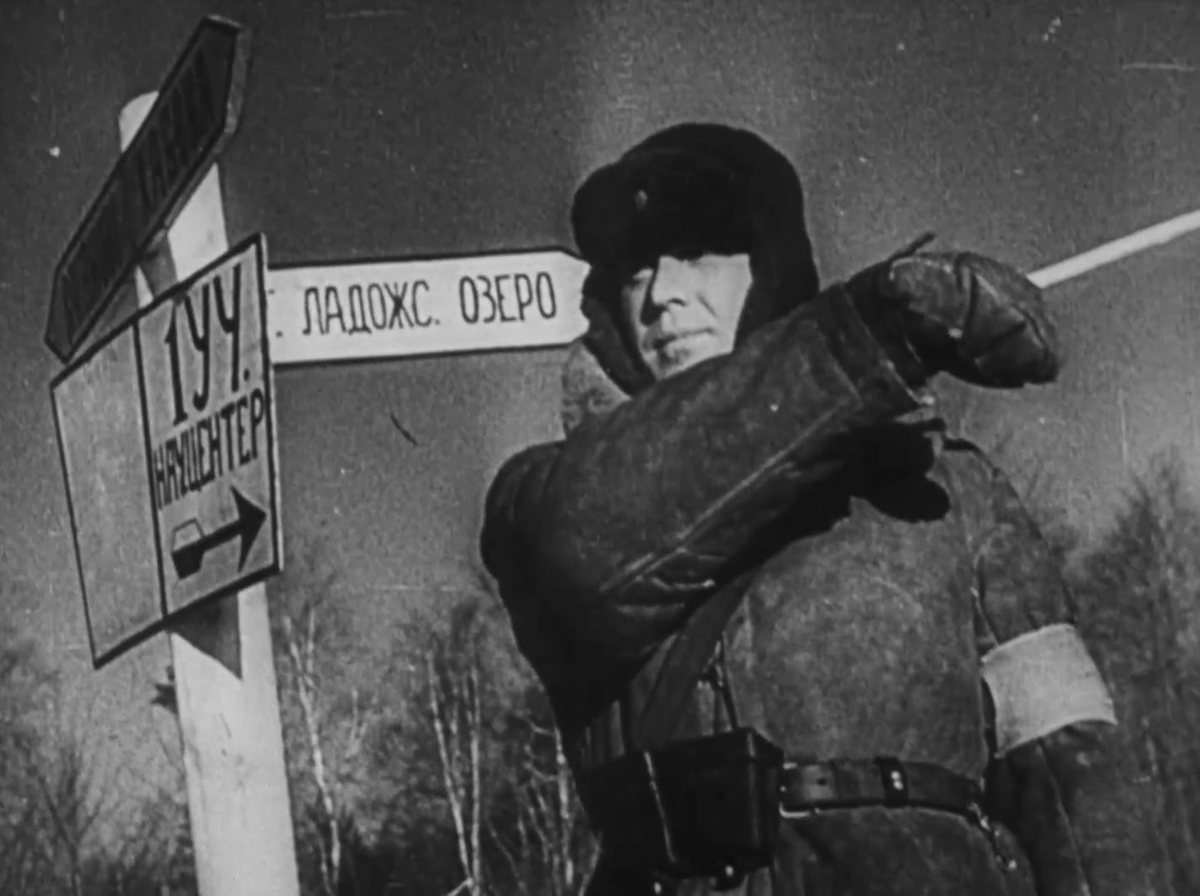
In Leningrad, anyone who wasn't a worker got about three thin slices of bread a day. This frozen lake was the only way in.
Soviet film of the Lake Ladoga ice road, winter 1941 to 1942, as shown in the U.S. Army's The Battle of Russia.
Would you have driven it?
Many of the drivers on Leningrad's ice road steered standing on the running board, with the door hanging open, so they could jump clear if the ice gave way.
On 22 November 1941 the first motor convoy set out across frozen Lake Ladoga: 60 trucks led by Major V. A. Porchunov. Leningrad had been cut off by land since September, and the bread ration for everyone but workers was down to 125 grams a day, about three thin slices.
The ice was still thin. About 40 trucks went through it in the first week, and the toll tripled the week after.
Was sending trucks onto ice that thin a reckless gamble, or the only choice Leningrad had?
@VoicesofWW2 Horse drawn sleds went out first on the thin ice, a couple of days before the trucks could. About 550,000 people were evacuated across it that first winter.
@Jason_R_Burt Love seeing the joy on her face in this one. After everything Strasbourg went through, that greeting must have meant the world to those soldiers too.
A New Zealand officer who had lived beside Tarawa for fifteen years warned the Marines there would not be three feet of water on the reef. On the morning of the landing, the boats began to stop hundreds of yards from the beach.
Read it free: https://t.co/EYnGRLDMTE
Major V. A. Porchunov led 60 trucks onto ice that was still too thin to trust. Behind him was a city where the bread ration for everyone but workers had fallen to 125 grams a day.
22 November 1941. Leningrad had been cut off by land since September. Its one link to the rest of the Soviet Union was Lake Ladoga, now frozen. Porchunov's column set out across it that day, the first motor convoy on what was called Military Road No. 101. People came to know it as the Road of Life.
Most of his trucks were GAZ AA polutorkas, light trucks rated at a ton and a half. By the most common account, the first run came back with 33 tons of flour.
The ice kept giving way. Many drivers rode standing on the running board, steering with the door hanging open so they could jump if the truck broke through. About 40 trucks went under in the first week.
It was worth the risk. Hunger and cold were killing about 100,000 people a month by early 1942. On 25 December, with food coming across the lake, the ration went up for the first time. By April the ice road had carried more than 350,000 tons into the city, and on the way back it carried out more than half a million civilians.
The Road of Life is now a card in Declass, our free WW2 card game: https://t.co/r4CD0wvvBc
Navy color film of D Day at Tarawa, 20 November 1943: Marines crowd amtrac number 67 as it churns through the water, a boatload of men heads in, and smoke rises over Betio's shore.
Shot the day before Col. David M. Shoup sent his famous report from the island. The original film is silent.
#OTD #OnThisDay #WW2
Two days into Tarawa, the colonel running the fight sent his general a report that ended in a line Marines still quote.
21 November 1943. Late that afternoon Col. David M. Shoup's situation report from Betio reached Maj. Gen. Julian C. Smith. It ended: "Casualties many; percentage dead not known; combat efficiency: We are winning."
Shoup, 38, was the junior colonel in the 2nd Marine Division, given the assault only when another commander fell ill. A shell fragment had wounded him on the first day. By the second afternoon, Marines had crossed the airfield to the south shore and fresh battalions were landing.
He received the Medal of Honor, the only one of Tarawa's four recipients who lived to receive it. In 1959 he became the 22nd Commandant of the Marine Corps.
#OTD #OnThisDay #WW2
@Chaoslord1848@ArnaudKubacki@VoicesofWW2 Yeah, and it goes back to 1918. Ebert cut a deal with the army right away just to keep the republic standing, so the officers never really felt they owed Weimar anything. Then in 1934 they all swore an oath to Hitler personally, and a lot of them used that as their excuse later.
@ArnaudKubacki@VoicesofWW2 Plenty of officers tried. Henning von Tresckow and others had bombs planted on his plane in 1943 and it just didn't go off, and Stauffenberg's 1944 attempt left him alive by a few feet. Rundstedt himself stayed out of the plots though.
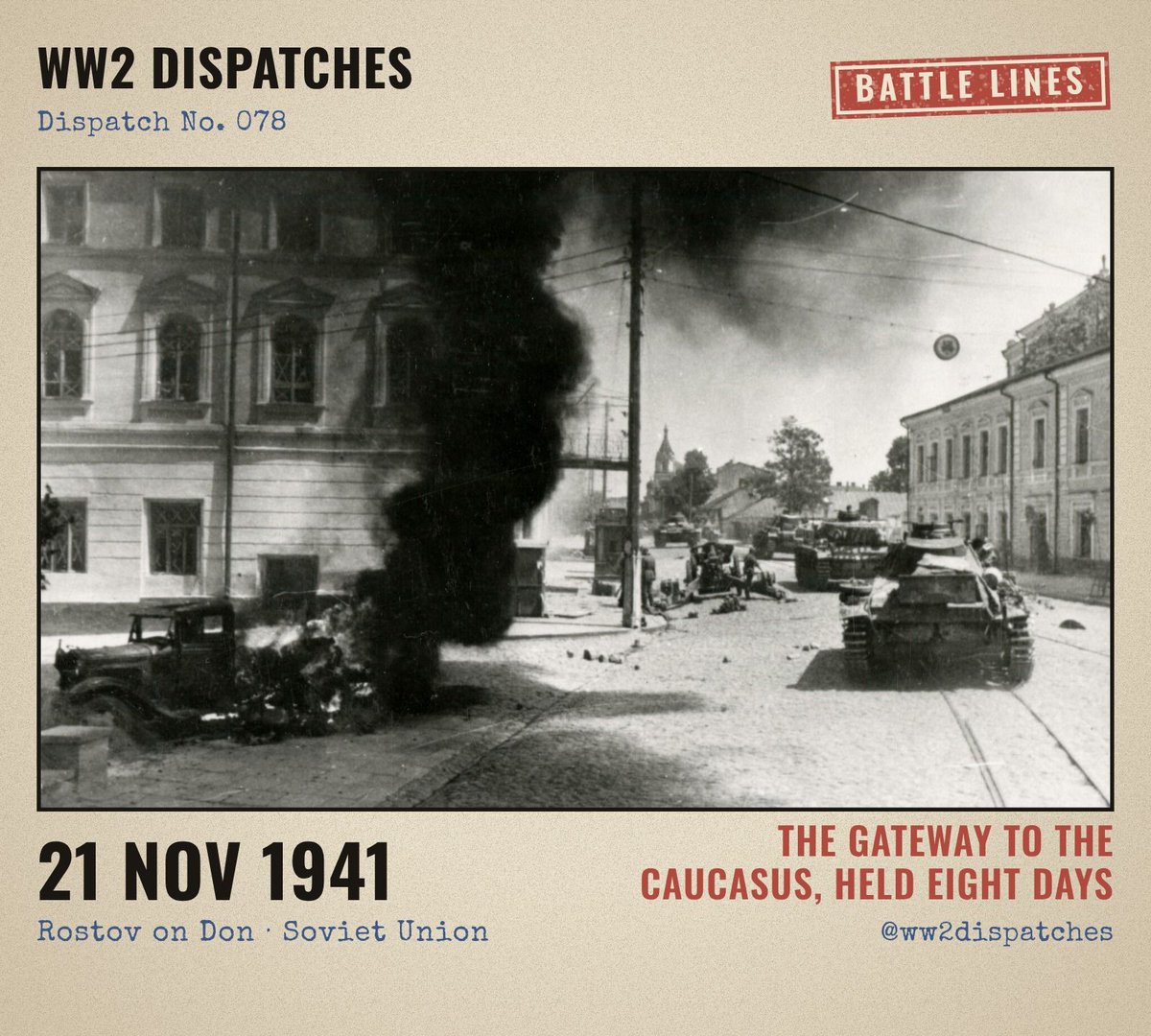
Field Marshal Gerd von Rundstedt told Hitler it was madness to try to hold the city. Days later he was dismissed.
21 November 1941. Troops of Ewald von Kleist's First Panzer Army took Rostov on Don, the rail junction and river port that opened the way to the Caucasus and its oil. They had driven all the way from Kiev through the autumn mud, and now winter had come. The panzer army was short of food, fuel, spare parts and winter clothing, and its left flank hung open.
On 27 November the Soviet 37th Army struck that flank. Rundstedt let Kleist pull back to the Mius River. Hitler ordered Rostov held and on 1 December replaced Rundstedt, whose successor soon reached the same conclusion.
It was the first significant German withdrawal of the war.
#OTD #OnThisDay #WW2
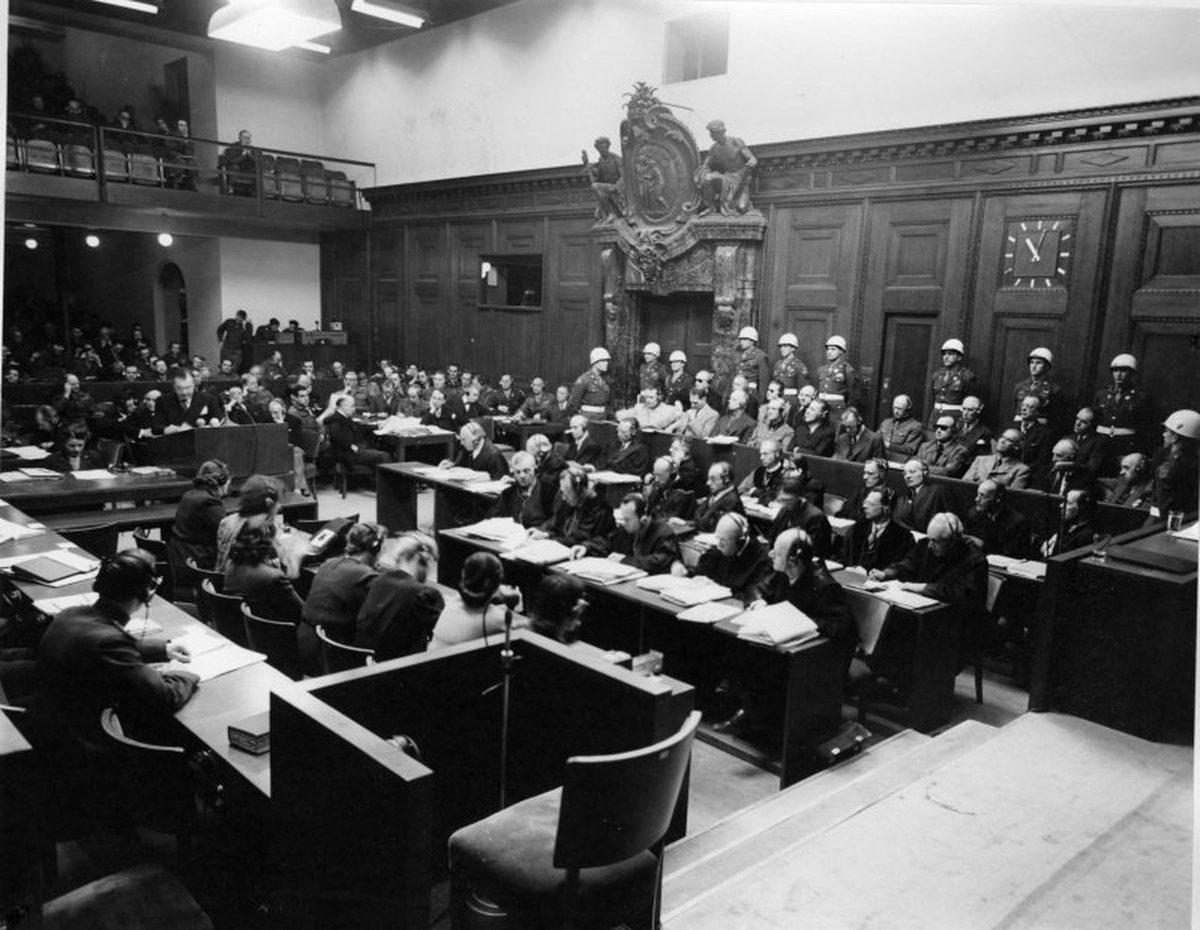
The man who opened the case against the Nazi leaders at Nuremberg was a sitting justice of the US Supreme Court. Robert H. Jackson took a leave of absence from the Court to do it.
On 21 November 1945, the second day of the trial, Jackson rose before the International Military Tribunal. He said the case would rest on the Nazis' own records: "We will show you their own films. You will see their own conduct and hear their own voices." He told the judges that the real complaining party at their bar was "Civilization", and he finished the whole address that same day.
When the trial ended on 1 October 1946, he went back to his seat on the Court.
Should a sitting Supreme Court justice have taken the job of chief prosecutor?
@Vanguard_WW2 Three men who never got to come home, and the ones who found them knew exactly what they were looking at. Rest easy, Endicott, Olds and Costin.