The wound bed is still largely uncharted terrain. What if mapping its changing landscape could help us find the shape of healing? https://t.co/cAGvI9MfHa
@LanceWoolie I hope that camera captures the first Starship launch from Starbase Louisiana someday, and that the footage plays at the Old State Capitol for Louisiana kids on their field trips. 🚀
@nostalgiafkninc I feel like temporal pacing is disappearing from children’s stories. Makes me wonder if short form media is manipulating how we tell our children’s stories.
@steppedenizen Am I misremembering, or did the old faubourgs of New Orleans have some connection to Greek goddesses or Muses? I swear there was something about different parts of the city being tied to Greek mythology.
Here's the schedule for the City of God read-along.
Instead of breaking down all 22 books, we will make this an "intro to the City of God." The live discussions will thus focus on the heart of the work:
Discussion 1 (September 15):
• Book 11 – creation, the angelic fall, and the origin of the two cities
• Book 12 – evil as privation, and how a good creature can turn away from God
• Book 14 – the two loves that found and distinguish the two cities
Discussion 2 (September 29):
• Book 19 – peace, justice, and the proper ends of human community
• Book 22 – resurrection, the beatific end, and the eternal rest of the City of God
Along the way, we'll send out weekly reading guides for the books in question.
Join us!
https://t.co/0R2mremKYi
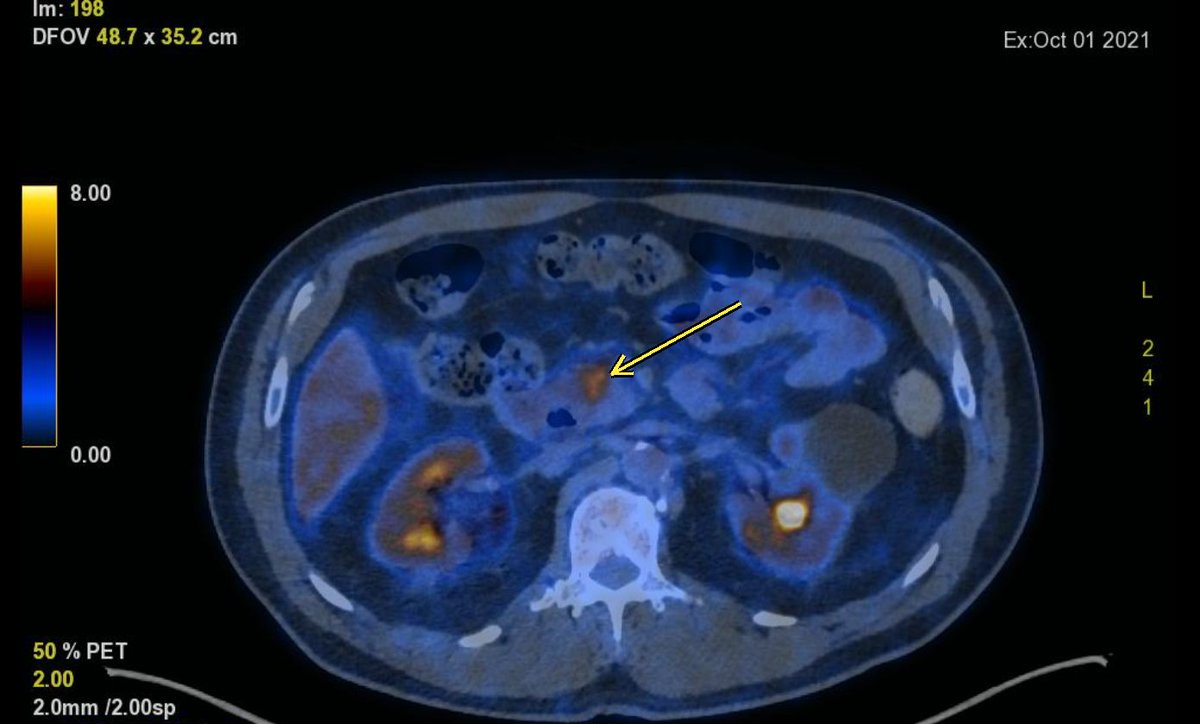
Five years ago I met a patient with stage 4 pancreatic cancer, the diagnosis most people fear most. Today there is no evidence of disease.
This isn't luck, and it isn't a miracle cure. It's precision medicine working exactly as designed.
Their tumor carried a BRCA mutation, a flaw in the cancer's ability to repair its own DNA. Six months of chemo, then three years of olaparib, a drug that targets that exact weakness. The cancer couldn't fix the damage.
Not every pancreatic cancer has this vulnerability, only roughly 10% do. But this is why we test. Why we sequence tumors. Why science can change everything.
Stage 4 pancreatic cancer, five years, no evidence of disease. I don't get to write that sentence often. Today I do.
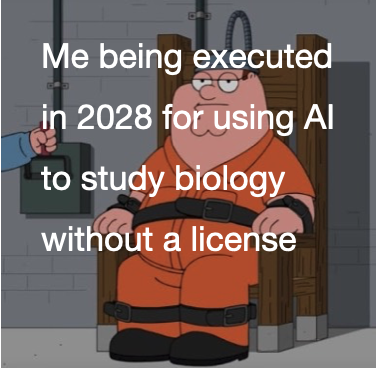
What changed? Perhaps the realization that knowledge itself isn’t the enemy.
We could learn the physics behind a nuclear weapon long before AI existed. Yet we don’t protect civilization by banning physics textbooks. We control fissile materials, monitor acquisition, watch for indicators of malicious intent, and intervene between knowledge and capability.
AI deserves serious safeguards too. But there is an enormous difference between mitigating dangerous actions and slowing humanity’s access to knowledge itself.
Build the guardrails around the road. Don’t stop building the road.
With the greatest respect, sir, pausing AI development risks pausing one of the greatest equalizers in human history. Beyond the calculator, AI is the first tool to give virtually anyone, regardless of background, instantaneous access to something approaching collegiate level knowledge and skills.
With the greatest respect, sir, pausing AI development risks pausing one of the greatest equalizers in human history. Beyond the calculator, AI is the first tool to give virtually anyone, regardless of background, instantaneous access to something approaching collegiate level knowledge and skills.
@gailcweiner Totally agree. A government backed “safety council” with unlimited access to AI, deciding which models the public is allowed to use and how, sounds suspiciously like the exact scenario everyone claims to be afraid of. lol
Something seems off to me with the Jacob Coxon Anthropic safety concerns whistle blowing.
He walks out of Anthropics doors and immediately posts on X, which is seen by 110 million people, followed by holding press interviews within the same day.
Anthropic who is prepping for IPO and can barely communicate the status of their models, just seems to let this guy walk out the building and scream on the loudest platforms.
Something just isn’t adding up for me.
An Obligation of Oblivion.
The Greatest Generation once stood in the New Mexico desert and wondered whether they might set the atmosphere on fire.
Not because oblivion was impossible, but because human beings have always moved forward under the shadow of what might destroy us.
Before surgery, we sign informed consent. We are told of infection, hemorrhage, disability, death. We understand the worst may happen, yet most of us still choose the possibility of life over the certainty of standing still.
Perhaps civilization has its own informed consent.
If we possess the intellect to perceive catastrophe, does walking away actually save us? Or does surrendering our curiosity merely guarantee another kind of extinction?
We are a mortal species leaving immortal marks upon the world.
Our obligation cannot be to avoid oblivion at any cost.
It is to face it with open eyes, understand the risk, and choose to thrive anyway.
As a point of terminal optimism, I’m willing to bet those pods are for healing, built from massive data acquisition and centuries of research, where cures hiding in plain sight finally become visible. Perhaps after the Great Company Wars of the 2030s, the dust settles and we discover profit was never the ceiling of human ingenuity. Maybe superintelligence doesn’t make humanity redundant. Maybe it unleashes the totality of human creativity and gives us the freedom to become more human, not less.
At the very least, we die with good intentions.
As a point of terminal optimism, I’m willing to bet those pods are for healing, built from massive data acquisition and centuries of research, where cures hiding in plain sight finally become visible. Perhaps after the Great Company Wars of the 2030s, the dust settles and we discover profit was never the ceiling of human ingenuity. Maybe superintelligence doesn’t make humanity redundant. Maybe it unleashes the totality of human creativity and gives us the freedom to become more human, not less.
At the very least, we die with good intentions.