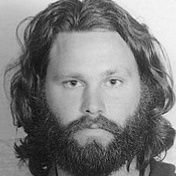
A Berkeley finance professor points to a photo of his own parents from the 1950s
To explain why nobody taught them personal finance
They didn't need it
- No credit cards existed yet. So there was no credit card debt to manage
- No adjustable-rate mortgages. So no mortgage decision to get wrong
- Their pension paid until they died. So no math on how long the money would last
Every one of those safety nets is gone now
The decisions didn't get removed
They got handed to you instead
Most people assume not knowing personal finance is a personal failing
Something they should've picked up by now
It's closer to being handed a much harder exam than your parents took
With no one telling you the rules changed
@0_oRai Financial literacy doesn't just change how you spend money,it changes how you see time,risk,debt and opportunity,once you understand the mechanics,thousands of everyday decisions start looking completely different
MIT showed a room full of students AI creatures evolving to swim,walk,fight over food
Everyone's reaction was the same: genetic algorithms must be the way to go
Patrick Winston's reaction was different
He walked out with a colleague. Both said the same thing at the same time
Not "genetic algorithms work"
"Wow, that space is rich in solutions"
The algorithm wasn't smart
The space was so full of working answers that almost anything searching it would stumble into one
Most people watching an impressive AI demo credit the algorithm
The real question is always where the credit lies
The algorithm,or the person who built the space it searched in
He breaks down why in the lecture
ChatGPT was never supposed to become one of the biggest products on the internet
In 2022,OpenAI had a problem
Making its models better required humans to compare and rank AI-generated answers
That was slow
And expensive
Then OpenAI released something that was initially framed as a research preview:
ChatGPT
The idea was to put the model in front of real users and learn how people actually interacted with it
Then something happened nobody expected
100 million people showed up in roughly two months
TikTok had taken around nine months to reach the same milestone
One of the fastest-growing consumer products in history had started as a research preview
But the interesting part isn't how fast ChatGPT grew
It's what OpenAI could learn from millions of people using it
That's what the video explains
Most people think AI will either fully solve math or stay a glorified calculator
Fields Medalist Terence Tao and OpenAI's head of research Mark Chen say the truth is harsher
Tao runs a project with 20 million problems. 99% got solved by plain brute-force. The remaining 1% - the hard ones - AI couldn't move at all
His best lessons are accidental. When he messes up a proof in front of students and fixes it live
Those mistakes almost never get published - and that's exactly the data AI needs to learn to reason,not just copy finished answers
Asked about losing intuition, Tao points to chess: the engine formally solved the game
People play differently now - they experiment,then ask the engine for an evaluation
"The mistake isn't that AI can't do real math yet. The mistake is thinking intuition disappears instead of changing shape."
AI isn't replacing mathematicians
It's changing what doing math even means
15:56 - Tao's best lessons are the ones where he messes up live
24:03 - The chess analogy
44:00 - 20M problems: exactly where AI breaks down
Steve Jobs described one of the wildest use cases for AI in 1983
Almost 40 years before ChatGPT existed
He said books had one fundamental problem:
You can read Aristotle
But you can't ask Aristotle a question
Then Jobs imagined a machine that could spend a person's entire life learning how they think - their principles,ideas,and view of the world
After that person died, you could ask:
“What would Aristotle have said?”
And the machine would try to answer
That was 1983
Today we're teaching AI models our writing,voice,preferences,memories and reasoning
Jobs wasn't describing a better computer
He was describing a way to preserve how a human mind thinks
This 80-second section feels very different in 2026
@polydao “The note format is the write API” is probably the most important line here,once relationships become explicit edges,Obsidian stops being a note app and starts behaving like a lightweight graph database agents can modify
Most computer science students learn that sorting n numbers can't be done faster than n log n
A Harvard professor walked into an Advanced Algorithms lecture and told the class they'd been lied to
Jelani Nelson starts with the familiar lower bound, then points out the assumption hidden underneath it: n log n is a barrier for comparison-based sorting
Real computers aren't limited to comparisons
A 32- or 64-bit machine can shift bits, XOR values, perform arithmetic, and manipulate an entire machine word in constant time. Change the computational model, and suddenly the old limit isn't the limit anymore
The lecture builds this idea through the predecessor problem - finding the largest stored value below a query - then shows how specialized data structures can beat ordinary binary search trees
Van Emde Boas trees push predecessor queries and updates to O(log w). Fusion trees exploit the machine word differently and reach O(log_w n) queries with linear space
Put the ideas together and something that sounds impossible becomes possible: integer sorting faster than n log n
Nelson goes further. Deterministic integer sorting can reach O(n log log n), and randomized algorithms can do even better. Whether linear-time integer sorting is possible in this model remains an open question in the lecture
The interesting lesson isn't really about sorting
It's that many "limits" in computer science are limits of the model you chose - not necessarily limits of the machine
Timestamps worth watching:
09:39 - The professor tells the class the n log n rule isn't the whole story
16:31 - The hidden assumption behind the sorting lower bound
19:36 - Van Emde Boas trees
23:02 - Fusion trees and beating binary search trees
26:18 - How much faster integer sorting can actually get
31:11 - Building the van Emde Boas tree
55:39 - Turning huge universe space into linear space with hashing
1:20:32 - X-fast tries
1:22:30 - The trick that turns X-fast into Y-fast
Most people memorize complexity bounds
Advanced algorithms teaches you to ask what assumptions made them true
@AnishJaitwar “You no longer need prompts” is catchy, but prompts didn't disappear.They became architecture: context,tools,memory,evaluation and feedback loops
Most people think a quant who called the market right ten times in a row is just talented. A quant trading lecture explains why that's often just math
If it's skill - why do even pros admit 95% of their ideas fail in backtesting?
Why did a "guru" with 99% confidence on an election lose to someone honestly saying 65%?
The story from "Fooled by Randomness": a market prediction email went to 10,000 people. Half told rise, half told fall. Every week. Someone was bound to "call it" ten times straight
Same with the election: thousands of random "stats gurus" against one Nate Silver. Someone out of thousands had to be right by pure chance
One moment worth remembering: even a strategy proven over years can be "picking up pennies in front of a steamroller" - working fine, until it wipes out everything at once
"It's not about who was right. It's about how many people placed a bet before that."
Return data can be a false signal
The illusion of skill is just randomness that survived
AI adoption inside a company doesn't follow a linear curve - it follows a log-normal one
The co-head of DE Shaw (one of the world's largest hedge funds) explained it: when they look at usage intensity across the firm, the data forms a log-normal distribution - the more someone already uses the tool, the more they'll keep using it
It's a multiplicative effect, not an additive one.
What this means in practice:
- Stop trying to guess the "right" use case from the top down
- Give the tool to everyone and watch who starts scaling exponentially
- Those people are your future internal AI champions
DE Shaw runs a specific tactic: at team meetings, everyone gets 30 seconds to share something strange they tried with AI that week - worked or not
The second tactic is even sharper: the path to feeling comfortable with AI at work doesn't have to start at work
People take more risks experimenting in their personal lives - failing there feels less embarrassing
AI adoption isn't a training program
It's personal experience accumulating - and it naturally spills over into how people work
@0_oRai Same dynamic as XIV,it paid for 7 years,attracted maximum capital right before February 2018,then lost 96% in one session,the people hurt most were the ones who arrived last
Quantum AI in robotics right now is 90% marketing and 10% actual technology
Here's what's real:
- Quantum sensors - real, already outperforming classical lidar in lab conditions
- Quantum processors running a robot's real-time control loop - don't exist at any company
- Humanoid robots are hitting the market (Tesla Optimus, Unitree) - but their "brain" is fully classical
Why the topic is exploding right now:
Robotics and quantum computing are both moving through the same "lab to product" phase simultaneously
Combining two hype words is an easy way to get attention
Real quantum-AI convergence is already happening - just not in robots. It's in optimization, materials science, cryptography
Direct robot control is still years out
My take: the first practical hybrids won't show up in the robots themselves - they'll show up in planning and simulation pipelines, where quantum computing is already showing an edge