🔥 The rumors are confirmed: The Clarity Act markup is set for the week of May 11.
This is the moment the "Wild West" era officially ends and the "Wall Street" era begins. By defining "mature blockchains" and drawing a hard line between the SEC and CFTC, this bill provides the legal air cover that every major pension fund and sovereign wealth fund has been waiting for.
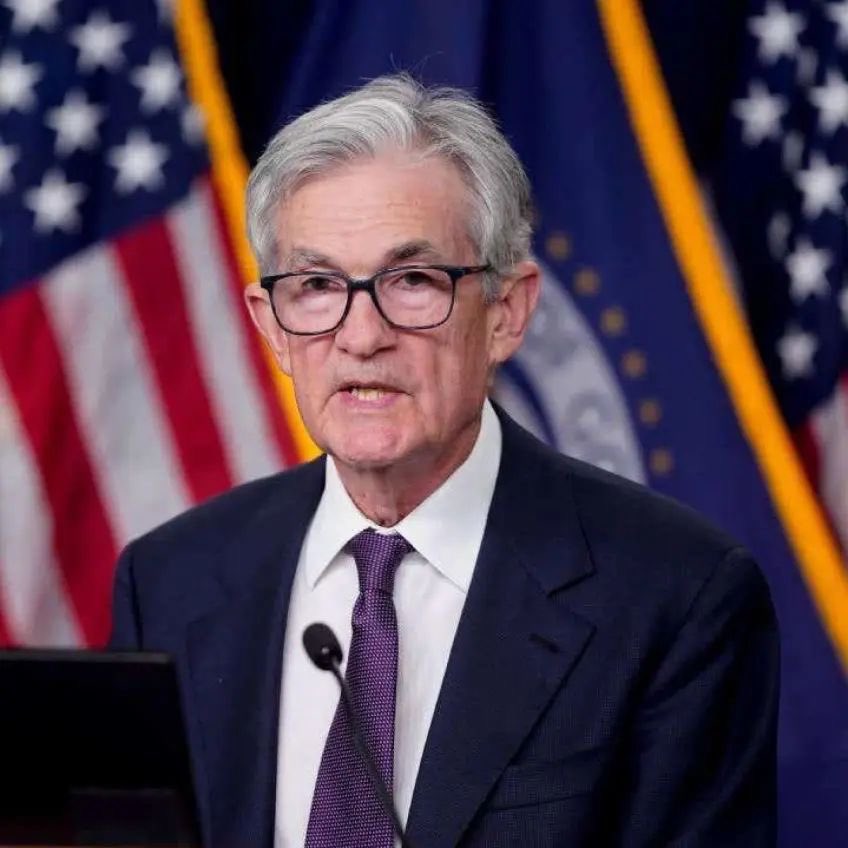
The next Fed Chair isn't your grandpa's central banker.
Kevin Warsh just dropped a 69-page financial disclosure and it reads like a Silicon Valley pitch deck:
→ SpaceX stake
→ Polymarket (crypto prediction markets)
→ Ethereum dev tools (Tenderly)
→ Crypto fintech: Lemon Cash, Stashfin
→ AI workforce platforms, robotic coffee bars, herpes vaccines & reversible male contraceptives
→ A literal digital cloning platform (Delphi AI)
Net worth: over $100M.
Worked with Stanley Druckenmiller. Called Bitcoin "the new gold for anyone under 40."
The Fed is about to have its most interesting chair in modern history.
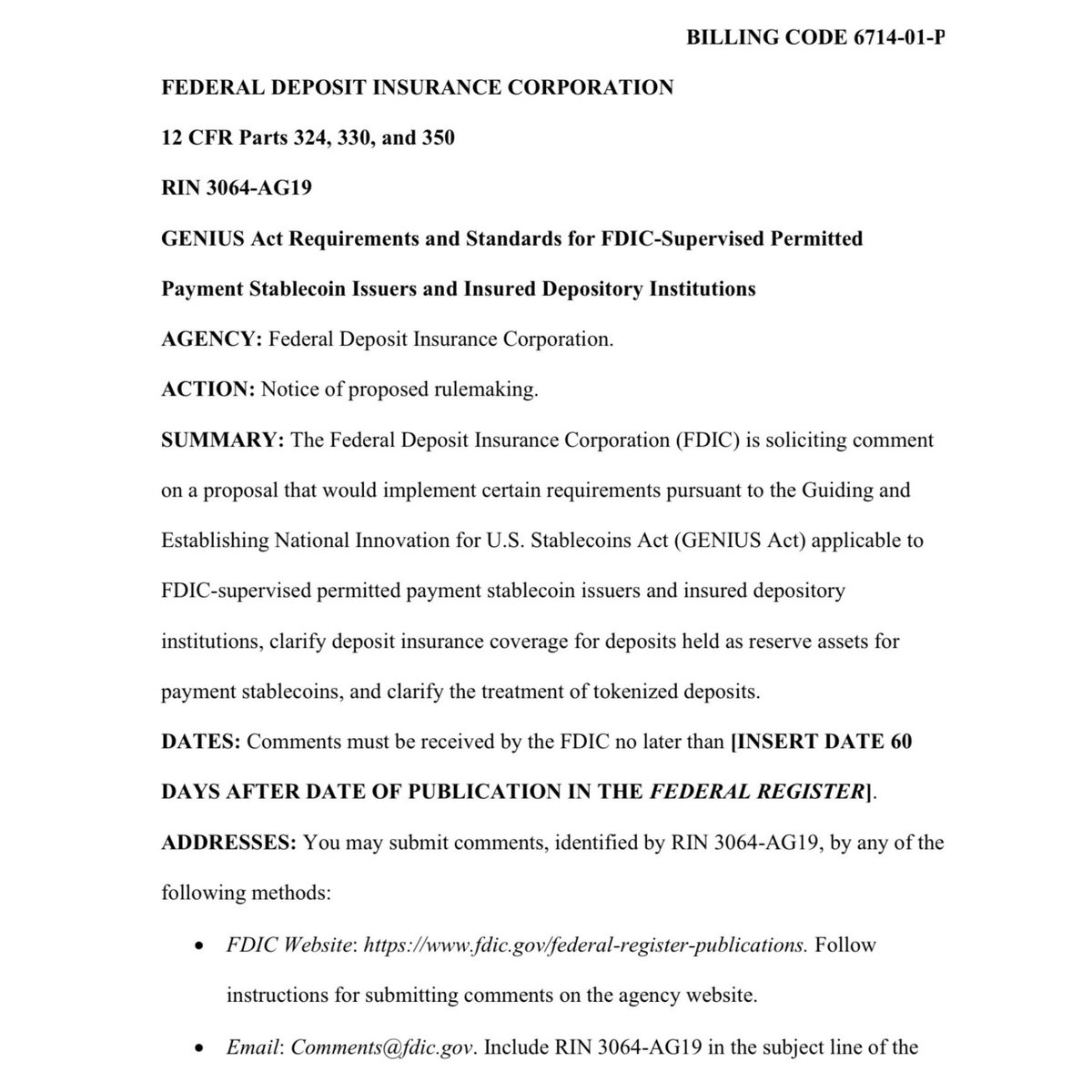
BREAKING: The US government just created the first official banking rules for stablecoins.
The FDIC today approved a full regulatory framework for stablecoin issuers under the GENIUS Act. Here is what it means:
Every stablecoin must be backed 1:1 with real assets. If there are $1 billion worth of stablecoins in circulation, the issuer must hold $1 billion in actual reserves without any exceptions.
Every stablecoin must be redeemable on demand at face value. If you hold $100 in stablecoins, you can always get $100 back.
Reserve assets cannot be rehypothecated or reused. The reserves must sit fully segregated and cannot be used for any other financial activity.
Stablecoin issuers cannot pay interest or yield to holders simply for holding the coin. This directly affects yield bearing stablecoin products currently in the market.
If redemption requests exceed 10% of all outstanding stablecoins within a single 24-hour period, it triggers a significant redemption event requiring immediate action.
Stablecoin issuers must meet capital requirements and risk management standards similar to what banks follow. Quarterly reporting and CEO signed audits are required. Banks that hold or manage stablecoins on behalf of customers fall under the same rules.
One important clarification. FDIC insurance covers the issuer's reserve deposits at the bank level, not individual token holders.
Why this is good for crypto?
Right now stablecoins operate in a gray area. No clear rules means no trust from institutions, no trust from regulators, and no certainty for users. These rules change that. Regulated stablecoins backed by real reserves and covered by FDIC insurance become as safe as a bank deposit.
That opens the door for banks, pension funds, and large institutions to use stablecoins without legal risk. A regulated stablecoin market is the foundation that the rest of crypto needs to grow.
🔥 $100 GIVEAWAY + Q2 ATH ALERT! 🔥
The #BNBChain moon mission is loading and these 3 gems are primed to SMASH new All-Time Highs! 🚀🐾 Don't sleep on the rotation—position now or FOMO later! 💎⚔️
🌟 The ATH Watchlist:
$OCICAT (@ocicattoken) 🐈🌕
$WKC (@wikicatcoin) 🦁📚
$SACHI (@sachi_coin) ✨🐾
🎁 WIN $100 CASH:
1️⃣ Like & RT ❤️🔄
2️⃣ Follow @hc_capital
3️⃣ Tag 3 friends & drop your ticker below! 🗣️👇
👇 RAID THE REPLIES! Which army is the strongest? Type your ticker 10 TIMES to show your power! 🔊🔥
#Giveaway #Memecoins #BNB #100xGem #Web3 #Airdrop #HCCapital #OCICAT #WKC #SACHI
This is MASSIVE for the crypto market.
America just unlocked trillions of dollars for crypto through tokenization.
Here’s what actually happened.
Imagine Apple stock existing as a digital token on a blockchain: same ownership, same legal rights, same value, just in a new digital format. That’s a tokenized security.
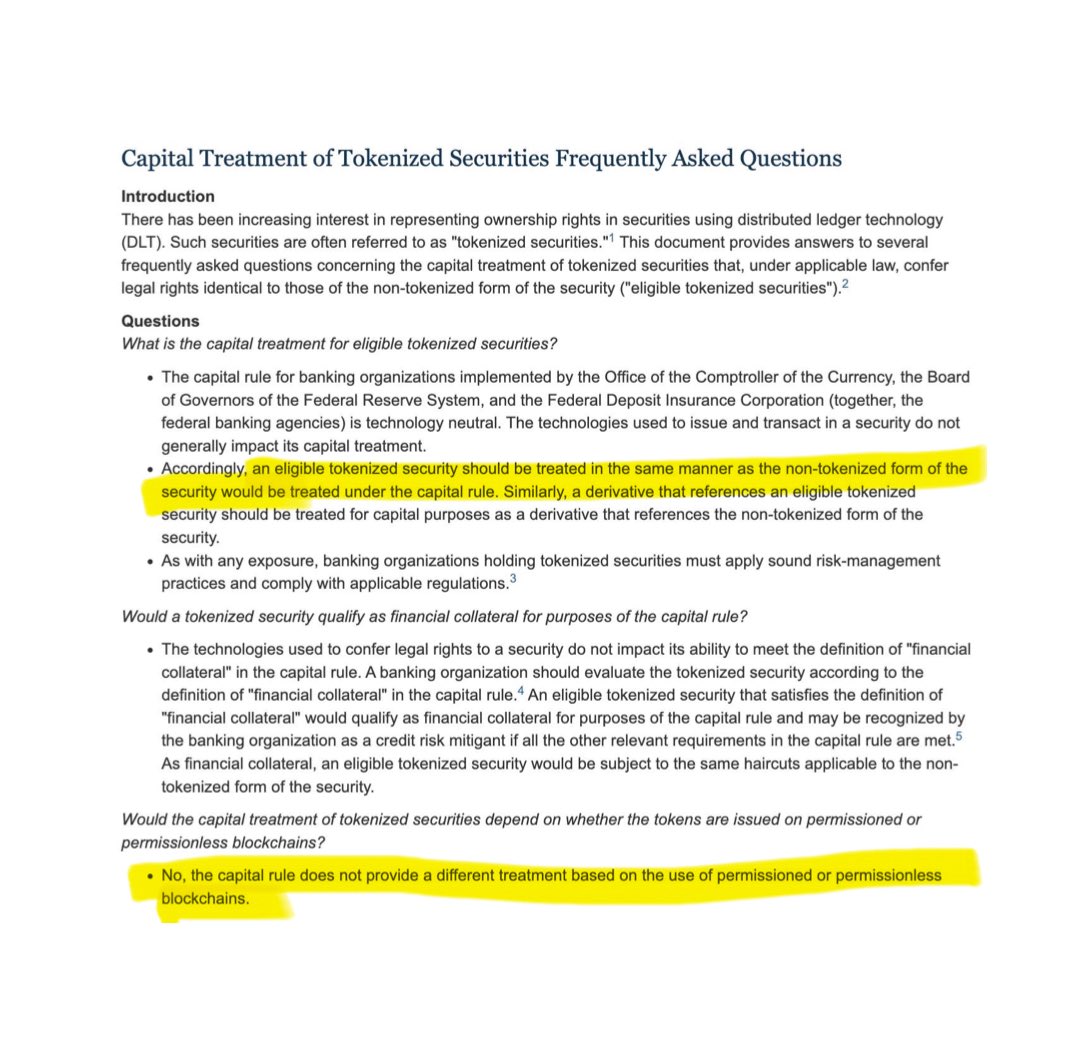
The Fed, OCC, and FDIC issued a joint announcement: every U.S. bank can now hold these tokens on their balance sheet with zero regulatory penalty.
Three immediate changes:
1. Banks can use tokenized securities as collateral for loans, the same as regular stocks or bonds. No difference in regulators’ eyes.
2. It doesn’t matter whether the token lives on a public blockchain like Ethereum or a private one. The same rules apply either way.
3. Any financial derivative linked to a tokenized asset is treated exactly like a traditional derivative.
Why this matters for crypto:
Trillions of dollars in stocks, bonds, and real estate were sitting off-chain, waiting for this green light.
JPMorgan, Goldman Sachs, Bank of America, they weren’t afraid of blockchain. They were afraid of regulatory uncertainty. That uncertainty just vanished.
The world’s largest pools of money now gave permission to move onto the blockchain.
🚨 JUST IN
🇺🇸 THE UNITED STATES HAS OFFICIALLY ADDED #BITCOIN AND CRYPTO TO ITS NATIONAL CYBERSECURITY STRATEGY FOR THE FIRST TIME EVER.
“WE WILL PROTECT AND STRENGTHEN THE SECURITY OF DIGITAL ASSETS.”
AMERICA IS CLEARLY POSITIONING ITSELF AS THE GLOBAL HUB FOR BTC AND CRYPTO. 🔥