La estructura de un prompt en Claude 4.6:
1. Tarea: sé directo: "Necesito [X] y el resultado exitoso se ve así: [Y]." Olvida los "actúa como experto senior"
2. Archivos de contexto: deja de explicar en el prompt. Sube archivos .md con tus reglas y dile: "Lee esto completo antes de responder." La IA ya puede digerir libros, no solo notas.
3. Referencia: sube un ejemplo real de lo que quieres. Define el tono, patrón y estructura como reglas. Nada de "algo parecido a esto" y cruzar los dedos.
4. Brief: lo único que escribes desde cero, corto y concreto: tipo de output + extensión + qué NO debe sonar + cómo se ve el éxito.
5. Reglas: tu archivo de contexto ya tiene tus estándares. El prompt solo dice: "Léelo completo, si vas a romper alguna regla, párate y avísame."
6. Conversación: antes dabas prompts y ahora la IA te los da a ti así que dile: "no ejecutes nada todavía, hazme preguntas para afinar el enfoque juntos."
7. Plan: antes de escribir una sola línea: "Dime las 3 reglas de mi archivo que más aplican aquí. Luego comparte tu plan."
8. Alineación: nada arranca hasta que los dos apunten al mismo objetivo "empieza solo cuando estemos alineados."
Esto reemplaza la era de los prompts de un solo mensaje. 🧵
It is hard to communicate how much programming has changed due to AI in the last 2 months: not gradually and over time in the "progress as usual" way, but specifically this last December. There are a number of asterisks but imo coding agents basically didn’t work before December and basically work since - the models have significantly higher quality, long-term coherence and tenacity and they can power through large and long tasks, well past enough that it is extremely disruptive to the default programming workflow.
Just to give an example, over the weekend I was building a local video analysis dashboard for the cameras of my home so I wrote: “Here is the local IP and username/password of my DGX Spark. Log in, set up ssh keys, set up vLLM, download and bench Qwen3-VL, set up a server endpoint to inference videos, a basic web ui dashboard, test everything, set it up with systemd, record memory notes for yourself and write up a markdown report for me”. The agent went off for ~30 minutes, ran into multiple issues, researched solutions online, resolved them one by one, wrote the code, tested it, debugged it, set up the services, and came back with the report and it was just done. I didn’t touch anything. All of this could easily have been a weekend project just 3 months ago but today it’s something you kick off and forget about for 30 minutes.
As a result, programming is becoming unrecognizable. You’re not typing computer code into an editor like the way things were since computers were invented, that era is over. You're spinning up AI agents, giving them tasks *in English* and managing and reviewing their work in parallel. The biggest prize is in figuring out how you can keep ascending the layers of abstraction to set up long-running orchestrator Claws with all of the right tools, memory and instructions that productively manage multiple parallel Code instances for you. The leverage achievable via top tier "agentic engineering" feels very high right now.
It’s not perfect, it needs high-level direction, judgement, taste, oversight, iteration and hints and ideas. It works a lot better in some scenarios than others (e.g. especially for tasks that are well-specified and where you can verify/test functionality). The key is to build intuition to decompose the task just right to hand off the parts that work and help out around the edges. But imo, this is nowhere near "business as usual" time in software.
"¿Necesito web si tengo Instagram?"
IG es alquilado. Tu web es propia.
❌ IG: Cero control, sin Google.
✅ Web: Eres dueño de tus ventas.
Instagram complementa. Tu web es la base.
5 errores que veo todos los días en
webs de negocios:
1 No se ve bien en el celular
2 No tiene botón de WhatsApp
3 La información está desactualizada
4 Tarda más de 5 segundos en cargar
5 No dice claro qué venden ni dónde están
Si tienes 3 de estos, está espantando
clientes.
El 70% de la gente busca un negocio en Google
ANTES de visitarlo.
Si buscas tu negocio y no aparece,
esos clientes se van a la competencia.
No necesitas ser experto en marketing.
Solo necesitas existir en internet
con una página clara y profesional.
Eso es todo.
Tu web trabaja mientras duermes.
Pero solo si cumple estas 3 cosas:
→ Carga r��pido en el celular (menos de 3 segundos)
→ Tiene un botón de WhatsApp visible
→ Dice claro QUÉ vendes y CÓMO contactarte
Si tu web no hace esto, no es una web.
Es un folleto abandonado en internet.
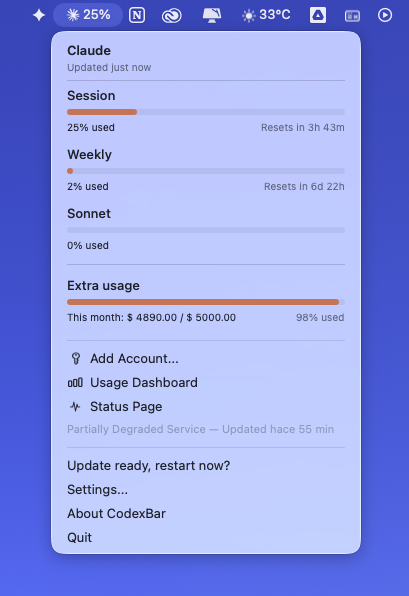
Si le das duro al vibecoding y consumes APIs como loco, necesitas CodexBar en tu Mac 💎
Muestra tu consumo de Claude/LLMs en tiempo real en la barra. Indispensable para no asustarte (yo ya casi quemo mis $5k este mes 💀).
Brutal trabajo de @tom_doerr 👇
Pregunta seria:
¿Qué prefieres?
A) Web bonita que tarda 3 meses → $3,000
B) Web bonita que tarda 72h → $350-$800
La tecnología cambió. Los precios deberían cambiar también.
Esto no es low-cost. Es eficiencia real.
Si vas a hacer vibecoding profesional, aprende esto primero:
1. React (componentes, hooks, routing)
2. Tailwind CSS (utility-first es el futuro)
3. Firebase (auth + db + hosting en un solo lugar)
4. Cómo escribir buenos prompts para IA
👇👇👇
Construí esta landing en 57 minutos ⏱️
Herramientas usadas:
→ Claude como copiloto
→ React / Tailwind
→ Copywriting de Alta Conversión
→ Deploy en Firebase
¿El objetivo? que más visitantes se conviertan en clientes con la estructura AIDA (Atención, Interés, Deseo, Acción).
"Las páginas web son un commodity"
❌Falso.
Un commodity es un template de $20 en ThemeForest.
Una solución digital que:
→Entiende tu mercado
→Es escalable
→Se despliega en 72h
→Incluye soporte
Eso es un servicio premium.
La diferencia es el cerebro detrás del código.



![7uanF's tweet photo. La estructura de un prompt en Claude 4.6:
1. Tarea: sé directo: "Necesito [X] y el resultado exitoso se ve así: [Y]." Olvida los "actúa como experto senior"
2. Archivos de contexto: deja de explicar en el prompt. Sube archivos .md con tus reglas y dile: "Lee esto completo antes de responder." La IA ya puede digerir libros, no solo notas.
3. Referencia: sube un ejemplo real de lo que quieres. Define el tono, patrón y estructura como reglas. Nada de "algo parecido a esto" y cruzar los dedos.
4. Brief: lo único que escribes desde cero, corto y concreto: tipo de output + extensión + qué NO debe sonar + cómo se ve el éxito.
5. Reglas: tu archivo de contexto ya tiene tus estándares. El prompt solo dice: "Léelo completo, si vas a romper alguna regla, párate y avísame."
6. Conversación: antes dabas prompts y ahora la IA te los da a ti así que dile: "no ejecutes nada todavía, hazme preguntas para afinar el enfoque juntos."
7. Plan: antes de escribir una sola línea: "Dime las 3 reglas de mi archivo que más aplican aquí. Luego comparte tu plan."
8. Alineación: nada arranca hasta que los dos apunten al mismo objetivo "empieza solo cuando estemos alineados."
Esto reemplaza la era de los prompts de un solo mensaje. 🧵](https://pbs.twimg.com/media/HCqHupPbgAEsDyr.jpg)