Es absolutamente vergonzoso que @VIX difunda contenidos que, además de poder interpretarse como una apología del abuso sexual infantil, contribuyen a revictimizar a @SashaSokol.
”La televisión educa. Pero educa al revés”, decía Carlos Monsiváis.
Es aberrante que, en pleno 2026, todavía se normalicen y se romanticen relaciones marcadas por el abuso de poder sobre menores de edad.
El abuso sexual infantil NO es entretenimiento, no es una historia de amor y mucho menos algo que deba celebrarse.
La verdad incomoda, pero incomoda más el silencio porque genera impunidad.
Aplaudo que cuidarte sea tu prioridad, Ximena.
Que tu voz te cobije y te libere.
Que tu historia te pertenezca.
Y como bien dices: “Que la vergüenza y las consecuencias cambien de bando.”
#XimenaSantaolalla
#25N
Non puoi passare 45 anni della tua vita ascoltando una canzone che è parte di te,della tua anima,che ha contribuito ad essere chi sei e non essere triste quando muore chi l’ha scritta 💔
RIP Andy Taylor
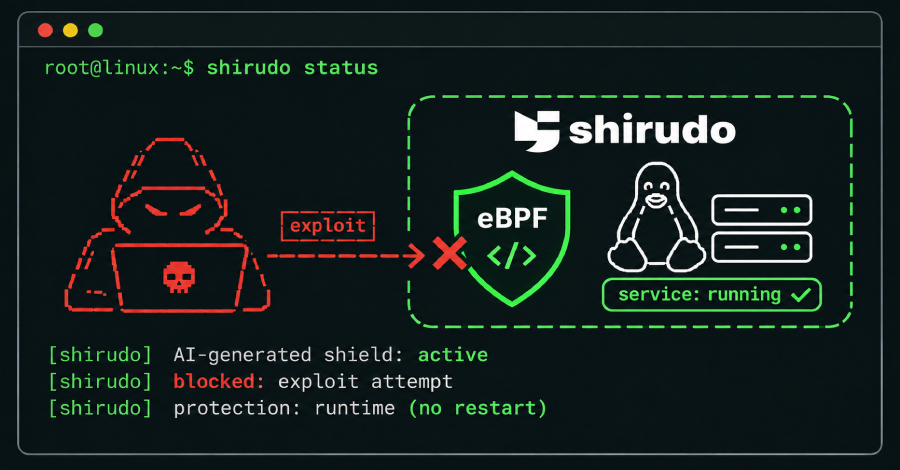
OpenAI y Cisco trabajaron juntos para crear Shirudo, una herramienta de código abierto de Linux que permite a agentes IA bloquear vulnerabilidades ANTES de que los parches se desplieguen, sin downtime.
O sea, si sale una vulnerabilidad y el parche todavia no existe (o todavia no tuviste tiempo de desplegarlo) podés bloquear la vulnerabilidad usando un mini parche a nivel eBPF para evitar que te ataquen y darte tiempo a parchar.
Estoy armando un video ahora de esto, con demo y todo.
https://t.co/VmPC6JPpFN
El mejor tema de la historia de el Heavy Metal
No existe una vez que lo escuche y me hierva la sangre, se me pongan los pelos de punta, aprete el puño y sacuda la cabeza como un desquiciado
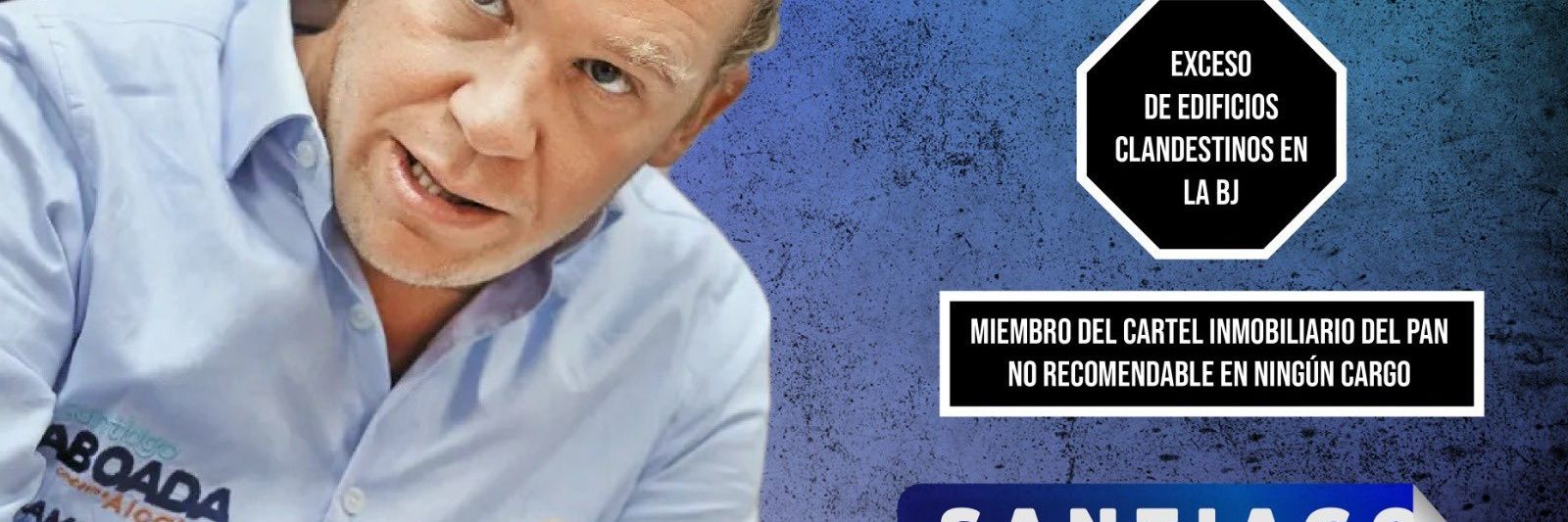
💅Manual para desmentir a miserables💅
Mira @A_MontielR
Así es como se escribe el DESMENTIDO para un miserable chayotero que inventa datos, hechos, nombres:
con la más implacable firmeza, sin concesiones a la cortesía, sin dejarle un sólo diente ileso, con tal contundencia y desprecio, que al chayotero mentiroso no le quede ninguna duda de que es un gusano
¡Bien hecho, @BerthaAlcalde... deberías dar cursos!
👏🏾... deberías dar cursos! 👏🏾
Hoy se cumplen 29 años que se fue unos de los mejores frontman que nos dieron las últimas 4 décadas. Se lo recuerda con uno de los mejores temas de INXS. 💜
Apple owns the 17.0.0.0/8 IPv4 address block.
That’s 16,777,216 addresses.
Every address from 17.0.0.0 to 17.255.255.255 falls within this allocation.
But how does one company end up with that many IP addresses?
Let’s talk about the history of IPv4 addressing.
> First, understand how IPv4 addresses work.
An IPv4 address is made up of 32 bits, divided into four octets.
For example:
192.168.1.10
Each octet represents 8 bits, giving us 32 bits in total.
Since each bit can have two possible values (0 or 1), IPv4 provides:
2³² = 4,294,967,296 possible addresses.
That’s approximately 4.3 billion addresses across the entire IPv4 address space.
> What does /8 mean?
You’ve probably seen IP addresses written with something like /24, /16 or /8.
This is called CIDR notation (Classless Inter-Domain Routing).
The number after the slash tells you how many bits are used to identify the network portion of an IP address.
For Apple’s allocation:
17.0.0.0/8
It means:
8 bits identify the network.
24 bits remain for addresses within that network.
So:
2²⁴ = 16,777,216 addresses.
The corresponding subnet mask is:
255.0.0.0
This gives Apple an enormous address range.
> How did Apple get an entire /8 block?
Here’s where networking history gets interesting.
In the early days of the internet, IPv4 addresses were distributed under a system known as classful addressing.
There were three major address classes used for unicast networks:
Class A: /8
Class B: /16
Class C: /24
A Class A network had 8 network bits and 24 host bits.
That meant a single allocation could contain more than 16 million addresses.
Apple received its 17.0.0.0/8 allocation on April 16, 1990.
This was a time when the internet was still developing, and the demand for public IP addresses was nowhere near what it is today.
The allocation was made under the older address distribution system.
Apple didn’t purchase 16.7 million individual addresses.
It received one enormous network allocation.
> Does Apple actively use all these addresses?
Not necessarily.
Having an allocation doesn’t mean every address is currently assigned to a device or server.
Apple can divide the range into smaller networks and use different portions for its infrastructure, services, data centres and other network operations.
Some addresses may be actively used, while others may remain unassigned.
This is an important distinction in networking:
An allocated IP address is not automatically an active IP address.
> How can you verify this?
You can check the allocation yourself.
Visit ARIN’s RDAP database and search for:
17.0.0.0
You’ll find the network registered as APPLE-WWNET, with Apple Inc. listed as the registrant.
You can also inspect the BGP routing information for the prefix.
Links:
https://t.co/8MmgWxv43a
https://t.co/zZJnLoUkmQ
> What can we learn from this?
IPv4 addresses aren’t distributed equally.
Some organisations received enormous address allocations decades ago, when the internet was much smaller.
Today, IPv4 addresses are a limited resource, and organisations often rely on NAT, address sharing, and IPv6 to deal with the growing demand.
This is also one of the reasons IPv6 was developed.
IPv6 uses 128-bit addresses instead of IPv4’s 32 bits, providing an astronomically larger address space.
So the next time you see an IP address beginning with 17, remember that you’re looking at an address within Apple’s registered IPv4 allocation.
Networking history is fascinating when you know where to look.
Me preocupa quien dejó diez años un servidor sin tocar y ahora lo cambia con prisa. Termina provocando la interrupción que quería evitar.
Antes de moverlo, escribe qué tres cosas, si se detienen, te dejan sin negocio.
Con @JavierSolorzano en @heraldoradio_.