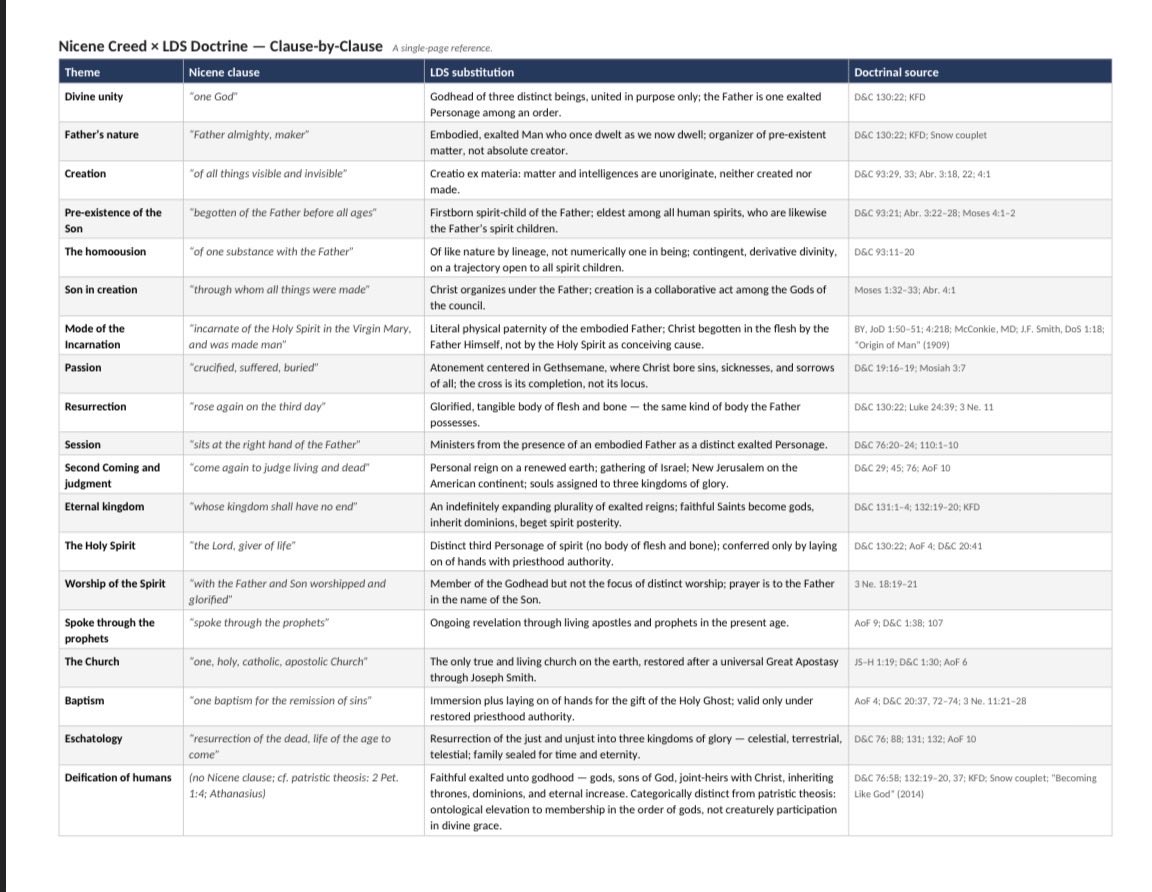
Orthodox Christian. Exile in Christ. Theology. Philosophy. Yes to: logical arguments and exploration leavened with human kindness. No to: quarreling/attacks.
I like this guy and his respectful approach, but the whataboutism is through the roof, and carries real problems.
Example:
As a general rule, in the normal course of human affairs, no individual a knows that another individual b will later do x (in this case, go to church, and convert). And if he do know, how is it that everything else winds along like so much clockwork, while he is able to meddle? It isn’t as if a can act on b via single variable, a there aren’t second-round, butterfly-effect implications. But we’re to suppose in the tough experiment that he can? In fact, that would fall way, way outside “normal”.
Truly, utterly anomalous. Maybe nonsensical.
But alright: let’s suppose this individual a existed, he knew of a certitude what individual b was going to do, knew he could affect that act in absolute isolation, and knew that by preventing b from doing it, b would go do hell.
This isn’t at all as if we’re saying “well if God already knows, then what’s it all for anyway?”
It’s more reasonable to presume that God would have foreknowledge of individual a’s preternatural - indeed, godlike - abilities, recognize his intent to act on b with those abilities, consider how utterly outclassed b is by a in a’s subversion of his free will, and either 1) pre-empt a entirely; or b) allow a to act on b, but judge him mercifully given the grave injustice done to him by the nefarious actor a. Or even c) this assumes a conception “salvation” that is geographic-temporal: something RC, Orthodox and many Reformed would outrightly reject as something that doesn’t obtain.
In any case, only a mechanistic watchmaker deity would stand by, allow this and then judge the victim adversely because of it.
@TalonAnderson15 Thank you, I am. Part of it is the caricaturing that comes with “Creedalism” where some LDS use it as a slur.
But what of the AoF? Isn’t that a kind of creed?
“…all their creeds were an abomination in His sight; that those professors were all corrupt; that 'they draw near to me with their lips, but their hearts are far from me; they teach for doctrines the commandments of men, having a form of godliness, but they deny the power thereof.'”
There’s a bunch of stuff there that an LDS believes that can’t be cashed out with physics currently. That said, LDS are materialistic monists (which is metaphysics/ontology), so I can see why they think it’s “all physics” - but I think some of the brethren might not agree with that kind of eliminative materialism. 🤷♂️
@xc_iles It’s what it is. It’s not science doesn’t follow the scientific method. There’s no measurement you can’t write formulas or use math to figure it out. It might as well be pixie dust.
Physics is God‘s law upon the universe.
Metaphysics is just what we call Greek philosophy today.
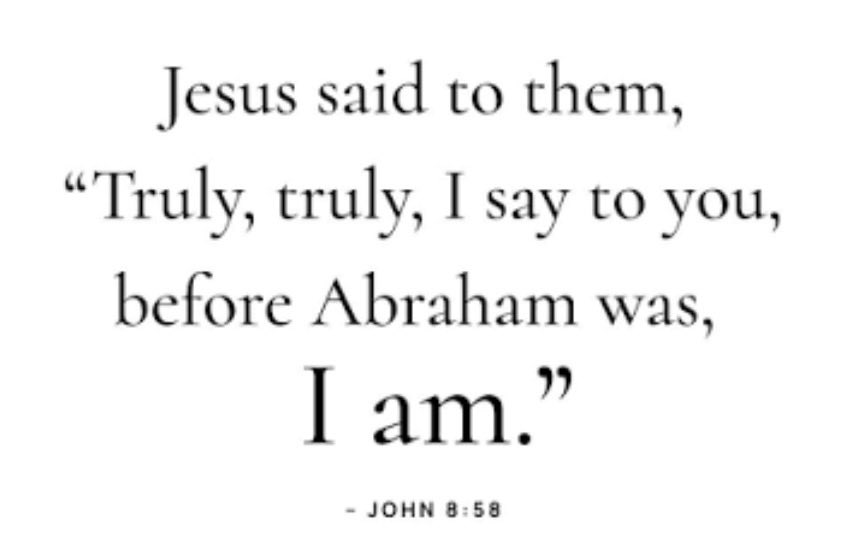
For example:
The metaphysical weight sits in the verb contrast. Greek: πρὶν Ἀβραὰμ γενέσθαι ἐγὼ εἰμί. Abraham γενέσθαι (aorist of γίνομαι, “came to be”); Christ ἐγὼ εἰμί (present of εἰμί, “I am”). Becoming versus being. Contingent existence versus subsistent existence. This is the same contrast that drives classical metaphysics’ distinction between ens ab alio and ens a se—between what exists from another and what exists from itself.
The Septuagint anchor makes the claim explicit. Exodus 3:14 LXX: ἐγώ εἰμι ὁ ὤν, “I am the One who is.”
Patristic and medieval reception read this ontologically—God’s name is being itself, ipsum esse subsistens in Aquinas’s formulation. Jesus’ absolute ἐγὼ εἰμί (note the lack of predicate, paralleled in 8:24, 8:28, 13:19) deliberately echoes that self-disclosure. The Jewish auditors caught it; hence the stones in v. 59. Lev 24:16 is the operative statute, and they applied it correctly to what they heard.
The implications cascade. The Son has aseity—not derived divinity, not progression to divinity, not functional or representative divinity. A creature, however exalted, exists by participation; ipsum esse cannot be predicated of one. This is Cyril’s hammer against Arianism, and Augustine works the same vein when he glosses the verse as “before Abraham who was made, I am, who made all”—factus est against sum. Atemporality follows from the same grammar: a present-tense εἰμί predicated of a state “before” a past event isn’t loose tense usage but the incommensurability of divine eternity with temporal sequence (Boethius’s interminabilis vitae tota simul et perfecta possessio). The Son isn’t older than Abraham; he belongs to a different order entirely.
Trinitarian pressure follows immediately. If the Son claims ipsum esse, and being is simple, three subsistent acts of being is incoherent. This forces precisely the Cappadocian ousia/hypostasis distinction—one divine being, three modes of subsistence. Without that move, John 8:58 plus monotheism collapses into either modalism or polytheism.
There’s also a metaphysical demand on creation itself worth flagging. The genesthai/eimi contrast presupposes a creator/creature distinction with no third category. Things either come-to-be from another or simply are. Any ontology that denies this hard divide—matter on a continuum, intelligences as ontological primitives, gods who progressed to godhood—has no room for the contrast John is exploiting. Mere preexistence is compatible with being a very old creature.
What 8:58 claims is that the Son belongs to the order of being rather than becoming. That is the classical doctrine of God in two verbs.
The point is that Jesus said many things that are heavily metaphysical, and fraught with metaphysical presuppositions that are impossible to discard.
“Ehyeh asher Ehyeh” is a metaphysical declaration. Claiming to be “before” someone 1500-2000 years dead is the stuff of 1000 metaphysical treatises. For a 1st. c. Jewish carpenter to assert this and identity with the YHWH of Abraham, Isaac and Jacob and to live, minister, die and rise again on that basis is the stuff of 1,000,000.
When children sing worshipfully in praise to God, “metaphysics”, regardless of the hymn/song are going to be implicit throughout. It isn’t necessary to call out specific postulates or conclusions, because they simply believe and sing.
“Metaphysics” really only becomes a thing when error and heresy are expounded: then apologetic works are written, and ortho-doxa delineated and clarified.
Which is, in some very small but discernible way, what is going on in this reply right now.
@RBryan2@xc_iles@ThoughtfulSaint I am does not equal the tri God that a what bunch of Greek philosophers came up with 300 years after Christ.
It equals, I am the god of the Old Testament, which we all acknowledge.
We are all children of God, and lots of his children have rebel against him.
@CTRyoda We can’t avoid metaphysics, whether we know it as “metaphysics” or not.
Not surprisingly, then, demonizing it as “philosophies of men” and reflexively writing it off leads into error.
But: “It’s not doctrine.”
/////
“Joseph Fielding Smith is the leading gospel scholar and the greatest doctrinal teacher of this generation.
Few men in this dispensation have approached him in gospel knowledge or surpassed him in spiritual insight, His is the faith and the knowledge of his father, President Joseph F. Smith, and his grandfather, the Patriarch Hyrum Smith.
It was inevitable, therefore, that his sermons and writings should form the basis of a substantial contribution to the literature of the Church.”
(Compiled by Apostle Bruce R. McConkie)
Some observers and critics are incredibly unkind to LDS. It’s no wonder that they have hair triggers and bristle at the slightest provocation.
Chris isn’t one of those critics, and doesn’t rate this kind of treatment.
I see a lot of LDS slinging mud back in the direction of “Creedalists”.
This fault is two-sided; and anyone who pretends otherwise is ignorant or lying.
Christ patiently abided with those in error, peacefully contending with them as He proclaimed and led them into His truth.
He offered gentle correction, without rancor, without animosity, even while he did not yield as the Wisdom and Word of God.
He only repudiated and showed indignation - in His holiness and divine justice - toward those who cynically blasphemed and pridefully resisted His admonishments and the call to repentance.
We are not the only sinless One: we are not agents of his justice and certainly not here to mete out judgment or wrath.
However much we disagree, let’s emulate His mercy and compassion, even - especially - for those we believe are fallen down in error.
“If you only love those who love you, what profit is that to you? Even sinners do that.”
The point is that Jesus said many things that are heavily metaphysical, and fraught with metaphysical presuppositions that it is impossible to discard.
“Ehyeh asher Ehyeh” is a metaphysical declaration. Claiming to be “before” someone 1500-2000 years dead is the stuff of 1000 metaphysical treatises. For a 1st. c. Jewish carpenter to assert this and identity with the YHWH of Abraham, Isaac and Jacob and to live, minister, die and rise again on that basis is the stuff of 1,000,000.
When children sing worshipfully in praise to God, “metaphysics”, regardless of the hymn/song are going to be implicit throughout. It isn’t necessary to call out specific postulates or conclusions, because they simply believe and sing.
“Metaphysics” really only becomes a thing when error and heresy are expounded: then apologetic works are written, and ortho-doxa delineated and clarified.
Which is, in some very small but discernible way, what is going on in this reply right now.
@Memo6673969902 Thanks! The structure is different since this is intended to follow the flow of the primitive creeds, but I’m glad to hear it heavily resembles the AoF. 👍
It’s tough, because everyone is “gatekeeping” somehow. If one’s belief is distinctive, there are unique tenets or principles that make it so, and often these are normative. Possibly they are rigorously normative: “one ought to believe this/do this/not do this; and if one chooses otherwise, they are flatly wrong, and the negative consequence is x.”
Christians believe “Christ” is a designator that carries with it many unique historical, doctrinal, and metaphysical claims. LDS make specific claims in all three of those domains that are regarded as either spurious or heretical. The entity that emerges as referent underlying their use of “Christ” is not the same. “Christian” refers to individuals and a collective (the Body of Christ) that believe in a different referent.
LDS can believe in their different Christ if they like; but that will never make them Christians. It makes them CoJCoLDS.
The Mormons/LDS are constantly vilifying Christians as "gatekeepers" because we objectively know they are not Christians.
Here's the thing. If we are "gatekeeping" by identifying true Christians, then they are gatekeeping by identifying true Mormons/LDS--so if they don't want to be hypocrites, they must claim that everyone on earth is a Mormon/LDS. And that would be silly--not to mention it would be a stark example of how they frequently stretch meaning until it is meaningless.
It’s tough, because everyone is “gatekeeping” somehow. If one’s belief is distinctive, there are unique tenets or principles that make it so, and often these are normative. Possibly they are rigorously normative: “one ought to believe this/do this/not do this; and if one chooses otherwise, they are flatly wrong, and the negative consequence is x.”
Christians believe “Christ” is a designator that carries with it many unique historical, doctrinal, and metaphysical claims. LDS make specific claims in all three of those domains that are regarded as either spurious or heretical. The entity that emerges as referent underlying their use of “Christ” is not the same. “Christian” refers to individuals and a collective (the Body of Christ) that believe in a different referent.
LDS can believe in their different Christ if they like; but that will never make them Christians. It makes them CoJCoLDS.