Just football. In your hands. Madden NFL 27 Arcade Edition is here.
Suit up for live seasons and original stories that make every drive count. 🏈
Get the game https://t.co/IIsXstydmT
Let me explain exactly why Apple still uses drag-to-install in 2026, because the joke here accidentally proves Apple right.
A macOS .app is a single self-contained folder disguised as a file. Every dependency, every framework, every resource lives inside it. Drag it to Applications, it works. Drag it to Trash, it's gone. No registry entries. No leftover DLLs. No uninstaller that misses half the files.
Windows installers scatter fragments across Program Files, AppData, the registry, system32, and a dozen temp directories. Uninstalling a Windows app is an archaeological dig. Five years later you're still finding config files from software you forgot you owned.
Linux is worse. Dependency hell is so common they named it. Entire package managers exist to solve the problem of "I installed something and now nothing else works." Flatpak and Snap were invented specifically to copy what macOS bundles already did natively.
The macOS bundle architecture came from NeXTSTEP in 1989. Steve Jobs brought it to OS X in 2001. The core design hasn't changed because the core design was correct. An app is a folder. Installation is a copy. Removal is a delete. Three operations that map perfectly to how humans already think about files.
The drag-to-install window with the arrow isn't lazy UX. It's the entire thesis of the system made visible. You are literally just moving a folder. There is no "installation" step because there's nothing to install. The app is already complete.
Every other OS eventually tried to get here. Windows got MSIX. Linux got Flatpak. Mobile figured it out from day one because phones shipped after Apple proved the model. The pattern everyone else converged toward is the pattern this tweet is calling outdated.
The funniest part: the app being dragged in that screenshot is Claude. An AI that can write code, analyze documents, and reason about complex systems. And the most advanced step in getting it onto your machine is holding down a mouse button and moving your wrist two inches to the right.
That's not a design failure. That's a 37-year-old architecture so good that the most sophisticated software on earth still ships inside it.
Welcome TDK, Cirrus Logic, Bosch, and Qnity to our American Manufacturing Program! We're proud to partner with even more companies to produce important components for our products right here in the US. https://t.co/GNvuTtXLqF
Steve was an incredible leader, innovator, and friend whose world-changing ideas moved all of us forward.
Celebrating his remarkable life and legacy today, on his birthday.
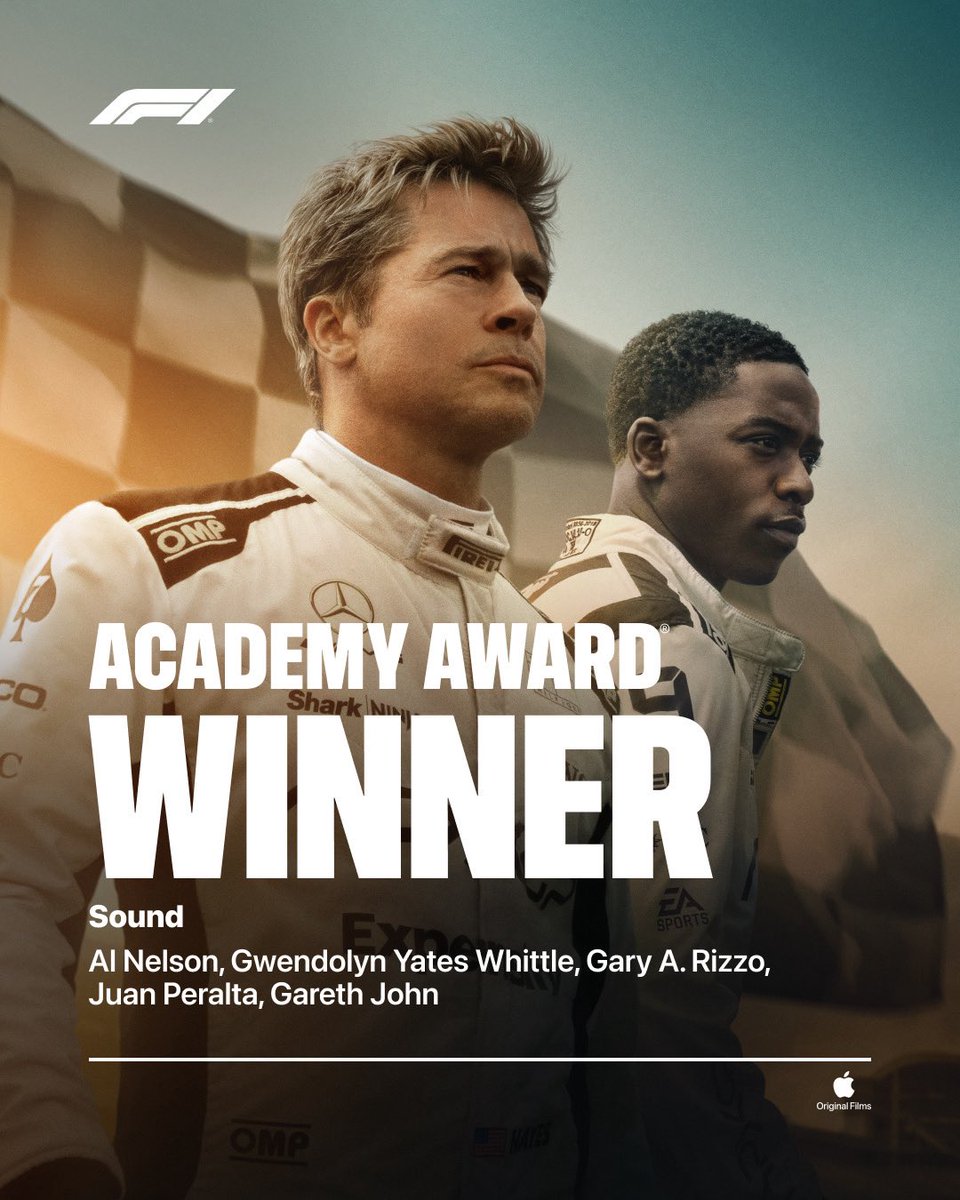
Congratulations to the entire #F1TheMovie team on their Oscar nominations.
Best Picture
Film Editing: Stephen Mirrione
Sound: Al Nelson, Gwendolyn Yates Whittle, Gary A. Rizzo, Juan Peralta, Gareth John
Visual Effects: Ryan Tudhope, Keith Dawson, Nicolas Chevallier, Robert Harrington
Invisible by design, engineered for authenticity. See how the award-nominated visual effects team brought #F1TheMovie to life.
#F1TheMovie — Now Streaming