This marks the second deployment of the Zephyr core engine in orbit and a fundamental step towards in-orbit computational autonomy.
The first deployment of Zephyr will be providing results soon and be fundamental to general infrastructure and EO applications.
Stay tuned.
In the last days, a part of our code dealing with inference on signal analysis has been uplinked and deployed to an active orbiting satellite:
An AI powered lightweight system adaptable for many signal characterization use cases usable directly onboard of spacecrafts.
📡 📡📡
🤖 At the same time it is the first time for us (or maybe the first in general) deploying an optimized adapted embedding-based system for signals.
🗃️ And it was the first time for us to optimize the system to run on less than 10 MB of RAM.
Direction Orbit!
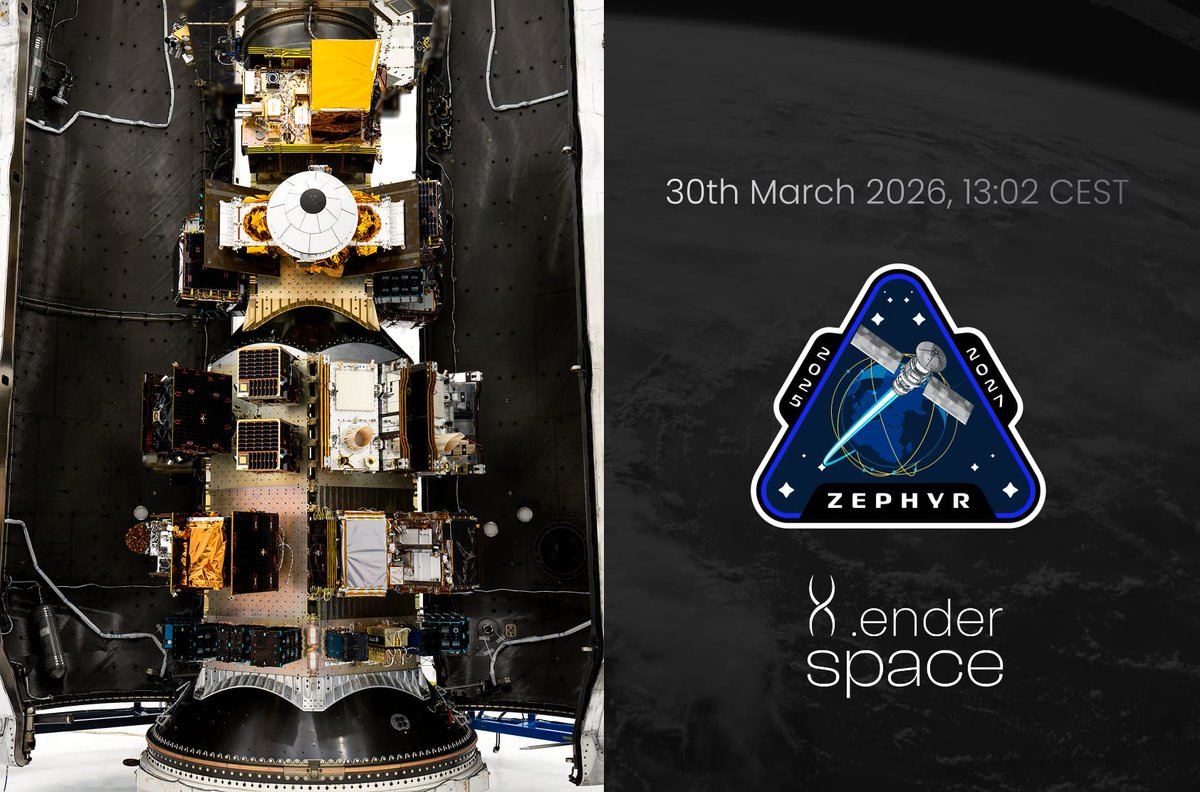
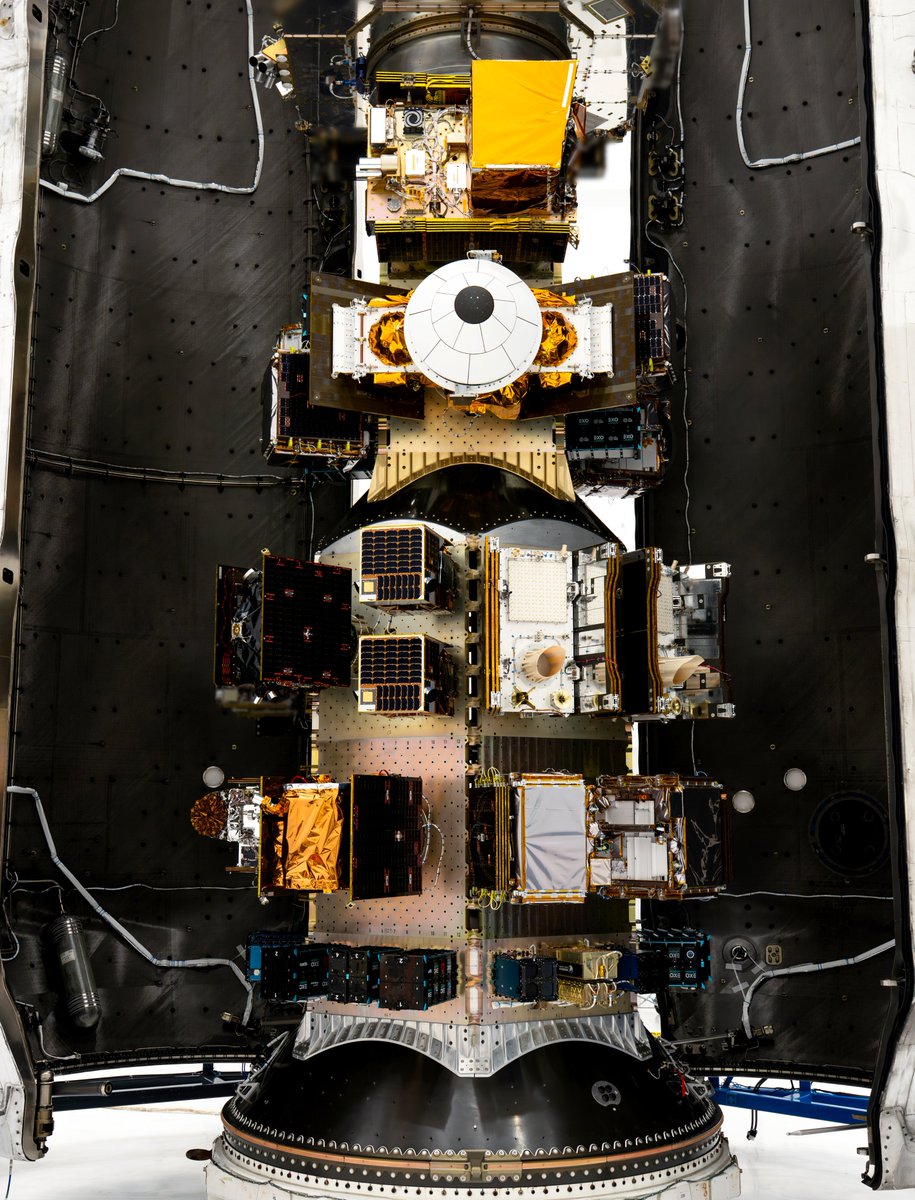
Last year, we designed a plan to test and deploy our technology to orbit, we called the plan Zephyr. Today 30th March 2026, our software is launching towards the orbit for the first time in order to test the primitives and the space adaptability of our protocol
The launch is taking place in Vandenberg Space Force Base, California on SpaceX Falcon 9's Transporter-16 mission no earlier than 13:02 CEST or 4:02 a.m. PT.
X - ENDER Space's protocol Zephyr is the infrastructure for Space security and Al native network collaboration.
This is the first step of many for our software deployment, part of which will be open-sourced to the community. Stay tuned for news, papers and software releases.
We are launching on this mission to validate in orbit our open protocol of ZKp and AI embedding pipelines. The future of networks and collaborative AI in space.
🌐 The future of space technology lies in collaboration, and we're aligned with ESA's vision for a system-of-systems framework in Earth Observation. 🚀
We connect different space assets, unlocking the full potential of space data, cross-mission collaboration, downstream💡
🚀 At X - ENDER Space, we're accelerating the development of a spaceborne distributed digital infrastructure that will revolutionize data accessibility for space assets. 🌍
In line with European Space Agency - ESA's Earth Observation Science Strategy
🔗 https://t.co/BdORh0Hdto
Our digital infrastructure will allow smooth, safe and verifiable in-orbit alerts and a trade platform for the companies building space debris alert systems.
https://t.co/HyXr8pORyL
Amazing pictures of a huge piece of space-junk captured by Astroscale's ADRAS-J orbital inspection mission. What could happen if a 3-ton rocket stage hit a satellite?
https://t.co/UW1NM2Q4oi
Space junk might be maliciously used in future against strategic space assets, fact that urges the development of redundant and resilient solutions for threat alert and response, as security and threat prevention reports previously pointed out.
🚀 A glance about Distributed Satellite Systems (DSS) Missions! 🌌
Distributed Satellite Systems (DSS) are transforming space exploration and operations. These systems, composed of multiple satellites working together, offer significant advantages over monolithic spacecraft. 🧵
We are boosting this evolution by developing a cutting-edge digital infrastructure that allows space assets to trade services and data. Our platform enhances the capabilities of DSS, boosting operational efficiency and supporting a wide range of private missions and applications.