That 6-digit WhatsApp code? NEVER share it. 🔐
Even if a friend says, “I’ve been hacked, please help!” verify first. That code can give someone access to your account.
Your code. Your account. Keep it private.
#KataStrike#WhatsAppSecurity#CybersecurityKenya
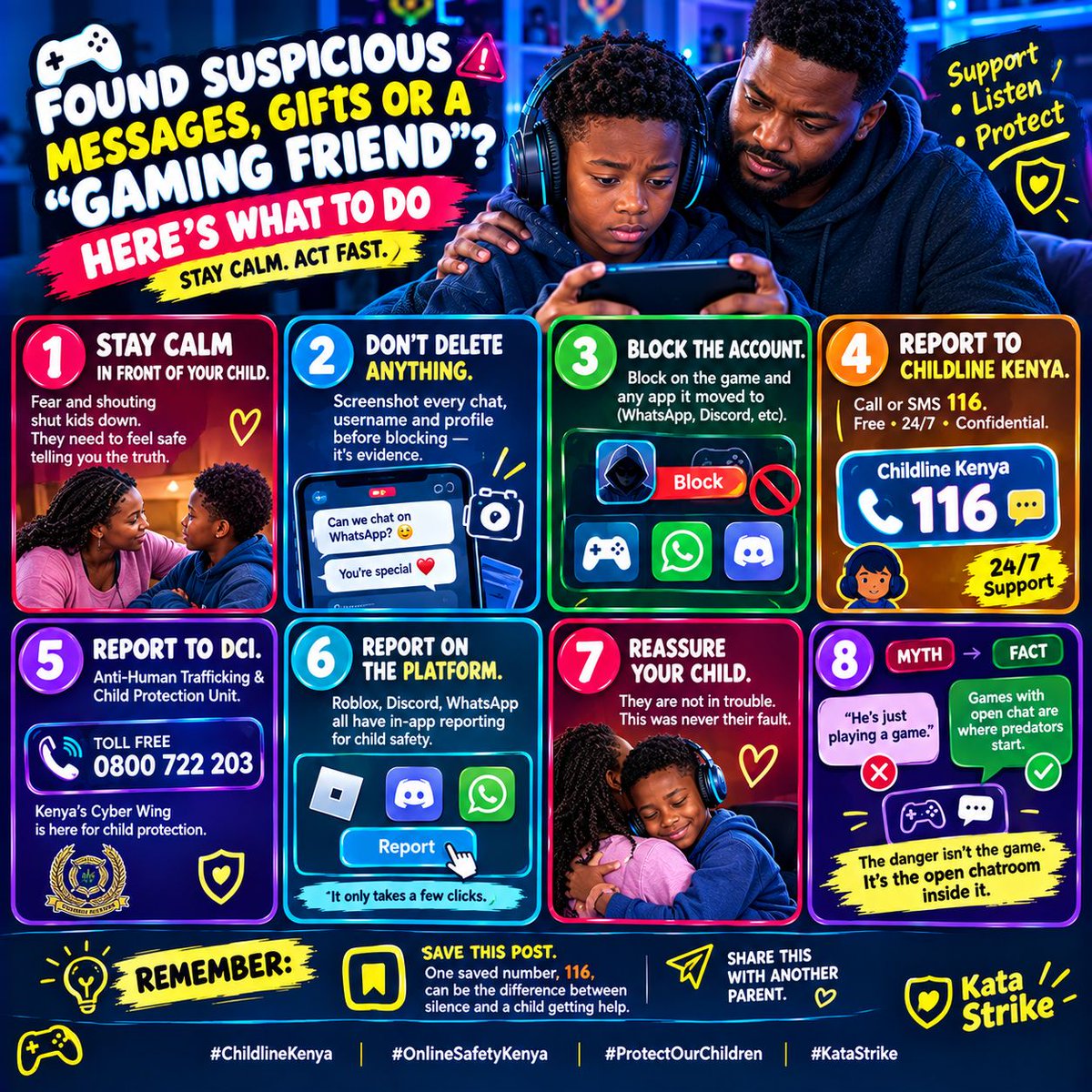
Found suspicious chats or gifts? Stay calm. Don’t delete evidence—save screenshots, usernames & profiles, then block/report. Reassure your child: it’s not their fault. In Kenya, call or SMS Childline 116 (free, 24/7, confidential). #ChildlineKenya#OnlineSafetyKenya
Don’t assume “just a game” means safe. Sit with your child sometimes, ask who they chat with, and keep conversations on the game—not WhatsApp or Discord. Watch for secrecy, block/report suspicious adults, and save chats as evidence. #OnlineSafetyKenya#KataStrike
You may be missing warning signs if your child has an unchecked gaming account, an online “friend” you don’t know, unexplained gifts, secretive chats, or wants to move conversations to WhatsApp/Discord. “Just a game” doesn’t always mean safe. #GamingSafety#KataStrike
Grooming can start in an ordinary game: gifts → trust → private chats → secrecy → escalating requests. The danger may be on the console in your sitting room, not just “somewhere online.” Talk to your child about who they game and chat with. #OnlineSafetyKenya#KataStrike
Your child’s gaming “friend” may not be who they seem. It can start with free coins, gifts and compliments, then move to WhatsApp. Online grooming can begin in games and escalate in private chats. Know who your child is talking to.
#OnlineGroomingKenya#GamingSafety#KataStrike
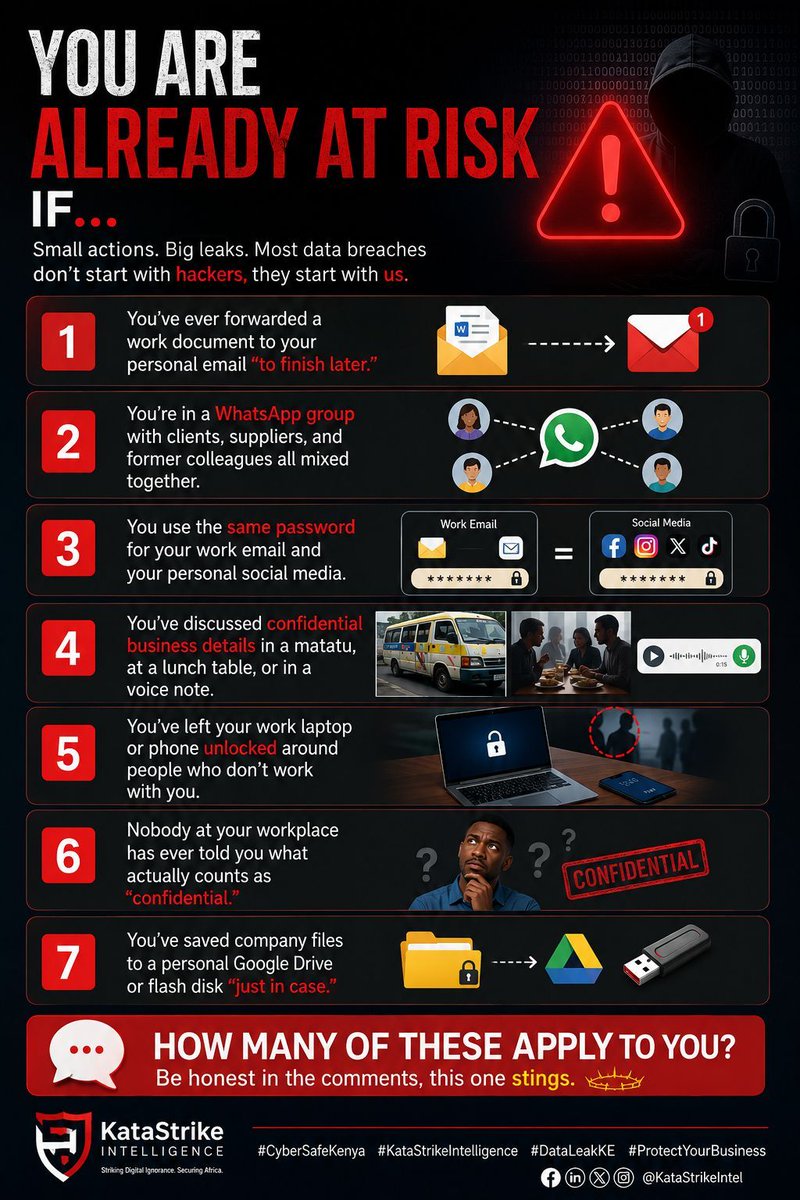
You’re at risk if you forward work files to personal email, mix clients and colleagues in WhatsApp groups, reuse passwords, discuss confidential info in public, leave devices unlocked, or save company files to personal storage.
How many apply?
#DataLeakKE#KataStrike
They didn’t hack you. You handed them the key. 🔑😭
That “I accidentally sent an OTP to your number” message can look innocent.
It isn’t.
The moment you send that code, you may be giving someone the final piece they need to access your account.
#Kenya
Many business data leaks don’t start with hackers. They start inside. An employee shares files in the wrong WhatsApp group, reuses passwords, screenshots sensitive data, or leaves documents on a shared device.
The door wasn’t broken. It was left open.
#DataLeakKE#KataStrike
Stuck in traffic, you email a client list to your personal Gmail to work from home. Months later, a competitor knows your client’s pricing. No hack. No virus. Just sensitive business data sent to an account nobody monitored.
Would your workplace catch this?
#DataLeakKE
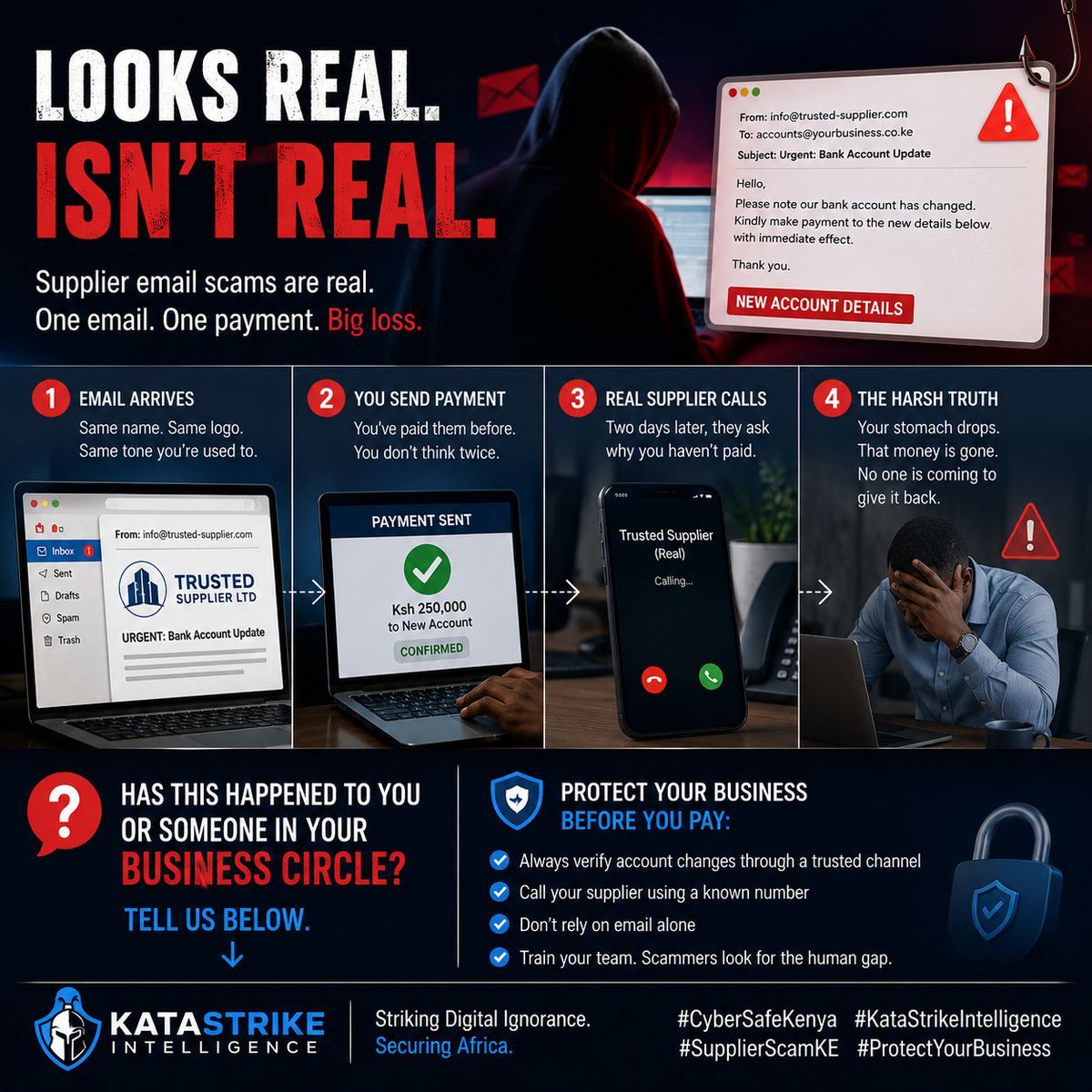
Before paying new supplier bank details, call a number you already trust—not the one in the email. Slow down, check the actual sender address, use a unique business email password, and report fraud immediately.
Save & share.
#SupplierScamKE#KataStrike
You’re at risk if you’ve ever changed payment details from an email without calling to verify, trusted an email because of its logo, reused your email password, or never double-checked account numbers.
How many apply to you?
#SupplierScamKE#KataStrike
A supplier scam can start with a hacked email. Criminals study your conversations, invoices and payment habits, then send a convincing “new bank details” request. You pay—and the money moves before you notice. Always verify account changes by phone.
#SupplierScamKE#KataStrike
Supplier emails you: “Our bank details have changed. Pay here today.” Same name, logo and tone. You pay. Two days later, the real supplier calls: “We haven’t been paid.” 😨
Always verify bank-detail changes by calling a trusted number.
#SupplierScamKE#KataStrike
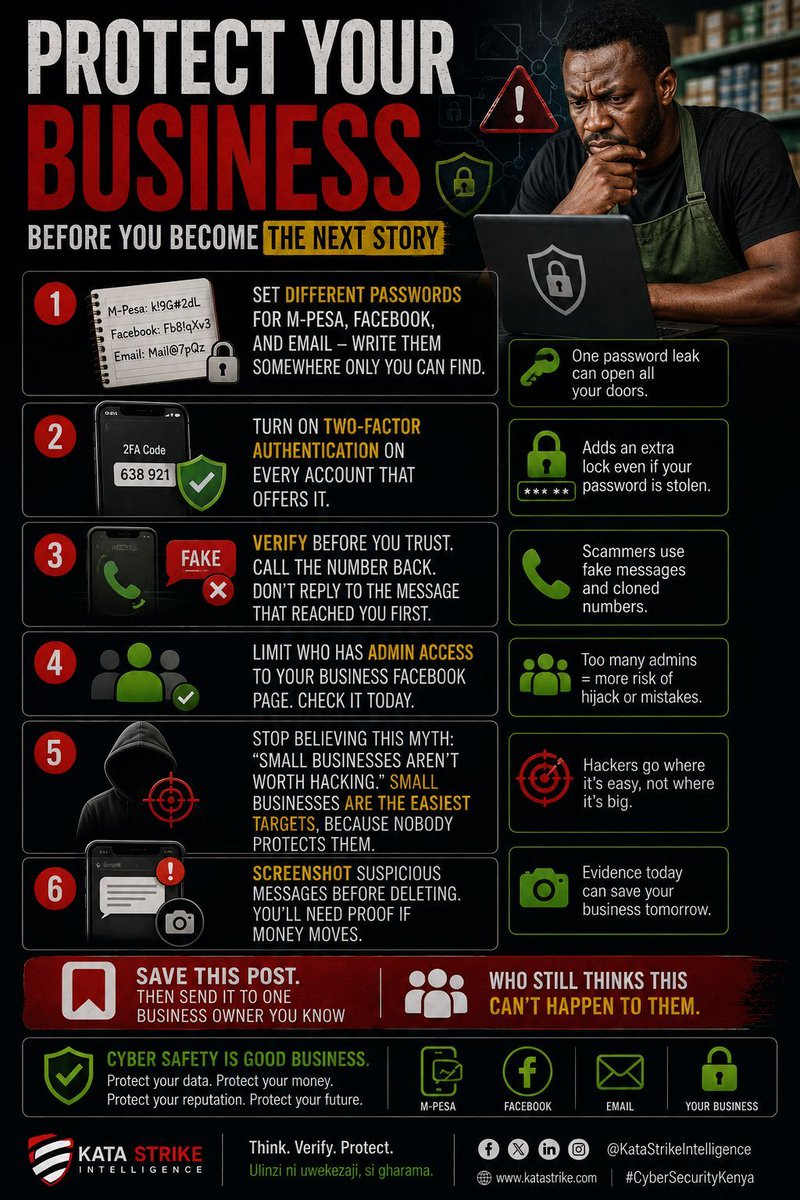
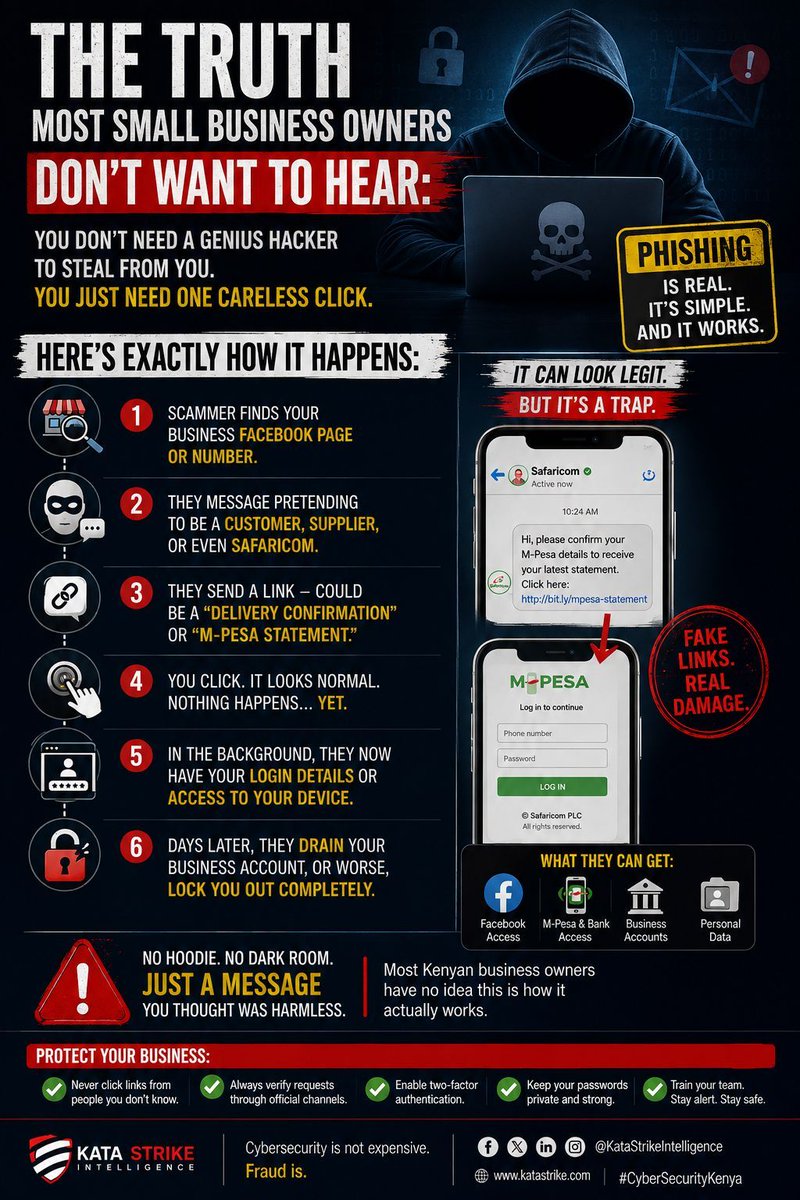
Protect your business: Use unique passwords, enable 2FA, verify unexpected messages by calling back, limit Facebook admin access, and save suspicious messages as evidence. Small businesses get targeted too.
Save this. Share with a business owner.
#CyberSecurityKenya#KataStrike
You’re already at risk if you reuse passwords, click unverified links, leave your business phone unlocked, or assume your small business won’t be targeted.
How many apply to you? Be honest. 👀
#CyberSecurityKenya#DigitalSafety#KataStrike
You don’t need a genius hacker to lose your business money. One careless click can be enough. A fake customer, supplier or “Safaricom” message sends a link. You click—and hand over access. Verify links before you click.
#PhishingKenya#KataStrike
You pay your supplier’s usual M-Pesa Till. Same number, same trust. Then he says: “I haven’t received it.” The SMS looked real—but it was fake. Your KSh20,000 is gone. Don’t trust SMS alone. Verify the payment on your Till.
#MPesaFraud#CyberSecurityKenya#KataStrike
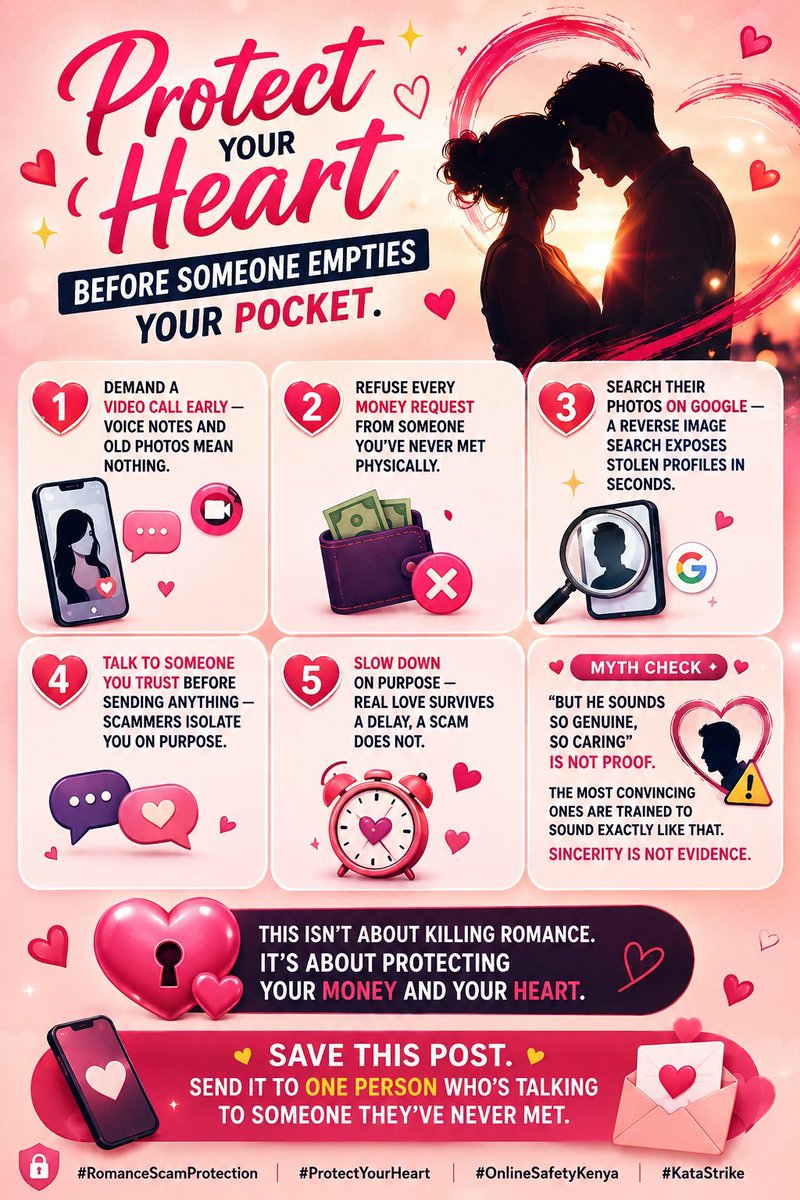
❤️ Protect your heart AND your wallet. Video-call early. Never send money to someone you haven’t met. Reverse-search their photos. Talk to someone you trust. Slow down—real love survives a delay; scams don’t. 🚩
#RomanceScamProtection#OnlineSafetyKenya
🚩 You may be at risk of a romance scam if they avoid video calls, always have excuses to meet, keep asking for money, hide their identity, or make you hide the relationship. How many signs have you seen? 👀
#RomanceScamSigns#StaySafeKenya