Pi Sign-in allows supported third-party websites and apps to offer Pi accounts as a sign-in or sign-up option.
It helps provide the infrastructure that allows applications and services to recognize, connect, and serve users across and outside the ecosystem.
This means Pioneers can access supported services with their Pi account instead of creating a new account or password for every app.
Why would third-party services or websites want to integrate Pi Sign-in? Pi Sign-in creates a simpler way to connect them with Pi’s large user base and bring Pi users into their own product experiences. It also gives Pi more presence in third-party contexts while offering a way to tap into the additional benefits and resources of Pi Network, besides user traffic.
Learn more about the Pi2Day 2026 release at https://t.co/lMgJBEMbYj
Pi2Day (tomorrow, June 28) is a moment to engage with new product releases and gain insight into the direction and priorities of the network.
Reminder: This year, Pioneers also have a timely opportunity to take part in app utilities expansion, community growth, and ecosystem development feedback before the events end tomorrow on June 28.
Participate in the two initiatives, the vibe coder campaign and Pi Launchpad Testnet token, now and stay tuned tomorrow for Pi2Day!
https://t.co/CCff3IuRQv
Does anyone else feel that running AI models and agents locally, on your own computer, should be much easier?
The privacy benefits are clear: your data stays with you. But while there are many open-source models and projects out there, turning them into a usable local AI agent is still far too hard for non-engineers.
Pi2Day (June 28) is approaching, and Pi’s vibe coder campaign will continue until that date! What exciting apps are you building ahead of Pi2Day?
Vibe coders (app creators using AI) can use Pi App Studio to easily convert their apps built through platforms such as Codex, Claude Code, Replit, Cursor, Lovable or other AI-assisted coding tools, into Pi Apps.
Pi can connect your AI-created apps with millions of engaged Pioneers, identity verification and Pi’s utility ecosystem.
Learn more and deploy vibe coded apps on Pi today!
https://t.co/x3mI1DqjfR
Ecosystem Directory Staking just got a new look and improved user experience!
Originally launched on Pi2Day 2025, staking through this feature increases an app’s exposure to the Pi community, resulting in more impressions and potentially more user traffic. By staking Pi, Pioneers can collectively support apps and services while developers and creators can promote their apps and tap into Pi’s 60M+ engaged community to acquire users.
The update prepares the feature for further utilization by developers, creators, vibe coders and Pioneers as more apps onboard to the ecosystem.
Note there are no rewards at the protocol level for staking, and the original staked amount will be returned once the staked duration has ended.
Go to the Pi home screen to learn more about Ecosystem Directory Staking and check out the recent design updates to the Ecosystem Interface.
Help bring more AI-created apps to the Pi ecosystem and enter a raffle to win Pi Network merch!
Pioneers are invited to introduce Pi App Studio to vibe coders and AI-builder communities around the world.
Why?
Because as AI makes building apps easier, competition for human attention and user acquisition becomes more intense.
Pi App Studio helps creators connect AI-built apps to:
60M+ engaged Pioneers
Built-in payments
Identity infrastructure
Pi Ad Network
And more!
Find a relevant builder community, share how Pi can help creators reach real users, then submit your post through the Pi App to enter the raffle.
By helping more creators discover Pi, Pioneers can help expand the range of apps, tools, and services available in the Pi ecosystem. A stronger app ecosystem gives Pioneers more ways to use Pi, support useful products, and participate in real utility.
Go to the Pi mining app to learn more.
The CiDi Games platform continues to make progress and has released 4 new games for Pioneers to experience!
CiDi Games, a Pi Network Ventures portfolio company, gives Pioneers new ways to use Pi through gaming, while also extending the Pi ecosystem with infrastructure that can support more games and developers over time.
Learn more in the Pi app.
CiDi Games, a Pi Network Ventures portfolio company, launched their beta app in the Pi Browser!
This brought Pioneers 10 instant-access games along with skill-based tournaments, platform progression through CiDiScore, the Pi ELF companion experience, Elf Continent, and developer infrastructure for Pi-integrated games.
In less than one week after the beta launch, CiDi Games independently attracted over 81,000 Pioneers across 160+ regions and 1.2 million game sessions organically, demonstrating how the Pi Platform can help utility-focused apps reach real users, drive engagement, and monetization, which in turn expands utility across the Pi ecosystem.
Go to the Pi app today to learn more!
The Pi Mainnet is upgrading to Protocol 24 – Deadline: June 2.
The Pi Mainnet has successfully upgraded to Protocol 23. All Mainnet nodes are required to complete this step before the deadline to remain connected to the network.
Details here: https://t.co/9VehO7hhj1
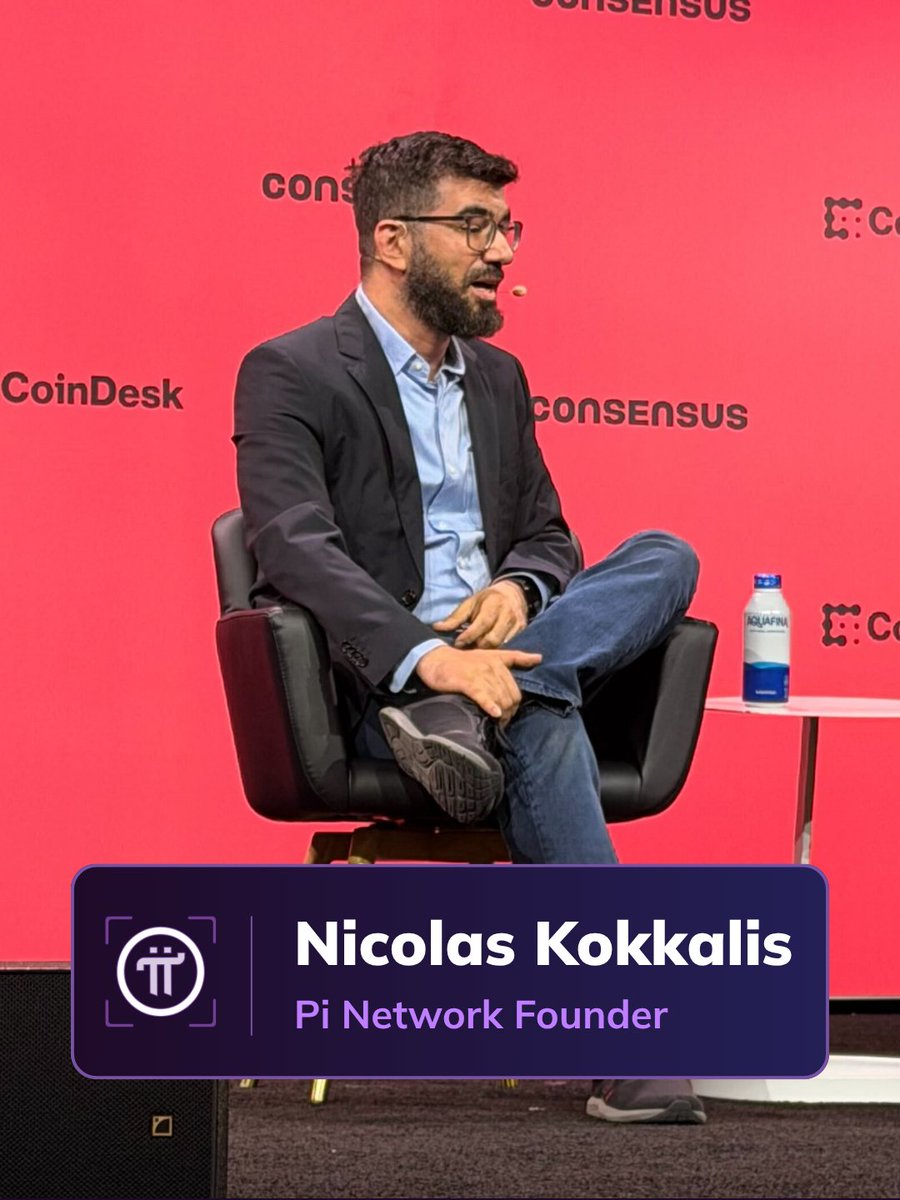
Watch Pi Founder Nicolas Kokkalis speak in the Consensus 2026 panel “How to Prove You’re Human in an AI World (Without Doxing Yourself)”.
The discussion focused on how digital trust and identity verification systems must evolve as AI makes it possible to generate bots, agents, and synthetic identities that closely resemble real human behavior at scale.
The panel explored a core question for the AI era: how systems can continue to verify real human participation without requiring unnecessary disclosure of personal information.
A key theme was that proof of humanity is context-dependent, with different systems requiring different levels of verification depending on use case and risk.
The importance of privacy-preserving design was also highlighted, ensuring verification can scale while remaining usable for real users.
As AI lowers the barrier to building and interacting online, the harder challenge may be connecting digital systems to real users, trusted participation, and meaningful utility.
Pi’s Layer 1 blockchain, identity verification, payments infrastructure, non-custodial wallets, smart contracts, and engaged global community are all part of Pi’s ongoing work to address that challenge.
Watch the full presentation now!
https://t.co/nFCz9nF7RR
For the first time, OKX has made Pi available to millions of people in the US through its platform, adding another access point to the Pi ecosystem for US users.
Pi continues to expand its global network of Pioneers and partners, and strengthen ecosystem participation, utility, and real user adoption across the world.
More users. More usage. Stronger network
AI is creating a new wave of builders.
People are turning ideas into apps faster than ever before.
But most creators still face the same problem after building:
How do you actually reach users?
Pi App Studio can now help close that gap.
Creators can now take apps built with external AI coding tools and connect them directly into an ecosystem with:
60M+ engaged users
Integrated payments
Decentralized human workforce
Platform-level infrastructure
If you know builders, vibe coders, indie creators, or AI communities looking for distribution and real users, share this with them.
The next generation of apps will come from more people than ever before.
Now they need places where those apps can actually be used.
Read more: https://t.co/xyfArx1SJp
Vibe coders and creators can now tap into Pi Network’s massive user base of over 60 million Engaged Pioneers by easily bringing their external AI-created apps to Pi’s real distribution network and utility ecosystem through Pi App Studio!
Creators, who may be technical developers or non-technical product people, can build apps using platforms such as Codex, Claude Code, Replit, Cursor, Lovable or other AI-assisted coding tools, and then use Pi App Studio to convert those apps into Pi Apps.
That changes the equation for creators.
AI can already help people generate apps quickly; the harder part is distribution and turning those apps into products people actually use.
Pi helps close that gap.
Instead of rebuilding infrastructure from scratch, creators can connect their apps to an existing ecosystem with users, payment capabilities, identity verification, decentralized human infrastructure and platform-level tools already in place.
This feature makes Idea → App → Users that much faster.
Because your ideas are too good not to be seen.
Try the Pi App Studio Now! If you’re a vibe coder or know someone building apps with AI who needs distribution, head to Pi App Studio today to convert AI-created apps into Pi Apps and access the Pi ecosystem’s users, infrastructure, and monetization opportunities.
Pi Founder Nicolas Kokkalis spoke today at Consensus 2026 Miami on the panel, “How to Prove You’re Human in an AI World (Without Doxing Yourself).”
The discussion focused on one of the most urgent challenges in the AI era: how to maintain trust and verify real human identity as AI systems become capable of generating convincing bots, profiles, and interactions at scale.
Stay tuned for the full video!
The Pi Founders are featured speakers at Consensus 2026 in Miami this week.
Chengdiao Fan will speak on Wednesday, May 6 (11:15–11:35 AM EDT, Convergence Stage) on “Aligning Web3, AI, and Blockchain for Utility,” exploring how Pi’s blockchain infrastructure, verified identity, and globally engaged network can support utility‑driven products and AI‑era business models.
Nicolas Kokkalis will join a panel on Thursday, May 7 (10:15–10:45 AM EDT, Convergence Stage) titled “How to Prove You’re Human in an AI World (Without Doxing Yourself),” exploring how the internet’s trust model is breaking as AI systems become capable of creating bots that can generate profiles and interact like real users.
Together, these sessions highlight Pi’s approach to the AI era: supporting utility-driven products and sustainable business models through blockchain, verified identity, and a globally engaged network, while enabling global identity verification and providing authenticity solutions through Pi’s native KYC solution.
See you there, Pioneers!
The Pi Mainnet is upgrading to Protocol 23 – Deadline: May 15.
All Mainnet nodes are required to complete this step before the deadline to remain connected to the network. This upgrade takes longer to complete, so plan accordingly.
Details here: https://t.co/9VehO7hhj1
Most AI systems still need good human input.
Automated training can scale.
But it struggles with:
Ambiguity
Nuance
Real-world judgment
That’s why human-in-the-loop systems still matter.
Not as a fallback. But as a core layer.
The challenge isn’t whether human input is needed.
It’s how to get it:
At scale
With quality
From real people
That’s the bottleneck, and Pi Network has already built the solution: the large-scale, globally distributed workforce of identity-verified human participants already active inside the Pi ecosystem.
https://t.co/uB1vllBMJU
AI companies can access Pi’s human input infrastructure through the network’s over 18 million identity-verified Pioneers to improve models, tune inference quality, and scale data labeling and evaluation.
Read the announcement to learn more about how Pi can provide such services for AI companies, and share it with AI companies that may be interested!
https://t.co/uB1vllCkzs
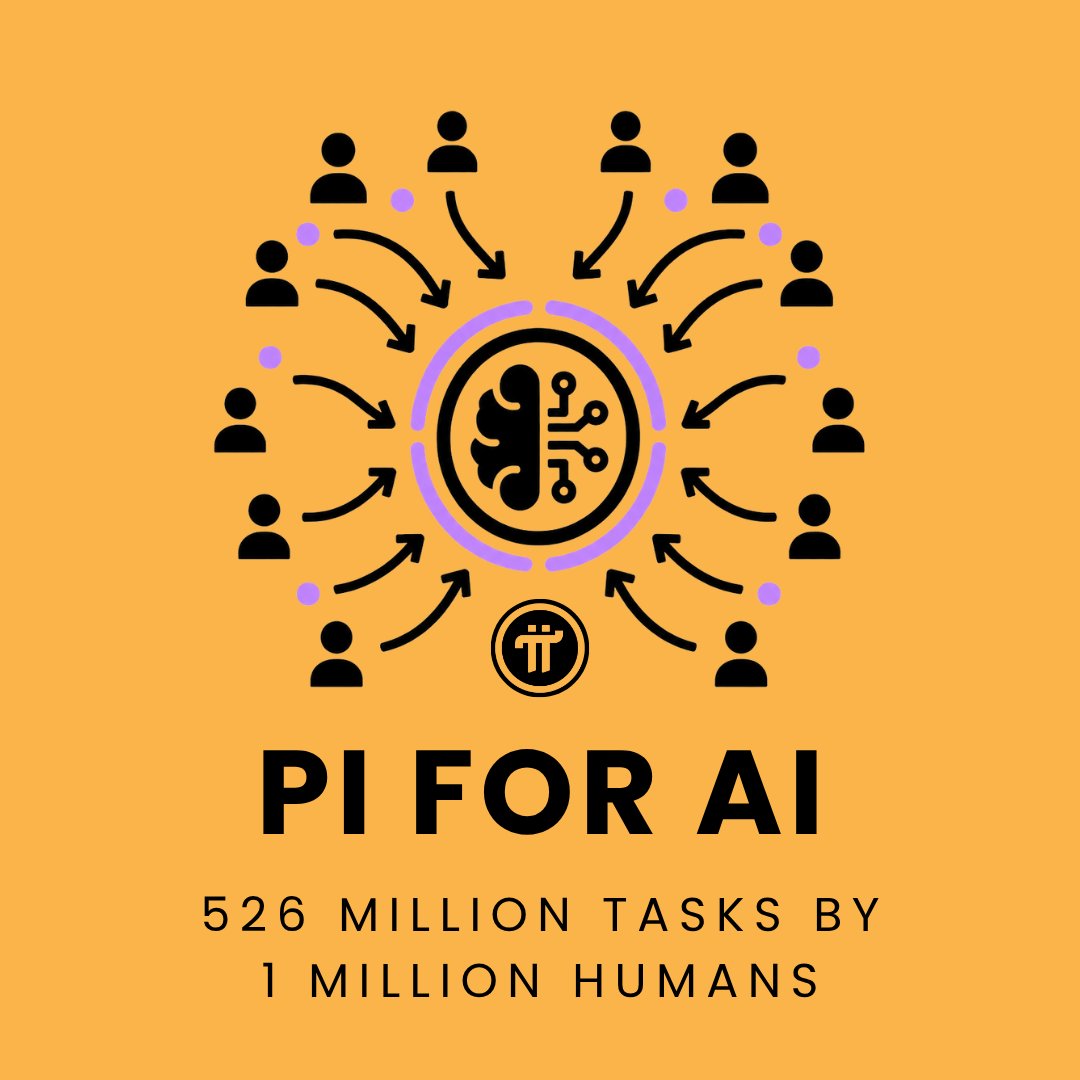
526 million human KYC validation tasks have already been completed on Pi.
By over 1 million verified people.
AI is advancing quickly.
But the hardest part of building reliable systems is still deeply human.
Models don’t improve from compute alone.
They improve from:
Judgment
Correction
Context
Nuance
Pi represents something different.
A globally distributed, identity-verified human workforce that has already demonstrated coordination at scale, already active in the Pi ecosystem.
This is real infrastructure, it’s already been used to process hundreds of millions of real tasks.
For AI systems, that changes what’s possible.
Go to the Pi mining app home screen to learn more.
The Pi Founders will both take the stage as speakers at the Consensus 2026 conference!
Dr. Chengdiao Fan will deliver a presentation exploring how Pi’s blockchain infrastructure, verified identity, and globally engaged network can support utility-driven products and AI-era business models.
Dr. Nicolas Kokkalis will join a panel discussion on human identity and authenticity in an AI World.
Don’t miss the Founders at Consensus Miami to learn more!
https://t.co/SutNgAMsvF