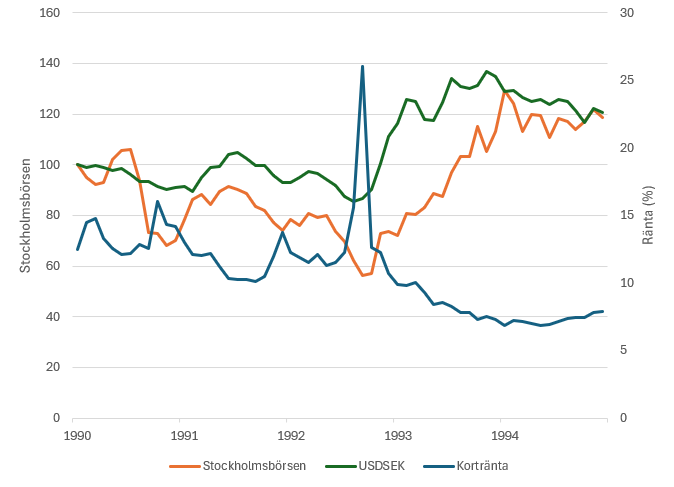
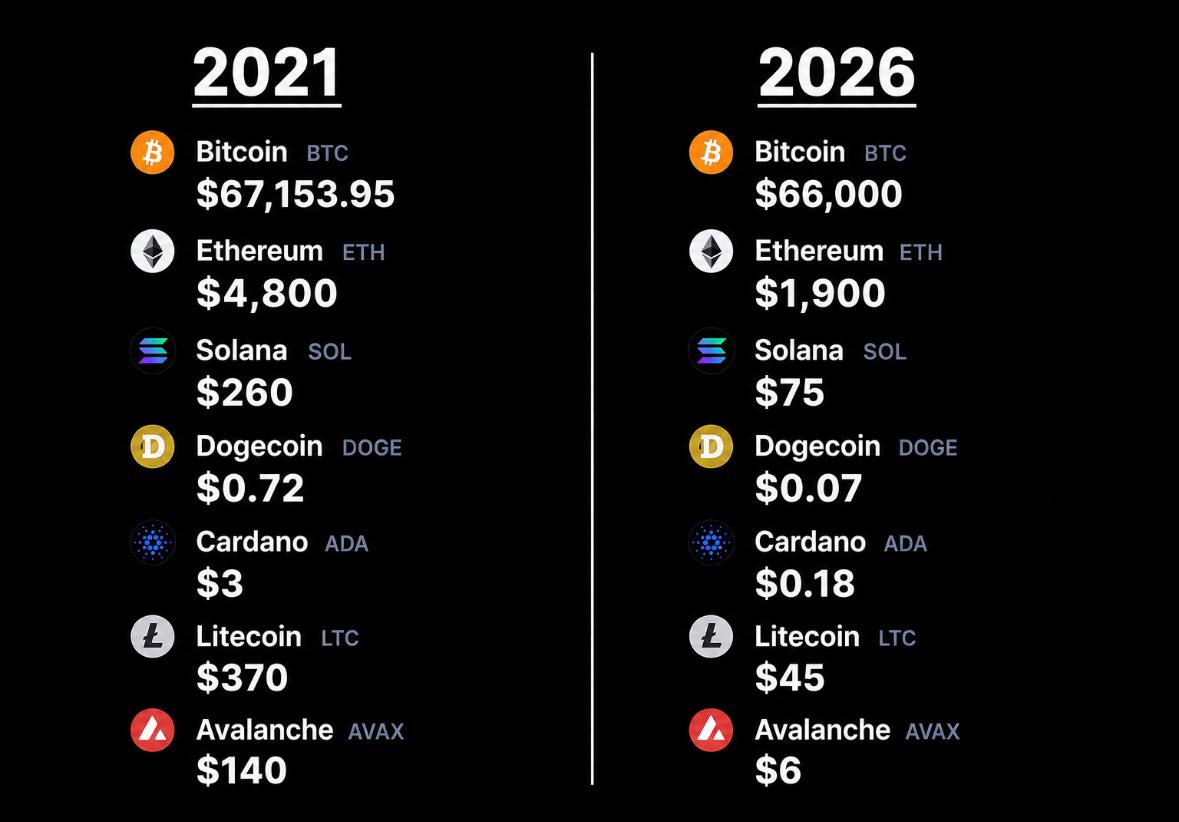
Guldet +15 % och Bitcoin +30 % under augusti. Marknaden prisar alltmer in risken för en skuldkris.
Men detta kan bara vara en första varning. Typiskt sker en skuldkris när ekonomin är svag. Skrivit om röda flaggor och hur man skyddar sig:
https://t.co/UxTKZU1HIt
I made a 16-page PDF to get you Claude-certified.
The certificates are official by Anthropic & free...
And the playbook is free too, at https://t.co/psB7XxAv8w. Here's what's inside:
The Claude Certification Playbook.
→ 3 official certificates & the order to take them in.
→ Step from creating an account to downloading.
→ The fake detector (yes, people sell fake ones).
→ The LinkedIn format to showcase the certificates.
→ The copy-paste announcement post on LinkedIn.
→ What you can honestly say about it in interviews.
The certificates take 6 hours.
Getting the playbook takes 2 minutes:
1. Go to https://t.co/psB7XxAv8w. Subscribe for free.
2. Open the welcome email in your inbox.
3. Tap the Notion library link inside.
4. Download "The Claude Certification Playbook."
5. Start with page 4 (the fake detector).
Know someone job hunting? Send them this post. It's the favor.
a skill people at Anthropic have been using a lot recently: ELI5
/eli5 <what you want explained>
"explain like I'm someone who knows nothing about this topic, using a HTML artifact with big pictures and few words"
Loops vs. Graphs, clearly explained!
loops are great, but they have a ceiling:
a loop makes one unit of work better. it cannot decide which units exist.
so you end up with a very good agent running the wrong three steps, in the wrong order, one at a time.
Graph engineering fixes this by moving the decision up a layer: what runs, what runs at the same time, and what never runs at all.
you need both. here's how it works:
a graph splits your system into two kinds of decision.
↳ inside a unit: the loop. produce, check, correct, repeat until green
↳ between units: the graph. split, fan out, merge, gate, send back
Prompts → Context → Harness → Loops → Graphs
you get parallel work, isolated contexts, and steps that stop running when nothing needs them.
the trick is being selective about what becomes a node.
only spend a model where judgment lives. merging, ranking, deduping and schema checks are edges, and edges are code.
free, instant, and they cannot be argued out of a verdict. a graph where every edge is an agent pays rent on its own wiring.
one thing to know before you scale it.
a graph has two return paths, and almost everyone builds one.
↳ the correction edge is short. a gate rejects one unit back to the step that produced it, and it fixes the run you are in
↳ the learning edge is long. an accepted result goes back to the splitter as a constraint, and it fixes every run after
skip the second and you get a graph that is fast and never gets smarter. next week it starts from the same place with the same blind spots.
and a smaller one that eats whole nights: when a unit fails, return that unit, not the batch.
send back four slices because one failed and you have just rewritten three correct ones. do it twice in a run and the run never converges.
below i have quoted my full guide on graph engineering. it covers the three topologies, the verifier patterns, and where the gate should actually open.
save this and read it below ↓
Andrej Karpathy’s 1-hour Stanford lecture on AI engineering is one of the best explanations I’ve seen of how AI systems actually work.
The progression is simple:
10% → LLM
30% → Prompt
50% → Agent
70% → Loop
100% → Graph
The key takeaway:
AI engineering isn’t just about writing better prompts.
It’s about building systems around models — giving them context, memory, tools, feedback loops, and data flows.
“Delete everything, keep Graph.”
Definitely worth watching if you’re building with AI agents.
Watch → Bookmark it
I found the piece on @DAcemogluMIT by @TheEconomist very odd. Reminded me of the Monty Python scene "What have the Romans every done for us?" A substantive critique of a particular piece of work may have given us more to discuss. Daron can handle it (as he has in the past). I value @TheEconomist so not sure what this piece is about.
https://t.co/RMkihD2gcV
They might know something ✍
As of right now, 4 different politicians have bought the dip on $ZTS Zoetis
- Gil Cisneros
- Ro Khanna
- Chuck Fleishman
- Byron Donalds
Why?
Zoetis is the pet pharmaceutical company that developed Librela, a painkiller for dogs with arthritis
Librela has been under FDA safety scrutiny since late 2024
Khanna and Donalds are members of a House Oversight subcommittee that has extensively dealt with pharmaceutical regulations
Qué cosas tan curiosas pasan cuando un Nobel de Economía escribe un libro defendiendo volver a poner a la clase trabajadora en el centro de la política económica.
De repente, aparecen artículos que cuestionan burdamente 40 años de una de las carreras más rigurosas y productivas de la profesión.
Quizá sea señal de que algunas ideas empiezan a pisar los callos correctos...
HBO brilla más por sus series, pero es que tiene películas MUY buenas.
Les dejo 6 para este fin de semana, que espero les gusten❤️😉 Al hilo🧵:
1/6 - Stuart: A life backwards (2007): Es un verdadero peliculón y con Tom Hardy y Benedict Cumberbatch. Triste, sí, pero una joyaza👌
🇸🇪With only one month to go till the Swedish elections, here's a new version of the Swedish political compass
On 13 September, Swedes will elect a new parliament. And I'd say these are the 36 main political characters across the spectrum
Choose your fighter!
Underrated life advice: Make peace with being unimpressive to the outside world. Drive the normal car. Wear the simple clothes. Live below your means. Stay in the committed relationship. The ability to look ordinary while building an extraordinary life is wildly underrated.