I just dropped my latest video, straight from the PRIVATE Rainmakers expert interviews collection and this episode is w/ @james_dooley 🔥🔥🔥
This was recoreded before the Google spam update, so we discussed the shadow update, local SEO, lead generation, EMDs, KGMIDs and so much more..
Absolute banger of an ep, Dooley unleased more knowledge bombs than he ever has before, give this a watch on YouTube now 👇
https://t.co/tpvkgwkzWw
We'll be spending a lot more time trying to understand the outputs of language models. A few thoughts, tips & tricks:
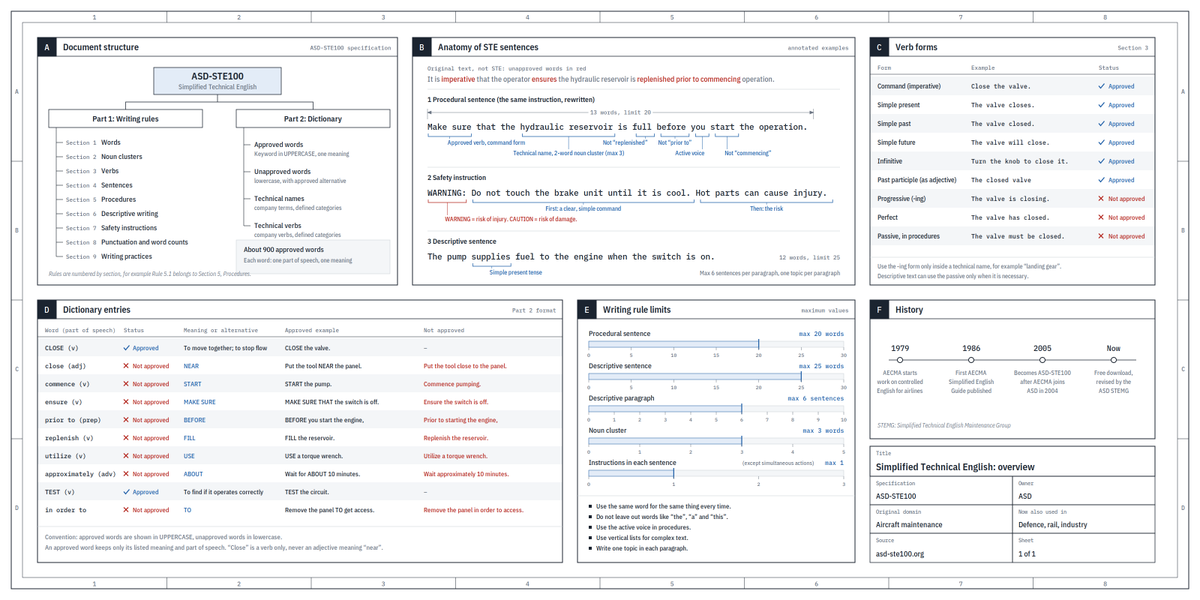
Writing. Something I've had success with: Ask your LLM to explain something in ASD-STE100, it's a controlled language specification originally developed for aerospace maintenance documentation. LLMs well-versed in this language and it comes with heavy constraints on clean writing style that I often find a lot more readable. Sometimes I've tried to soften it a bit e.g. ask for "80% of the way to ASD-STE100" because the spec is quite stringent. But even better:
Diagrams / images. Instead of writing, ask your LLM to create a diagram. These can be a lot easier to process, parse, and understand. But even better:
Web pages. Ask for output "in HTML" to get a beautiful, interactive webpage. LLMs are getting really good at frontend and can create beautiful experiences, animations, etc. But even better:
Explainer videos. The output format I am most bullish on is fully custom / bespoke explainer videos generated on any arbitrary topic. Experiment with things like "Create a 3b1b style video explainer on X. Use my ElevenLabs API key for audio narration". (you'd need an API key for the latter or you can ask your LLM to find you decent free alternatives that use your local compute). This is actually starting to work!
In summary:
- As LLMs get better, they will do more and more of the legwork autonomously, and a lot more of our work will rise up the abstractions into oversight and understanding.
- Luckily, LLMs can help here too because as intelligence and code are increasingly abundant, you can ask for large, custom, discardable software artifacts (e.g. web apps, video explainers) that would have never made sense to create before. Push the boundaries here and you'll be surprised.
mattpocock/skills prompt of the day:
/codebase-design Take a look in the repo for shallow modules, applying the deletion test and look for candidates for deletion.
Helps kill unnecessary abstractions.
here's how i shipped 2,500 PRs last month to production
this was originally supposed to be for Cursor Compile in London. i couldn't make it since i was livestreaming for Grok @Bot Galaxy so i'm making it available for free here on X! watch it on 2x speed, i talk slowly
I created a skill that creates animated 3d icons from a single prompt
The results are crazy good🤯
Excited to see what you guys make with it🔥
https://t.co/vGRUP9DFr2
opus 5.5 is f*cking cracked at motion design
this entire video is code, 0 after effects
im open sourcing the prompt template for these motion designs
steal it to recreate these ↓
<inputs>
Ask me for: 8 to 12 UI states I want the shape to become (e.g. button, loader, player, slider, toggle, tabs, chart, command palette, toast), pure black and white or one accent color, and a royalty-free song around 120 BPM (e.g. Mixkit, free for commercial use).
</inputs>
<direction>
Dribbble-level UI motion. One shape, never cut: every state is the same element morphing its size, radius and color while its content swaps with a short blur. A cursor drives every change with real clicks and drags. Light warm-gray canvas, black and white components, one clean UI font (Geist). Springs everywhere, a tiny overshoot at most. The camera zooms so each state fills the frame. The last frame is the first frame, so it loops.
Banned: bouncy easing, particle bursts, glows, gradients on UI chrome, mismatched icon strokes, dead time, anything that looks like a template.
</direction>
<structure>
120 BPM, 7 bars, something happens on every beat.
Button → loader → check → dynamic island → music player with a play/pause morph → scrub the progress bar → it becomes a volume slider that stretches when dragged past max → a toggle flips on the beat → the knob becomes a liquid tab indicator → the tabs open into a chart that draws itself, with a tooltip on hover → it collapses into ⌘K → type to filter → enter → toast → back to the button.
</structure>
<build>
1. One HTML file, square 1440x1440. Every style is computed from time inside seek(t): no CSS transitions, no timers, no state carried between frames.
2. Springs are closed-form step responses. A value that changes target many times is the sum of one spring per change, so it stays a pure function of time.
3. The tab indicator's two edges ride different springs, so the leading edge stretches ahead of the trailing one. Same trick for the toggle knob.
4. Drags are direct manipulation: while the cursor is held, the value is computed from its position. On release it springs back from wherever it was.
5. Analyze the song with numpy for the beat grid and start on a downbeat. Place every UI sound by its measured peak.
6. Render with Playwright: 4 subframes per frame, blended with ffmpeg tmix for motion blur at 60fps.
7. Render one frame per beat before the full render. Fix anything off the grid, cramped or hard to read.
</build>
<gotchas>
Never put will-change on anything the camera scales or the text renders blurry. Text that swaps inside a morphing container needs its own enter and exit timing or it overlaps. Make the last frame identical to the first, cursor position and speed included, or the loop stutters.
</gotchas>
<start>
Ask me for the inputs, then show me the state list on the beat grid before you write any code.
</start>
إذا كنت مبرمج، أو تعرف مبرمج يبحث عن مشروع يساهم فيه ويتعلم منه، أو كانت عندك فكرة لميزة ودك تضيفها وتساعد بها الناس...
فموقع قافية صار مفتوح المصدر!
مشروع عام، غير ربحي، من الجميع وللجميع، في خدمة العربية وأهلها
مستودع قتهب: https://t.co/UqgtVrQuid
I asked Opus 5.5 to make a game inspired by the discovery of the first computer, the Antikythera mechanism.
Everything you see and hear is procedurally generated in real time, from code by Opus 5.5.
It's a single 3 MB HTML file. Playable Claude artifact below.
NOBODY talks about Treg and it's insane
One API key to connect:
→ facebook ads
→ seo tools
→ ads library
→ social media
→ literally everything
https://t.co/uKdIXzVu8N
Canceled 5 subscriptions since using it
👋 @nestframework community, we’ve been looking forward to sharing this with you
If you’ve used Prisma in NestJS, a few things will look different this time.
Here’s the new way to build with Prisma ORM 8 ↓
https://t.co/KdmA2uaUPS
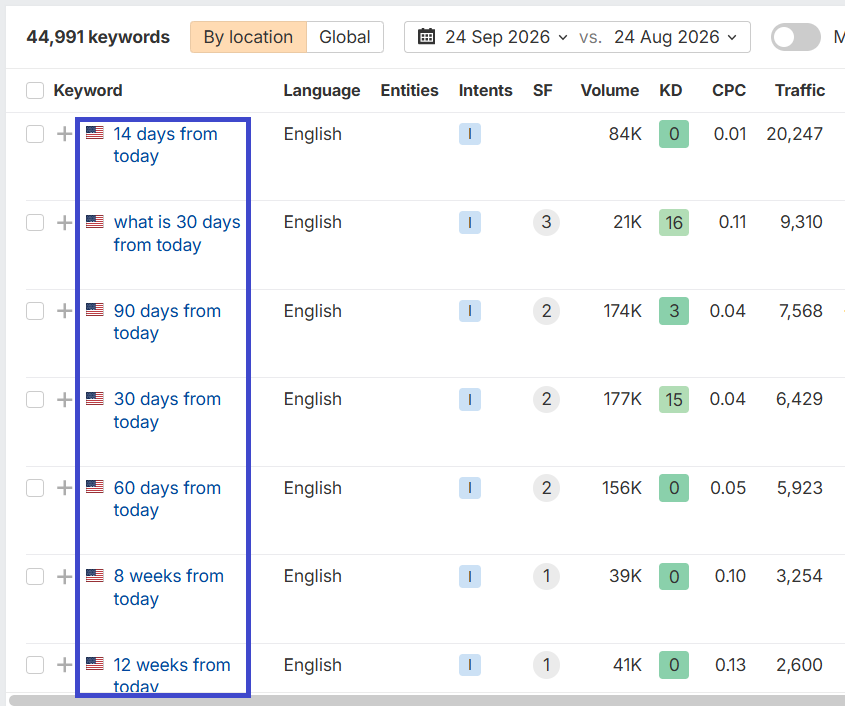
Can you target these Keywords
and earn $24,000 - Yes
Revealing this in Special List in my Pro Database
https://t.co/oJCbU73dDT
More details in comments 👇
🚨🚨🚨: New Ablit Drop
Keys-MiMo-v2.6-Flash-RL now Abliterated. Enjoy
upcoming: MiM-v2.6-Pro-RL requant + Ablit (may take few days)
https://t.co/vUFK8RqyDW