Circle in Jakarta.
Yesterday’s conversations centered on financial access, local market structure, and how trusted digital dollars can support more accessible and efficient money movement.
Important conversations for a market like Indonesia, where the opportunity is both local and global.
It took me about 3 months to become *the* expert on gas optimization back in 2022.
There is still a lot of low-hanging fruit like that. You just need to stop chasing a new thing every week that the influencers say is hot.
Your proven ability to focus and go deep will go a long way towards building the credibility people need to trust you with large projects.
I don't talk about gas optimization anymore, but the credibility I built back then paved the way for everything I do now in Web3. So don't stress out about building expertise in the "wrong" thing.
I'm literally giving you my playbook here.
If you don't know how to push yourself to state-of-the-art, you'll have a tough time competing with AI while staying in the comfort zone of what is easy to learn and has a lot of material already.
People think being a good generalist means studying a lot of different subjects. No, "being a good generalist" means knowing first-hand it takes to be excellent it a certain field, then apply that experience to other fields.
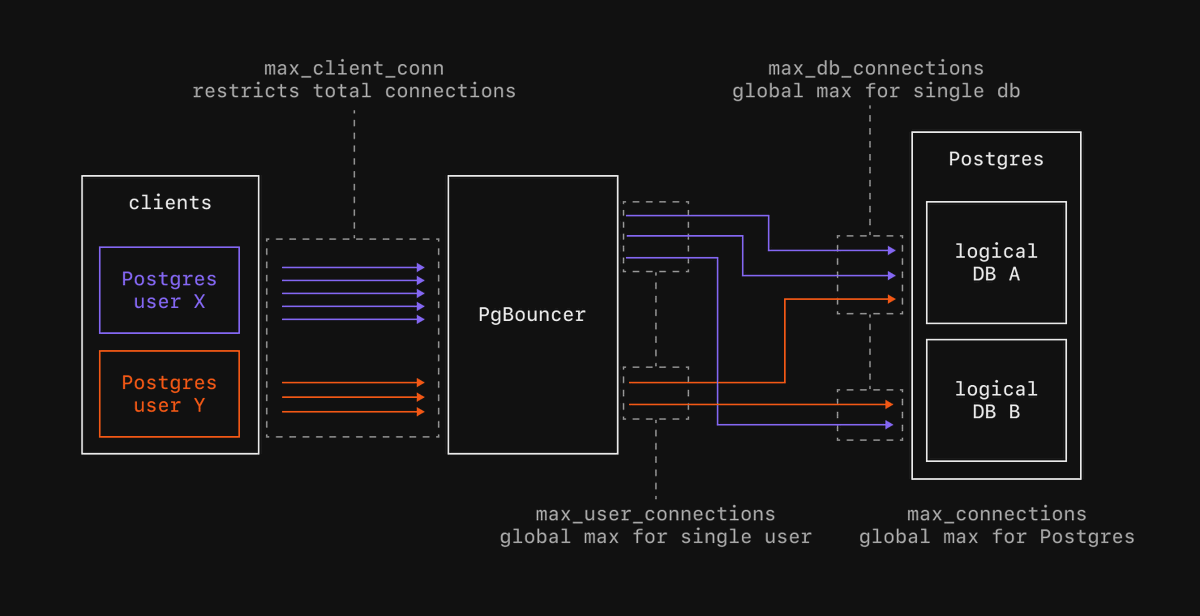
Postgres has a problem: connections.
PgBouncer is the solution, but it's not so simple.
We've got the guide for how to optimize your connections for any database size.
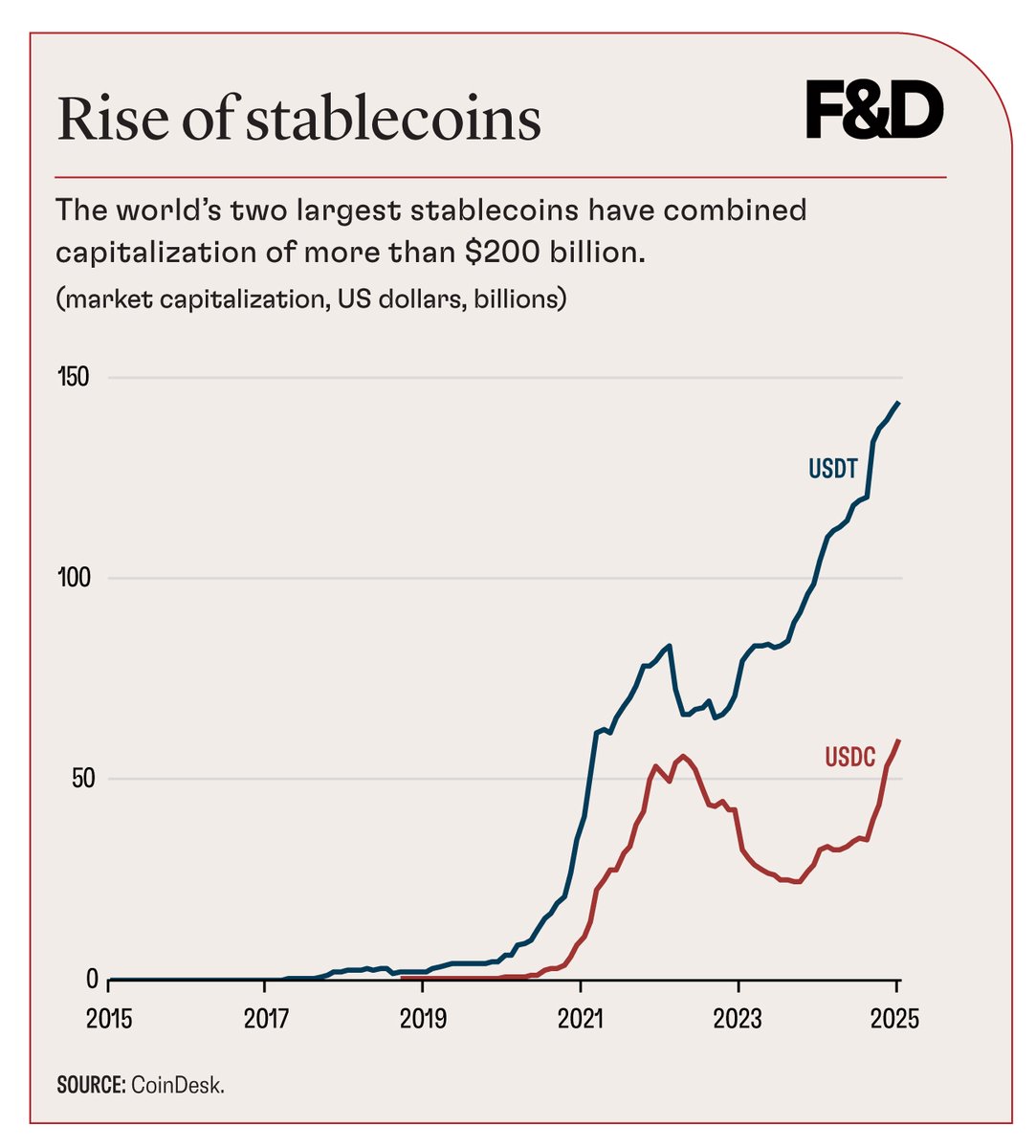
Crypto, stablecoins, and tokenization promise new possibilities, but also new risks. Forward-looking policy is essential, Aldasoro, Frost, and Shreeti write in F&D magazine. https://t.co/CuQvcizM8U
x402 + @Google just unlocked a new level for AI agents.
Agents can actually pay each other now, with x402 powering the stablecoin rail inside Google’s new Agentic Payments Protocol (AP2). Really cool.
Finished another FP in C++ stream.
We had lots of fun trying to write idiomatic code!
Thanks everyone, for joining. I still can't believe so many people were watching it.
👉 If you like Apache Kafka you need to learn about Schema Registry.
EVERY company uses schemas in their Kafka messages. The only question is how.
There are all kinds of out-of-band solutions one can apply - e.g you can just vibe-code some JSON and parse it ad-hoc in your clients. 🤢
It will work until it doesn’t. At which point you’ll start to feel the pain of poison pills, inconsistent structures, changing code in 10+ different repos & more 😓
The solution?
(hint: it’s not perfect, but it works)
Kafka deployments utilize a separate service called Schema Registry (SR). It’s basically a CRUD REST API that stores your schemas in a database.
SR essentially keeps a pair of {schema, topic}, denoting which topic the schema is associated with.
🤔 reminder: Kafka does not support message schemas out of the box.
For the broker, every payload is a completely opaque blob of bytes. (probably Kafka’s biggest mistake was to not evolve in this aspect)
Producer and Consumer clients interface with SR as they work with Kafka.
The Producer idempotently registers the schema for the message prior to publishing it. As a response from that call, it receives the ID for the persisted schema in the registry. The Producer then embeds this schema ID in the bytes (record payload) it sends to Kafka.
💡 In this way, every message in Kafka refers to the exact schema it was created with.
This helps with versioning - e.g if you update your schema but want to use an old version to parse an old message. The schema registry stores all versions of a topic's schema. It also stores separate schemas per key and value.
When it’s time to read the message, the Consumer parses the schema ID from the payload. It then knows which schema to fetch from Schema Registry. Once fetched, the consumer caches it for performance.
Having the schema, it simply deserializes the record. Done 🙌
The benefit of this approach is that the broker’s work is kept light - it doesn’t need to spend CPU cycles decompressing, deserializing, validating, serializing, compressing each message.
👎 But the downsides are much greater:
• 🌎 ecosystem fragmentation - I count 6+ schema registries in the market (Confluent’s, Karaspace, RedPanda’s, Bufstream’s, ApiCurio, AWS Glue); not to mention all the custom code some orgs use. That’s what happens when you don’t standardize on an official solution.
• 😓 weak validation - the Producer is the ONLY component that validates the schema. A buggy client will break all your consumers.
• 🥶 difficult evolution - supporting features like the Iceberg format becomes more difficult
• 🥺 no rich features - we miss out on a ton of cool stuff like server-side DLQ, CEL rules, filtering based on RBAC
In 2011, when CPUs were weaker, that decision made sense.
In 2025, where 1) CPUs have skyrocketed in performance and optimizations, 2) the JVM, 3) GC and 4) Java serialization libraries have improved, and 5) most don’t push Kafka to its true limits (KB/s anyone?) – it makes no sense.