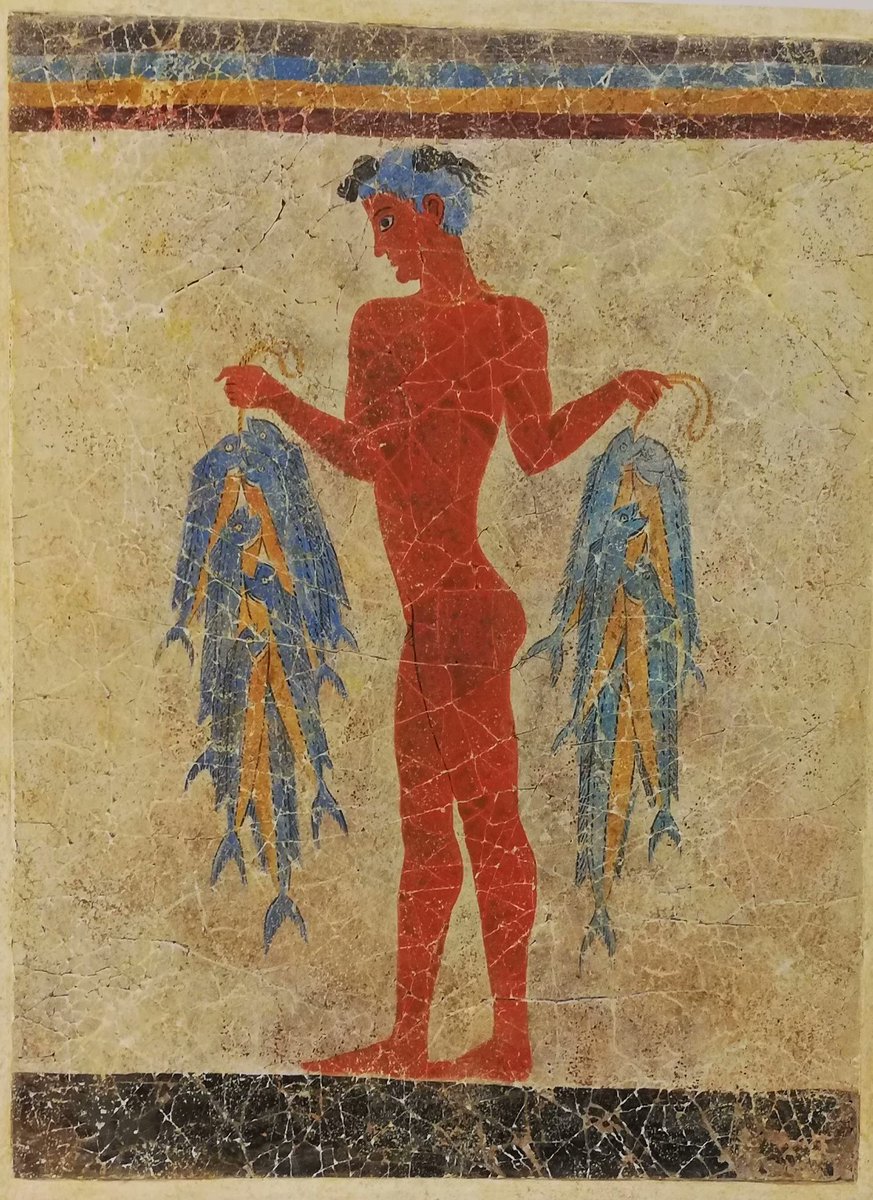
This striking fresco, known as *Fisherman*, was discovered in the ancient settlement of Akrotiri on Thera (modern-day Santorini) in the Cyclades, Greece 🇬🇷. Dating back to around 1600 BC, it is a remarkable example of Minoan art, showcasing the vibrant culture of the Bronze Age.
The artwork depicts a young fisherman holding two strings of freshly caught fish, his muscular frame and dynamic pose highlighting the skill of Minoan artists in capturing movement and realism. The use of bold colors—deep blues, earthy reds, and stark whites—adds to its visual appeal, while the detailed rendering of the fish emphasizes the importance of marine life in the island's economy.
Preserved by volcanic ash from Thera's catastrophic eruption, this fresco offers a rare glimpse into daily life before the disaster. It reflects the sophistication of Akrotiri’s society, known for its advanced architecture and artistry.
A masterpiece of ancient Aegean art, the *Fisherman* fresco remains a testament to the creativity and resilience of a civilization lost to time.
#archaeohistories
The rise of figurative art in the Fatimid era owed much to the aesthetic and philosophical ideas of the 10th-century Ikhwan al-Safa philosophers, who saw artistic creation as a form of 'imitating the wise artisan' (see ALT).