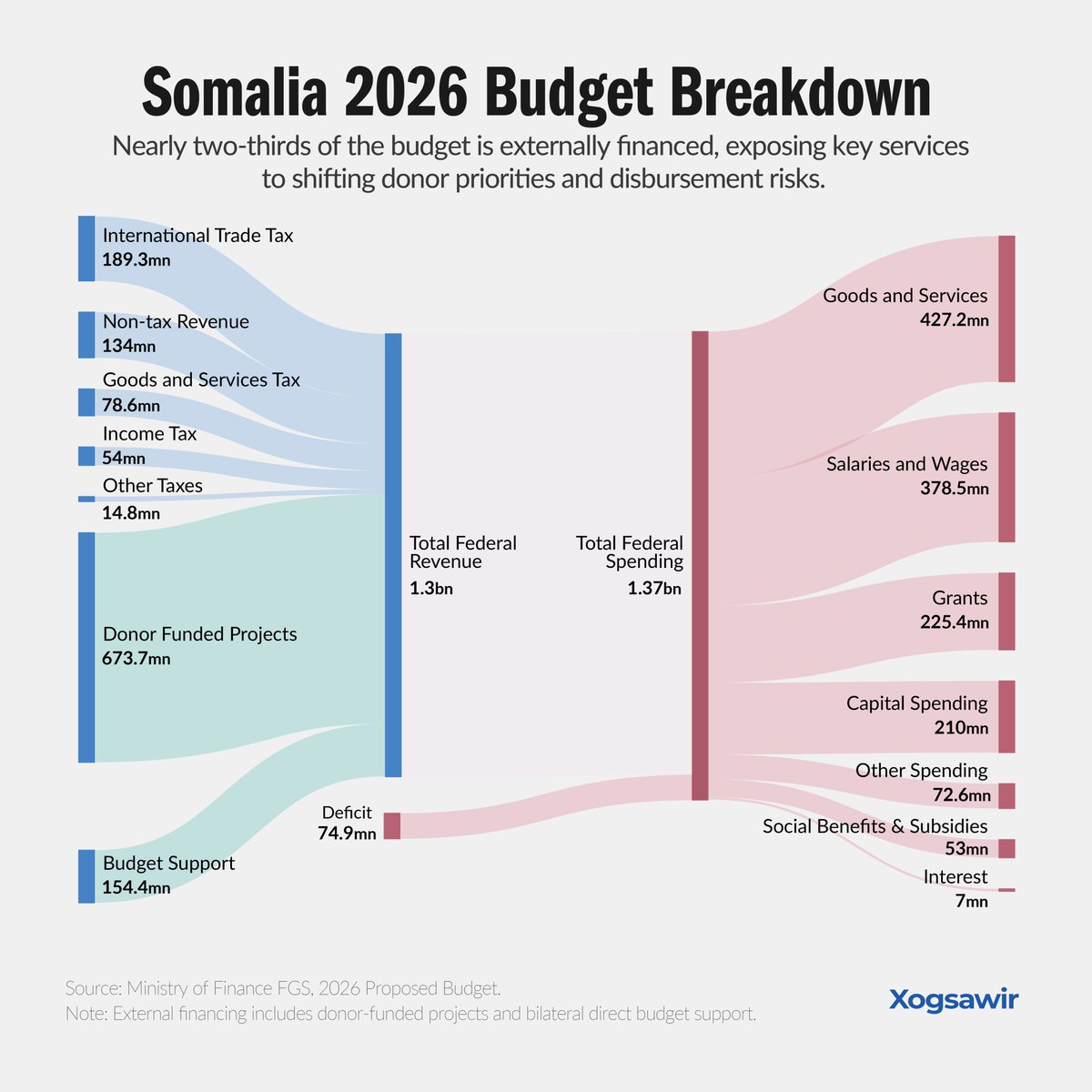
🇸🇴 Somalia’s 2026 budget reveals a continuing fiscal fragility. Nearly two-thirds of federal spending (over $820m) is financed externally, leaving essential services vulnerable to shifting donor priorities.
See the budget flow, domestic vs. donor split 👇🏿
Solar imports to the Horn of Africa more than doubled in a year—rising from 555 MW to 1.39 GW. #Kenya and #Sudan led the surge, while #Somalia’s market grew 63% to 61 MW. ☀️🔋
Somalia went from Africa’s 29th most expensive market for mobile internet in 2019 to one of the most affordable by 2023. The cost of 1 GB fell 92 % — from $6.20 to $0.50 — lifting Somalia into Africa’s top 5 for affordability.
Somalia’s forest cover has nearly halved since 1990 — the steepest decline in the Horn. While global forest loss is slowing, Somalia lost 1.2 million ha in the last decade alone. Ethiopia’s loss has eased, and Kenya, Djibouti saw small gains. 🌍🌲
Most #Somali bank credit is tied to trade, property & personal loans — not to the sectors that drive production.
By end-2024, about 86% of credit sat in these areas, while agriculture, manufacturing & energy shared <6%.
A mixed outlook for 2025 in the Horn of Africa — steady growth in Ethiopia and Djibouti, a rebound in South Sudan, slower pace in Somalia, and a fragile recovery in Sudan.
📉#Somalia’s trade deficit hit a record US $8.8 billion in 2024. Exports grew fast, led by services, but import demand grew faster. The gap is still financed by remittances and grants, showing how dependent the economy remains on external inflows.
In #Somalia, too many young women are shut out of school and work — about half at 15–24, rising sharply in their early 20s and nearly three-quarters by age 24. Breaking barriers can change that.
Micro is where #Somali women work. Women hold ~70% of jobs in microbusinesses— and micro firms make up nearly half of all establishments. That’s the beating heart of daily trade, led by women at street and stall level.
#Somalia#WomenInBusiness#Xogsawir
USAID cuts have already stripped hundreds of millions in aid from the Horn of Africa.
In countries like #Ethiopia, #Somalia, #Uganda, and #Kenya, the withdrawal runs especially deep — undermining food security, health, and stabilization programs.
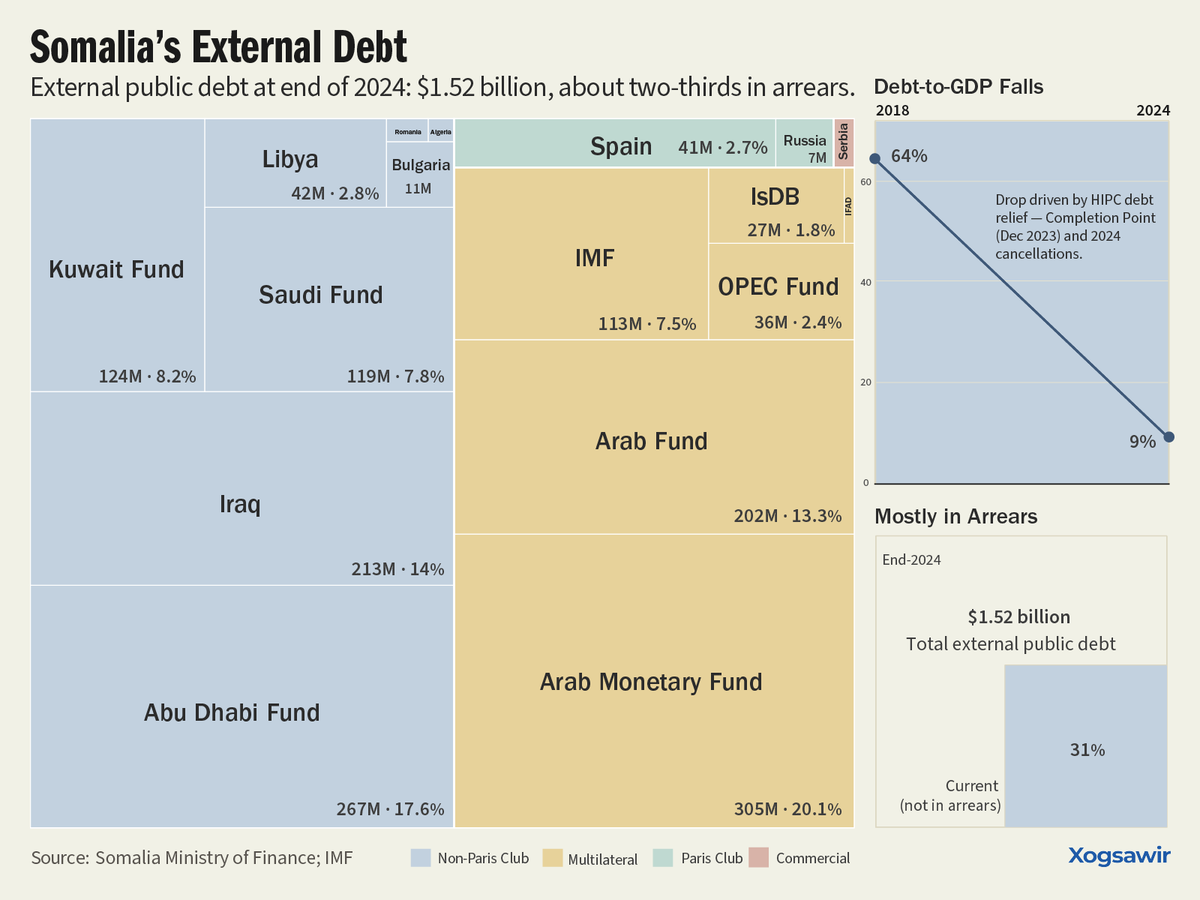
After years of arrears and negotiations, Somalia’s external public debt has plunged — from 64% of GDP in 2018 to just 9% by 2024, following #HIPC debt relief and last year’s cancellations.
What remains, about $1.52 billion, is largely arrears owed to a few bilateral & Arab funds
Somalia’s extreme poverty is uneven across regions.
🔺 Highest: Middle Shabelle — 54.7%
🔻 Lowest: Banaadir — 10.8%
Drought exposed rural areas bear the heaviest burden while big cities benefit from jobs, services, and remittances—so their rates are lower.
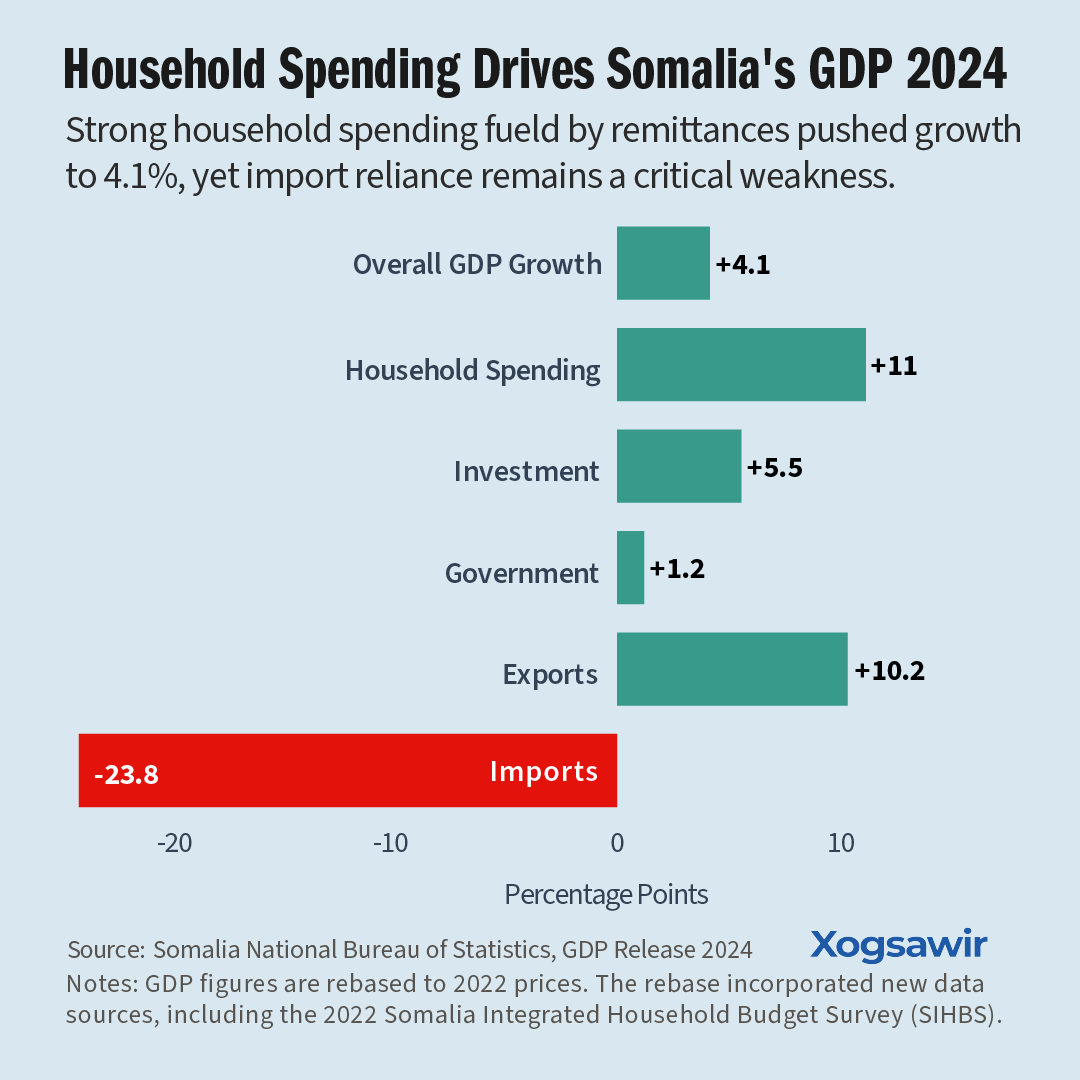
#Somalia’s growth story in 2024:
📈 GDP rose 4.1%, powered by remittance-backed household spending.
But heavy import dependence 🛳️ wiped out much of the gain. See the breakdown ⬇️
#Somalia’s immunization story is turning a corner. In 2024, about 70% of children completed the critical third dose of DTP3, up 28 points since 2012, with faster gains after 2019.
See chart + data🔗 https://t.co/JEe08o3MMB
#Somalia#Immunization#Xogsawir