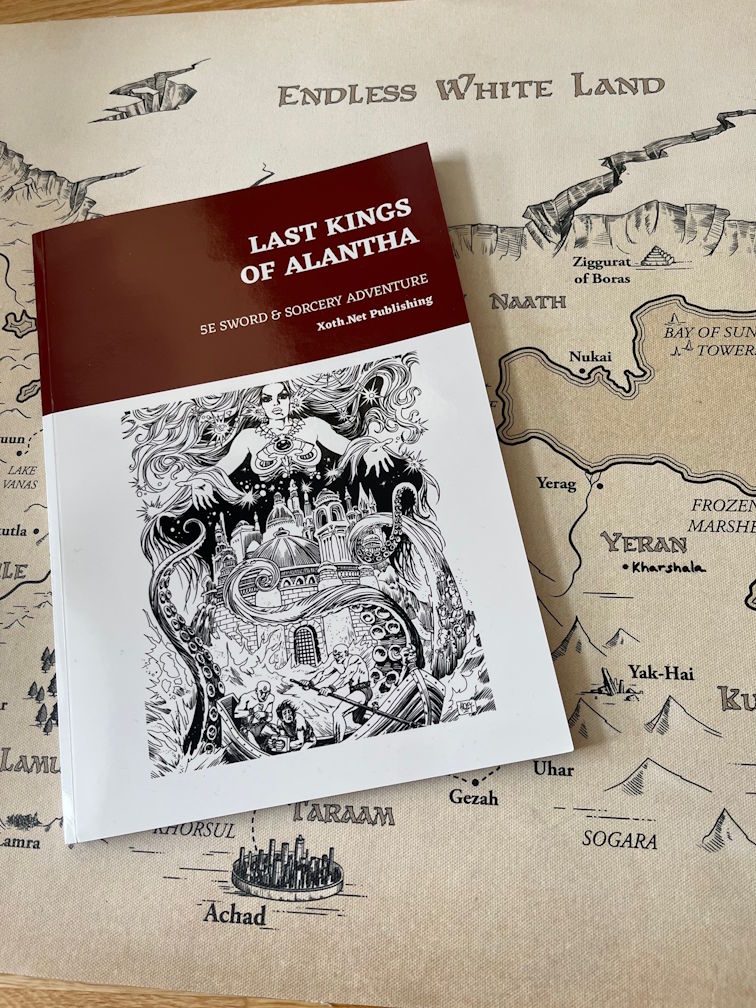
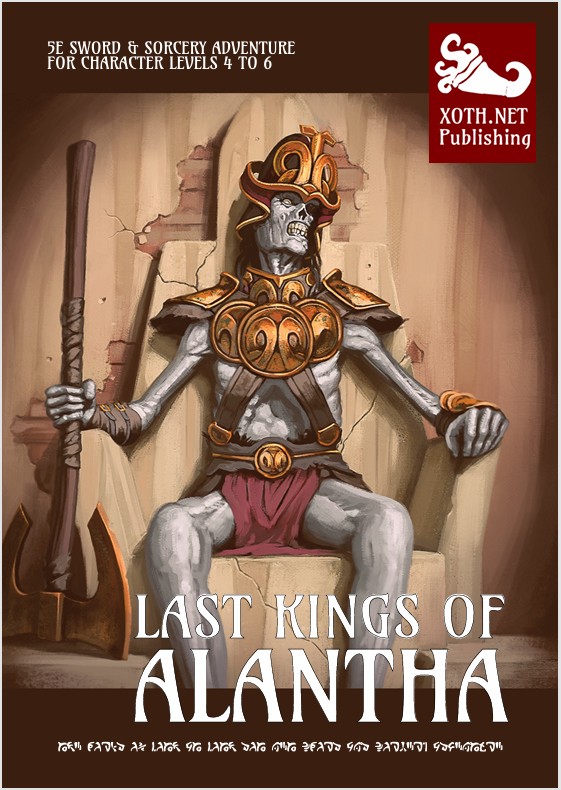
👉AVAILABLE NOW! 👈
LAST KINGS OF ALANTHA ⚔️💀
Sword & Sorcery Adventure Module with an old-school vibe, inspired by Robert E. Howard's story "The Gods of Bal-Sagoth"
Awesome art by @DeanSpencerArt , @AlexeyGorboot, Stefan Poag, and others
#dnd#5e
Link in replies below 👇
@newbiedm@ForgottenWrit@dungeoncraft For me I’d have to say advantage/disadvantage mechanic, and bounded accuracy (keeping numbers fairly low), and legendary actions (single boss not overwhelmed by multiple PCs).
@dungeoncraft@newbiedm In almost 100 sessions of 5E, Inspiration was not used once (we mostly forgot about it). Recently started using Luck from Tales of the Valiant, and that was easier for players to remember (not being hoarded, but used almost immediately).
@dungeoncraft@newbiedm What do you like most about 5E, and what do you like the least?
Bonus question: What do you like most about Shadowdark, and what do you like the least?
#RPGstuffdaily#ttrpg
“Sensitivity Readers” for RPGs
TTRPGs are games of pure imagination. At their best, they let players and GMs create worlds filled with dragons, ancient evils, moral dilemmas, heroic triumphs, and terrifying horrors. The hobby thrives on creative freedom—the freedom to explore dark themes, complex characters, and uncomfortable situations without external gatekeepers deciding what is “acceptable” to imagine.
Yet Wizards of the Coast has recently taken another step in the opposite direction. They’ve formed a new D&D Community Advisory Group that includes sensitivity readers and DEI-focused voices tasked with reviewing and “challenging” game content for potential issues of representation or offense. This approach treats fantasy RPGs as if they require pre-approval from professional offense detectors before reaching tables. And what is really laughable is I have more experience across more games and genres and more education and more real world experience than these pronoun folks that WotC has hired. Not to be a jerk (as if I care), but their opinions mean nothing to me.
This is a fundamental mistake for the genre. Dungeons & Dragons and the broader TTRPG space have always featured mind flayers devouring brains, demonic cults, rampaging orc hordes, undead liches, and morally ambiguous anti-heroes. These elements are not bugs—they are features of sword-and-sorcery storytelling. Applying sensitivity filters to such content risks sanding off the danger, moral complexity, and raw edge that make the games compelling.
For over five decades of running games, no external reader has ever been needed to portray a chaotic evil sorcerer, a brutal raider tribe, or a seductive fiend. The table itself is the ultimate arbiter: players communicate boundaries, vote with their participation, and resolve issues through open discussion like adults. Outsourcing imagination to corporate committees produces sanitized, lowest-common-denominator material that often lacks the power and memorability of older, freer designs.
Sensitivity readers do not enhance creativity in a hobby built on freedom—they constrain it. They transform dungeons into carefully managed spaces and turn epic conflicts into lectures. The real vitality in TTRPGs today lives in the OSR, indie scenes, and homebrew tables where creators and players reject external policing and prioritize bold, unfiltered play.
Run what excites your group. Explore the dark, the weird, and the glorious without apology. Imagination doesn’t need training wheels.
@AlexeyGorboot This awesome piece is the cover illustration for the print version of LAST KINGS OF ALANTHA, swords & sorcery adventure module for D&D 5E 👇
Now available in print!
LAST KINGS OF ALANTHA
60-page Sword & Sorcery Adventure module for D&D 5E and other old-school TTRPGs, inspired by "The Gods of Bal-Sagoth" by Robert E. Howard
👉Link in replies
Artwork by @AlexeyGorboot , Stefan Poag, @DeanSpencerArt and others
@archon@BLKfeatherPress Or it’s just that it’s easier to fall into the «everyone has magic» mindset? In D&D 5e, 8 of 12 (9 of 13 if you include the Artificer) classes have spellcasting.
Compare low-magic S&S adventures vs high-fantasy «anything goes», it’s like Euro film vs Hollywood SFX nonsense 🤓
@archon@BLKfeatherPress I don’t think it’s impossible (or even difficult) to create an RPG with nonmagical classes that each have their own niche (ie berserk-fighting, acrobat-tumbling, sneaking, buffing, equipment-making, etc).
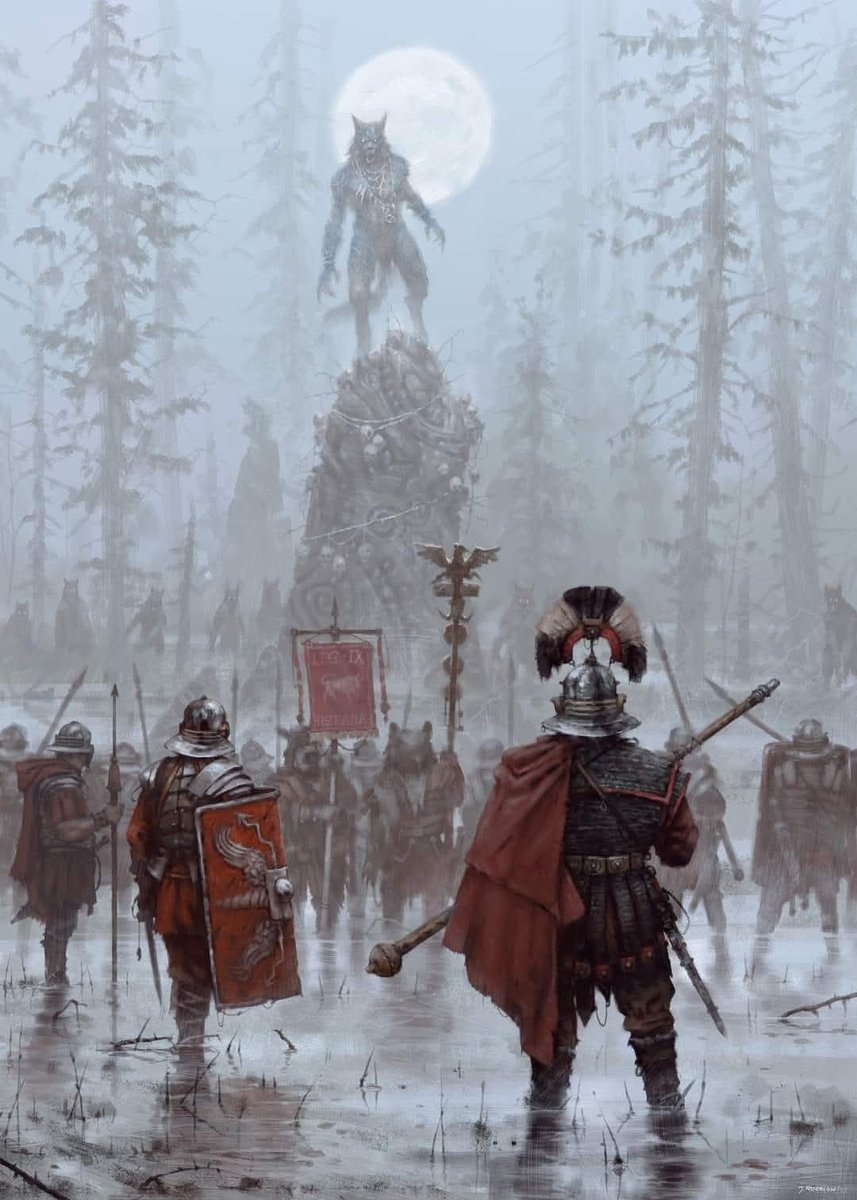
Caledonian Forest 120 AD ...
"Written by Titus Ursus, Primus pilus of Legiō IX Hispana, in the third year of Hadrian's reign (120 AD). This will probably be the last papyrus and entry in my diary. Our legion was ambushed in the wild realm called Caledonian Forest and was almost completely annihilated. Half of my first cohort is all that was left of the IX legiō. We were pushed into the marsh and we will probably die here, fighting bravely to the end in the name of Rome and the Emperor. We were attacked by a demonic pack of the barbaric Picts. They looked more like wild beasts than humans. Some of them were dressed in animal furs, painted with strange runic signs... others seemed to be two-legged wild beasts. They tore us apart as if we were made of paper! I saw our legatus and my brothers in arms being eaten alive, I will never forget their screams. The barbarians attacked us unnoticed, quickly and with wild fury, then disappeared in the fog. Mainly at night. Our shields, swords and armor were no use here. The enemy we face seems to be the ancient wrath of some dark gods we have awakened. We should never invade these lands. I hear demonic howls, they're coming! They're coming! "
Scrap of the papyrus written by Centurion Titus Ursus. Found in October 120 AD in the Caledonian Forest. Taken to Rome, where it was presented to the emperor and then burned. Two years later, Emperor Hadrian ordered the construction of a wall on the border of the land called Caledonia, in north Britannia.
An appropriate story and illustration for Halloween by Jakub Rozalski
#archaeohistories