European Parliament's top jobs were up for grabs last night, as each political group alternately picked the committee they want to chair starting from the biggest delegation and strictly applying the d’Hondt mathematical formula.
Here's what happened and who got what:
🧵
France and Germany have been clashing over energy policy, hampering EU progress.
To make sense of what's going on, my new policy brief looks at the FR & DE positions on key energy policy files. Overall finding: lots of common ground to work on if nuclear is circumvented
🧵↓
📯🇨🇾Cyprus has announced the plan for linking its major gas reservoirs to🇮🇱Israel's east Mediterranean gas fields.
It seems both🇮🇱PM Netanyahu and🇨🇾President Nikos Christodoulides back the project, talks are to start by July 2023.
Could this be the end of the EastMed pipeline? 🧵
The COM released its 🇪🇺 Sovereignty Fund proposal. It's a lot of hand-waving over the fact that nothing new will come from BXL. And it reflects a much deeper issue: The current EU system remains fundamentally incapable of productive industrial policy. Short thread:
If there ever is a shift to QMV in EU foreign policy, I suspect this proposal is precisely how we would get there:
- No treaty change
- More constructive abstention
- Use the existing QMV provisions
- Activate passerelle clause to QMV to test it
https://t.co/cIT2BvpZTa
Too many researchers erroneously think that #qualitative data are not useful for generating explanation or understanding causation.
A 🧵
Sure, qual data analysis is NOT designed to generate universal laws causally linking together decontextualized independent variables. But...
The missing link in the literature review process: 4 elements to look for when reviewing the literature https://t.co/ut7hD0Vwl9
A lot of folks have a hard time reviewing the literature because they forget what they are looking for. In this post I explain 4 key elements to look 4
There is a lot of noise around cancelling the Hungarian Council presidency 2024. The @Europarl_EN adopted a resolution calling for the Council to "find a proper solution".
A thread on the role of Council presidencies and the (limited) practical risks of a Hungarian presidency:
Folks, Central Asian countries have not been “Russian vassals for 30 years,” they did not exchange Russian “vassalage” for Chinese “vassalage,” China is not new to the region, they do face challenges from landlockedness and developmental but they have interests and agency. Stop.
New research:
Recently, we have seen a plethora of EU-level industrial policy initiatives. Where did the penchant to promote and protect the single market come from?
@luukschmitz and I study the new 🇪🇺 industrial policy in this @JEPP_Europe piece:
https://t.co/EgPMUWteyD
🧵: 1/9
In Berlin last week I concluded that Franco-German relations are about as bad as they can get. Of course there will be no demise. But @PedderSophie's points are about optics, not substance. You can tell things are bad when Paris & Berlin emphasise the symbolism. @CER_EU 1/4
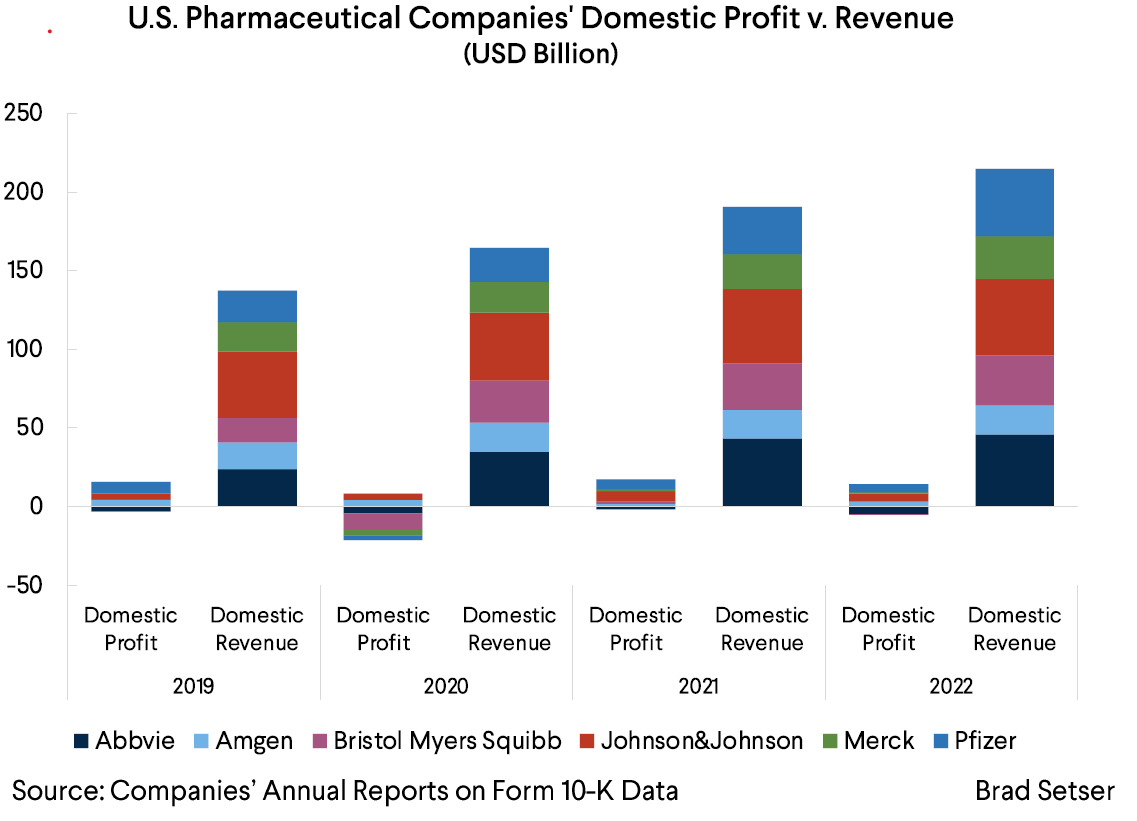
US pharmaceutical companies charge Americans more than anyone else. They report generating the bulk of the revenue in the US.
But they apparently earn almost no (taxable) income in the United States.
Rather remarkable.
1/
It's possible for democracies to friendshore critical mineral supplies, but it would take an unprecedented mining buildout to achieve 2030 targets. We also need technology (sodium batteries) and new approaches (bikes instead of giant EVs) Our new report: https://t.co/AIvsH7dm0r
In our new paper, we (@niredeker@JansenJannik1) analyse how Europe should design its green industrial policy, in light of the IRA subsidies. We assess for EU clean tech: which sectors are at risk; which are important; and for which do national subsidies risk EU divergence?
Our study for the @Europarl_EN on the scope of application of the rule of law conditionality mechanism and other tools to protect the EU budget against rule of law breaches with @eulaliarubio, @kgtamas, @Ruiz8Tomas, @f_corti1992 is now out: https://t.co/3mWLaGXNr0
A thread: