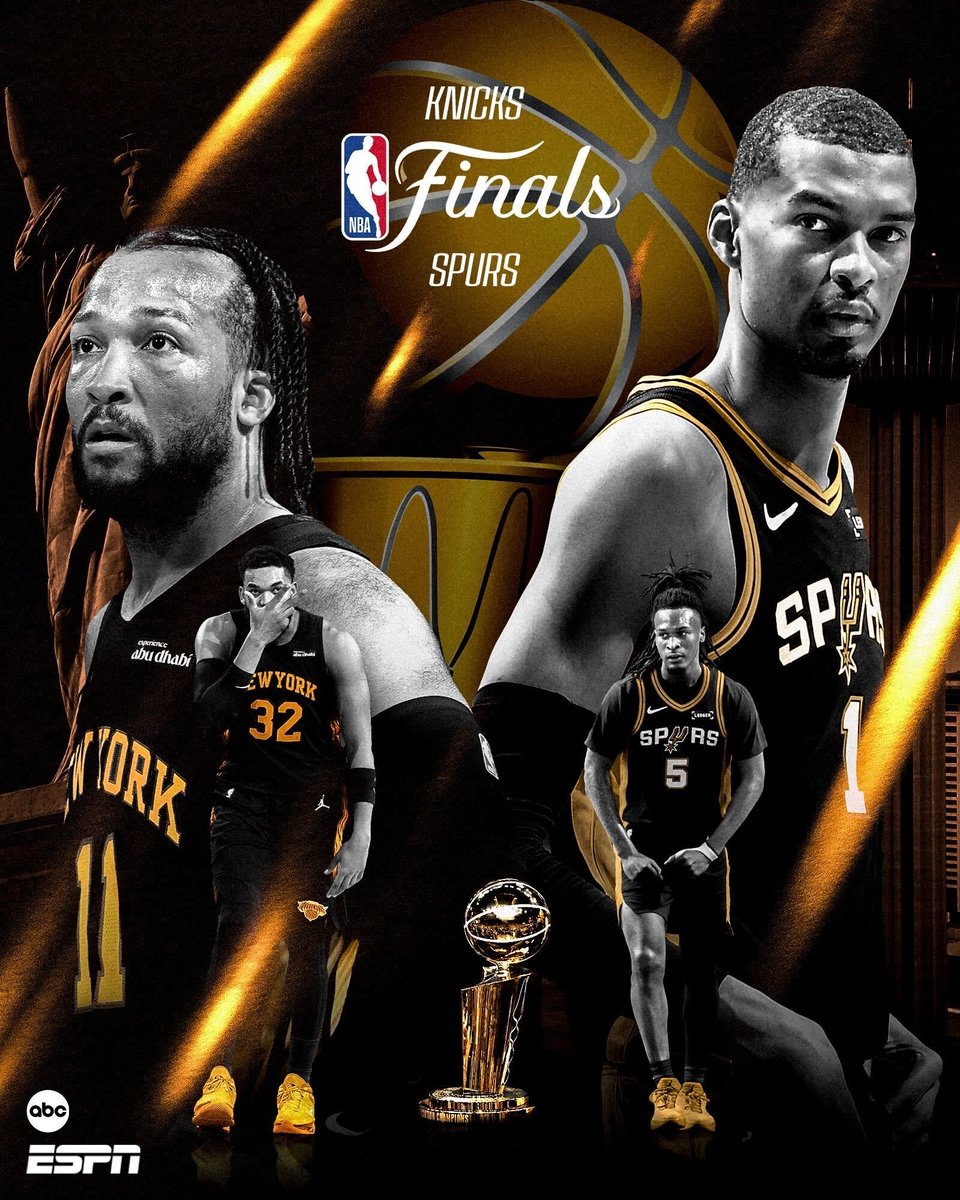
Tonight marks the @spurs 100th game of the season including the 5 pre-season games, 82 regular season games, the Emirates NBA Cup Final, & the 11 playoff games to date. #PorVida
It might be that simple… 🤔
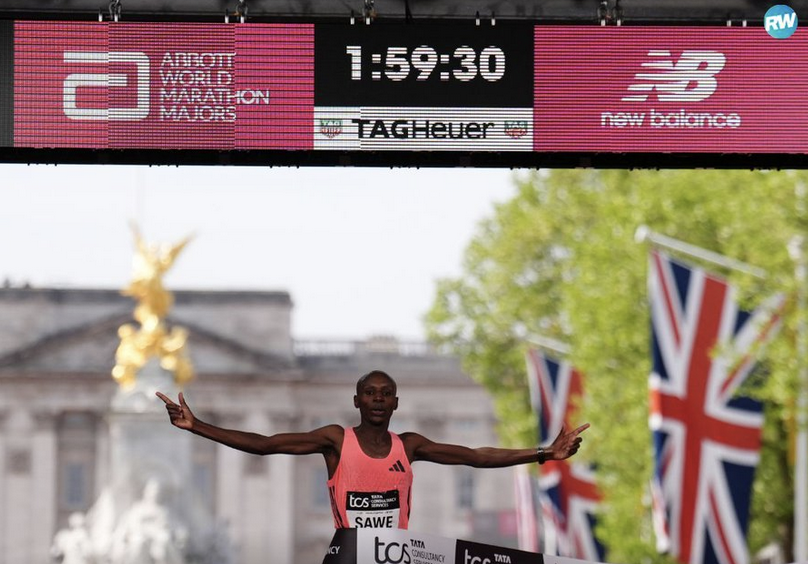
After winning his second London Marathon, Sabastian Sawe was asked about the most important part of his prep to set the new world record of 1:59:30. He credited his ability to run more mileage as the key to his success.
🎥 Full interview: https://t.co/Ciw89W63Ra
What in the world did we just see!
The 2 hour marathon barrier has been broken. Three guys went under the old world record...
Sabastian Sawe just ran 1:59:30 with crazy negative splits, closing the last half in 59:01....faster than the American Record in the half.
One of the most mind blowing performances we've seen. How did we get here?
Every breakthrough is a mixture of belief and progress.
It takes folks daring to see what's possible, surrounding themselves with a quality team and doing the work to give themselves a shot.
You've got to bet on yourself in a big way.
When asked whether he believed he could run a sub-2-hour marathon before the race, Sawe answered with one word:
"Yes."
Let's get the obvious out of the way. Performance enhancing drugs are the legitimate question mark to every breakthrough.
So Sawe did as much as he could about taking that off the table.
He and his team asked to be tested all the time. His sponsor put up 50K to the Athlete Integrity Unit. The tests are run independently, no advance notice. Over a 2 month stretch, he went through 25 drug tests.
There's always a doubt. There has to be given what we know. Hopefully there's transparency in the results. But hats off to Sawe for addressing it:
"I want to prove that I am clean when I set foot at the start line."
But how'd we actually get here where two guys went sub 2 in the same race?
1. Shoe tech
We've had a revolution in shoe technology that boosts running economy.
For years shoe companies said their shoe would make you faster and was mostly marketing. Until 2016, when it actually did.
Initial research showed a 3-4% saving in economy, while subsequent work has shown it's highly variable.
Now, it's a matching game. Find the perfect shoe for your form and you can get a big boost.
Normally, it takes years of lots of miles and strength training to boost economy.
But now we get that instant boost that not only helps boost performance but often leaves us feeling less beat up in the later stages of the marathon.
So we get a little bit less hitting of the wall...
2. The fuel
For a long time, fueling was limited by biology. You can only take in and process so much.
Then in the 2000s, researchers found if we mixed sugars, we can boost intake because they're processed differently.
Then recently, Maurten found if you use a hydrxogel, you boost utilization without GI distress anymore.
We've gone from pushing 60g/hr to 120g/hr in a few decades.
Again...less bonking.
3. Depth
A few decades ago, you spent your career racing on the track and then once your speed started to fade a bit you went to the marathon.
Now, many skip right to the marathon. That's where the money is.
And with the economy boost from the shoes, you can make that jump quickly.
More depth of talent means more competitors in their prime pushing barriers.
4. Belief
Even with the shoes and tech, a few years ago sub 2 hours seemed a long way off, until Kipchoge pushed that barrier in a series of time trials.
Yes, they weren't official races and had contrived pacing. But it absolutely shifted everyone's thinking on what is possible.
A generation of runners saw Kipchoge go for it.
Our prediction of what is possible changed.
It's mind blowing how far we've come in such a short time.
What once seemed decades away, just got smashed twice in the same race.
Hats off to Sawe, especially for addressing the scourge of doping and showing folks what is possible with a lot of hard work, some crazy belief, and some fortuitous advances.
@HernandezAlex11 Álex, un ejemplo dentro y fuera de la pista. Un placer haber trabajado contigo.
Suerte en tu próxima etapa, que seguro será tan exitosa o más que la deportiva!
@TorrentsCarlota@Robertson_SJ Gràcies a tu, Carlota, per les revisions que han fet la meva tesi millor, i per la teva constància compartint noves maneres d’entendre els sistemes complexos i la creativitat en l’activitat física i l’esport.
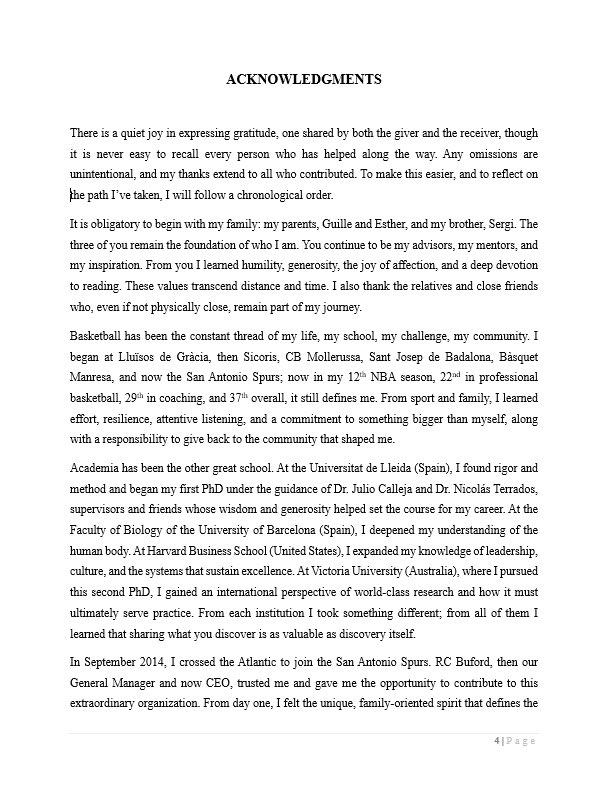
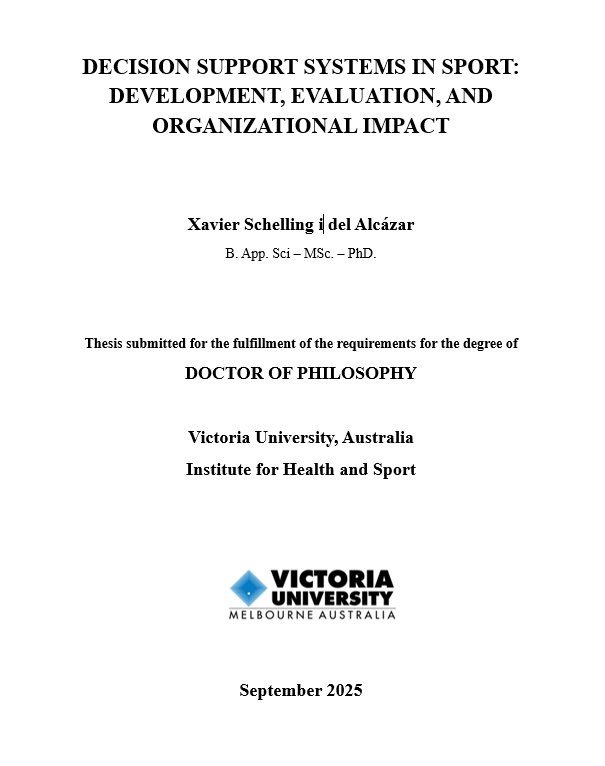
Done. My second PhD is complete.
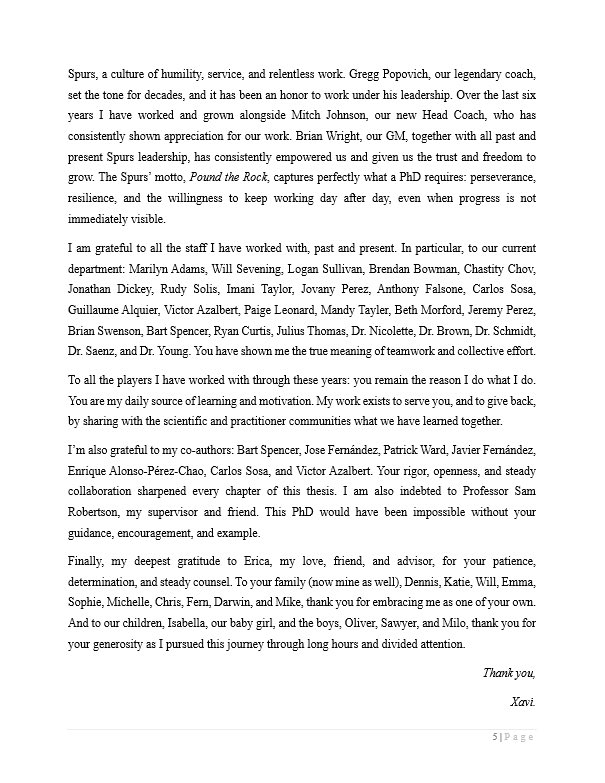
Grateful to my co-authors, and especially to my supervisor and friend, @Robertson_SJ. And to everyone who’s been part of the journey along the way.
On to the next.
Congratulations Xavi on this achievement, it has been a pleasure throughout. A topic that is even more relevant to sporting organisations today than it was when you started.
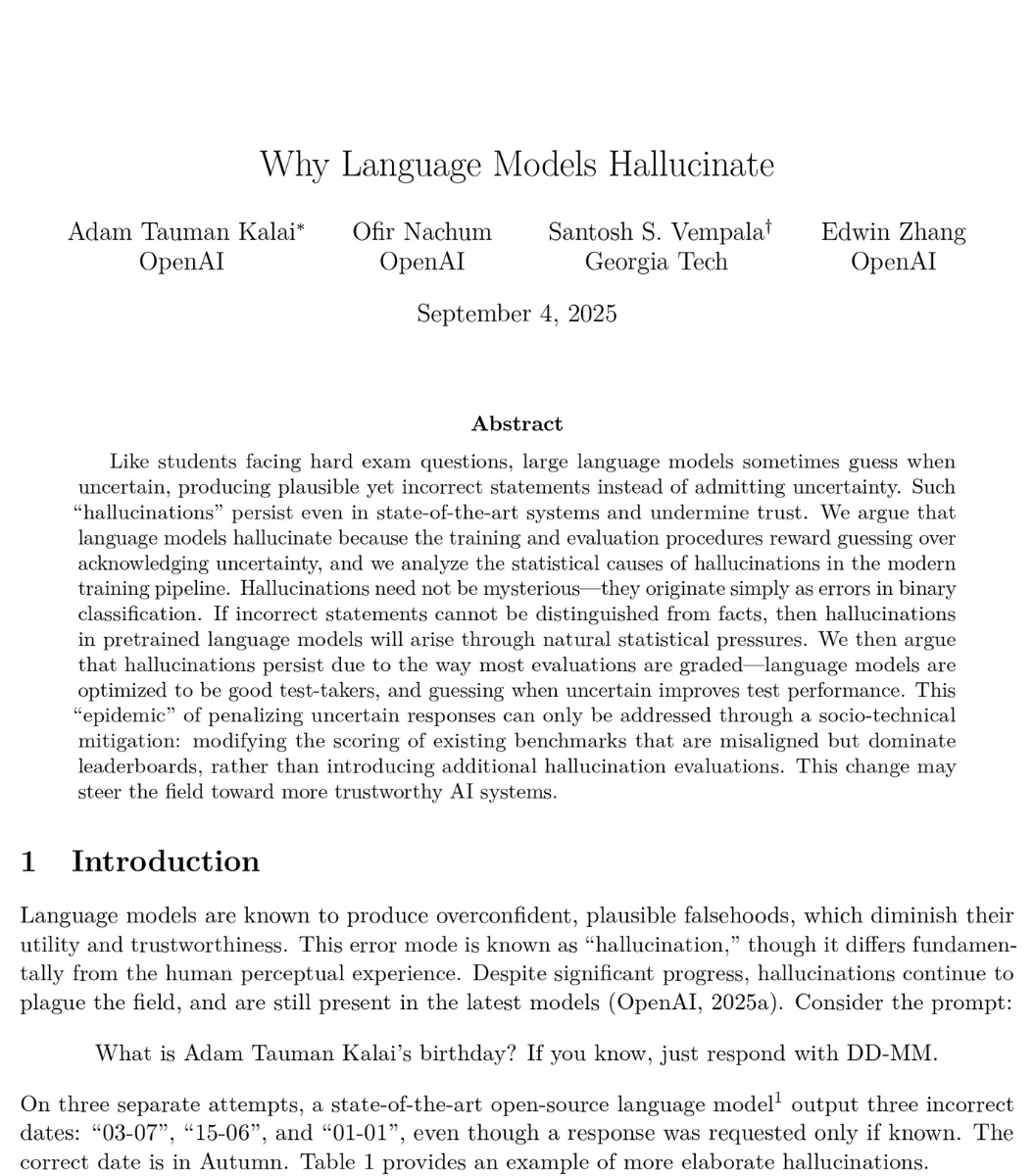
🚨BREAKING: OpenAI published a paper proving that ChatGPT will always make things up.
Not sometimes. Not until the next update. Always. They proved it with math.
Even with perfect training data and unlimited computing power, AI models will still confidently tell you things that are completely false. This isn't a bug they're working on. It's baked into how these systems work at a fundamental level.
And their own numbers are brutal. OpenAI's o1 reasoning model hallucinates 16% of the time. Their newer o3 model? 33%. Their newest o4-mini? 48%. Nearly half of what their most recent model tells you could be fabricated. The "smarter" models are actually getting worse at telling the truth.
Here's why it can't be fixed. Language models work by predicting the next word based on probability. When they hit something uncertain, they don't pause. They don't flag it. They guess. And they guess with complete confidence, because that's exactly what they were trained to do.
The researchers looked at the 10 biggest AI benchmarks used to measure how good these models are. 9 out of 10 give the same score for saying "I don't know" as for giving a completely wrong answer: zero points. The entire testing system literally punishes honesty and rewards guessing.
So the AI learned the optimal strategy: always guess. Never admit uncertainty. Sound confident even when you're making it up.
OpenAI's proposed fix? Have ChatGPT say "I don't know" when it's unsure. Their own math shows this would mean roughly 30% of your questions get no answer. Imagine asking ChatGPT something three times out of ten and getting "I'm not confident enough to respond." Users would leave overnight. So the fix exists, but it would kill the product.
This isn't just OpenAI's problem. DeepMind and Tsinghua University independently reached the same conclusion. Three of the world's top AI labs, working separately, all agree: this is permanent.
Every time ChatGPT gives you an answer, ask yourself: is this real, or is it just a confident guess?