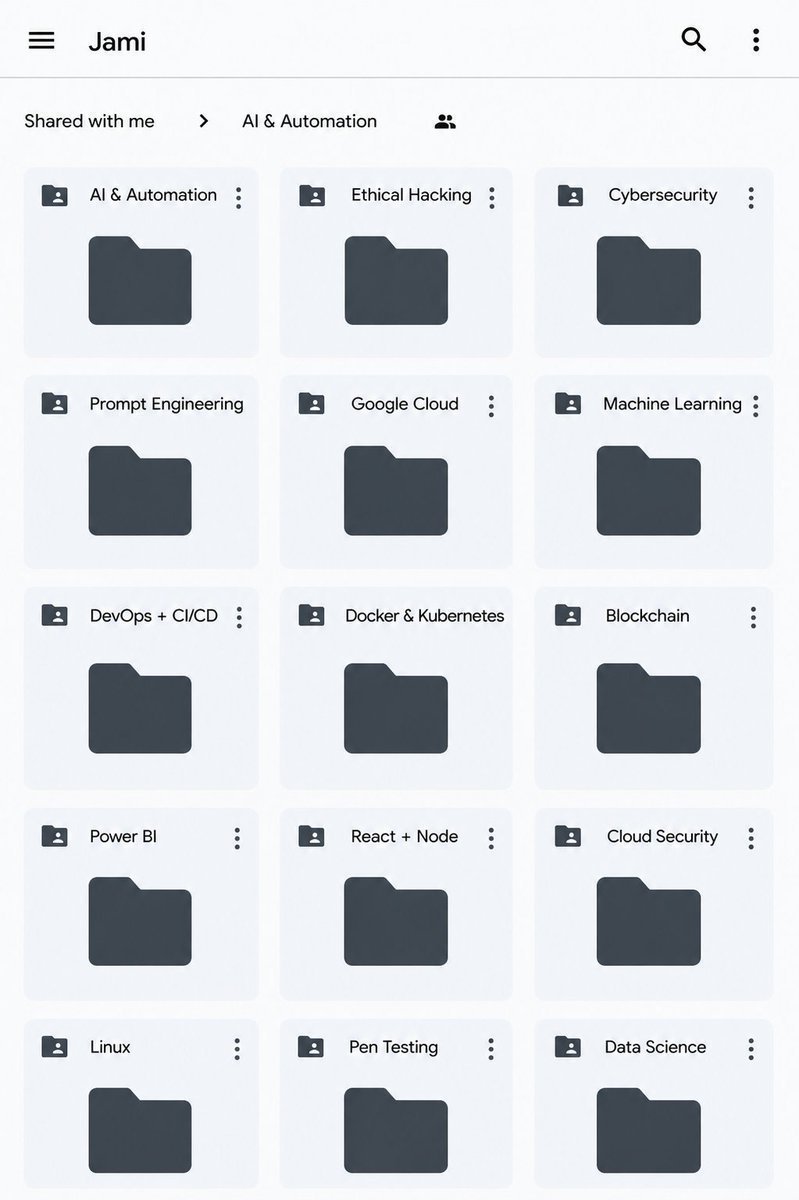
All Paid Courses (Free for First 4500 People)
𝗣𝗮𝗶𝗱 𝗖𝗼𝘂𝗿𝘀𝗲 𝗙𝗥𝗘𝗘 (PART - 1)
1. Artificial Intelligence
2. Machine Learning
3. Prompt Engineering
4. Claude,Chatgpt,Grok
5. Data Analytics
6. AWS Certified
7. Data Science
8. BIG DATA
9. Python
10. Ethical Hacking
(72 Hours only )
Like + RT + comment ' Drive '
Must Follow me so I can DM you.
Instead of watching an hour of Netflix, watch this 2-hour Stanford lecture, which will teach you more about how LLMs like ChatGPT and Claude are built than most people working at top AI companies learn in their entire careers.
Murió un hombre admirable y ejemplar, el expresidente de Uruguay José “Pepe” Mujica. Deja un gran legado de honestidad, humildad y coherencia; defendió a los más vulnerables.
#QEPD un revolucionario de ideas sociales, un político humano! #PepeMujica
Can’t fathom being at this race and witnessing this man gasping for air & his body going missing
How in the world did nobody working the CrossFit Games not see this man drowning this close to the finish line???
What a fuckin horrific moment
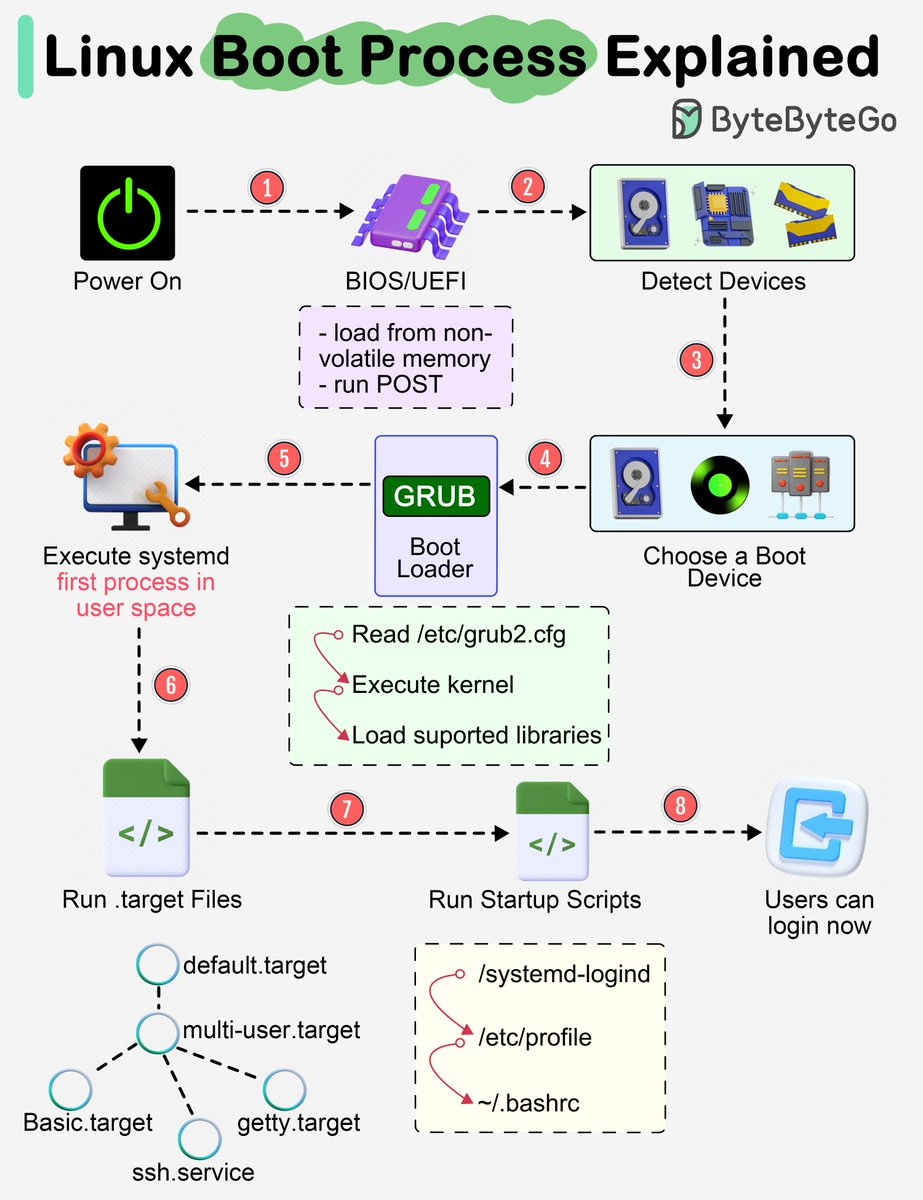
Almost every software engineer has used Linux before, but only a handful know how its Boot Process works :) Let's dive in.
The diagram below shows the steps.
Step 1 - When we turn on the power, BIOS (Basic Input/Output System) or UEFI (Unified Extensible Firmware Interface) firmware is loaded from non-volatile memory, and executes POST (Power On Self Test).
Step 2 - BIOS/UEFI detects the devices connected to the system, including CPU, RAM, and storage.
Step 3 - Choose a booting device to boot the OS from. This can be the hard drive, the network server, or CD ROM.
Step 4 - BIOS/UEFI runs the boot loader (GRUB), which provides a menu to choose the OS or the kernel functions.
Step 5 - After the kernel is ready, we now switch to the user space. The kernel starts up systemd as the first user-space process, which manages the processes and services, probes all remaining hardware, mounts filesystems, and runs a desktop environment.
Step 6 - systemd activates the default. target unit by default when the system boots. Other analysis units are executed as well.
Step 7 - The system runs a set of startup scripts and configure the environment.
Step 8 - The users are presented with a login window. The system is now ready.
–
Subscribe to our weekly newsletter to get a Free System Design PDF (158 pages): https://t.co/FIzCeaWsZV
"Perro":
Porque este animal pudo prever que su dueña, la cual padece síndrome de taquicardia postural, estaba a punto de desmayarse, por lo que la ayudó sentándola y llevándole agua y medicamentos.