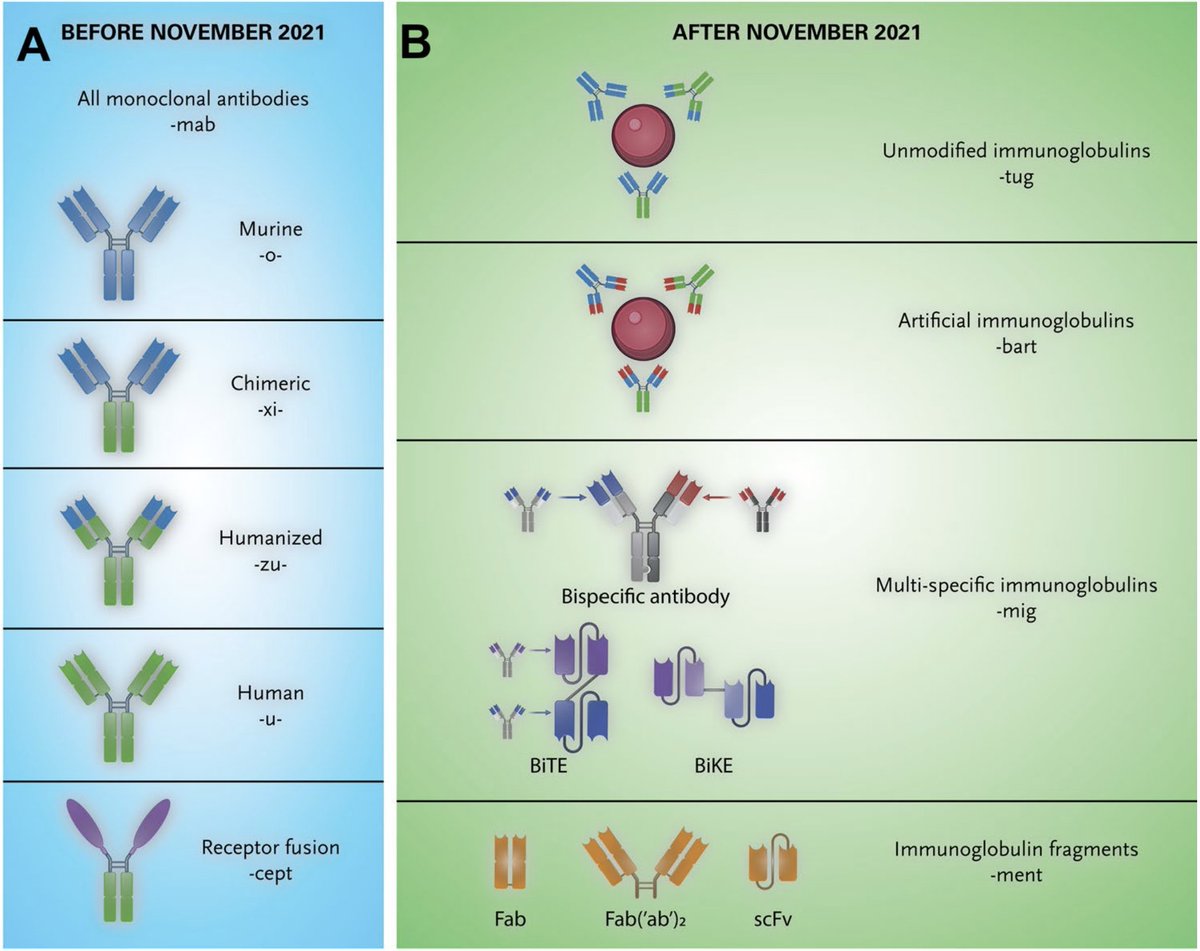
I just found out we don't use the suffix 'mab' for new monoclonal antibodies anymore — now it's -tug/-bart/-mig/-ment
So, for the new amyloid antibody, Remternetug
'Remter–' is a random prefix; '–ne' is for neurology and '–tug' because it's unmodified and monospecific
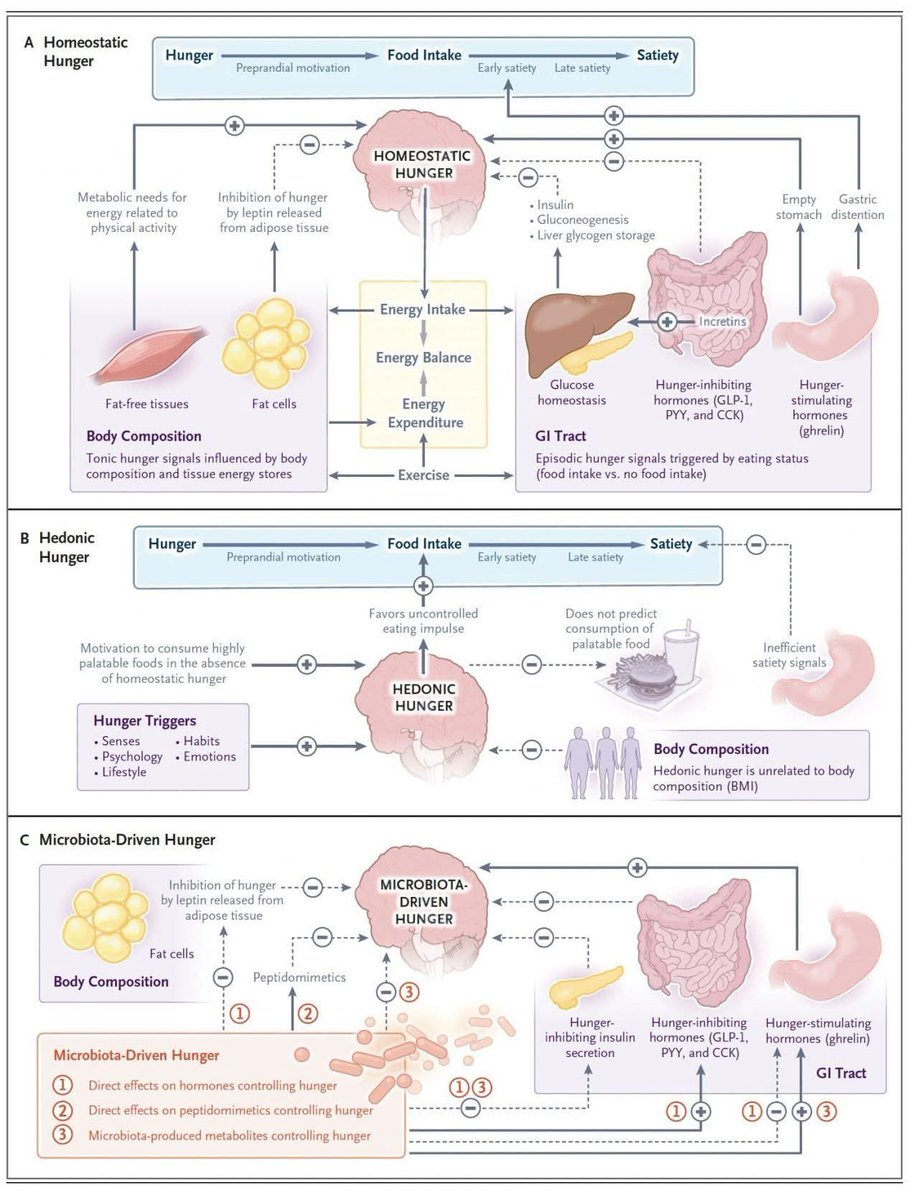
3 types of hunger explained "simply"
Hunger isn’t just about an empty stomach. Your brain receives signals from body composition, hormones, emotions, and even gut microbes. Here’s how the three major types work:
1️⃣ Homeostatic Hunger (Energy Balance Hunger)
This is your body’s “fuel gauge.” It rises and falls based on energy needs and metabolic signals.
What drives it: Ghrelin from the stomach stimulates hunger; leptin from fat cells and incretin hormones (GLP-1, PYY, CCK) reduce it.
What it does: Ensures your intake matches your energy needs for exercise, growth, and tissue repair.
🟢 Example: After a long run, homeostatic hunger pushes you to replace calories and glycogen.
2️⃣ Hedonic Hunger (Reward-Driven Hunger)
This is your “food pleasure” system. It’s triggered by sight, smell, habits, and emotions, not by actual energy needs.
What drives it: Brain reward circuits activated by highly palatable foods (sugar, fat, salt).
What it does: Encourages eating even when you’re not truly hungry. Weak satiety signals make it harder to stop.
🟢 Example: Craving dessert after dinner even though you’re full.
3️⃣ Microbiota-Driven Hunger (Gut Microbe Hunger)
Your gut bacteria also shape hunger signals by producing metabolites that influence hormones and the brain.
What drives it: Microbes generate compounds that mimic hunger or satiety signals, affect insulin, and modulate ghrelin, GLP-1, and PYY.
What it does: Links gut health to appetite regulation and metabolic control.
🟢 Example: Certain bacterial imbalances may increase cravings or weaken satiety, nudging overeating.
Not every trigger finger is caused by A1 annular ligament thickening with consecutive tenosynovitis.
In this case, we have just seen today, rheumatoid arthritis is characterized by tenosynovitis of the flexor pollicis longus tendon and submuscular impingement due to proliferative pannus-like tenosynovitis, typical in rheumatoid arthritis