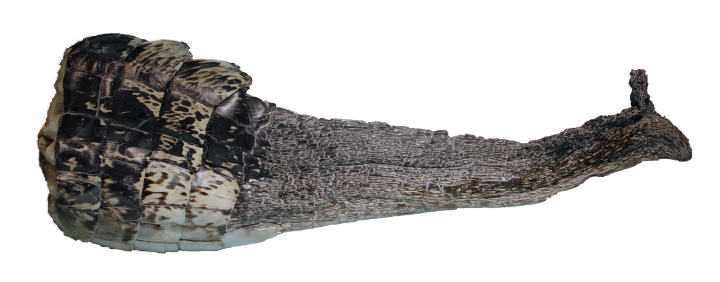
🚨New article alert from the @KusumiLab! 🚨 Juvenile American #alligators regrow their tail up to 18% of their total body length but with limitations. Our study is the first to characterize the anatomy of regrown tails in an #archosaur - thread cont. https://t.co/REnKNv7JFm
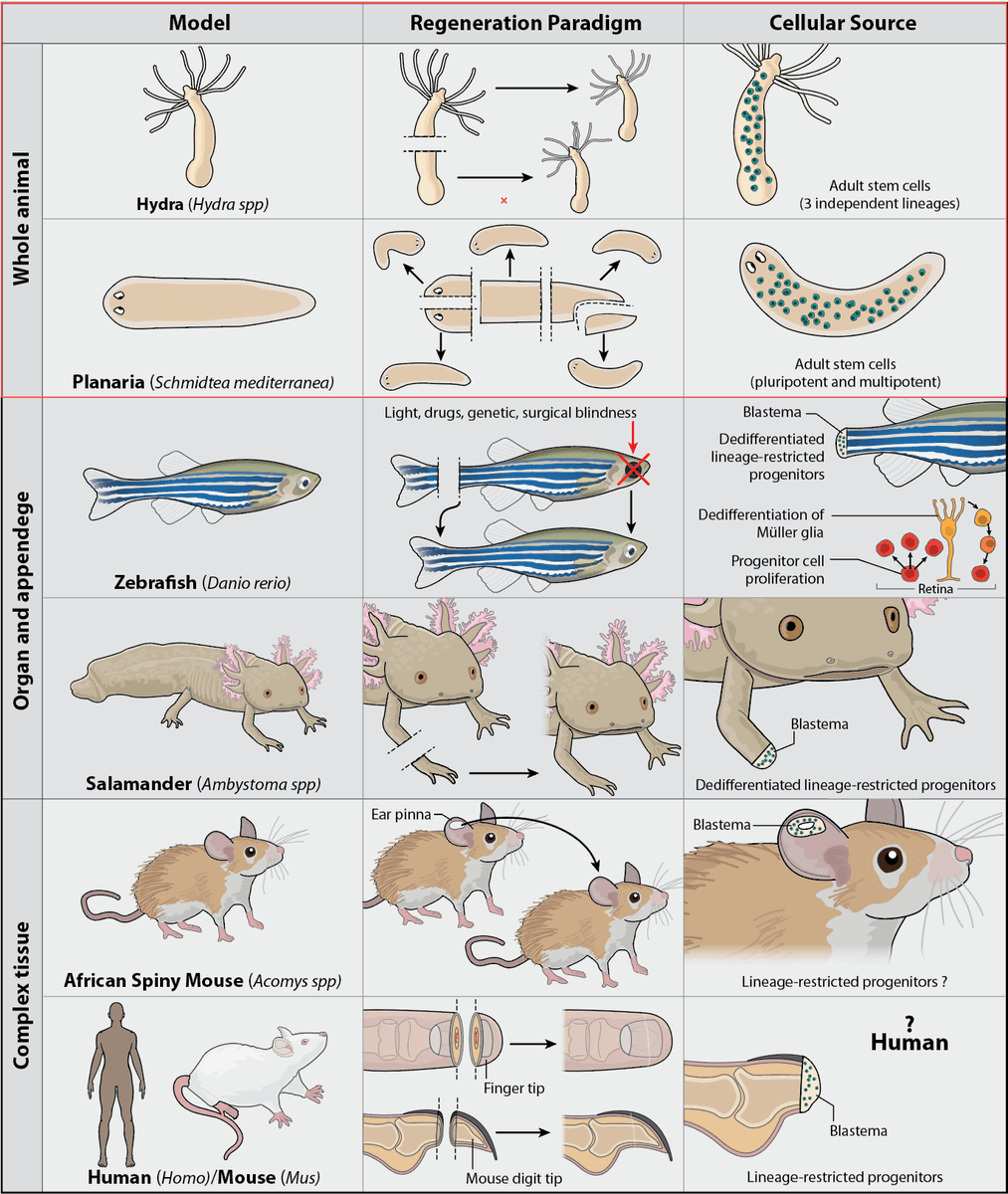
Super excited to share the work of two of my amazing students (Julia Losner and Kath Courtemanche), who synthesized this review article on systemic inputs to regeneration, which will hopefully spur more interest in this topic: https://t.co/rTkVmdkyjr
Thrilled to announce a new society promoting science for tissue regeneration. See writeup with Elly Tanaka in Development and visit https://t.co/xAakwR984J. Virtual launch meeting in April - join, see great talks, students/postdocs submit abstracts! https://t.co/tceVdd9hyf
Out now! Simple #genetic perturbation causes the formation of #limb-like bones in the pectoral fins of #zebrafish. These new bones integrate into #musculature, form joints, and articulate with neighboring elements https://t.co/5113RCAjzG 🐟💪
I like this is out...a lot! Hopefully this will protect some folks from themselves.
Guidelines for reporting single-cell RNA-seq experiments - PubMed https://t.co/VDwmfFDPlb
Excited to share our latest publication in @eLife , describing the cellular identity of the enthesis- the tissue which attaches tendon and bone https://t.co/fnJMPabxzM (1/4)
Check out our latest review in @DevelopmentalDy! 😊
Bringing tendon biology to heel: Leveraging mechanisms of tendon development, healing, and regeneration to advance therapeutic strategies https://t.co/dQV68XNFJX
Many thanks to my co-authors @kenrokusumi, Jeanne Wilson-Rawls, Rebecca Fisher, Alan Rawls, @JoannaPalade, Cameron Smith,@sgsamps1, Andrew Clark, and our collaborators Ruth Elsey and Russell Bourgeois! This work was in collaboration with the @LDWF.
Interestingly, the regrown alligator tail lacked skeletal muscle and featured scar-like connective tissue populated with nerves and blood vessels. Tissue differences in regenerative capacity may be related to the alligator’s large body size and/ or developmental stage.
To summarize, regrown tails from juvenile American #alligators exhibit features of both #regeneration and wound #repair. As large amniotes, alligators serve as a valuable comparison point within vertebrates to understand the mechanisms that enable or limit regrowth.
The regrown alligator tail is supported by an unsegmented cartilage tube rather than bone. This is similar to tail #regeneration in other non-avian #reptiles such as lizards and the tuatara.
🚨New article alert from the @KusumiLab! 🚨 Juvenile American #alligators regrow their tail up to 18% of their total body length but with limitations. Our study is the first to characterize the anatomy of regrown tails in an #archosaur - thread cont. https://t.co/REnKNv7JFm
Hot off the press! May not have strong sexual dimorphism—but strong gene expression differences: Immune and sex-biased gene expression in the threatened Mojave desert tortoise, Gopherus agassizii @PLOS #reptiles#tortoise https://t.co/v1EWOg9orC
We’re looking for a PhD student to work on integration of geologic and genomic data and speciation as part of our new Baja GeoGenomics consortium https://t.co/YuvINKvv7y please RT!